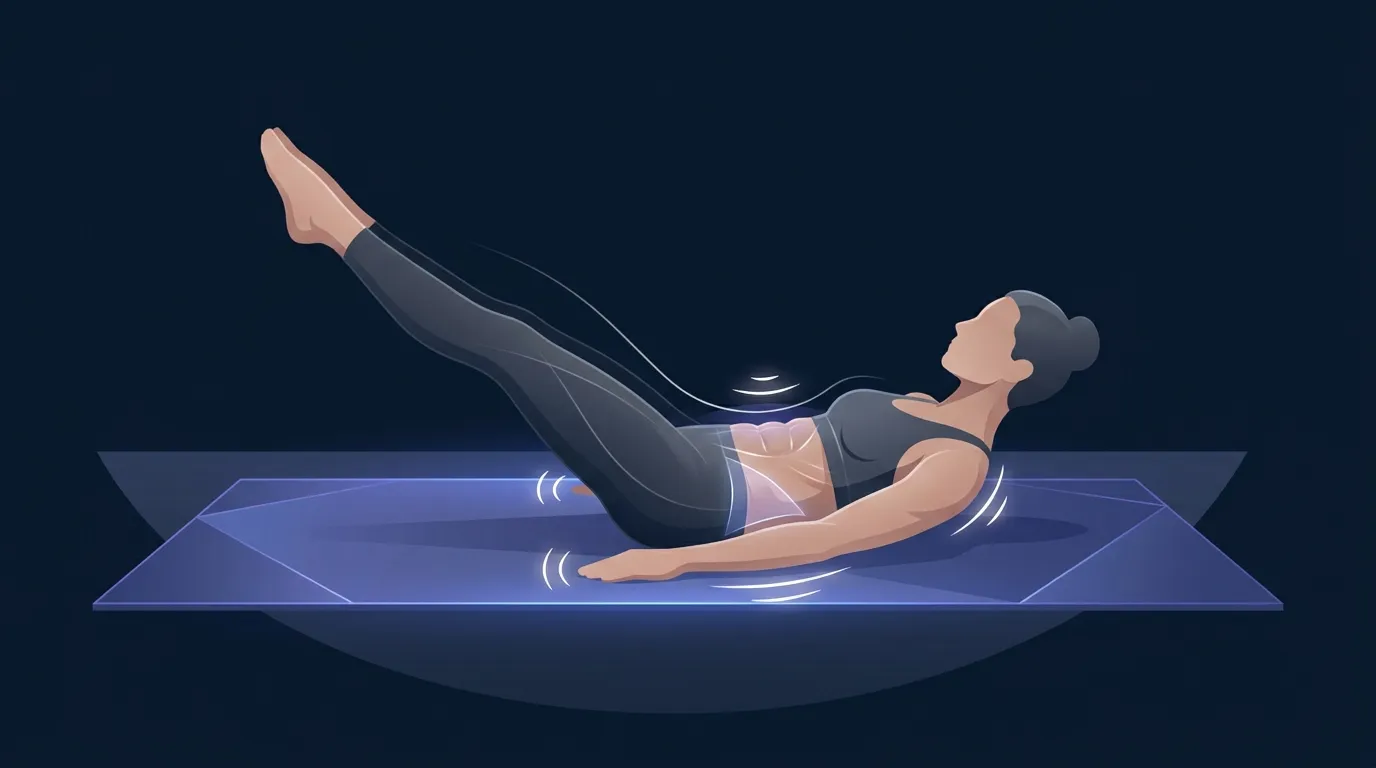
Pilates has broken out of the boutique studio and into the algorithm. Wall Pilates, reformer Pilates, and mat classes now compete with lifting programs for the same time slot in the same person's calendar. And that's fair. The physiology story is intuitive. Slow, controlled movement with sustained tension trains the core, hips, and postural chain in a way that most people neglect on lifting day. Whether that translates into the kind of muscle you can see (or just the kind you can feel) is a different question.
The evidence base has grown up. Since Kloubec's 2010 randomized trial, at least four systematic reviews and meta-analyses have pooled the Pilates literature, and the results converge on a specific, useful, real answer. Pilates builds muscular endurance. It builds trunk strength. It matches or approaches conventional resistance training on some strength outcomes. It does not, on its own, reliably build muscle mass the way progressive loaded resistance training does. Different tools, different jobs.
This article walks through the five most useful RCTs and reviews, what they actually measured, where the evidence is strong, and where the wall-Pilates videos are outrunning the data. If you already love Pilates, this is a case for keeping it in the rotation. If you're deciding between Pilates and lifting, this is the honest read on what each one gives you. The same test applied to the most common cardio modality gives a sharper answer, and we work through it in our review of whether running builds muscle.
The Research: What Studies Show
Kloubec 2010: The Foundational 12-Week RCT
The modern Pilates evidence base starts with a clean randomized trial. Kloubec (2010) at Winona State University, publishing in the Journal of Strength and Conditioning Research, randomized 50 healthy middle-aged adults to either 12 weeks of Pilates (two 60-minute mat classes per week) or a no-intervention control group. The outcome battery covered abdominal endurance, hamstring flexibility, upper-body muscular endurance, posture, and balance.
The results were consistent and specific. The Pilates group significantly improved abdominal endurance, hamstring flexibility, and upper-body muscular endurance versus control (all p ≤ 0.05). Posture and balance did not move meaningfully in the 12-week window. The takeaway that has shaped every downstream review: two Pilates sessions a week for three months are enough to change what your core and posterior chain can do for a sustained period of tension. That's the endurance quality, not the peak-force quality, and definitely not muscle size.
Kloubec's paper also framed the question that later work would keep re-asking. Endurance and control gains were undisputed. Hypertrophy was not measured. Strength was inferred from endurance tests. The design of the trial made sense for what the field was ready to ask in 2010, but it left the "bigger muscle" question wide open. It has stayed open ever since.
Cruz-Ferreira 2011: The First Big Systematic Review
A year later, the field got its first proper synthesis. Cruz-Ferreira, Fernandes, Laranjo, Bernardo, and Silva (2011) at the University of Évora published in Archives of Physical Medicine and Rehabilitation a systematic review of the effects of the Pilates method on healthy people. The team searched Science Direct, MEDLINE, PubMed, SPORTDiscus, PEDro, the Cochrane Central Register, CINAHL, and Web of Science, and graded the evidence across four outcome categories.
The verdicts were graded, not universal. The evidence was strong for improvements in flexibility and dynamic balance. The evidence was moderate for improvements in muscular endurance. It was much weaker, and often absent, for cardiovascular fitness and body-composition changes. That grading structure is important. It's the first big paper that said out loud what practitioners had suspected: Pilates does specific things well, and the specific things are on the endurance and control side, not the size and body-composition side.
The paper also flagged what would become the field's persistent methodological problem. The included studies used a wide range of session lengths, weekly frequencies, mat-vs-reformer setups, and outcome measures. Sample sizes were generally small. The direction of effect was consistent, but the effect magnitudes varied more than a rigorous meta-analysis would prefer. The signal is real. The precision is not yet sharp.
Carrasco-Poyatos 2019: Pilates vs. Resistance Training in Older Women
The most useful head-to-head trial is Carrasco-Poyatos, Ramos-Campo, and Rubio-Arias (2019) at the University of Almería, published in PeerJ. Sixty women aged 60 to 80 were randomly assigned to Pilates, conventional resistance training, or a no-intervention control. Both training groups performed two 60-minute sessions per week for 18 weeks at moderate-to-vigorous intensity, progressed on the OMNI Resistance Exercise Scale from 6 to 7 up to 8 to 9.
The findings were surprisingly close on one important outcome. Pilates significantly improved isometric hip-extension strength versus control (p = 0.004), with a larger effect size (2.06) than the resistance training group achieved on the same measure (0.61). The Pilates group matched conventional resistance training on this specific trunk-strength outcome despite never picking up a dumbbell.
Where resistance training won: isokinetic hip strength across the full range. The muscular training group improved on all hip isokinetic measurements by 31 to 34 percent. The Pilates group only improved isokinetic hip flexion. On dynamic balance (the Timed Up and Go test), both worked, with resistance training producing the bigger relative gain (12.3 percent vs. 4.8 percent). On static balance, neither intervention moved the needle.
The clean read: for postural and endurance-biased strength qualities in a population most Pilates studios actually serve, Pilates delivers. For maximal strength across a full range of motion, conventional resistance training still wins. And both beat sitting on the couch.
The same trade-off shows up in the pool. Our post on whether swimming builds muscle works through what a velocity-dependent, concentric-only load does to the size question.
Pinto 2022: The Head-to-Head Systematic Review
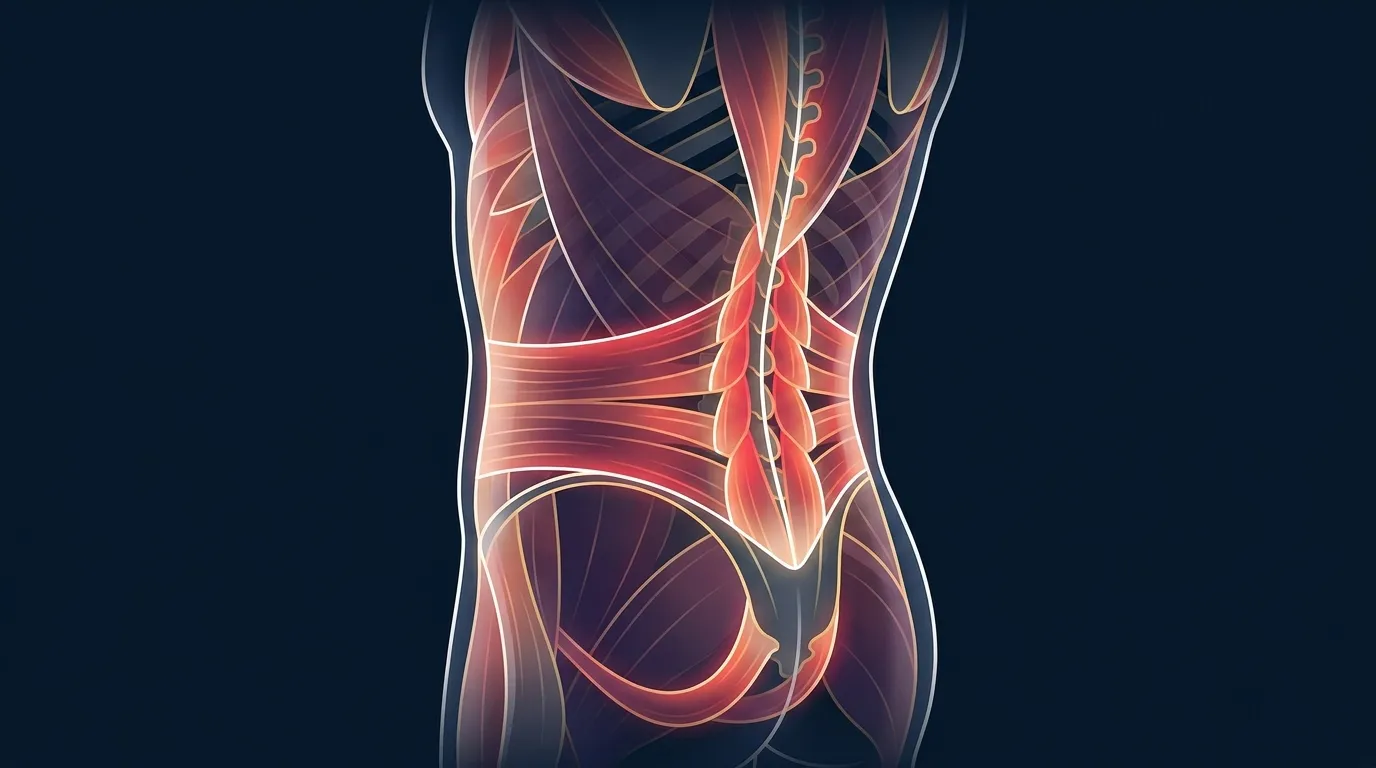
The most direct answer to the "does Pilates match other exercise for strength" question comes from Pinto and colleagues (2022) at Egas Moniz School of Health and Science, published in Heliyon. The review included 11 randomized trials with 689 total participants (354 Pilates, 335 comparator exercise) and evaluated Pilates against other exercise modalities on dynamic strength, isometric strength, resistance strength, balance, and flexibility.
The pooled verdict was even-handed. There was low-to-very-low certainty that there is no meaningful difference between Pilates and other exercises on any of the measured outcomes. Read carefully, that's not "Pilates is best" and it's not "Pilates is worse." It's "at the certainty of evidence the current trials support, we can't distinguish them on these outcomes." That's a reasonable result. Pilates and general exercise both improve strength, endurance, and flexibility in typical practitioners; the trials aren't precise enough to declare a winner.
The practical implication is the important one. If you enjoy Pilates and it fits your life, the evidence does not say you're leaving strength or endurance gains on the table by choosing it over another equivalently effortful exercise program. If you were hoping Pilates would beat resistance training on peak strength or hypertrophy, that's a claim the literature does not support and does not need to support to keep Pilates in your routine.
Oliveira 2024: The Older-Adults Meta-Analysis
The most recent meta-analysis is Oliveira, de Oliveira, da Silva, Gonzaga, and de Oliveira (2024), published in the Journal of Bodywork and Movement Therapies. The team pooled 24 randomized clinical trials with 1,190 older-adult participants (search cutoff September 2022) and evaluated strength, endurance, and muscle power.
The findings were more sober than earlier reviews. There is low quality evidence that Pilates did not significantly improve muscle strength compared to control groups. There is very low quality evidence that Pilates can improve upper-limb muscular endurance vs. control and lower-limb endurance vs. other exercise modalities. Muscle power could not be analyzed. The authors concluded that at current evidence quality, they cannot recommend Pilates specifically as a tool for strength or muscle power in older adults.
This is a useful counterweight to the earlier optimism. Pilates keeps producing signal in individual trials, but the trials still don't share designs, dose, or reporting well enough to give a meta-analysis a clean read. The mechanistic story (Pilates builds endurance and postural strength more than peak force) survives Oliveira 2024 intact. The claim that Pilates alone is enough for maintaining strength and power in the older years does not.
Why This Matters for Your Fitness
For a FitCraft user weighing Pilates against strength training, or trying to figure out how much of each belongs in the week, the evidence points to a specific mental model. Pilates is a serious training modality that trains specific things well. It is not a rebranded resistance-training program with fewer weights. It trains the deep trunk musculature, hip stabilizers, and postural chain through slow, controlled, endurance-biased movement. It builds the kind of strength that shows up in walking upright at 75, standing longer without back fatigue, and holding a plank for two minutes instead of thirty seconds.
That's genuinely valuable. Sarcopenia (age-related muscle loss) and postural collapse are among the biggest predictors of loss of independence, and Pilates directly attacks the postural side. See our writeup on the musculoskeletal syndrome of menopause for the perimenopause-specific version of that same story. Pilates also fits neatly next to balance training as a complementary practice for the same population.
What Pilates is not: a hypertrophy tool. If the goal is a visibly bigger arm, chest, or glutes, mat Pilates and even most reformer Pilates programs don't apply enough progressive external load to consistently drive size gains. The mechanism is right there in the movement style. Slow, controlled, sustained-tension work trains muscular endurance more than the near-maximal contractions that reliably grow muscle. Different tools, different jobs. If you'd like the deeper read on load and hypertrophy, the stretch-mediated hypertrophy research and the lengthened partials research both cover the load-plus-range recipe that Pilates alone doesn't quite satisfy.
Get an evidence-based plan built for you
FitCraft, our mobile fitness app, pairs you with an AI coach who builds you a personalized plan around your goals, schedule, and fitness level. Every FitCraft program is designed by Domenic Angelino, MPH (Brown University) and NSCA-CSCS, with research published in the Journal of Strength and Conditioning Research and Medicine & Science in Sports & Exercise.
Take the Free Assessment Free • 2 minutes • No credit cardHow to Use Pilates for Real Strength and Endurance Gains
The trials that produced clean results shared a small set of design features. Match them, and you're operating at the intensity and volume where results consistently show up.
| Design variable | What the trials that worked used |
|---|---|
| Frequency | Two 60-minute sessions per week is the most-cited protocol (Kloubec 2010, Carrasco-Poyatos 2019). Once a week is unlikely to produce meaningful adaptation. Three times a week is fine but has diminishing returns. |
| Duration to first effect | 12 weeks for endurance and flexibility improvements (Kloubec 2010). 18 weeks for measurable trunk-strength gains in older adults (Carrasco-Poyatos 2019). Under 8 weeks, most trials show inconsistent effects. |
| Intensity | Progressed from moderate to moderate-vigorous over the training block. Carrasco-Poyatos (2019) used an OMNI resistance scale progression from 6 to 7 up to 8 to 9. Coasting at a comfortable level of exertion doesn't produce the same adaptation. |
| Mat vs. reformer | Mat is fine for endurance and postural strength. Reformer with progressive spring loading is closer to resistance training and is a better bet if strength is the priority. The pooled reviews group both together, so the head-to-head evidence is thin. |
| Complementary training | If hypertrophy or maximal strength is a real goal, keep Pilates as 1 to 2 sessions a week and pair with 2 to 3 progressive resistance sessions. Pilates does not replace resistance training. It complements it well. |
A note on the population most trials have studied. The Pilates evidence base skews toward women, middle-aged and older adults, and beginners. The generalizability to a 25-year-old male who already lifts is limited. That's not a fatal flaw. It's a boundary condition. If you're already deep in a training program and adding Pilates as a supplement, expect the improvements to show up in movement quality, core control, and postural endurance, not in your bench press or squat.
Common Misconceptions
Misconception: "Pilates gives you long, lean muscles instead of bulk."
Muscle length is set by your skeleton, not your training modality. What Pilates practitioners often mean by "long and lean" is either a body composition (relatively low body fat) or a postural presentation (upright, decompressed) that comes with Pilates practice. Pilates doesn't literally lengthen muscle. What it does do, well, is improve trunk endurance and postural control, which makes people look taller and more composed. That's real. The mechanism is not muscle-lengthening.
Misconception: "Pilates is better than lifting for building strength."
The head-to-head trials do not support this. Carrasco-Poyatos (2019) found Pilates and resistance training were essentially tied on isometric trunk strength, with resistance training superior on isokinetic strength. Pinto (2022) pooled 11 trials and reported low-certainty evidence of no meaningful difference on strength outcomes. The claim that Pilates is a strictly better strength tool than lifting is a marketing claim, not a research claim. What Pilates offers is comparable results on some strength outcomes with a very different movement experience and lower joint loading. That's still a valid reason to pick it.
Misconception: "Pilates alone is enough to prevent age-related muscle loss."
The most recent meta-analysis (Oliveira 2024) says the current evidence quality is too low to recommend Pilates specifically for maintaining strength and muscle power in older adults. Resistance training has decades of stronger evidence for the same purpose (see the sarcopenia and resistance training research). The safest bet for age-related muscle preservation is progressive resistance training, with Pilates as a complement, not a replacement.
Misconception: "Reformer Pilates and mat Pilates are the same thing."
They are not, at least not from a strength-adaptation standpoint. Reformer adds external spring resistance that can be progressively loaded. Mat is bodyweight (plus small props). Reformer is mechanistically closer to resistance training. Mat is closer to a bodyweight endurance and control practice. Both count as "Pilates" in the pooled reviews, which is one reason the evidence base looks messier than it should. If strength is the priority, pick reformer over mat, and pick a studio that actually progresses your spring load over weeks rather than keeping you at the same setting session after session.
What the Research Suggests Going Forward
The Pilates literature has arrived at a specific and defensible summary. Pilates improves muscular endurance and postural strength, especially in the trunk, hips, and posterior chain. It matches conventional resistance training on some trunk-strength outcomes and falls short on peak isokinetic strength and hypertrophy. It is a real training modality with real adaptations. It is not a substitute for progressive loaded resistance training if bigger muscles are the goal.
Where the field still needs work: standardized reporting of mat vs. reformer intervention design (the pooled reviews conflate them and lose signal), more head-to-head trials against conventional resistance training in male and younger-adult populations (both underrepresented in current pools), and direct measurement of muscle hypertrophy via ultrasound or MRI in Pilates trials, which almost no study has done. The Oliveira 2024 verdict of "low quality evidence" reflects those design gaps more than a lack of underlying signal. The next generation of trials should also settle the reformer-vs-mat question head-on, which the current literature leaves open.
For the trainee deciding how to allocate weekly training time, a defensible template: if strength and hypertrophy are the priorities, do 3 progressive resistance sessions and 1 to 2 Pilates sessions. If postural control, endurance, and joint-friendly movement are the priorities, invert that ratio. If you love Pilates and it's the thing you'll actually do consistently, that answer beats a theoretically optimal program you'll quit in three weeks. Consistency is the top of the pyramid. The specific modality is the second floor.
References
- Kloubec JA. "Pilates for improvement of muscle endurance, flexibility, balance, and posture." Journal of Strength and Conditioning Research 24.3 (2010): 661-667. doi:10.1519/JSC.0b013e3181c277a6.
- Cruz-Ferreira A, Fernandes J, Laranjo L, Bernardo LM, Silva A. "A systematic review of the effects of Pilates method of exercise in healthy people." Archives of Physical Medicine and Rehabilitation 92.12 (2011): 2071-2081. doi:10.1016/j.apmr.2011.06.018.
- Carrasco-Poyatos M, Ramos-Campo DJ, Rubio-Arias JA. "Pilates versus resistance training on trunk strength and balance adaptations in older women: a randomized controlled trial." PeerJ 7 (2019): e7948. doi:10.7717/peerj.7948.
- Pinto JR, Santos CS, Souza Soares WJ, Silveira Ramos AP, Scoz RD, Teixeira de Júdice AF, Alves Ferreira LM, Baltazar Mendes JJ, Amorim CF. "Is pilates better than other exercises at increasing muscle strength? A systematic review." Heliyon 8.11 (2022): e11564. doi:10.1016/j.heliyon.2022.e11564.
- Oliveira LS, de Oliveira RG, da Silva TQ, Gonzaga S, de Oliveira LC. "Effects of pilates exercises on strength, endurance and muscle power in older adults: Systematic review and meta-analysis." Journal of Bodywork and Movement Therapies 39 (2024): 615-634. doi:10.1016/j.jbmt.2024.02.021.
Frequently Asked Questions
Does Pilates actually build muscle?
Pilates reliably builds muscular endurance and trunk strength. It does not reliably build muscle mass (hypertrophy) the way progressive resistance training does. Cruz-Ferreira et al. (2011) in the Archives of Physical Medicine and Rehabilitation graded the evidence as strong for flexibility and dynamic balance and moderate for muscular endurance in healthy people. Pinto et al. (2022) in Heliyon pooled 11 trials and reported low-to-very-low-certainty evidence that Pilates and other exercise modalities produce equivalent gains in strength and resistance in typical practitioners, not that Pilates is a hypertrophy tool. If a bigger-looking muscle is the goal, add loaded resistance work. If a stronger, more capable core with better posture and control is the goal, Pilates delivers that on its own.
How long does it take to see strength gains from Pilates?
Twelve weeks of consistent practice is the most-cited timeline for measurable changes. Kloubec (2010) in the Journal of Strength and Conditioning Research ran a 12-week trial of two 60-minute Pilates sessions per week and found statistically significant improvements in abdominal endurance, hamstring flexibility, and upper-body muscular endurance. Kloubec did not find changes in posture or balance in that window. For trunk strength specifically, Carrasco-Poyatos et al. (2019) ran an 18-week trial in older women and found meaningful gains in isometric hip-extension strength.
Is Pilates as effective as strength training for building strength?
For trunk and hip strength, the head-to-head evidence is close. Carrasco-Poyatos et al. (2019) in PeerJ randomized older women to Pilates or conventional resistance training for 18 weeks and found Pilates matched resistance training on isometric hip-extension strength, with a larger effect size for Pilates on that specific outcome. Resistance training was superior on isokinetic hip strength across the full range. Pinto et al. (2022) in Heliyon concluded from 11 pooled trials that Pilates and other exercise modalities produce equivalent strength, resistance, and flexibility improvements at low certainty of evidence. For maximal strength or hypertrophy, progressive loaded resistance training remains the more reliable tool. For a deeper look at the loaded-resistance side, see the sarcopenia and resistance training research.
Does Pilates build a bigger core or just a stronger core?
Mostly stronger and more coordinated, not visibly bigger. Pilates targets endurance qualities of the deep trunk muscles (transversus abdominis, multifidus, obliques) more than the maximal-tension qualities that drive size. Kloubec (2010) showed abdominal endurance nearly doubled after 12 weeks, but the study did not measure muscle thickness. Visible core definition depends more on total body-fat percentage than on core-specific hypertrophy. A stronger core will show through when body fat is low enough. Pilates helps with the strength part. Nutrition and total training volume do the rest.
Is reformer Pilates better than mat Pilates for building muscle?
Reformer Pilates adds external loading through spring resistance, which is mechanistically better positioned to drive strength and modest hypertrophy than mat Pilates. The direct head-to-head evidence base is small, and most of the pooled meta-analyses (Cruz-Ferreira 2011, Pinto 2022, Oliveira 2024) group both under the Pilates umbrella. The practical read: reformer sessions with progressively heavier spring loads and controlled tempo are closer to resistance training. Mat sessions are closer to a bodyweight endurance and control practice. Neither is a substitute for progressive resistance training if hypertrophy is the primary goal.
Can Pilates replace lifting weights?
For general fitness and postural strength in a beginner or a returning trainee, yes, Pilates alone can be enough. For hypertrophy or peak strength, no. Oliveira et al. (2024) in the Journal of Bodywork and Movement Therapies concluded that current evidence quality is too low to recommend Pilates as a substitute for resistance training in older adults specifically for strength and power. The safest posture is to pair the two if you can. Pilates gives you the trunk endurance, hip control, and postural strength that many lifters neglect. Loaded resistance training gives you the size and peak strength that Pilates does not reliably drive. See the home workouts guide for how to combine them in a small-space setup.