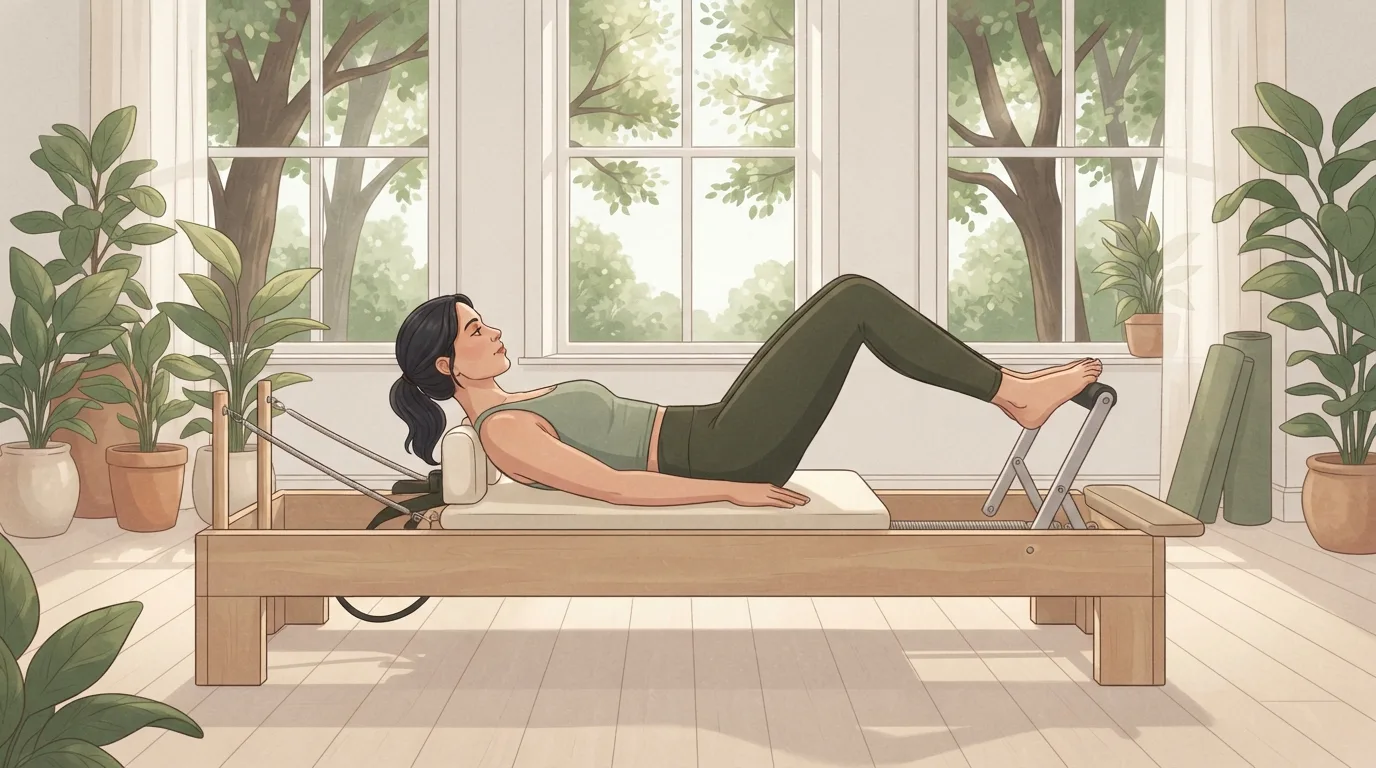
You leave every Pilates class with shaking legs and a core that feels it the next morning. So it's fair to ask whether that's your strength training covered, or whether you still need to pick up weights. Is Pilates considered strength training by the people who write the exercise guidelines? Mostly yes, with a few conditions worth knowing.
The question matters because your week only has so many hours. You don't want to spend three years doing something faithfully and then learn it never covered the thing you were counting on it for, whether that's stronger legs, a bigger deadlift or denser bones in your fifties.
Below: what makes any exercise strength training, how Pilates measures up against the official guideline, how mat and reformer differ, whether it counts as cardio, what it does for bone density, and how to make it count if it's the only strength work you do.
What Makes Something Strength Training?
Strength training is any exercise where your muscles work against a resistance hard enough to challenge them, with that challenge increasing over time. The resistance can be a dumbbell, a spring, a band or your own body. What separates strength training from general movement is effort and progressive overload, not the equipment.
Load still matters, though, and it matters differently for different goals. Schoenfeld and colleagues (2017) meta-analysed 21 studies in the Journal of Strength and Conditioning Research that compared light loads (60 percent of one-rep max or less) with heavy loads (more than 60 percent), with sets taken to muscular failure. Muscle growth was similar across loads. One-rep-max strength, the ability to lift something heavy once, improved significantly more with heavy loads.
That single finding explains most of the Pilates debate. Pilates is light-load training done with control and plenty of repetitions. It can build muscle when the sets get close to fatigue. It's a weaker tool for the kind of strength that shows up when you lift something heavy off the floor.
Does Pilates Count as Strength Training Under the Activity Guidelines?
Pilates counts as strength training under the WHO guidelines when a session works all of your major muscle groups at moderate or greater effort, and you do it on at least two days a week.
That's the standard set by the World Health Organization's 2020 guidelines, published by Bull and colleagues in the British Journal of Sports Medicine, which recommend muscle-strengthening activity at moderate or greater intensity, involving all major muscle groups, on two or more days a week. Pilates clearly qualifies on intensity for most people in a well-taught class. The open question is coverage, because most classes are built around the trunk and hips.
| Muscle group | Typical mat class | Typical reformer class | What to add if Pilates is all you do |
|---|---|---|---|
| Core and trunk | Heavy emphasis | Heavy emphasis | Nothing |
| Glutes and hips | Good, mostly bodyweight | Good, with springs | A loaded hinge such as a dumbbell Romanian deadlift |
| Thighs | Light | Moderate, from footwork against springs | Split squats or goblet squats |
| Upper back (pulling) | Light | Light to moderate, from rowing on springs | Dumbbell rows |
| Chest, shoulders and arms (pushing) | Moderate, from planks and push-up variations | Light to moderate | Push-ups or dumbbell presses |
Those ratings are my read of how classes are usually built, not a measured result, and teachers vary a lot. The practical test is simple: by the end of the week, has every row in that table been worked to the point where the last few reps were hard? If yes, your Pilates counts. If the thighs and upper back keep getting skipped, add the exercise in the last column.
Mat vs Reformer: Which Is Closer to Strength Training?
Reformer Pilates is closer to traditional strength training, because its springs add adjustable external resistance. Heavier springs mean more load, so you can apply progressive overload in roughly the way you would with heavier dumbbells.
Mat Pilates uses your body weight and leverage. You make an exercise harder by lengthening the lever (straighter legs, arms overhead), moving to one leg, slowing the tempo or adding reps. Those progressions work well for months. The ceiling arrives sooner than it does with added load, especially for big muscles like the thighs and glutes, which can handle far more than your body weight.
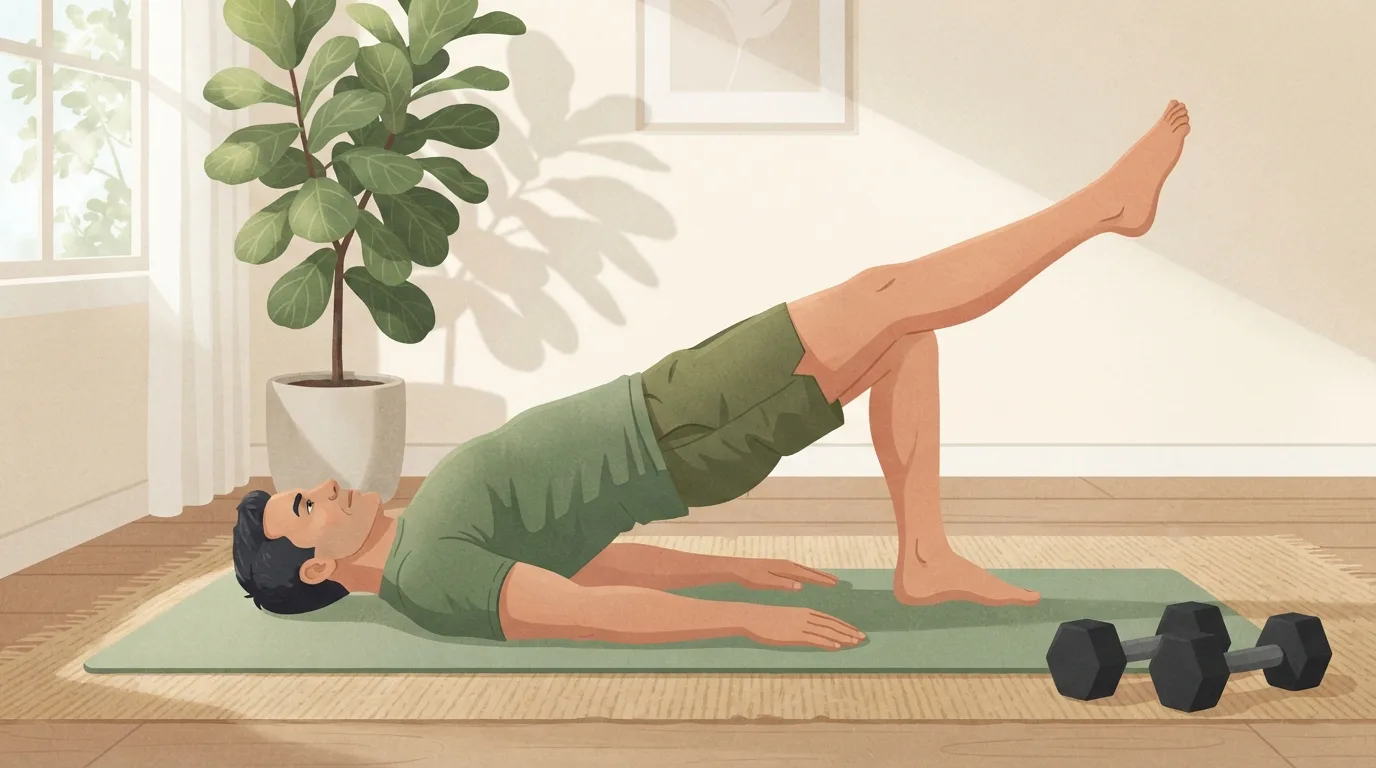
If you do mat Pilates at home, our post on wall Pilates at home shows how a wall adds a little leverage and support to the standard moves. When those get easy too, a dumbbell held at the hips during bridges or at the chest during squats is the simplest upgrade.
Is Pilates Considered Cardio or Strength Training?
Pilates is considered strength training, not cardio, because it rarely pushes your heart rate into the moderate-intensity range.
The numbers come from the 2024 Adult Compendium of Physical Activities by Herrmann and colleagues, the standard reference for the energy cost of exercise. It rates general Pilates at 2.8 METs and traditional mat Pilates at 1.8 METs, where one MET is your energy use sitting still and 3.0 METs is where moderate activity begins. For comparison, the same Compendium rates Hatha yoga at 2.3 METs, moderate calisthenics like push-ups and lunges at 3.8, and general weight training of 8 to 15 reps at 3.5.
So Pilates sits just below the line for moderate cardio and a little below most other strength formats in energy cost. That's a different kind of intensity from the effort that makes a set count as strength work: a hard side plank can exhaust your obliques while barely raising your breathing. That's why it doesn't count toward the 150 minutes a week of moderate aerobic activity in the WHO guidelines, and why Pilates and calisthenics feel different even when the exercises look similar: calisthenics usually moves faster with less rest. If you're weighing Pilates against yoga for the same slot in your week, our comparison of Pilates vs yoga covers how the two differ in strength, flexibility and intensity.
Knowing what to do is the easy part.
FitCraft, our mobile fitness app, pairs you with an AI coach who builds you a personalized plan around your goals, schedule, and fitness level. Every FitCraft program is designed by Domenic Angelino, MPH (Brown University) and NSCA-CSCS, with research published in the Journal of Strength and Conditioning Research and Medicine & Science in Sports & Exercise.
Take the Free Assessment Free • 2 minutes • No credit cardWhere Muscle Growth Fits In
Yes, modestly, and mostly in people who are new to training. Because the loads are light, Pilates builds muscle the way any light-load training does: only when sets get close to fatigue, which is the condition under which light and heavy loads grew muscle similarly in the Schoenfeld meta-analysis. Gains tend to be largest in the first months and slower after that, once the springs or your body weight stop being a real challenge. Our review of whether Pilates builds muscle goes through the controlled trials, including the ones that compared it head to head with weight training.
Is Pilates Strength Training for Bone Density?
Pilates isn't enough strength training for bone density on its own, based on current evidence. Bone responds to high forces applied quickly, and Pilates mostly applies low forces slowly.
The Pilates trials are small and mixed. De Oliveira and colleagues (2022) pooled three randomized trials of at least six months in postmenopausal women and found no significant effect of Pilates on bone mineral density at the lumbar spine, total hip or femoral neck. They noted that only one of the three trials had satisfactory methodological quality. Earlier, a single six-month trial by de Oliveira and colleagues (2019) in 51 postmenopausal women had found a small lumbar spine gain with Pilates three times a week compared with controls. Taken together, the evidence that Pilates protects bone is weak.
Heavy loading has a much stronger signal. In the LIFTMOR trial, Watson and colleagues (2018) randomized 101 postmenopausal women with low bone mass, average age 65, to eight months of supervised high-intensity resistance and impact training (five sets of five reps above 85 percent of one-rep max, twice a week, 30 minutes a session) or a low-intensity home program. Lumbar spine density rose 2.9 percent in the heavy group and fell 1.2 percent in the home group, femoral neck density held steady against a 1.9 percent loss, and only one adverse event was reported.
That study used supervised barbell lifts, which is a different world from a reformer class. You don't need to start there. But if bone density is one of your reasons for training, Pilates should sit alongside progressively heavier lifting, ideally with a qualified coach and your doctor's input.
Can I Replace Strength Training With Pilates?
You can replace strength training with Pilates for general health and as a beginner, as long as your classes work every major muscle group hard on two or more days a week. Pilates falls short as a full replacement for three goals:
- Maximal strength. Heavy loads build more one-rep-max strength than light loads, so if you want to carry, lift or push heavy things more easily, you need some heavier work.
- Bone density after menopause. The heavy-loading evidence is far stronger than the Pilates evidence.
- Continued muscle growth. Once bodyweight and springs stop taking you close to fatigue, growth slows unless the load goes up.
The "Pilates body vs gym body" comparisons on social media mostly compare different loads, different training histories and different genetics. Both styles build muscle. Heavier loads let you keep progressing longer.
How to Make Pilates Count as Strength Training
If Pilates is your main strength work, five adjustments make it count for more:
- Work close to fatigue. The last two or three reps of each exercise should be hard to finish with good form.
- Progress on purpose. Move to heavier springs, longer levers or one-leg versions every few weeks, rather than repeating the same class forever.
- Fill the gaps. Add two or three sets each of rows and split squats on two days a week if your classes skip the upper back and thighs.
- Train at least twice a week. That's the floor in the WHO guidelines, and three sessions gives you room for an off week.
- Keep your cardio separate. A walk or a bike ride covers the aerobic side that Pilates doesn't.
A simple week that covers everything: two Pilates classes, two short dumbbell sessions built around squats, hinges, rows and presses, and walking on most days. If you want the dumbbell sessions planned for you, our roundup of the best strength training apps compares the options side by side.
What This Means for You
If Pilates is the workout you actually show up for, keep it. A strength habit you keep beats a "better" program you quit in three weeks, and Pilates already counts as strength training by the guideline's definition. Your job is to fill the gaps it leaves: some heavier pulling and leg work, a bit of progression, and cardio on the side.
Picture six months from now. Your Pilates classes feel controlled instead of shaky, your rows and squats have moved up a dumbbell size or two, and the stairs at the end of a long day feel like nothing. That's what it looks like when Pilates is part of your strength training rather than all of it. As Katie, a FitCraft user, put it: "I've tried everything. This is the first time I've stuck with something past two weeks."
Frequently Asked Questions
Does Pilates count as strength training?
Yes. Pilates works your muscles against your body weight or a reformer's springs, which makes it resistance training, and it counts toward the WHO recommendation of muscle-strengthening activity on two or more days a week when a session works all major muscle groups at moderate or greater effort. Most mat classes load the core and hips well and the back and legs lightly, so add a few pulling and leg exercises if Pilates is your only strength work.
Is Pilates good for weight loss?
It helps, modestly. A meta-analysis of 11 randomized trials with 393 adults with overweight or obesity found Pilates reduced body weight by about 2.4 kg and body fat percentage by about 4.2 points compared with controls, with no significant change in waist circumference or lean mass (Wang 2021). Pilates burns relatively few calories, rated at 2.8 METs in the 2024 Compendium, so pair it with walking and a modest calorie deficit.
Can you get fit by only doing Pilates?
You can get stronger, more mobile and better at controlling your trunk with Pilates alone, but you won't cover aerobic fitness. The 2024 Compendium rates general Pilates at 2.8 METs, below the 3.0 METs where moderate activity starts, so it doesn't count toward the 150 minutes a week of moderate aerobic activity the WHO recommends. Add brisk walking, cycling or another cardio habit.
Do I still need to lift weights if I do Pilates?
Not at first, if your classes work every major muscle group hard twice a week. You'll benefit from adding heavier loads once the springs or bodyweight stop challenging you, if you want maximal strength, or if bone density matters to you. A meta-analysis of 21 studies found heavy loads built more one-rep-max strength than light loads (Schoenfeld 2017), and bone responds best to heavy, high-impact loading.
Is reformer Pilates strength training or cardio?
Reformer Pilates is strength training. The springs add adjustable external resistance, which lets you progress the load over time in a way mat work can't, but the pace rarely raises your heart rate enough to count as moderate cardio. Treat it as one of your two or more weekly strength sessions and get your aerobic activity elsewhere.
Is 30 minutes of Pilates a day enough exercise?
It's enough strength and mobility work for most people, but not enough aerobic exercise on its own. Thirty minutes a day easily meets the muscle-strengthening guideline of two or more days a week, as long as your sessions work every major muscle group, but Pilates sits below the moderate-intensity threshold, so add about 150 minutes a week of brisk walking or other moderate cardio.
Can Pilates flatten the belly?
Pilates strengthens the deep abdominal muscles, which can improve how your midsection holds itself, but it doesn't remove belly fat on its own. In a meta-analysis of 11 trials in adults with overweight or obesity, Pilates reduced body weight and body fat percentage but had no significant effect on waist circumference (Wang 2021). A flatter belly comes from overall fat loss, which depends on diet and total activity.