Your baby is here, the hospital bag is unpacked, and your old jeans still don't close. Maybe you were told the weight would fall off with breastfeeding, and it hasn't. Every post partum weight loss plan you scroll past seems to assume you're sleeping, eating on schedule and have an hour free. Right now you have none of those.
That gap breeds a quiet kind of guilt. You grew a whole person, and somehow you still feel behind. Then a celebrity shows up on your feed "back in shape" at six weeks, and the guilt gets louder.
The "bounce back" story is the real problem here. Your body runs on a timeline measured in months, and six weeks is often just the date of your first full check-up. This guide gives you realistic numbers from primary studies: how long postpartum weight loss usually takes, what breastfeeding really does, how many calories you need while nursing, why sleep matters, and when and how exercise fits in.
How Long Does Postpartum Weight Loss Take?
Postpartum weight loss usually takes many months, and for most women it runs past the baby's first birthday. Endres and colleagues (2015), in Obstetrics and Gynecology, followed 774 mostly lower-income U.S. women who gained an average of 32 pounds in pregnancy. At one year, about 75 percent still weighed more than before pregnancy, 47 percent were more than 10 pounds heavier and 24 percent were more than 20 pounds heavier. If you're not back to your old weight at six months, you're in the majority.
Postpartum weight loss timeline
| When | What typically happens | What to focus on |
|---|---|---|
| Birth | The baby, the placenta and the amniotic fluid leave your body, so the scale drops right away. | Rest and recovery |
| First 2 weeks | Your body sheds much of the extra fluid it carried in pregnancy. | Short walks, breathing and pelvic floor exercises if your clinician agrees |
| 2 to 6 weeks | Weight change is mostly passive. A cesarean birth can slow early loss, but the difference fades by 6 months. | Build walking gradually. Don't diet yet. |
| 6 to 12 weeks | ACOG recommends a full postpartum visit no later than 12 weeks after birth. | Get clearance, then start a gentle calorie deficit and strength work |
| 6 months | In one cohort, the average woman was about 1.4 kg (3 pounds) above her weight at her first prenatal visit. | A useful checkpoint. Keep a steady pace. |
| 12 months | About 3 in 4 women in a U.S. cohort still weighed more than before pregnancy. | Still normal. Keep going. |
The cesarean and 6-month figures come from Schauberger, Rooney and Brimer (1992), who weighed 795 women often for six months after birth. Delivery route mattered at 2 and 6 weeks but not at 6 months, and weight gained during pregnancy was the strongest predictor of how much came off. The 12-week visit comes from ACOG Committee Opinion 736 (2018), which also recommends contact with your obstetric provider within the first 3 weeks.
Why the first year still matters
There's no deadline, but the first year sets a direction. Rooney and Schauberger (2002) checked on 540 of those same women about 8.5 years later. Women who had lost all their pregnancy weight by 6 months were 2.4 kg heavier than before pregnancy. Women who had kept weight at 6 months were 8.3 kg heavier. Women who breastfed and women who did aerobic exercise also gained less over the decade.
How much you gained in pregnancy matters too. Nehring and colleagues (2011), in the American Journal of Clinical Nutrition, pooled 9 studies and found that women who gained more than the Institute of Medicine range kept about 3.1 kg more weight three years after birth than women who gained within it. If you gained a lot, expect a longer timeline. That's simple arithmetic, and it says nothing about your effort.
Does Breastfeeding Help You Lose Weight?
Breastfeeding helps some women lose weight, but less than its reputation suggests. Neville and colleagues (2014), in the International Journal of Obesity, reviewed 45 studies. Most of them, 63 percent, found little or no link between breastfeeding and weight change. Four of the five highest-quality studies did find a modest benefit, so the effect is real for some women and small for most.
The reason is appetite. Making milk takes a lot of energy, and your hunger rises to match it. In a randomized trial by Dewey and colleagues (1994), in the New England Journal of Medicine, 33 exclusively breastfeeding women started at 6 to 8 weeks after birth. Those assigned to 45 minutes of aerobic exercise five days a week burned about 400 calories per session, then ate more to match it. Their milk volume and composition were unaffected, and their fitness improved. So exercise while breastfeeding is safe for your milk, but it won't take weight off unless you also eat a little less.
How Many Calories Do You Need While Breastfeeding?
Breastfeeding raises your calorie needs above your pre-pregnancy level. The 2020 Dietary Guidelines Advisory Committee report sets the extra intake at about 500 calories a day from food in the first 6 months, and assumes roughly another 170 calories a day comes from fat you stored during pregnancy. In the second 6 months, as milk output falls, the extra intake is about 400 calories a day. That built-in 170 is the gentle, automatic weight loss breastfeeding is supposed to bring.
Postpartum weight loss plan while breastfeeding
The best trial on weight loss while nursing set the pace you can copy. Lovelady and colleagues (2000), in the New England Journal of Medicine, randomized 40 exclusively breastfeeding women with a BMI of 25 to 30, starting at 4 weeks after birth. One group cut about 500 calories a day and exercised for 45 minutes four days a week for 10 weeks. They lost 4.8 kg, against 0.8 kg in the control group, which works out to about 0.5 kg a week. Their babies grew normally.
- Wait until your supply is settled. The trial started at 4 weeks, in women whose milk was established. Most clinicians suggest holding off on any deliberate deficit until after your postpartum check.
- Cut about 500 calories a day and no more. Count down from your breastfeeding needs, which are higher than your pre-pregnancy needs.
- Aim for about 1 pound (0.5 kg) a week. That's the pace that was tested and found safe for babies.
- Back off if your supply drops. Fewer wet diapers, a baby who seems hungry after feeds or a sudden dip in pumped volume are reasons to eat more and call a lactation consultant.
Find out what's really holding you back
FitCraft, our mobile fitness app, pairs you with an AI coach who builds you a personalized plan around your goals, schedule, and fitness level. Every FitCraft program is designed by Domenic Angelino, MPH (Brown University) and NSCA-CSCS, with research published in the Journal of Strength and Conditioning Research and Medicine & Science in Sports & Exercise.
Take the Free Assessment Free • 2 minutes • No credit cardCan You Lose Weight Fast After Pregnancy?
You can lose weight steadily after pregnancy, but fast loss isn't a good idea while you're healing or nursing. Aim for about 1 pound a week if you're breastfeeding and no more than about 2 pounds a week if you're not. Bigger deficits haven't been tested carefully in breastfeeding women, and they cost you the things you're shortest on: energy, patience and sleep.
The quickest safe route is the combination that trials support. In the Cochrane review by Amorim Adegboye and Linne (2013), which pooled 12 trials of 910 women, diet plus exercise produced about 1.9 kg more weight loss than usual care and diet alone about 1.7 kg. Exercise alone made essentially no difference to weight. None of the programs seemed to harm breastfeeding. The authors favored diet plus exercise, because the exercise improved fitness and protected lean muscle while diet alone cost some of it.
Skip the shortcuts. No postpartum weight loss supplement, tea or drink has good evidence behind it, and many haven't been tested for safety in breastfeeding. Ask your clinician or pharmacist before you take any of them. The NIH's free LactMed database lists what's known about substances that pass into breast milk.
Sleep and Postpartum Weight Loss
Short sleep is one of the strongest predictors of keeping postpartum weight. Gunderson and colleagues (2008), in the American Journal of Epidemiology, followed 940 women in the Project Viva cohort. Women who slept 5 hours or less a day at 6 months postpartum had about 3 times the odds of keeping 5 kg or more at one year, compared with women who slept 7 hours. Sleeping 6 hours or 8 or more made no difference. Women whose sleep dropped between 6 months and a year also had twice the odds.
It's an observational study, so it can't prove short sleep caused the weight. But the link fits what tired people know: you're hungrier, you crave quick food and the workout feels impossible. In the first months, protecting sleep may do more for your weight than any workout. Nap when you can, share night feeds if someone can take a bottle, and let chores slide before sleep does.
When Can You Start Exercising After Giving Birth?
You can usually start gentle exercise within days of an uncomplicated birth and build up over months. ACOG Committee Opinion 804 (2020) encourages a gradual return to physical activity once it's medically safe, notes that some women can start within days, and says pelvic floor exercises can begin right after birth. When it's safe for you is a call for your own clinician, so get clearance before you add anything beyond walking.
The long-term target is the same as for any adult. The WHO 2020 guidelines (Bull et al., 2020) recommend that postpartum women build toward at least 150 minutes of moderate activity a week, with muscle-strengthening work included. Here's how most women progress:
| Stage | What to add | Move on when |
|---|---|---|
| First weeks | Short walks, breathing exercises and pelvic floor contractions | Walking feels easy and bleeding isn't increasing |
| After your postpartum check | Two short strength sessions a week with bodyweight or light dumbbells, and walking building toward 150 minutes a week | No leaking, heaviness, bulging or pain during or after sessions |
| From about 12 weeks | Impact, running and intervals, introduced gradually | You pass the same symptom check with every step up |
The 12-week mark for running comes from return-to-running guidance by Donnelly and colleagues (2020) in the British Journal of Sports Medicine, which treats it as a guide rather than a rule. Leaking, a heavy or dragging feeling, a bulge, pain or bleeding that picks up again are all signs to drop back a stage and see a pelvic health physiotherapist.
After a cesarean birth
A cesarean is major abdominal surgery, so the gentle stage starts early and the demanding stage takes longer. Our week-by-week guide to exercises after a C-section covers what to do and avoid while the scar heals. For weight, the Schauberger data are reassuring: the early gap after a cesarean had closed by 6 months.
If your abs have separated
A gap between the two sides of your abdominal muscles, called diastasis recti, is common after pregnancy and changes which core exercises suit you. It doesn't stop you from losing weight. Our guide to diastasis recti exercises explains how to check for it and how to progress your core work safely. For the bigger picture of getting back into training, see our guide to postpartum fitness.
Postpartum Diet for Weight Loss
A postpartum diet for weight loss is a normal healthy diet, eaten in slightly smaller amounts once you're cleared. It needs to be easy enough to manage one-handed and half-asleep. These weight loss tips post pregnancy matter more than any special plan:
- Protein at every meal. Eggs, Greek yogurt, beans, fish, chicken or tofu keep you full longer and help hold on to muscle while you lose fat.
- Fiber you don't have to cook. Fruit, raw vegetables, oats and whole-grain bread fill you up for few calories.
- Snacks within reach. Put a bowl of fruit, nuts or cheese where you feed the baby, so hunger doesn't send you to whatever's fastest.
- Drink to thirst. Keep water by your feeding spot. Breastfeeding makes many women thirstier.
- Watch the liquid calories. Sweet coffee drinks and juice add up fast and don't fill you up.
- Don't skip meals to save calories. Skipped meals tend to turn into late-night grazing when you're exhausted.

How to Lose Weight After Pregnancy: A Simple Post Partum Weight Loss Plan
Put the evidence together and a post partum weight loss plan comes down to six steps, in this order:
- Get cleared. Ask at your postpartum visit whether you're ready for a calorie deficit and for exercise beyond walking. Bring up any leaking, pain, low mood or feeding problems.
- Walk most days. Build toward 150 minutes a week. Stroller walks count.
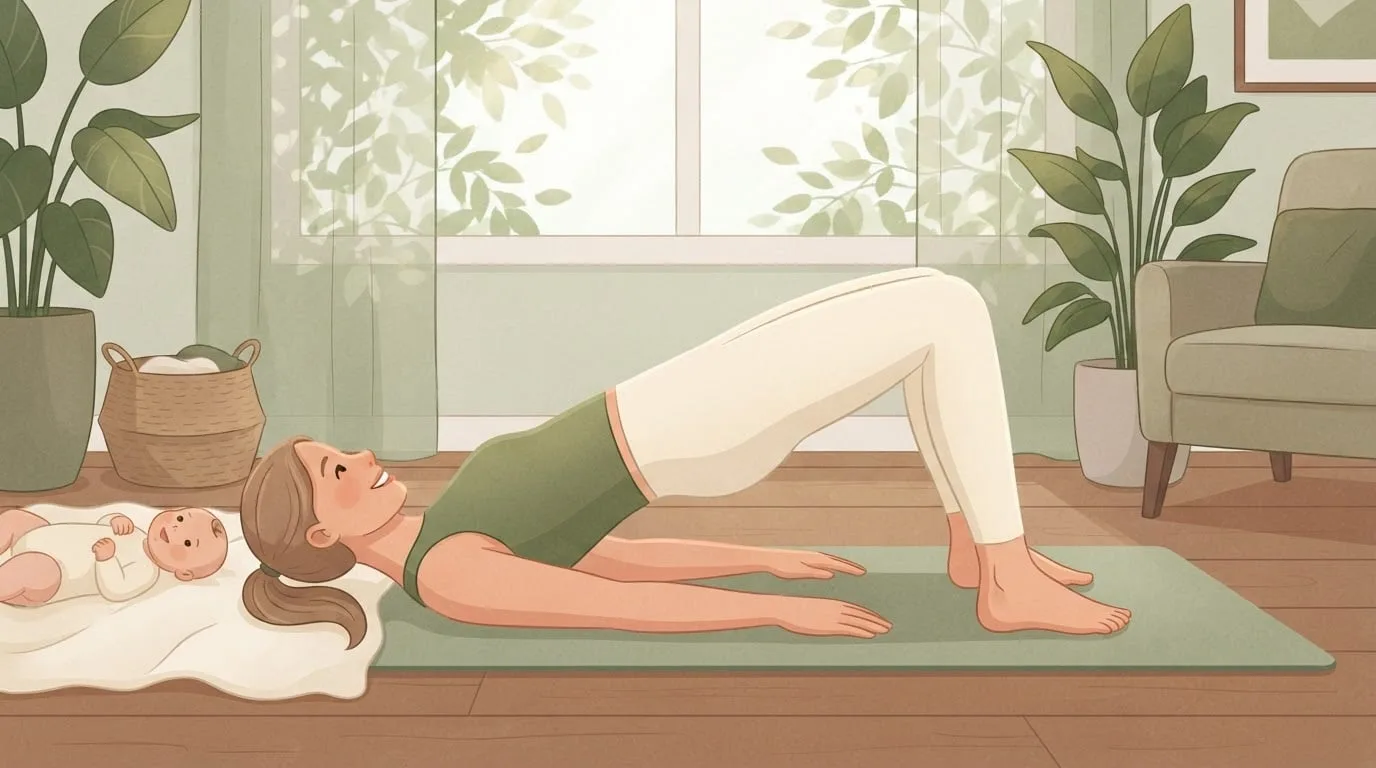
- Add two short strength sessions a week. Bodyweight squats, glute bridges, rows and push-ups with light dumbbells are enough. Even our 10 minute workouts fit into a nap, starting with the low-impact routine.
- Eat about 500 calories less than your current needs. If you're breastfeeding, count down from your nursing needs, which are higher than before pregnancy.
- Protect your sleep. Treat sleep as part of the plan. Short sleep was linked with keeping more weight at one year.
- Judge progress by the month. Weigh in once a week at the same time and look at the trend over 4 weeks. Fluid swings and feeding patterns make daily weights noisy.
If you want structure for the strength part, FitCraft's workouts run at home with dumbbells and bodyweight, plus yoga and mobility sessions, and an AI coach demonstrates each move on an interactive 3D model you can rotate. Streaks and calendar tracking help short sessions add up across the week. Our roundup of the best workout apps for moms compares the options, FitCraft included.
When to Talk to Your Clinician
Most postpartum weight change just needs patience. Some patterns are worth a call to your clinician, though:
- Weight that moves fast for no clear reason, up or down, especially with fatigue, a racing heart, feeling cold or shaky. Thyroid problems can appear after pregnancy, and a blood test can check.
- Low mood that lasts more than two weeks, anxiety, losing interest in things or trouble bonding with your baby. Postpartum depression is common and treatable. Exercise may help a little: a meta-analysis of 18 trials by Carter and colleagues (2019) found a small reduction in depressive symptoms, from low-quality evidence. It isn't a replacement for care.
- A history of disordered eating, or calorie counting that starts to take over your day.
- A falling milk supply after you cut calories or started exercising.
- No change at all after several months of a steady deficit and regular activity.
In the U.S., the National Maternal Mental Health Hotline is free, confidential and open 24 hours a day by call or text at 1-833-852-6262 (1-833-TLC-MAMA). If you ever have thoughts of harming yourself or your baby, call 911 or 988 right away.
The Bottom Line
Postpartum weight loss takes months, often more than a year, and that's normal. Once your clinician clears you, a modest deficit of about 500 calories, regular walking and two short strength sessions a week bring off about a pound a week, even while you breastfeed. Protect your sleep, skip the supplements and judge your progress by the month.
Stacy, 41, lost 22 pounds in four months with FitCraft and said it simply: "After my second kid, I needed something stupidly simple." Simple is the right goal. Your body did something enormous, and it gets the time it needs.
Frequently Asked Questions
How long does postpartum weight loss take?
Postpartum weight loss usually takes many months, and often longer than a year. In a U.S. study of 774 women, about 3 in 4 still weighed more than before pregnancy at one year. A steady loss of about 1 pound a week, started after your postpartum check, is a realistic pace.
Is it safe to lose weight while breastfeeding?
Yes, at a gradual pace once your milk supply is established. In a randomized trial, breastfeeding women who ate about 500 fewer calories a day and exercised four days a week lost about 0.5 kg (1 pound) a week, and their babies grew normally. Faster loss hasn't been tested as carefully, so stay near that pace.
Does breastfeeding help you lose weight?
A little, for some women. A systematic review of 45 studies found most reported little or no link between breastfeeding and weight change, though four of the five highest-quality studies found a modest benefit. Breastfeeding also raises appetite, which often cancels out the extra calories it uses.
Can high prolactin levels cause weight gain during breastfeeding?
Prolactin rises every time you nurse and is often blamed for stubborn weight, but there's little direct evidence in breastfeeding women that it causes weight gain. Hunger from making milk and short sleep are more likely explanations. If you gain weight you can't explain, ask your clinician to check for thyroid and other hormonal causes.
When can I start exercising after giving birth?
Gentle walking and pelvic floor exercises can often start within days of an uncomplicated birth. ACOG advises a gradual return when it's medically safe, which is a decision for your own clinician. Most women add strength work after their postpartum check, and running guidance suggests waiting at least 12 weeks.
What is the quickest way to lose weight after having a baby?
The quickest safe way is a modest calorie deficit plus regular exercise, which beat exercise alone in a Cochrane review of postpartum trials. Aim for about 1 pound a week while breastfeeding and no more than about 2 pounds a week if you're not. Crash diets risk your milk supply, your energy and your mood.
Do postpartum weight loss supplements or drinks work?
No postpartum weight loss supplement, tea or drink has good evidence behind it, and many haven't been tested for safety while breastfeeding. Check any supplement with your clinician or pharmacist before you take it, especially if you're nursing.
How can I get support for postpartum depression?
Tell your obstetric provider, midwife or family doctor, who can screen you and arrange treatment. In the U.S., the National Maternal Mental Health Hotline is free, confidential and open 24 hours a day by call or text at 1-833-852-6262 (1-833-TLC-MAMA). If you have thoughts of harming yourself or your baby, call 911 or 988 now.
Should I try to lose weight while pregnant?
Weight loss isn't usually recommended during pregnancy unless your obstetric provider advises it. Ask which weight gain range fits you instead: in a meta-analysis, women who gained more than the Institute of Medicine range kept about 3 kg more weight three years after birth.