
What to eat before a run depends mostly on how long the run is. For 30 easy minutes, what you ate yesterday is plenty. For a long run of 75 minutes or more, the meal beforehand does real work: it refills the carbohydrate your liver used overnight and gives your muscles fuel they'd otherwise run short of in the last half hour.
If you've ever hit a wall two thirds of the way through a long run, or spent the last few miles hunting for a bathroom, you know both ways this goes wrong. Eat too little and your legs go empty. Eat too much, too late or too greasy and your stomach takes over the run.
This guide is the long-run companion to our general guide on what to eat before a workout. It scales the carbohydrate amounts from the position stands to your body weight and turns them into real meals for 3 to 4 hours, 1 to 2 hours and 30 minutes out, then covers caffeine, fuel during the run and the night before.
What to Eat Before a Run vs Before a Long Run
The line sits at about an hour. Below it, the carbohydrate already stored in your muscles and liver covers an easy run, and what you eat beforehand is mostly about comfort. Above it, those stores start to run down, and the pre-run meal begins to change how the second half of the run feels.
Aird, Davies and Carson (2018) pooled 46 studies comparing exercise after a meal with exercise after an overnight fast. Eating beforehand improved performance in prolonged aerobic exercise, while shorter aerobic efforts showed no measurable difference. That's the research version of what most runners discover by accident: a fasted half-hour jog feels fine, and a fasted two-hour run often doesn't.
If your long runs are still growing toward an hour, as they do in the second half of our couch to 10K plan, the 1-hour and 30-minute options below are usually all you need. The bigger meals matter once runs pass 75 to 90 minutes.
Is it best to jog on an empty stomach?
For an easy jog under an hour, it makes little difference, so do whatever your stomach prefers. For a long run, eat. If you can't face food early in the morning, a banana or a glass of sports drink 30 minutes before is far better than nothing. Some trained endurance athletes do occasional fasted long runs on purpose to change how their muscles adapt, but the evidence that it improves race performance is unclear, and it's not a tool a newer runner needs.
How Many Carbs to Eat Before a Long Run, and When
The joint position stand of the American College of Sports Medicine, the Academy of Nutrition and Dietetics and Dietitians of Canada (Thomas, Erdman and Burke, 2016) recommends 1 to 4 grams of carbohydrate per kilogram of body weight, eaten 1 to 4 hours before exercise that lasts longer than an hour. The range is wide because the two numbers move together. The further out you eat, the more food your gut can clear before you start. A simple way to use it is about 1 gram per kilogram for every hour before the run, up to 4.
| Body weight | 1 hour before | 2 hours before | 3 to 4 hours before |
|---|---|---|---|
| 50 kg (110 lb) | 50 g | 100 g | 150 to 200 g |
| 60 kg (132 lb) | 60 g | 120 g | 180 to 240 g |
| 70 kg (154 lb) | 70 g | 140 g | 210 to 280 g |
| 80 kg (176 lb) | 80 g | 160 g | 240 to 320 g |
| 90 kg (198 lb) | 90 g | 180 g | 270 to 360 g |
The top of each range is a race-morning amount for a long event. For an easy training run of 75 to 90 minutes, many runners do well at the lower end, which is also where to start if your stomach is touchy. Move toward the higher amounts over several long runs before you try them on a race morning.
To turn grams into food, these rough values cover most pre-run staples:
- A medium plain bagel: about 50 to 55 g
- A medium banana: about 27 g
- A slice of white bread: about 13 to 15 g
- A tablespoon of jam: about 13 g; a tablespoon of honey: about 17 g
- A cup of cooked white rice: about 45 g; a cup of cooked pasta: about 43 g
- A cup of orange juice: about 26 g; a cup of milk: about 12 g
- Half a cup of dry rolled oats: about 27 g
- 500 ml of a 6 percent sports drink: 30 g
Pre-Run Meals 3 to 4 Hours Before a Long Run
This is the window for a proper meal, and on race mornings it's where most of your carbohydrate should come from. You have time to digest some protein and a little fat, so keep both modest rather than cutting them out. A few examples, sized for a 70 kg runner:
- Oats and a bagel: oatmeal made with a cup of dry oats and milk, topped with a sliced banana and 2 tablespoons of honey, plus a plain bagel with jam and a glass of orange juice. About 215 g of carbohydrate.
- Rice breakfast: two cups of cooked white rice with a couple of eggs, a banana, a slice of toast with honey and a glass of orange juice. About 175 g.
- Afternoon long run: lunch 3 to 4 hours before of 2 cups of cooked pasta with tomato sauce and a little chicken, a bread roll and a piece of fruit. About 145 g, then a snack an hour before the run.
Lighter runners scale down. At 55 kg, the first breakfast without the bagel lands around 150 g, close to the low end of the range for that weight.
The best evidence for this window comes from running specifically. Chryssanthopoulos and colleagues (2002) had 10 men run on a treadmill at 70 percent of their VO2max until they couldn't continue, three times over: after a high-carbohydrate meal 3 hours before with water during the run, after the same meal with a carbohydrate-electrolyte drink during it, and after a liquid placebo with water. The meal alone stretched their time to exhaustion from about 103 to 112 minutes. The meal plus the drink took it to 125 minutes.
What to Eat 1 to 2 Hours Before a Long Run
Less time means a smaller, simpler meal: mostly carbohydrate, with little fat, little fibre and not much protein. Aim for roughly 1 to 2 grams per kilogram. For a 70 kg runner, any of these works:
- A plain bagel with a thin layer of jam and a banana: about 90 g
- Two cups of low-fibre flake cereal with a cup of milk and a banana: about 85 g
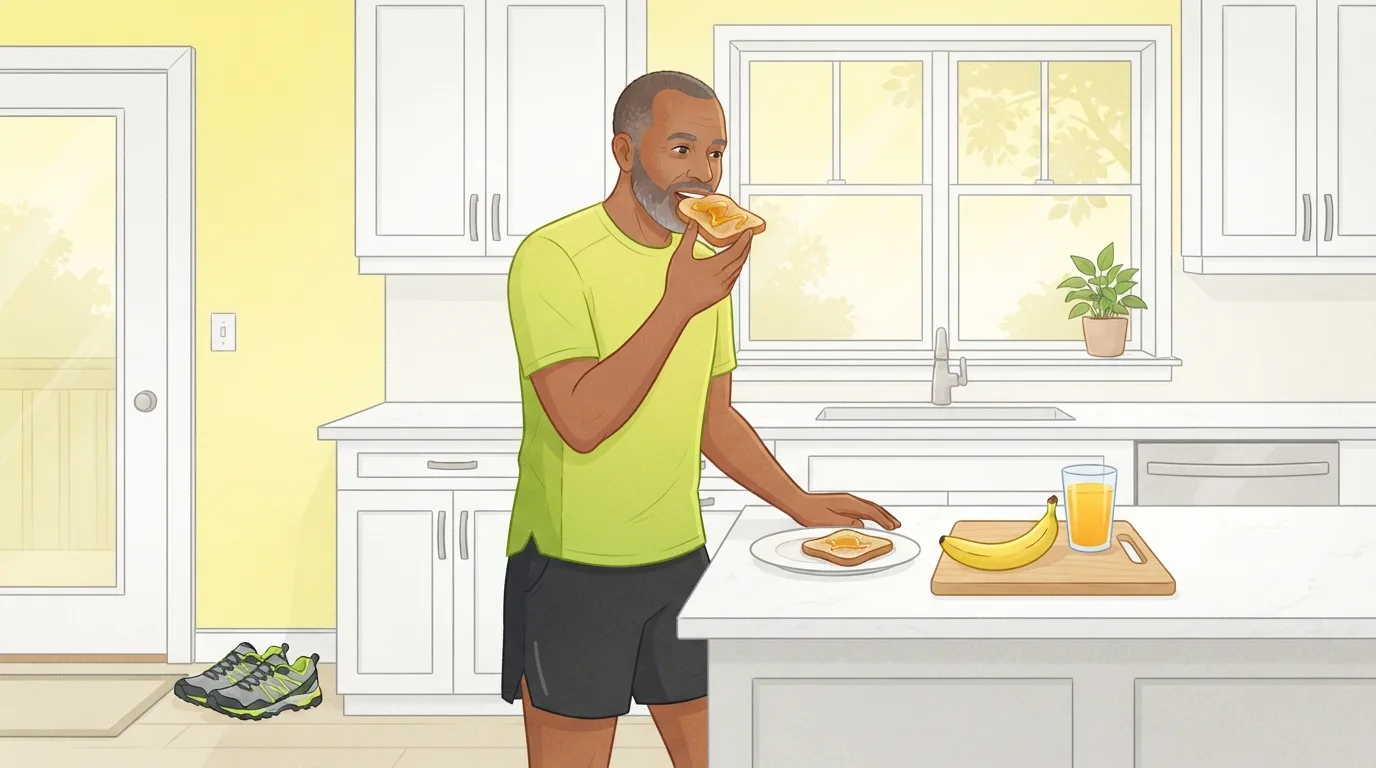
- Two slices of white toast with honey and a glass of orange juice: about 85 g
- A smoothie of banana, orange juice, a spoonful of honey and a little yogurt: about 75 g
If your stomach is unsettled early in the morning, a drink is easier than a plate. Liquids leave the stomach faster than solid food, so a smoothie or a glass of juice plus a banana often sits better than toast.
Pre-Run Snacks for the Last 30 Minutes
Thirty minutes out, you're topping up, not eating a meal. Pick 15 to 30 grams of fast carbohydrate that you know your stomach likes. These are the best things to eat before a run when time is short:
- A medium banana: about 27 g
- Two soft dates: about 35 g
- A handful of pretzels: about 23 g
- Two graham cracker sheets: about 22 g
- A pouch of applesauce: about 15 to 20 g
- 250 to 500 ml of sports drink: 15 to 30 g
- A slice of white toast with honey: about 30 g
This top-up matters most on early-morning long runs when you couldn't eat a real breakfast, and on afternoon runs when lunch was several hours ago.
Should you eat a banana before running?
Yes, a banana is one of the easiest pre-run foods there is. A medium one has about 27 grams of carbohydrate, almost no fat and about 3 grams of fibre, and ripe bananas tend to sit better than greener ones. Eat it 15 to 60 minutes before you start. On its own it's a good top-up for a long run, but it isn't enough to replace breakfast before a run of 90 minutes or more.
Gut-Friendly Foods and What Not to Eat Before Running
Running jostles your gut in a way cycling and lifting don't, so a meal that sits fine before a gym session can cause trouble halfway through a long run. Your own history is the best guide. When Pfeiffer and colleagues (2012) surveyed 221 endurance athletes after Ironman and half-Ironman triathlons, a marathon, a cycling race and professional stage racing, athletes with a history of gut problems reported more symptoms on race day in every group. If you're prone to it, be stricter with the swaps below.
| Instead of | Try |
|---|---|
| Bran cereal, seeded wholegrain bread, beans, a big raw salad | Low-fibre cereal, white toast or bagels, white rice, peeled potatoes |
| A fried breakfast, pastries, cheese, thick nut butter | Jam or honey on toast, or just a thin layer of nut butter |
| A big plate of eggs and bacon | One egg or a small yogurt, if any protein at all |
| A new bar, gel or drink you've never tried | Foods you've eaten before at least three long runs |
| "Sugar-free" snacks with sugar alcohols | Ordinary sugar from a sports drink, white bread or rice |
| Two big mugs of coffee just before you leave | A smaller cup earlier, with time for the bathroom |
If you already get cramping or urgency during runs, two of our posts go deeper on the causes: why your stomach hurts when you run separates side stitches from gut cramps, and how to prevent runner's trots covers the low-FODMAP approach and when to see a doctor.
Find out what's really holding you back
FitCraft, our mobile fitness app, pairs you with an AI coach who builds you a personalized plan around your goals, schedule, and fitness level. Every FitCraft program is designed by Domenic Angelino, MPH (Brown University) and NSCA-CSCS, with research published in the Journal of Strength and Conditioning Research and Medicine & Science in Sports & Exercise.
Take the Free Assessment Free • 2 minutes • No credit cardCaffeine Before a Long Run
Caffeine is the one pre-run extra with strong evidence behind it, and endurance running is where it works most reliably. The International Society of Sports Nutrition's position stand (Guest and colleagues, 2021) found aerobic endurance shows the most consistent benefit, at doses of 3 to 6 mg per kilogram of body weight, most often taken about 60 minutes before exercise. Doses as low as 2 mg per kilogram may help, and very high doses around 9 mg per kilogram bring more side effects without being needed for the benefit.
For a 70 kg runner, 3 mg per kilogram is about 210 mg, a little more than two 8-ounce cups of brewed coffee. Three things are specific to long runs:
- Coffee gets the gut moving for a lot of people. That's welcome an hour before you leave and unwelcome at mile 5, so drink it early enough to use the bathroom before you start.
- Caffeine in gels and chews counts toward the total. Two caffeinated gels on top of morning coffee can push you past what you'd planned.
- Test it on a training run first. Some people get jittery or nauseous, and sensitivity varies with genetics and how much caffeine you normally drink.
Fuelling During Runs Longer Than 75 to 90 Minutes
Breakfast covers you for the first hour or so. Beyond that, carbohydrate during the run keeps the pace from fading. Burke and colleagues (2011), in a review in the Journal of Sports Sciences, scale intake to the length of the effort: small amounts, even a mouth rinse, help sustained efforts of about an hour; 30 to 60 grams an hour suits longer sessions; and efforts beyond 2.5 hours may benefit from up to 90 grams an hour from blends of different sugars.
The benefit grows with the length of the run. Stellingwerff and Cox (2014) reviewed 61 placebo-controlled studies and found carbohydrate improved performance in 82 percent of them, with bigger gains the longer the exercise lasted. Around an hour, the effect seems to come from sensors in the mouth signalling the brain. Past two hours, the amount your gut can absorb and your muscles can burn takes over.
Most runners take in less than that. In Pfeiffer's survey, marathon runners averaged about 35 grams an hour, less than the triathletes and cyclists, and higher intakes went with more nausea but also with faster Ironman finishing times. Your gut can be trained to handle more. In Costa and colleagues (2017), 25 endurance runners ran for 2 hours while taking 30 grams of carbohydrate every 20 minutes, then repeated that kind of gut challenge for two weeks with carbohydrate gels, carbohydrate food or a placebo. Gut symptoms fell by 60 and 63 percent in the two carbohydrate groups, more than with placebo, and distance in a 1-hour run improved by 5.2 and 4.3 percent while the placebo group's fell by 2.1 percent.
In practice, for a 90-minute to 2-hour long run:
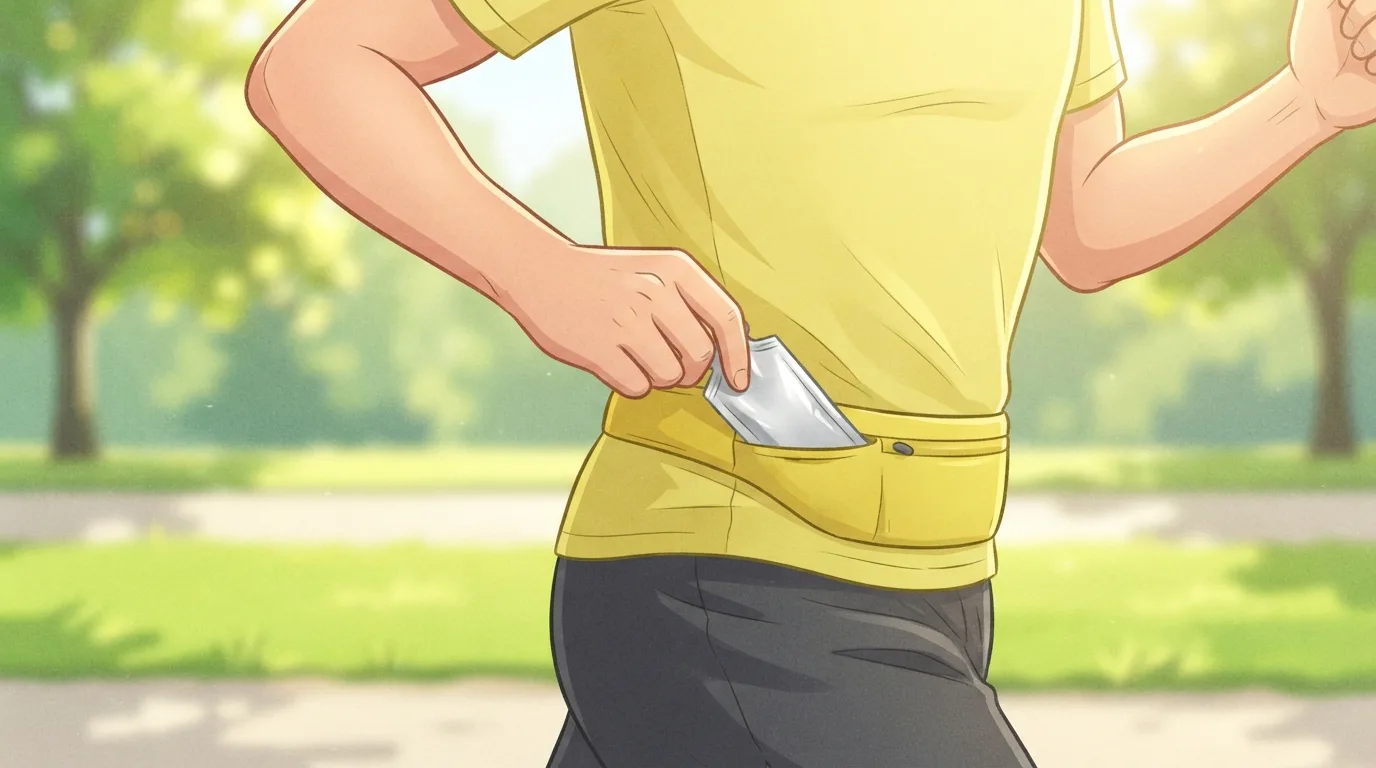
- Start eating 30 to 45 minutes in, before you feel you need it, and take small amounts every 20 to 30 minutes to reach 30 to 60 grams across each hour.
- Pick a format you can carry: gels (most carry 20 to 25 grams), sports drink (30 grams per 500 ml at 6 percent), chews, dates, raisins, pretzels, or a small salted boiled potato.
- Practise on training runs and build up the amount over several weeks, the way the runners in the gut-training study did.
- Drink to thirst along the way rather than to a schedule, and take gels with water.
What to Eat the Night Before a Long Run
Dinner the night before a long run should be an ordinary, carbohydrate-rich meal you've eaten before: pasta with a tomato sauce, rice with chicken or tofu, potatoes with fish, plus some vegetables. It doesn't need to be a huge plate. A bigger dinner can't make up for skipping breakfast, because your liver uses much of its stored carbohydrate overnight.
Carbohydrate loading is a different thing. The 2016 position stand reserves it for events longer than 90 minutes, at 10 to 12 grams per kilogram a day for the 36 to 48 hours before, which is far more than a normal dinner. It's a tool for a half marathon or marathon race, not for a weekly training run.
Hydration starts the night before too. The American College of Sports Medicine's fluid position stand (Sawka and colleagues, 2007) advises starting to drink several hours before exercise, so your kidneys have time to pass what you don't need. In practice, drink normally the evening before, have a glass or two of water with breakfast, and finish your last big drink about an hour before you head out.
A Sample Long-Run Morning
Here's how it fits together for a 70 kg runner heading out at 8:00 a.m. for 90 minutes:
- Night before, 7:00 p.m.: a normal dinner of rice, chicken and vegetables, and a glass of water.
- 6:00 a.m.: a glass of water, then a plain bagel with jam and a banana (about 90 g of carbohydrate) and a cup of coffee.
- 7:30 a.m.: two dates or half a bottle of sports drink (about 15 to 35 g), and a bathroom stop.
- 8:40 a.m.: the first gel or a few dates, with water.
- 9:10 a.m.: a second gel or more sports drink.
- 9:30 a.m.: finish, then a real meal with carbohydrate and protein within a couple of hours.
That's roughly 105 to 125 grams of carbohydrate before the start, about 1.5 to 1.8 grams per kilogram, and around 45 to 50 grams during the run.
Getting the Long Run Right Week After Week
Once you've found a breakfast, a snack and a mid-run fuel that work, write them down and stop experimenting until race day. The right food makes a long run feel very different, and it's one less thing to decide on a Saturday morning.
The harder part is usually turning up for the long run every week, especially in the middle of a training block. Our comparison of the best fitness apps for staying consistent looks at which ones actually help with that. FitCraft is one of them, with streaks, leaderboards and a 3D AI coach who demonstrates each exercise and calls you by name in the strength and mobility work that keeps runners healthy.
Frequently Asked Questions
How long before a run should I eat pasta?
Give a full plate of pasta 3 to 4 hours, or eat it as dinner the evening before a morning run. A small bowl of plain pasta with a simple tomato sauce can sit well about 2 hours out for some runners, but creamy, cheesy or oily sauces need longer. Test the timing on a training run before you rely on it for a race.
What should I eat before a long run in the morning?
Eat a mostly carbohydrate breakfast 1 to 2 hours before you start, around 1 to 2 grams per kilogram of body weight: a bagel with jam and a banana, or a bowl of low-fibre cereal with milk and fruit. If you can't eat that early, have a banana, a couple of dates or a glass of sports drink 30 minutes before, then take carbohydrate during the run.
How many calories should I eat before a long run?
Count carbohydrate grams rather than calories. The 2016 sports-nutrition position stand suggests 1 to 4 grams of carbohydrate per kilogram of body weight in the 1 to 4 hours before exercise lasting over an hour. For a 70 kg runner that's about 70 grams an hour out, roughly 280 calories from carbohydrate, or around 200 grams over a breakfast 3 hours out, roughly 800.
Is peanut butter good before a long run?
A thin layer is fine, especially 2 hours or more before the run. Two tablespoons of peanut butter carry about 16 grams of fat and only about 7 grams of carbohydrate, and fat slows how fast your stomach empties. Closer to the start, swap it for jam or honey.
Do I need a gel on a 10-mile run?
It depends on how long the 10 miles take you. Under about 75 minutes, a good pre-run meal is usually enough. If the run takes 90 minutes or more, which is anyone slower than 9 minutes per mile, taking 30 to 60 grams of carbohydrate an hour from a gel, sports drink or dried fruit helps you finish stronger.
What should I eat before or after running?
Before a long run, eat mostly carbohydrate, scaled to how long you have: about 1 gram per kilogram of body weight for every hour before you start, up to 4. After it, eat a normal meal with carbohydrate and a good serving of protein within a couple of hours, such as rice with chicken, eggs on toast or yogurt with fruit and granola.