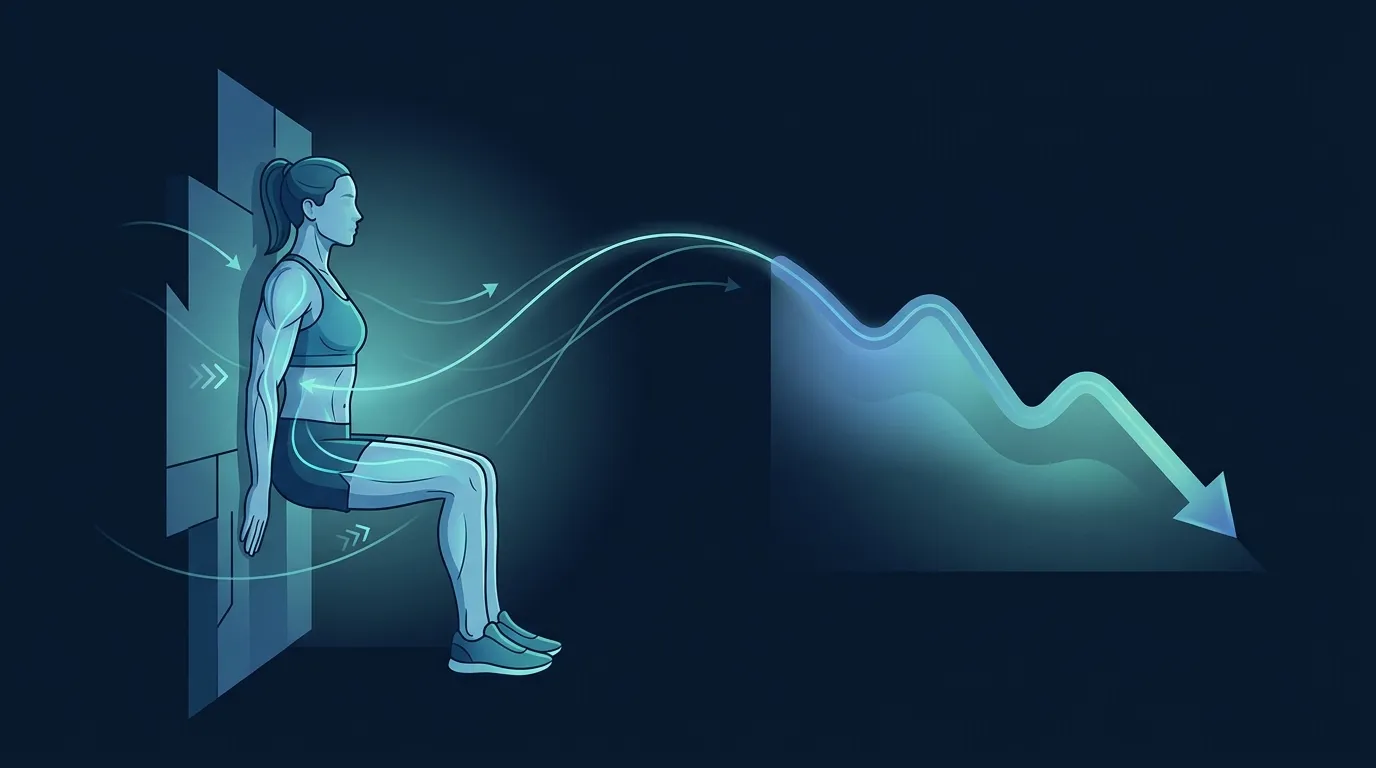
If you've ever stood at the top of a doctor's appointment and gotten the "your blood pressure is a bit high" speech, you've probably also gotten the standard advice. Cut salt. Walk more. Maybe try yoga. The newest network meta-analysis on this question, published in the British Journal of Sports Medicine, says one of those answers is right and most of them are underselling the bigger lever. Holding a hard wall sit, three times a week, beat cardio, resistance training, and high-intensity intervals on systolic blood pressure reduction. By a wide margin.
That sounds like a fitness clickbait headline. It's actually the conclusion of the largest pairwise and network meta-analysis ever run on the topic. Below is what the research shows, what the protocols actually look like, where the limits are, and why isometric exercise quietly turned into one of the most evidence-backed BP interventions a healthy adult can do at home.
For context, this is part of a broader pattern in the longevity research, where small-equipment, high-effort protocols keep showing outsized effects. We covered the same idea in our piece on grip strength and mortality, and the principle that effort matters more than load shows up again in our light weights build muscle review. Isometric exercise sits squarely inside that pattern.
The Research: What Studies Show
Edwards 2023: The Network Meta-Analysis That Changed the Conversation
The headline study came from Edwards, Deenmamode, Griffiths, and colleagues (2023) in the British Journal of Sports Medicine. They pooled 270 randomized controlled trials with 15,827 total participants, looking at five exercise modalities: aerobic, dynamic resistance, combined training, high-intensity interval training, and isometric. The endpoint was resting blood pressure after at least two weeks of intervention.
The results sit in a table worth reading slowly:
- Isometric: -8.24 mmHg systolic / -4.00 mmHg diastolic
- Combined training: -6.04 / -2.54
- Dynamic resistance: -4.55 / -3.04
- Aerobic: -4.49 / -2.53
- HIIT: -4.08 / -2.50
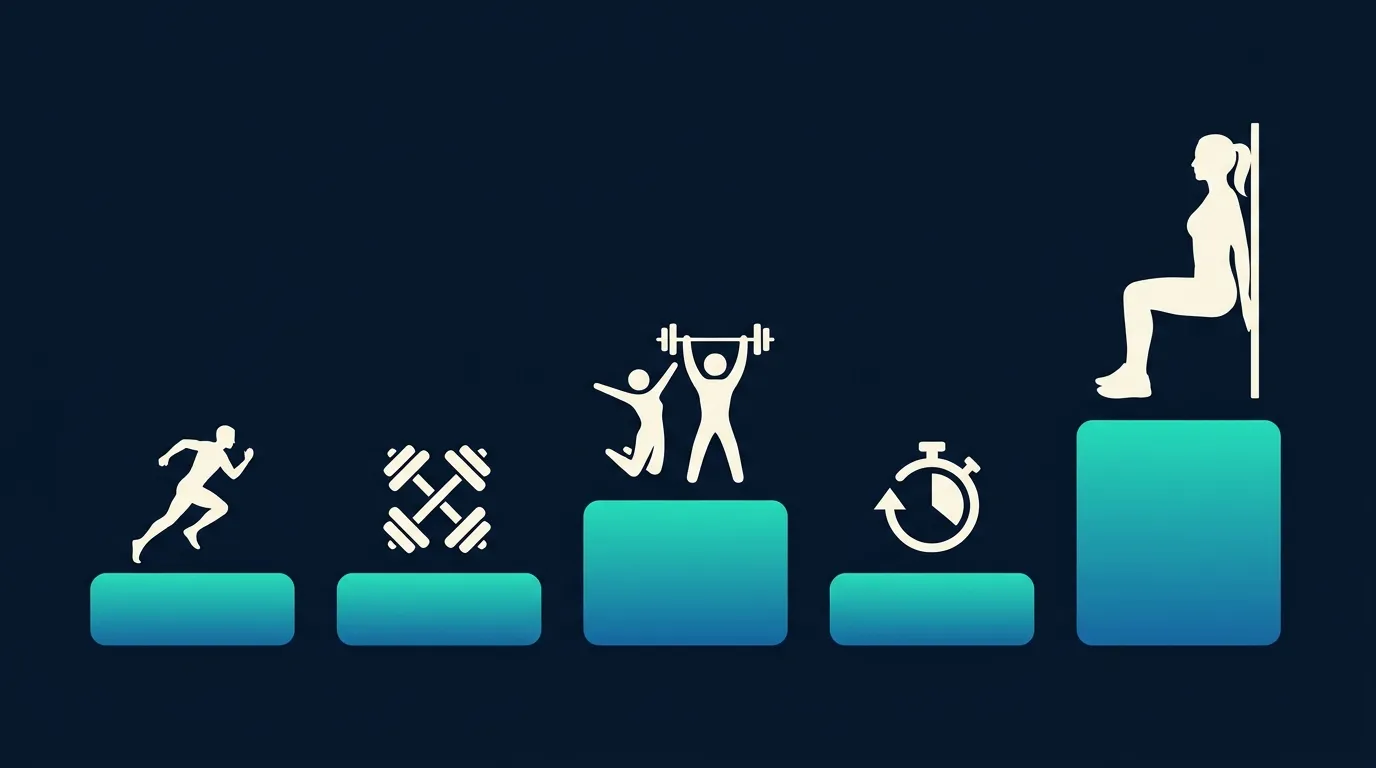
Isometric came in roughly twice as effective as everything else for systolic BP. The network meta-analysis ranked exercise sub-modes by SUCRA score (a probabilistic ranking of which intervention is most likely to be best). Isometric wall squats topped the systolic list at 90.4%. Running topped the diastolic list at 91.3%. The takeaway from the authors was direct enough that it made the news cycle in the UK and US: the current exercise guidelines for blood pressure (mostly aerobic-focused) probably need an update.
Inder 2016: The Earlier Meta That Pointed the Way
Before Edwards 2023 reframed the broader question, Inder and colleagues (2016) in Hypertension Research pooled 11 randomized trials with 302 participants. All trials were at least two weeks long, all were in healthy adults aged 18 and up. The pooled systolic drop was 5.20 mmHg (95% CI -6.08 to -4.33, p < 0.00001). The diastolic drop was 3.91 mmHg.
Most of the trials Inder pooled used isometric handgrip exercise, the protocol you see in cardiology clinics: a hand dynamometer set to 30% of maximum voluntary contraction, held for 2 minutes, four bouts per session, alternating hands, three sessions per week. Eight weeks was the typical duration. The fact that this simple protocol produced a 5 mmHg systolic drop in pooled data was, in 2016, a quiet finding. By 2023, it had grown into the headline.
Wiles 2017: Wall Squats at Home, Faster Than Expected
Wiles, Goldring, and Coleman (2017) in the European Journal of Applied Physiology tested home-based wall squats specifically. Participants did an incremental test to find the knee angle that produced a heart rate of 95% of peak during the last 30 seconds of a 2-minute hold. They then did 4 of those 2-minute holds, three times a week, for 4 weeks at home.
After just 4 weeks, clinic-measured systolic blood pressure dropped about 12.4 mmHg. Diastolic dropped 6.2 mmHg. The effect was larger than most aerobic protocols produce in 12 weeks, in a third the time, and the equipment cost zero. Participants did the work in their hallways and bedrooms.
Edwards 2024: Comparable to Medication
The most recent narrative review, Edwards, Coleman, Ritti-Dias, and colleagues (2024) in Sports Medicine, pulled the picture together. Pooled across 18 trials and 672 participants, isometric training produced -8.50 mmHg systolic and -4.07 mmHg diastolic. The authors made an explicit comparison to first-line antihypertensive medications: many of those drop systolic BP by 8 to 12 mmHg as monotherapy. Isometric exercise, in carefully run trials, lands in the same neighborhood.
That doesn't mean isometric exercise replaces medication for someone with stage 2 hypertension. It does mean the effect size is in the same league. For someone in the prehypertensive zone (120-139 systolic), or someone whose physician is monitoring before starting drug therapy, the math gets interesting fast.
Carlson 2014: The Original Mayo Clinic Meta
Worth flagging the earliest comprehensive meta on the topic, because it set the methodological foundation. Carlson and colleagues (2014) in Mayo Clinic Proceedings pooled 9 trials with 223 participants and reported systolic reductions of 6.77 mmHg and diastolic of 3.96 mmHg from isometric resistance training. Most of those trials used handgrip protocols. The signal was already clear in 2014. The decade since has only made it stronger.
Why This Matters for Your Health
About 47% of US adults have elevated or high blood pressure. Most of them either don't know it, don't act on it, or take medication and stop walking enough. The standard non-drug recommendation has been aerobic exercise for decades. That recommendation isn't wrong. It's just not the strongest lever.
The clinical math matters here. A 5 mmHg drop in systolic blood pressure is associated with roughly a 10% reduction in cardiovascular event risk in epidemiological data. An 8 mmHg drop, sustained over years, is associated with substantially larger reductions in stroke and heart attack incidence. So the gap between "aerobic gives you about 4.5 mmHg" and "isometric gives you about 8 mmHg" isn't trivial. Doubled effect on a metric that drives the most common cause of death in the developed world is meaningful.
The other reason this matters: isometric exercise is unusually accessible. You don't need a gym, a treadmill, equipment, or a class schedule. A wall, two minutes, and the willingness to be uncomfortable for that two minutes is the entire prescription. People who hate gyms or can't fit cardio into their week can still do this. People recovering from joint injuries who can't run can still do this. Older adults working on fitness in their 60s and beyond can usually do at least a partial-range wall sit, even when impact-loaded cardio is off the table.
How Isometric Training Works in Practice
The protocols across the literature are remarkably consistent. Pick whichever fits your life.
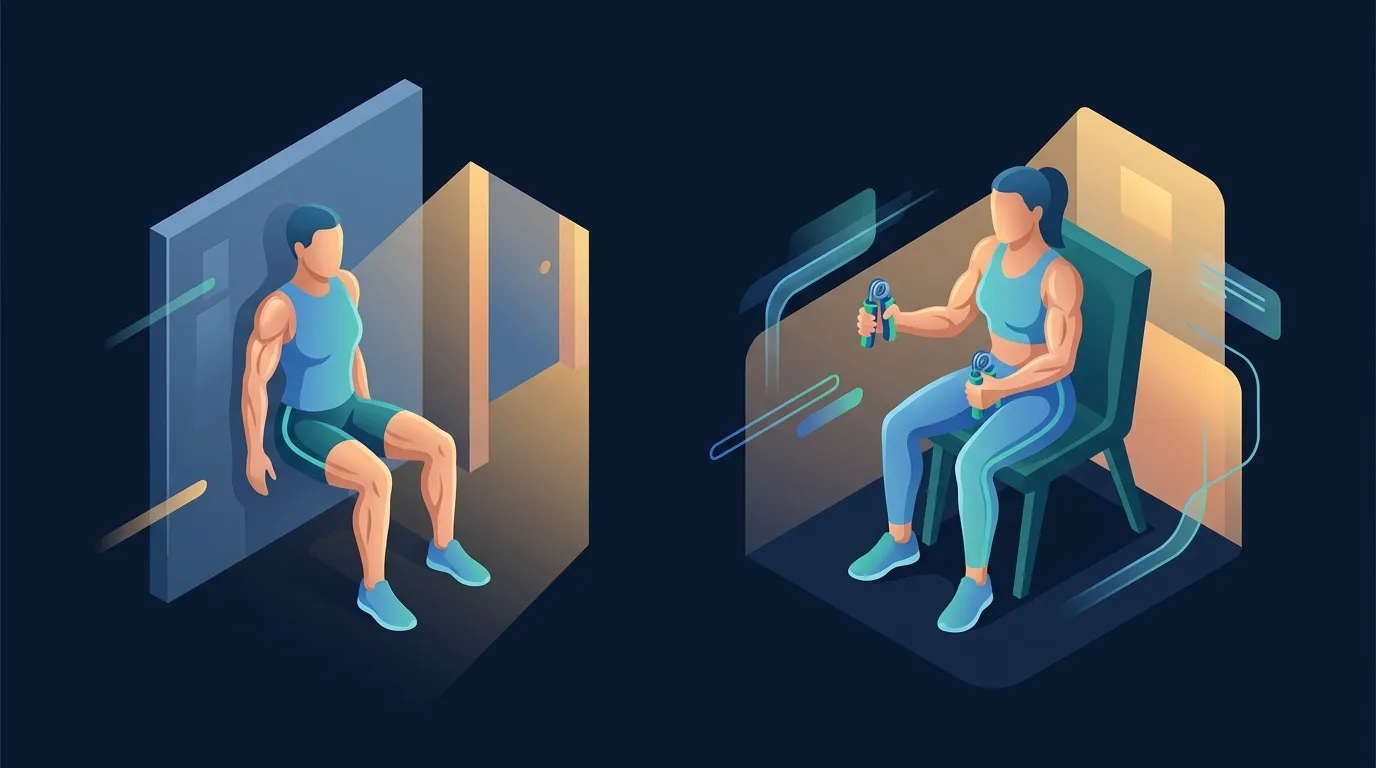
The Wall Squat Protocol
This is the version with the largest BP effect in the 2023 network meta-analysis. The setup:
- Position: back flat against a wall, feet about a foot-and-a-half out from the wall, knees bent. The exact knee angle should be the one that makes 2 minutes genuinely hard. For most adults that's somewhere between 90° and 135° of knee flexion. Your thighs should not be parallel to the floor unless you're already conditioned.
- Sets: 4 holds of 2 minutes each.
- Rest: 1 to 2 minutes between holds.
- Frequency: 3 sessions per week, with at least one day off between sessions.
- Duration: minimum 4 weeks for measurable effects, 8-12 weeks for the literature-typical drops.
If your first 2-minute hold isn't quite hard, lower your hips a bit on the next set. The point is sustained tension. A wall sit you can hold for 5 minutes is too easy. You want the last 30 seconds to be a fight. (See our exercise page for wall-sit form cues if you want a step-by-step.)
The Handgrip Protocol
Older, more clinically tested. You need a handgrip dynamometer (digital or spring-based, widely available online for the price of a paperback book). The setup:
- Step 1: measure your maximum voluntary contraction (MVC) on each hand. Squeeze as hard as you can for 3 seconds. Repeat twice with rest. Take the highest number as your MVC.
- Step 2: calculate 30% of your MVC. That's your target hold force.
- Sets: 4 bouts of 2 minutes, alternating hands.
- Rest: 1 minute between bouts.
- Frequency: 3 times per week.
Handgrip work is the most chair-friendly version of this protocol. People with mobility limitations, knee or hip pain, or balance issues often pick this one for those reasons.
If you want these protocols folded into a broader weekly routine instead of tracked on your own, our personalized training program page walks through how a coached plan schedules holds like these alongside the rest of your training.
The Plank Variant
A 2025 study in Sports Medicine documented acute blood pressure responses to plank holds and wall sits and confirmed both as viable isometric stimuli. Front plank or forearm plank holds work the same physiology, though the limited published data is on planks specifically being shorter-duration than the 4 x 2-minute wall sit prescription. If you're starting from scratch, planks are also a reasonable option, building toward 2-minute holds over time.
What the Mechanism Looks Like
The blood pressure drop from isometric training does not come from getting bigger or stronger. It comes from improvements in vascular function and autonomic balance. During an isometric hold, blood flow to the working muscle is partially occluded by the sustained tension. When the hold ends and blood rushes back in, the endothelium (the inner lining of blood vessels) is stimulated to release nitric oxide and other vasodilators. Repeated over weeks, this trains the vascular system to be more responsive and lowers resting tone.
The cardiovascular adaptations include increased baroreflex sensitivity, reduced sympathetic nerve activity, and improved flow-mediated dilation. These are the same mechanisms targeted by ACE inhibitors and ARBs, just through a different pathway.
Enjoying the article?
Start a new fitness routine today, written by me and coached by the AI I designed.
Take the Free Assessment Free • 2 minutes • No credit cardCommon Misconceptions
Misconception: "Isometric exercise raises blood pressure, so it's bad for hypertension"
Half right. During the hold itself, blood pressure rises. That's true. The acute spike during a 2-minute wall squat can be significant. Across the controlled trials in the meta-analyses, no adverse cardiovascular events were reported in supervised settings, but this caveat is real: the long-term resting BP drop comes from training adaptations over weeks, not from the acute response.
For most healthy adults with stage 1 or 2 hypertension cleared by their physician, the acute spike is well-tolerated. For someone with uncontrolled stage 3 hypertension, recent cardiac events, or aortic disease, the acute response is a legitimate concern. This is the case where talking to your doctor first is not a formality. It's important.
Misconception: "It only works if you're already fit"
The opposite, actually. The trials that showed the largest effect sizes were in untrained or sedentary adults with elevated BP. People with the most room to drop tended to drop the most. Trained athletes already have low resting BP and lower baseline endothelial dysfunction, so the effect ceiling is lower. If your blood pressure has been creeping up, you're the population the studies were powered to help.
Misconception: "I'll just walk more, that's the same thing"
Walking is excellent. We've covered walking after meals and interval walking elsewhere. But on the specific outcome of resting blood pressure, the data is unambiguous. Aerobic exercise, including walking, drops systolic BP by about 4 to 5 mmHg in pooled trials. Isometric exercise drops it by about 8 mmHg. Walking has other benefits (mood, glucose, longevity-from-steps) that isometric work doesn't replace. If you can do both, do both. If you can only do one, the BP-specific evidence favors isometric.
How to Lower Blood Pressure Naturally, Ranked by Effect Size
Isometric work is the biggest single exercise lever in the pooled data, but it is not the only one. Most articles on how to lower blood pressure naturally hand you a flat list of ten habits as if they all carried the same weight. They do not. Below is the same question answered with effect sizes, using pooled averages from randomized trials. Treat every number as a group average with a wide individual spread around it.
| Intervention | Average systolic change | Evidence |
|---|---|---|
| Isometric training (wall squats, handgrip) | -8.24 mmHg | Edwards 2023, 270 RCTs |
| Combined aerobic and resistance training | -6.04 mmHg | Edwards 2023 |
| Dynamic resistance training | -4.55 mmHg | Edwards 2023 |
| Aerobic training | -4.49 mmHg, roughly double that if you start hypertensive | Edwards 2023; Cornelissen 2013 |
| Weight loss | -4.44 mmHg per 5.1 kg lost, about -1 mmHg per kg | Neter 2003, 25 RCTs |
| High-intensity interval training | -4.08 mmHg | Edwards 2023 |
| Cutting dietary sodium | Scales with the size of the cut | Huang 2020 |
1. Isometric training: about 8 mmHg
The protocols are described in full above. Four holds of two minutes, three days a week, wall squat or handgrip, for at least four weeks. It ranks first because it produced roughly double the systolic effect of every other modality in the Edwards 2023 network meta-analysis, and because the equipment requirement is a wall. If you are only going to add one thing, the pooled data says add this one.
2. Combined aerobic and resistance training: about 6 mmHg
Doing both cardio and lifting in the same week landed second at -6.04 mmHg systolic. That is a useful finding for anyone who already trains, because it means you do not have to choose. A week that holds two or three lifting sessions and two or three easy cardio sessions is already a blood pressure intervention. Adding a few wall squat holds to the end of two of those sessions costs about ten minutes.
3. Resistance or aerobic training alone: about 4.5 mmHg
Either one on its own lands near 4.5 mmHg systolic in the pooled network. The aerobic number deserves a footnote, though, because it depends heavily on where you start. Cornelissen and Smart (2013) in the Journal of the American Heart Association pooled 93 trials and found endurance training dropped resting blood pressure by about 3.5 mmHg systolic across all participants, but by roughly 8 mmHg in the subgroup who began the trial with hypertension. People with the most room to move, move the most. If your reading is already 118 over 74, do not expect an 8 mmHg drop from anything on this list.
4. Weight loss: about 1 mmHg per kilogram
This is the lever most often left off exercise-focused lists, and the arithmetic is simple enough to plan around. Neter and colleagues (2003) in Hypertension pooled 25 randomized trials with 4,874 participants. An average weight reduction of 5.1 kg produced a systolic drop of 4.44 mmHg and a diastolic drop of 3.57 mmHg, which works out to about 1.05 mmHg systolic per kilogram lost. Ten kilograms is therefore worth roughly as much as the isometric protocol, and the two stack. The catch is that weight loss takes months and a wall squat takes eight minutes, which is why the training levers sit higher on a list ranked by what you can start today.
5. Sodium: real, and proportional to how much you actually cut
One sentence, because the evidence is consistent and unglamorous: Huang and colleagues (2020) in The BMJ pooled 133 randomized trials and found the systolic fall tracked the size of the sodium reduction, with larger effects in older participants and in those who started with higher blood pressure.
What to expect when you stack them
Effects do not add cleanly. Someone who loses 8 kg, starts lifting, and adds wall squats will not drop 20 mmHg, because each intervention is partly working through the same vascular and autonomic pathways and because the drop is bounded by how high you started. The honest expectation for a sedentary adult with stage 1 hypertension who changes several things at once is high single digits to low double digits over three to six months, measured at home on a validated cuff, in the morning, after five minutes sitting still.
One boundary worth stating plainly. Nothing in this ranking is a reason to change, reduce, or stop a prescription, and no article can make that call. If your training or your weight changes your readings, that is information for the physician who wrote the prescription, and it is a good conversation to have with numbers in hand.
What the Research Suggests Going Forward
The picture from a decade of converging evidence is clear enough to act on, but a few caveats are honest.
First, most of the BP trials were 8 to 12 weeks. Long-term adherence data is thinner. The Cohen et al. (2023) follow-up trial showed that one session per week was enough to maintain reductions achieved with three sessions per week, which is encouraging for sustainability. But the literature on what happens at 1, 3, and 5 years is still maturing.
Second, individual response varies. Some people in the trials saw larger drops than the pooled average, some smaller. If you try this for 8 weeks and your home BP cuff doesn't budge, that's real data. Layer on aerobic work, look at your sodium intake, and check with your physician.
Third, the studies were done in healthy adults and adults with stage 1 or 2 hypertension. The evidence in pregnancy, post-stroke recovery, severe heart failure, or pediatric populations is much thinner. The protocols described above are not meant for those groups without specific medical guidance.
And fourth, the new exercise guidelines from major bodies (ACSM, AHA, ESC) have begun referencing isometric exercise more prominently in recent updates. The 2023 BJSM analysis specifically called for guidelines to be revised. If you read updated documents in the next year or two, expect to see this category get the attention the data has been pointing toward.
References
- Edwards JJ, Deenmamode AHP, Griffiths M, et al. "Exercise training and resting blood pressure: a large-scale pairwise and network meta-analysis of randomised controlled trials." Br J Sports Med. 2023;57(20):1317-1326. doi:10.1136/bjsports-2022-106503
- Inder JD, Carlson DJ, Dieberg G, McFarlane JR, Hess NC, Smart NA. "Isometric exercise training for blood pressure management: a systematic review and meta-analysis to optimize benefit." Hypertens Res. 2016;39(2):88-94. doi:10.1038/hr.2015.111
- Edwards JJ, Coleman DA, Ritti-Dias RM, et al. "Isometric Exercise Training and Arterial Hypertension: An Updated Review." Sports Med. 2024;54(6):1459-1475. doi:10.1007/s40279-024-02036-x
- Wiles JD, Goldring N, Coleman D. "Home-based isometric exercise training induced reductions resting blood pressure." Eur J Appl Physiol. 2017;117(1):83-93. doi:10.1007/s00421-016-3501-0
- Carlson DJ, Dieberg G, Hess NC, Millar PJ, Smart NA. "Isometric exercise training for blood pressure management: a systematic review and meta-analysis." Mayo Clin Proc. 2014;89(3):327-334. doi:10.1016/j.mayocp.2013.10.030
- Cornelissen VA, Smart NA. "Exercise training for blood pressure: a systematic review and meta-analysis." J Am Heart Assoc. 2013;2(1):e004473. doi:10.1161/JAHA.112.004473
- Neter JE, Stam BE, Kok FJ, Grobbee DE, Geleijnse JM. "Influence of weight reduction on blood pressure: a meta-analysis of randomized controlled trials." Hypertension. 2003;42(5):878-884. doi:10.1161/01.HYP.0000094221.86888.AE
- Huang L, Trieu K, Yoshimura S, et al. "Effect of dose and duration of reduction in dietary sodium on blood pressure levels: systematic review and meta-analysis of randomised trials." BMJ. 2020;368:m315. doi:10.1136/bmj.m315
Frequently Asked Questions
Does isometric exercise lower blood pressure?
Yes. The largest network meta-analysis on the question (Edwards et al., 2023, British Journal of Sports Medicine) pooled 270 randomized controlled trials with 15,827 participants and found isometric training lowered resting systolic blood pressure by 8.24 mmHg and diastolic by 4.00 mmHg. That was the biggest effect of any exercise modality tested, larger than cardio, dynamic resistance, combined training, or HIIT. Wall squats ranked first for systolic reductions, with a SUCRA score of 90.4%.
How long do you need to hold a wall sit to lower blood pressure?
Most of the wall squat literature uses 4 sets of 2-minute holds with 1 to 2 minutes of rest between sets, performed three times per week. The protocol developed by Wiles and colleagues sets the knee angle to whatever produces a heart rate of about 95% of peak during the last 30 seconds of a test bout. Practically, that's a deep enough squat that holding it for the full 2 minutes is genuinely hard. Eight to twelve weeks at this dose is the typical study window.
Is isometric handgrip exercise as effective as wall sits for blood pressure?
Both work. Handgrip exercise has more of the older trial data behind it. The standard protocol is 4 sets of 2 minutes at 30% of maximum voluntary grip force, alternating hands, three times per week. Inder et al. (2016) pooled 11 trials and reported systolic reductions averaging 5.20 mmHg. Wall squats may produce slightly larger systolic effects in newer trials, but handgrip is more accessible (chair-friendly, no floor space) and has the longest evidence base.
Can people with hypertension safely do isometric exercise?
Most healthy adults with stage 1 or 2 hypertension can, but the question deserves a real conversation with your doctor first. Isometric holds briefly raise blood pressure during the contraction itself, sometimes substantially. The long-term resting BP reduction comes from training adaptations over weeks. People with uncontrolled hypertension, recent cardiac events, or aortic disease should not start isometric training without medical clearance. If your doctor approves it, start at a lower intensity (a shallower wall squat angle or lower handgrip force) and build up.
How can I lower blood pressure naturally without going to the gym?
Rank the options by effect size rather than by how often you see them repeated. In the Edwards et al. (2023) network meta-analysis, isometric training produced the largest systolic reduction at 8.24 mmHg, ahead of combined training at 6.04, dynamic resistance at 4.55, aerobic work at 4.49 and HIIT at 4.08. Weight loss adds roughly 1 mmHg systolic per kilogram lost (Neter et al., 2003), and cutting dietary sodium helps in proportion to how much you actually cut (Huang et al., 2020). None of it needs a gym: a wall squat, a pair of walking shoes and a kitchen cover most of the list. Discuss any of it with your doctor if you take blood pressure medication, and never change a prescribed dose on your own.
How quickly does isometric exercise lower blood pressure?
Faster than most people expect. Wiles et al. (2017) reported clinic systolic reductions of about 12 mmHg after just 4 weeks of three home-based wall squat sessions per week. Most studies use 8 to 12 weeks and see the bulk of the BP drop within the first month, with continued smaller improvements after that. Effects are maintained as long as training continues. If you stop, the gains fade within weeks.