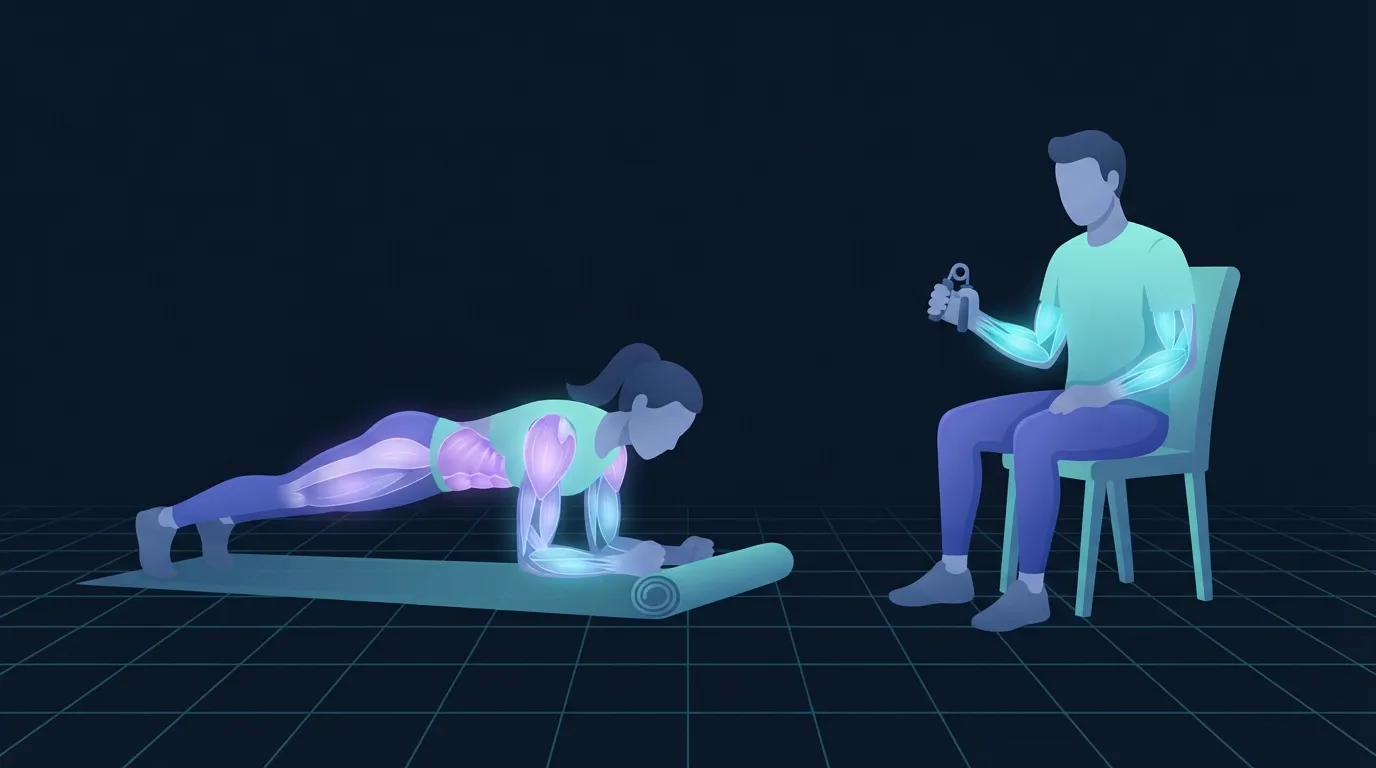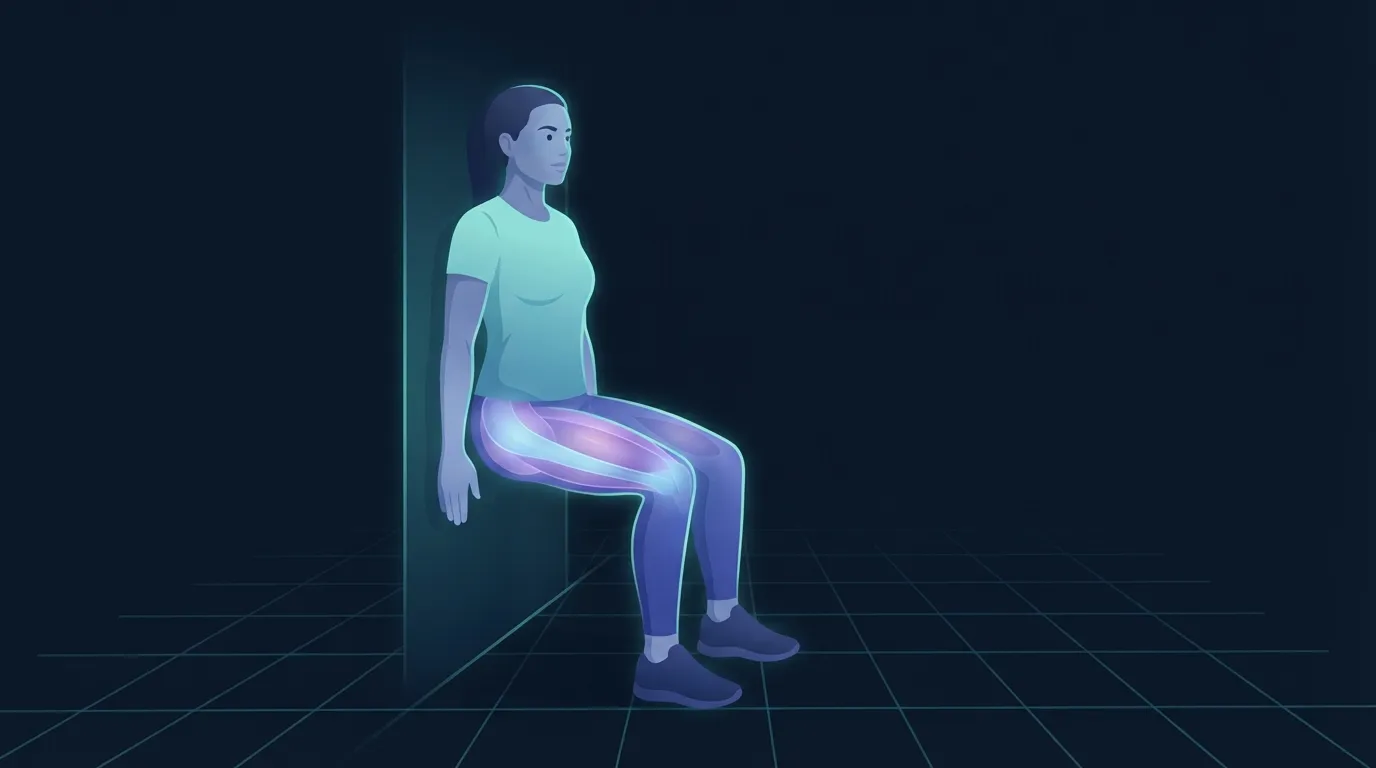
If you have ever held a plank for a minute and wondered whether the effort was actually building anything, the answer is yes. The muscle is producing force. The joint is not moving. That single feature is what makes an isometric contraction different from every other kind, and it changes what the exercise does well and what it does poorly.
Isometric training has a strange reputation. Old textbooks called it a niche adjunct. Some coaches treat it as a mobility drill by accident. But the actual research on isometric contractions is broad, mature, and much more interesting than the reputation lets on. Below is what the evidence supports for strength, tendon rehab, hypertrophy, and cardiovascular health, along with the honest caveats about where isometric work still loses to a proper set of push-ups.
This is the umbrella evidence page. If you want the deep dive on blood pressure specifically, our isometric exercise and blood pressure review covers the Edwards network meta-analysis in detail. For older adults who want a joint-friendly starting point, our roundup of the best fitness apps for people over 50 flags the apps that program isometric holds well.
The Research: What Studies Show
Oranchuk 2019: The Modern Systematic Review on Isometric Strength
Oranchuk, Storey, Nelson, and Cronin (2019) in Scandinavian Journal of Medicine & Science in Sports did the systematic review that most current coaches point to. They pulled together isometric training studies with durations of at least three weeks. The headline findings:
- Strength gains at the trained angle: around 40% on average, after 6 to 12 weeks of training two to three sessions per week.
- Carryover to nearby joint angles: meaningful but incomplete. About 15 to 25 degrees on either side of the trained angle showed real gains. Beyond that, strength did not automatically transfer.
- Muscle length matters: training at longer muscle lengths (near the bottom of a squat, at deep hip flexion, at the stretched position of a curl) produced the widest transfer to other angles and the largest hypertrophy signal.
- Maximal intent matters: pushing as hard as possible for a short duration was more effective for strength than submaximal, long-duration holds.
That last finding surprises people. The "hold as long as you can" version of an isometric hold is the wall-sit-until-your-legs-shake version. It has its uses (endurance, mental toughness, blood pressure). For pure strength gains, the evidence favors short, hard, focused holds where the intent is to push as much force as possible into an immovable object.
Rio 2015: Isometric Analgesia for Tendinopathy
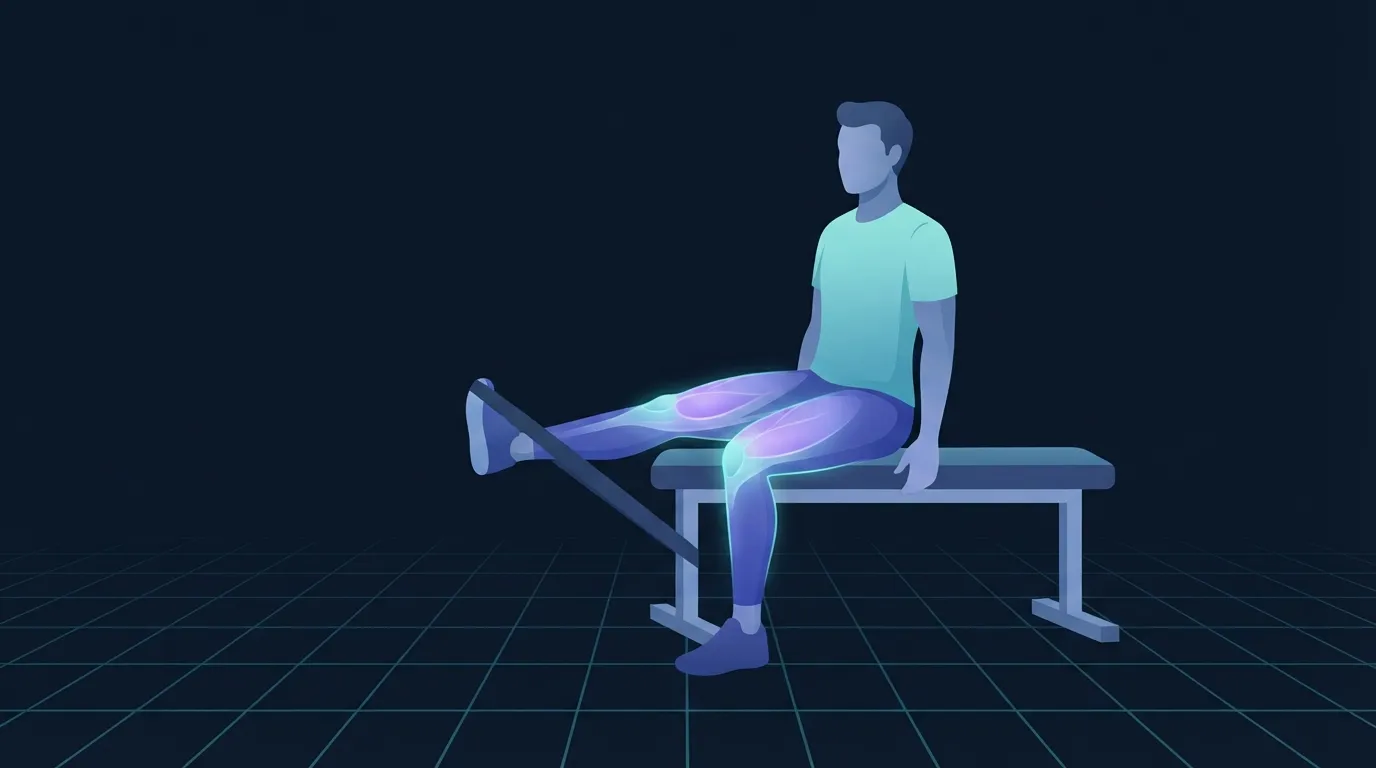
Rio and colleagues (2015) in British Journal of Sports Medicine ran a small controlled trial in six volleyball athletes with patellar tendinopathy. They tested 5 sets of 45-second isometric leg extensions at roughly 70% of maximum voluntary contraction against 5 sets of isotonic (dynamic) leg extensions. Pain on a single-leg decline squat was measured before, immediately after, and 45 minutes after.
The isometric intervention cut pain by about 7 points on a 10-point scale, with the analgesia holding for at least 45 minutes. The isotonic intervention produced only about a 2-point drop. Cortical inhibition of the quadriceps (measured by transcranial magnetic stimulation) was reduced only after the isometric session, suggesting the pain relief was neurophysiological, not just mechanical.
Follow-up work by the same group and others has been mixed. Not every trial has replicated the immediate analgesic effect in every tendinopathy population. But heavy isometrics remain a common first-line loading option for reactive tendon pain, especially when patients cannot tolerate the eccentric work that longer-term rehab programs typically emphasize.
Edwards 2023: Isometric Training Ranked First for Blood Pressure
Any modern review of isometric exercise has to point at the cardiovascular finding. Edwards and colleagues (2023) in British Journal of Sports Medicine pooled 270 randomized controlled trials with 15,827 participants across five exercise modalities. Isometric training produced the largest reduction in resting systolic blood pressure of any modality tested, at roughly 8.24 mmHg versus about 4.5 mmHg for aerobic. Wall squats ranked first for systolic drops (SUCRA 90.4%). The standard prescription across the literature is 4 sets of 2-minute holds, three sessions per week.
We break down the Edwards analysis and its follow-ups on our dedicated isometric exercise and blood pressure page. The point here is that the cardiovascular effect is not folklore. It has some of the strongest evidence of any exercise-BP intervention.
Lum & Barbosa 2019: Strength and Dynamic Performance Transfer
Lum and Barbosa (2019) in International Journal of Sports Medicine reviewed the effect of isometric strength training on dynamic performance in trained athletes. Their read of the literature: isometric strength training can improve maximal dynamic strength, jump performance, and sprint performance, but the gains are position specific and dose specific. Programs that used explosive intent (pushing as hard as possible into an immovable object for short durations) transferred to jumping and sprinting better than programs that used sustained submaximal holds.
This is why competitive lifters and coaches use protocols like the mid-thigh pull or the isometric bench press against pins at sticking points. The point is not to replace the main lifts. The point is to build neural drive at the exact joint angle where a lifter fails.
Folland & Williams 2007: Where the Strength Actually Comes From
The classic review from Folland and Williams (2007) in Sports Medicine laid out the two contributors to strength gain: neural adaptation (early gains, drives most of the first 6 to 8 weeks) and morphological adaptation (hypertrophy, drives later gains). Isometric training taps both pathways. Neural adaptation is strong and immediate. Hypertrophy from isometric work is real but smaller than from full range-of-motion dynamic training, and it shows up primarily when the holds are near the muscle's stretched length.
Why This Matters for Your Training
The practical upshot is that isometric exercises earn a place in most programs, just not as the whole program. Three cases where the evidence is strong enough to change what you do:
Case 1: You have a sore tendon that flares whenever you load it dynamically. Heavy isometric holds are the standard entry point. They calm the pain, they load the tendon meaningfully, and they build the confidence to tolerate more dynamic work later. If a physiotherapist has cleared you and the diagnosis is a reactive tendinopathy (patellar, Achilles, gluteal), a Rio-style protocol of 5 sets of 45 seconds at roughly 70% of max, three to five times per week, is well supported.
Case 2: You want a joint-friendly way to load muscle at home. Wall sits, planks, side planks, glute bridges held at the top, and split squats held at the bottom load muscle without asking a joint to accelerate and decelerate a heavy weight. For adults with cranky knees, hips, or shoulders, isometric work is often the way in. See our chair exercises for seniors guide for a version built around this idea.
Case 3: Your resting blood pressure is creeping up. The Edwards 2023 analysis is unusually clear here. Isometric training beat cardio, resistance training, and HIIT on the specific outcome of systolic BP reduction. If a doctor has cleared you, adding three 8-minute isometric sessions per week has some of the best evidence-to-effort math in exercise science.
Isometric work is not a replacement for lifting. It is not a replacement for cardio. It cannot, on its own, build the sport-specific power that comes from moving heavy loads fast through a full range. But the reputation as a "niche adjunct" undersells it. In the specific cases above, isometric exercise is the primary intervention the evidence supports.
How to Program Isometric Exercises
Three dose prescriptions cover most of what the literature actually studied. Pick the one that matches your goal.
For Strength at a Joint Angle
- Sets and duration: 3 to 5 sets of 3 to 6 seconds at maximal intent.
- Intent: push as hard as possible, as if trying to move the immovable object.
- Position: the exact joint angle where you want strength. Sticking-point pauses in a squat or bench press, mid-thigh pulls, split squat isometrics at the bottom.
- Frequency: 2 to 3 sessions per week, integrated with (not replacing) your dynamic work.
- Duration: a 6 to 8 week block, then reassess.
For Tendon Rehab
- Sets and duration: 5 sets of 45 seconds.
- Load: roughly 70% of maximum voluntary contraction. On a leg extension, that is a challenging but sustainable hold.
- Rest: 1 to 2 minutes between sets.
- Frequency: daily or every other day during the acute reactive phase, tapering as the tendon calms.
- Caveat: this is a rehab prescription. If you have persistent tendon pain, get it assessed. Progressing to heavy slow resistance and eccentric work over time is usually part of the plan.
For Blood Pressure
- Sets and duration: 4 sets of 2 minutes.
- Position: wall squat at a knee angle that makes the last 30 seconds genuinely hard. Handgrip work at 30% of maximum voluntary contraction is the alternative and has similar effects.
- Rest: 1 to 2 minutes between sets.
- Frequency: 3 sessions per week for at least 8 to 12 weeks.
- Full breakdown: our isometric exercise and blood pressure page covers the protocol variants and the safety considerations.
Enjoying the article?
Start a new fitness routine today, written by me and coached by the AI I designed.
Take the Free Assessment Free • 2 minutes • No credit cardCommon Misconceptions
Misconception: "Isometric exercises do not build real strength"
Partly true, mostly wrong. Isometric training builds strength that is real but angle specific. Oranchuk 2019 documented gains around 40% at the trained angle. The catch is that these gains carry over roughly 15 to 25 degrees before starting to fade. Train at one knee angle and you own a 30 to 50 degree band of strength around that angle. Train at multiple angles, or train at longer muscle lengths, and the band widens considerably.
Misconception: "Long holds build strength; short holds build endurance"
Reversed from what the evidence shows. For pure strength and neural drive, the literature favors short (3 to 6 second) holds with maximal intent. For endurance and blood pressure, longer submaximal holds (2 minutes at moderate intensity) fit better. A minute-long wall sit for "strength" is a fine general fitness move but not the best strength dose the isometric approach can offer.
Misconception: "Isometrics are only for rehab"
Rehab is where isometrics shine brightest, so this misconception has a kernel of truth. But strength athletes have used isometrics to bust sticking points for decades. Track athletes use them for neural drive. Older adults use them when joints will not tolerate impact. The tendinopathy protocol is famous. That does not mean everything else the evidence supports is not real.
Misconception: "You cannot build muscle with isometric holds"
You can, but less efficiently than with full range dynamic training, and only if the hold is near the stretched position of the muscle. Oranchuk 2019 flagged this. Long-length isometrics (a paused split squat at the bottom, a hold at the stretched position of a curl) produce measurable hypertrophy. Short-length isometrics do not. For serious hypertrophy, full range-of-motion dynamic training remains the tool. For a supplemental hypertrophy stimulus at a specific angle, long-length isometrics work.
What the Research Suggests Going Forward
The evidence base on isometric exercise has grown quickly in the past decade, but a few honest caveats are worth naming.
First, most of the strength and tendon research uses trained athletes or clinical populations. General population data on isometric training as a primary strength modality is thinner. The blood pressure literature is the exception, with much larger and more diverse samples.
Second, isometric training does not build the coordination or motor control that dynamic training does. A perfect wall sit will not make you better at picking a heavy box off the floor. Programs that include isometrics without any dynamic loading will leave real athletic capacity on the table.
Third, the acute cardiovascular response to isometric holds involves a real spike in blood pressure during the contraction itself. The long-term resting BP reduction comes from adaptation over weeks. People with uncontrolled hypertension, recent cardiac events, or aortic disease should get medical clearance before starting isometric training. This is the same caveat we flag on the dedicated BP page.
Fourth, the science on which joint angles transfer best, and how to program mixed-angle isometrics for the widest strength band, is still active. Current best practice is train at multiple angles or emphasize longer muscle lengths, but sharper prescriptions are likely to come out of the next few years of work.
References
- Oranchuk DJ, Storey AG, Nelson AR, Cronin JB. "Isometric training and long-term adaptations: Effects of muscle length, intensity, and intent: A systematic review." Scand J Med Sci Sports. 2019;29(4):484-503. doi:10.1111/sms.13375
- Lum D, Barbosa TM. "Brief Review: Effects of Isometric Strength Training on Strength and Dynamic Performance." Int J Sports Med. 2019;40(6):363-375. doi:10.1055/a-0863-4539
- Rio E, Kidgell D, Purdam C, et al. "Isometric exercise induces analgesia and reduces inhibition in patellar tendinopathy." Br J Sports Med. 2015;49(19):1277-1283. doi:10.1136/bjsports-2014-094386
- Edwards JJ, Deenmamode AHP, Griffiths M, et al. "Exercise training and resting blood pressure: a large-scale pairwise and network meta-analysis of randomised controlled trials." Br J Sports Med. 2023;57(20):1317-1326. doi:10.1136/bjsports-2022-106503
- Folland JP, Williams AG. "The adaptations to strength training: morphological and neurological contributions to increased strength." Sports Med. 2007;37(2):145-168. doi:10.2165/00007256-200737020-00004
Frequently Asked Questions
What are isometric exercises?
Isometric exercises are movements in which a muscle produces force without changing length and without visible joint motion. A wall sit held at a fixed knee angle, a plank held on the forearms, a mid-thigh pull against an immovable bar, and a handgrip squeeze on a dynamometer all qualify. The muscle is working. The joint is not moving. That single feature separates isometric contractions from concentric contractions (muscle shortens) and eccentric contractions (muscle lengthens under load).
Do isometric exercises actually build strength?
Yes, but with an important caveat. Oranchuk and colleagues (2019) reviewed the long-term isometric training literature in Scandinavian Journal of Medicine & Science in Sports and reported strength gains of roughly 40% at the trained joint angle in typical 6 to 12 week programs. Gains at untrained angles were smaller but meaningful, with observable carryover of about 15 to 25 degrees on either side of the trained position. Training at longer muscle lengths produced the broadest carryover, which is why heavy holds near the bottom of a squat or split squat transfer better than holds near lockout.
Can isometric exercises help with tendon pain?
Often, yes. Rio and colleagues (2015) in British Journal of Sports Medicine tested 5 sets of 45-second heavy isometric holds in athletes with patellar tendinopathy and found immediate analgesia. Pain on a single-leg decline squat dropped by roughly 7 points on a 10-point scale within minutes, and the effect lasted at least 45 minutes. Cortical inhibition of the quadriceps was also reduced. Heavy isometrics are now a standard first-line loading strategy for reactive patellar and Achilles tendinopathy, though eccentric and heavy slow resistance programs remain the longer-term treatment backbone.
Are isometric exercises better than lifting weights?
Better for some outcomes, worse for others. Isometric training is unmatched for lowering resting blood pressure and for calming reactive tendon pain in the short term. It is comparable to dynamic training for building strength at the trained joint angle. For hypertrophy, sport-specific power, and functional strength that transfers across a full range of motion, dynamic resistance training (concentric and eccentric contractions through the full range) remains superior. The honest answer is that isometric and dynamic training complement each other. Most well-designed programs use both.
How long should an isometric hold be?
The literature clusters around two prescriptions depending on the goal. For blood pressure, the standard is 4 holds of 2 minutes each at roughly the intensity that makes the last 30 seconds a real fight. For tendon rehab, Rio's protocol is 5 holds of 45 seconds at a heavy (roughly 70% of max) load. For strength and neural drive, shorter, harder holds work well, typically 3 to 5 sets of 3 to 6 seconds at maximal or near-maximal intent, often with a brief pause at the sticking point of a lift. Match the dose to the outcome you want.