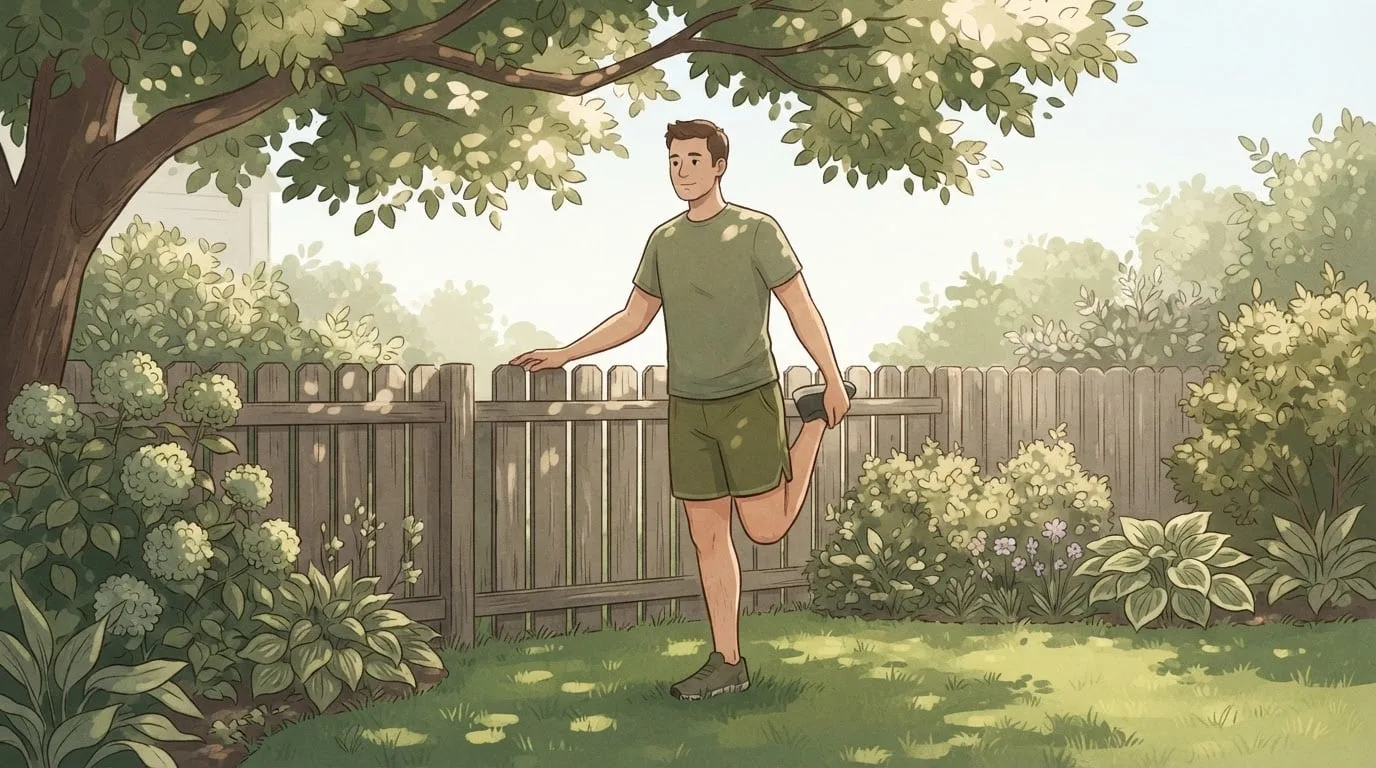
Maybe you've started stretching every morning and every night, and now you're wondering whether that's too much. Or you pushed deeper into a split or a toe touch than usual, felt a twinge, and spent the next week nervous about it.
Both worries make sense. Stretching is sold as the gentle, safe part of fitness, so it's unsettling when it hurts. And the advice online swings from "you can't overdo it" to "stretching weakens your muscles", which leaves you guessing about what's actually safe.
This page explains how much stretching is too much, what overstretching does to muscles and nerves, the signs you've gone too far, whether you can stretch too much in a day, who should stretch less, and why your body sometimes stretches on its own.
How Much Stretching Is Too Much?
Stretching becomes too much when you force it past a firm but bearable pull into sharp pain, or when a position loads a joint, a nerve or an injury instead of the muscle you're aiming at. How often you stretch matters far less than how hard.
Pushing harder doesn't pay off. Konrad and colleagues' 2024 meta-analysis of 77 stretching studies found that low-intensity and high-intensity stretching produced similar long-term gains in range of motion. The authors noted that this may not hold for people chasing extreme flexibility, such as gymnasts and figure skaters, who were scarce in the studies. For everyone else, stretching to the edge of pain adds risk without adding range.
The short-term picture is mixed. A 2023 systematic review by Bryant and colleagues found that higher-intensity stretching gave a bigger immediate gain in range in 8 of 16 studies and no extra gain in the other 8. In two of the four studies that measured strength, more intense stretching also reduced strength more. Strength dips like that are why long holds belong after a workout rather than right before it, as the static vs dynamic stretching review on our science page explains.
So aim for a mild to moderate pull in the middle of the muscle, at a level where your breathing stays slow and your face and shoulders stay loose. If you need to hold your breath, clench your jaw or bounce to stay in a position, you've gone past the useful zone. Our guide to post-workout stretches has a 10-stretch routine that keeps every hold at that level.
Can You Overstretch a Muscle?
Yes. Stretching can strain a muscle or the tendon that anchors it to bone, usually when someone forces an extreme position, bounces at the end of the range or has a partner push them deeper.
The clearest evidence comes from dancers. Askling and colleagues (2007) followed 15 professional dancers who strained a hamstring for the first time. Every injury happened during a slow stretching movement into deep hip flexion with the knee straight, the kind of position a high kick or a split demands, and every one sat high in the back of the thigh, close to the sit bone. The symptoms at the time were fairly mild. Even so, the dancers needed a median of 50 weeks, and as long as 76, to get back to their pre-injury level.
That's the pattern to avoid at home: a forced, end-range position that pulls hard close to where the muscle meets the bone. A mild ache spread through the middle of the muscle is normal. A sharp, pinpoint pain near an attachment, such as the sit bone, the groin or the back of the knee, isn't.
Nerves can be stretched too far as well. A stretch that sets off burning, electric or tingling sensations, or numbness, is pulling on a nerve rather than lengthening a muscle, so ease off straight away. Behind the thigh the two can feel alike, and the best stretches for hamstrings guide explains how to tell nerve tension from a tight muscle.
Pain inside a joint, such as a pinch at the front of the hip or an ache inside the knee, means the position is loading the joint rather than the muscle you're aiming at. Change the position instead of pushing through it.
How Do You Know If You Stretched Too Much?
You've probably overstretched if a stretch caused sharp pain, a pop, or burning or tingling, or if the area afterward hurts in one spot, bruises, swells or feels weak when you use it.
| When | Normal | Warning sign |
|---|---|---|
| During the stretch | A steady pull in the middle of the muscle that eases as you breathe | Sharp, stabbing, burning or electric pain, tingling or numbness, a pinch inside a joint, or a pop |
| Right after | Feeling looser, or mildly tender all over the muscle | Pain in one spot, pain when you tense the muscle, or weakness |
| The next day | Mild stiffness that fades as you move | Bruising, swelling, pain that's worse than the day before, or a limp |
If you notice warning signs, stop stretching that area for a few days and keep moving gently within what's comfortable. See a doctor or physical therapist if you felt a pop, see bruising, can't bear weight or use the limb normally, or have numbness or weakness that doesn't settle within a day or two.
Knowing what to do is the easy part.
FitCraft, our mobile fitness app, pairs you with an AI coach who builds you a personalized plan around your goals, schedule, and fitness level. Every FitCraft program is designed by Domenic Angelino, MPH (Brown University) and NSCA-CSCS, with research published in the Journal of Strength and Conditioning Research and Medicine & Science in Sports & Exercise.
Take the Free Assessment Free • 2 minutes • No credit cardCan You Stretch Too Much in a Day?
Not usually. For healthy adults, the amount of time spent stretching is rarely what causes harm, as long as each session stays gentle.
The most extreme test comes from Warneke and colleagues (2022). Seventy active adults either wore an orthosis that held one calf in a stretch for one or two hours a day, seven days a week for six weeks, or did nothing extra. The stretch was intense, set at about 8 on a 10-point pain scale. Nobody dropped out, no injuries were reported, and maximal calf strength in the stretched leg rose by 14 percent in the one-hour group and 22 percent in the two-hour group. Participants did report numbness after 10 to 15 minutes in the device.
That was a supervised research protocol, not a routine to copy, and the numbness is a reminder to shift position when a long hold makes part of a limb go numb. But it suggests that a lot of stretching, on its own, isn't what injures healthy muscle, and that it doesn't make muscle weaker over time.
Extra sessions in a day add little flexibility, though. Our page on how often you should stretch covers how many sessions a day and how many days a week are worth your time.
Who Should Stretch Less
For some people, extra range isn't what's missing, and more stretching can make things worse.
If your joints are very flexible
Try these: bend your little finger back past 90 degrees, bring your thumb down to touch your forearm, straighten your elbows or knees until they bend backward by more than 10 degrees, and fold forward to put your palms flat on the floor with your knees straight. Those moves make up the 9-point Beighton score. The 2017 international classification of Ehlers-Danlos syndromes by Malfait and colleagues uses a score of 5 or more as the sign of generalized joint hypermobility in adults up to age 50, with 6 for children before puberty and 4 after age 50.
If that's you, you already have range to spare, and what loose joints usually lack is strength and control at the end of that range. That's what the exercise trials in hypermobility have tested. In one by Pacey and colleagues (2013), children and teenagers with joint hypermobility syndrome and knee pain did eight weeks of supervised strength and movement-control exercise, and their knee pain fell whether they trained into their hyperextended range or stopped at straight. Gentle stretching for a genuinely tight spot is fine, but strength work deserves more of your time.
If you have osteoporosis
Forward-bending stretches need care. In a 1984 study by Sinaki and Mikkelsen, women with postmenopausal spinal osteoporosis who did flexion (forward-bending) exercises had new spinal fractures in 89 percent of cases, against 16 percent of those doing back-extension exercises and 67 percent of those who did no exercise. It was a small, retrospective study, with only nine women in the flexion group, but it's one reason toe touches and other loaded rounding of the spine are usually left out of exercise plans for fragile bones. Ask your doctor or a physical therapist which positions suit you.
If you've just strained a muscle
Stretching a freshly strained muscle can aggravate it. Keep moving gently within what doesn't hurt, and leave deep stretching of that muscle until the pain has settled or a physical therapist clears it. Strains close to a tendon, like the dancers' hamstring injuries above, can take months to heal, so they're worth getting checked.
Why Do We Involuntarily Stretch?
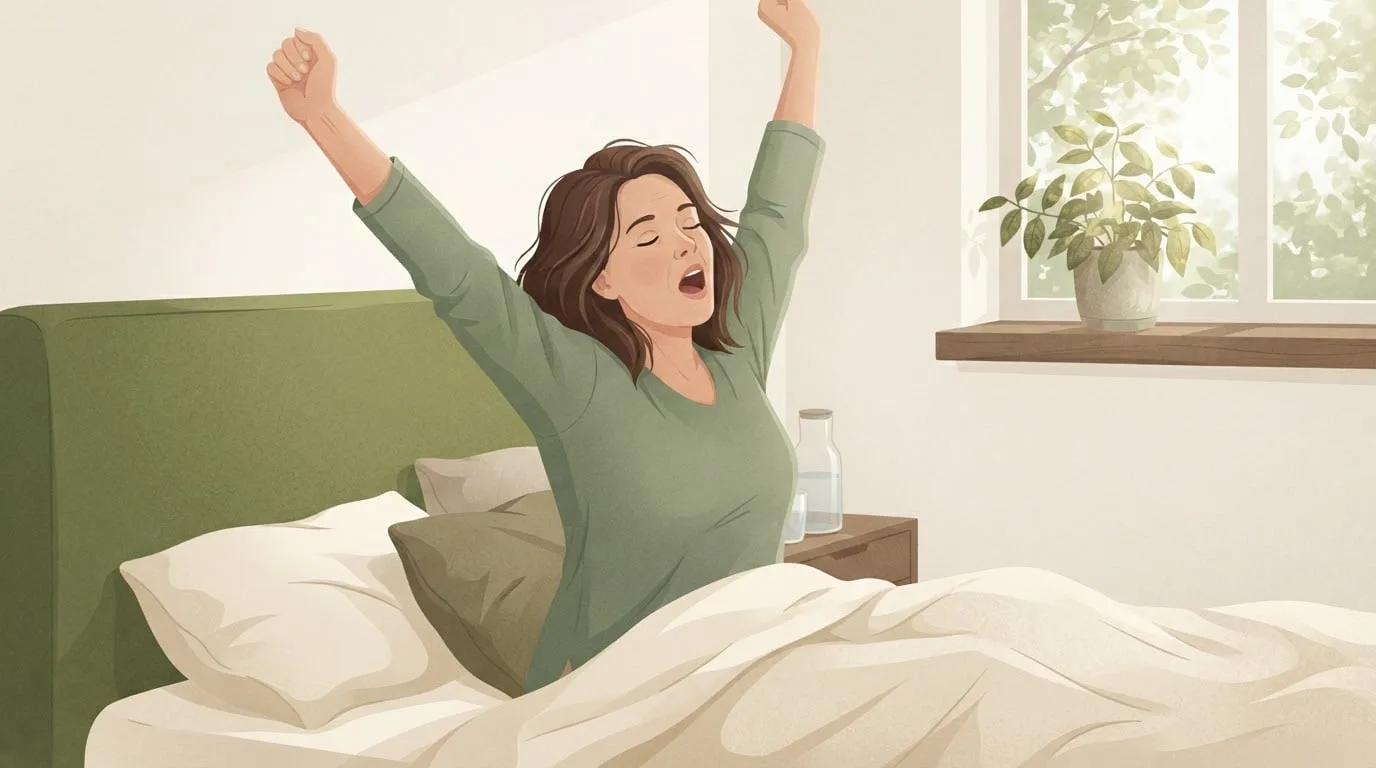
That big, full-body stretch you do without deciding to, often with a yawn, has a name: pandiculation. Most animals do it too, and in people it happens most at the switch between rest and activity, especially right after waking.
Provine, Hamernik and Curchack (1987) had college students log every yawn, stretch and bout of sleep for a week. Stretching happened mostly in the hour after waking rather than before bed, and yawns and stretches often came together, with a stretch more likely to bring on a yawn than the other way round.
Nobody knows for sure why we do it. In a 2011 review, Bertolucci proposed that pandiculation keeps the muscles and the connective tissue around them working as one system, and resets their resting tension after a long period of stillness. It's a hypothesis rather than a tested finding, but it fits the timing, since the urge peaks right after sleep.
So the urge itself is normal. An involuntary stretch is short and comfortable, and it isn't a sign that you're stretching too little or too much.
Why Do I Feel the Need to Stretch So Much?
Usually because you've been still for a long time, you're tired, or a muscle has been held in one position for hours. An urge that's constant, mostly in your legs and worse in the evening or at night, can be a sign of restless legs syndrome, which a doctor should check.
- Long periods of stillness: the longer you stay in one position, sitting or lying down, the stronger the pull to move once you get up. That's the pattern behind waking stretches.
- Tiredness: yawning and stretching tend to come together around sleep, so a drowsy afternoon can bring on both.
- Habit and relief: a stretch feels good, and many people stretch out of habit whenever they've been still for a while.
Restless legs syndrome is different from an ordinary urge to stretch. Under the 2014 diagnostic criteria from Allen and colleagues, it's an urge to move the legs, usually with unpleasant sensations, that starts or gets worse while you're resting, is relieved at least partly by moving, happens mainly in the evening or at night, and isn't better explained by another problem. If that describes your nights, talk to a doctor, because it can be treated.
A sudden, painful knot in the calf at night is something else again. That's a muscle cramp, and gently stretching the calf usually eases it.
What This Means for You
Gentle daily stretching is fine, and forcing a stretch is what causes problems. Keep each stretch at a mild to moderate pull you can breathe through, skip the bouncing and the partner pushes, and change position the moment something tingles, pinches or goes numb. Within those limits, you can stretch as often as you like.
If you're already very flexible, give more of that time to strength, and if you have osteoporosis or a fresh injury, get a plan from someone who can examine you. For the strength side, the how to become more flexible guide shows how full-range strength work builds range you can control.
If you'd like stretching and strength in one plan, a bodyweight workout app for home can combine them. FitCraft's workouts include yoga and mobility sessions alongside bodyweight and dumbbell strength, and a 3D AI coach demonstrates every move with interactive 3D models, so you can see the position before you try it.
Picture yourself a few months from now, stretching most days without second-guessing it, knowing what a useful stretch feels like and when to back off. As Matt, a FitCraft user, put it: "The real win is I actually want to work out now. That's never happened before."
Frequently Asked Questions
Is it good to stretch multiple times a day?
For most people it's fine, as long as every session stays gentle, because the risk comes from how hard you stretch rather than how often. In a 2022 trial, adults who held a calf stretch for one to two hours a day for six weeks reported no injuries. Extra sessions add little flexibility, though, so you gain more by stretching on more days than by stacking several sessions into one.
What could be causing my extreme tightness in the lower back?
Most often it's stiffness from long hours of sitting or muscles guarding after a strain, and stretching harder rarely fixes either. Morning stiffness that lasts more than 30 minutes and eases as you move, pain that wakes you at night, numbness, leg weakness, or any change in bladder or bowel control needs a doctor's assessment. A physical therapist can work out whether strength work, movement breaks or rest is the answer.
Does stretching change your body shape?
No. Regular stretching changes how far you can move, mostly by raising your tolerance to the stretch, but it doesn't lengthen bones or visibly reshape muscles. The change people notice is posture, since loosening tight hips and a tight chest can make standing tall easier.
Why does my entire body feel like I need to stretch?
Usually because you've been still for a while, through sleep, a long drive or a day at a desk, and your body wants to move again. That whole-body stretch, often with a yawn, is called pandiculation and is completely normal. If the urge is constant, sits mainly in your legs and gets worse in the evening, ask a doctor about restless legs syndrome.
Can stretching too much make you weaker?
Not over the long term. In a 2022 trial, adults who stretched one calf for one to two hours a day for six weeks ended up 14 to 22 percent stronger in that leg, not weaker. Stretching and strength training work well together, and lifting through a full range of motion builds strength and flexibility at the same time.