You stretch your hamstrings. You've stretched them for months, maybe years, in the same seated fold you learned in a school gym. The tight feeling comes back within hours, every time, and at some point you decided you were just built this way.
That's a frustrating place to be, because the effort isn't the problem. You're showing up. What you're not getting is any feedback about whether the position you picked is aimed at the thing that's actually limiting you.
Here's the useful reframe. "Tight hamstrings" is a sensation, and at least three different mechanisms produce it. A short muscle responds to loading and length. An overprotective nervous system responds to repeated, unthreatening exposure. Sciatic nerve tension responds to gliding, and barely responds to stretching at all. Same feeling, three different jobs. Find out which one is yours and the next eight weeks stop being a coin flip.
What Is Actually Limiting Your Hamstrings
Start with the mechanism that surprises people most. When stretching increases your range, the muscle itself often hasn't changed length. Weppler and Magnusson (2010), in Physical Therapy, reviewed the evidence on both explanations and concluded that in healthy adults, short-term stretching increases range mainly by modifying the sensation of stretch rather than by lengthening tissue. You get further into the position because your nervous system lets you, not because anything got longer. That's not a reason to skip stretching. It's the reason consistent, unhurried exposure works better than forcing a position once a week. Our guide to how to touch your toes works through that evidence and the four-week plan built on it in full.
The second mechanism is where most people's hamstring routine quietly fails. The sciatic nerve runs from the low back, under the glutes and straight down the back of the thigh between the hamstrings. If the nerve isn't gliding freely through the tissue around it, a straight-leg raise produces a pulling sensation in exactly the place a hamstring stretch produces one. Stretching harder into a nerve that's already irritable makes the sensation worse and the range no better.
The 15-second test that tells them apart
Lie on your back. Raise one leg, knee straight, until you feel a firm pull behind the thigh, and stop there. Hold it still. Now do two things without moving the leg:
- Pull your toes toward your shin. That tensions the nerve further down the chain without changing the hamstring's length at all.
- Tuck your chin to your chest. That tensions the same nerve from the other end, and it definitely doesn't change anything in your thigh.
If either move sharply increases the pull, or changes it from a stretch into something sharp, buzzy or electric, the nerve is contributing. If neither changes anything and the sensation stays a broad, dull pull in the belly of the muscle, you're dealing with muscle and tolerance, and the classic positions are the right tools.
That distinction has real consequences. Castellote-Caballero and colleagues (2014), in a randomised double-blinded trial published in the Journal of Sports Medicine, took 120 people with short hamstrings and gave each of three groups a single 180-second intervention: neurodynamic sliding, hamstring stretching in six 30-second holds, or a placebo foot mobilisation. Straight-leg-raise range improved most in the sliding group, with the stretching group second and placebo last. Same three minutes, different results, purely because of what the technique targeted.
Seven Best Stretches for Hamstrings, and What Each One Is For
Pick two or three of these, not all seven. The list is a menu organised by limiter and by what your body will actually let you do.
| Stretch | Best for | Dose |
|---|---|---|
| Supine strap stretch | Everyone, as the default | 3 x 30 sec per side |
| Doorway or wall 90/90 | Beginners, and anyone who cheats the hip angle | 2 x 45 sec per side |
| Half-kneeling hinge | Backs that round in a seated fold | 3 x 30 sec per side |
| Standing split-stance hinge | Warm-ups, done as reps not holds | 8-10 slow reps per side |
| Elevated seated fold | Adding depth once the flat back holds | 2 x 45 sec |
| Sciatic nerve glide | A positive nerve test | 10-15 slow glides per side |
| Single-leg Romanian deadlift | Making the new range stick | 3 x 8 per side, controlled |
1. Supine strap stretch (the default)
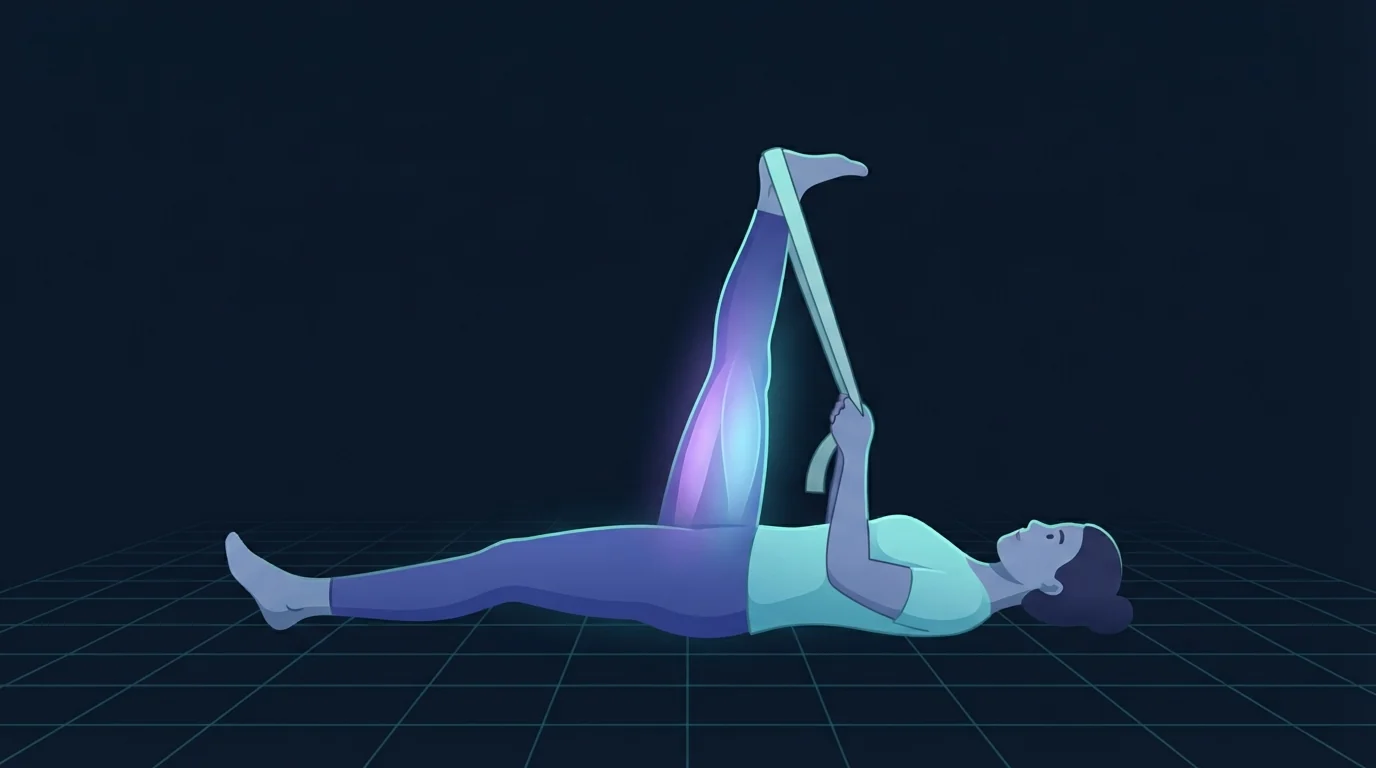
Lie on your back with both legs straight. Loop a strap, belt or towel around one foot, raise that leg with the knee straight, and pull gently until you feel a firm pull, not a fight. Keep the other leg flat on the floor, because letting it bend hides a lot of missing range by tipping your pelvis. Thirty seconds, three times per side.
This is the default for one reason: gravity holds your spine flat and your pelvis honest, so the stretch goes where you think it's going. Every seated version lets your low back round and take the tension instead.
2. Doorway or wall 90/90
Lie on your back in a doorway with one leg through the opening and the other resting up the door frame, hip bent to roughly a right angle. Slowly straighten the knee of the raised leg until you feel the pull, then hold. The frame sets your hip angle for you, which makes this the most repeatable version and the easiest to progress: you know you improved because you straightened the knee further from the same hip position.
3. Half-kneeling hinge
Kneel on one knee with the other leg straight out in front, heel on the floor and toes pulled up. Keep your chest tall and your back flat, then push your hips backward until the pull starts. If your low back rounds in every seated stretch you try, this position is the fix, because the kneeling base makes rounding much harder to do by accident.
4. Standing split-stance hinge (dynamic)
Step one foot forward with the heel down and the toes lifted, soften the back knee, and hinge forward from the hips with a flat back for eight to ten slow reps. Two seconds down, two seconds up. This is the warm-up option, and it's essentially the sweep at the end of the worlds greatest stretch done on its own.
5. Elevated seated fold
Sit on the front edge of a folded cushion or a low step so your hips are higher than your knees, legs out in front. That elevation tips your pelvis forward before you start, which is the whole trick. Hinge forward from the hip crease, chest leading, back flat. Stop the moment your spine starts to curl. If you can't get any forward tilt at all even on a cushion, go back to the half-kneeling version for a few weeks.
6. Sciatic nerve glide
This is a mobilisation, not a stretch, and it feels completely different. Sit on a chair with your back upright, slump slightly, and extend one knee while pulling your toes toward you and dropping your chin to your chest. Then reverse it: bend the knee, point the toes, and lift your head. The nerve slides rather than getting pulled at both ends, which is the point. Ten to fifteen slow glides per side, twice a day. Never push into sharp or electric sensations.
7. Single-leg Romanian deadlift
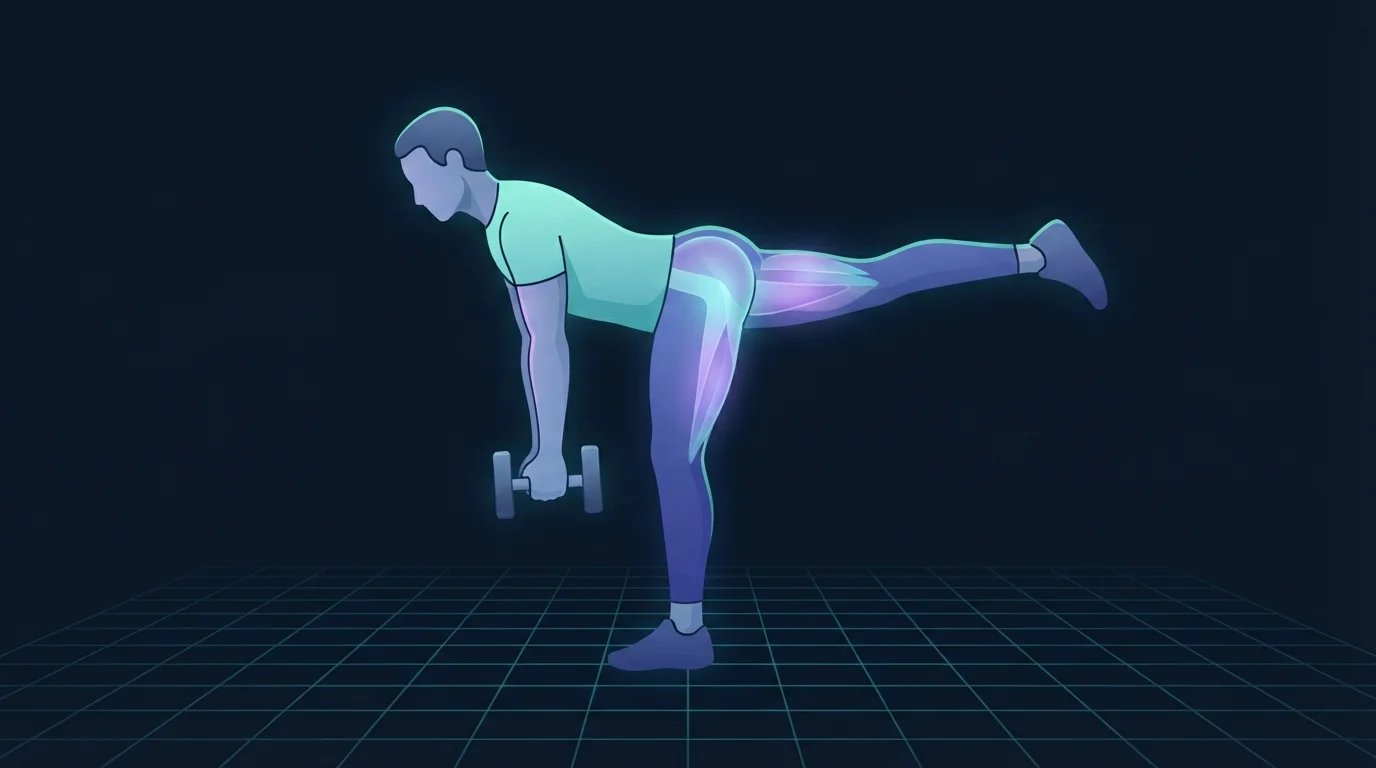
Hold a dumbbell in one hand, stand on the opposite leg, and hinge forward at the hip with a flat back while the free leg extends behind you as a counterweight. Go as low as you can while keeping the back flat, feel the loaded stretch at the bottom, then drive the hip forward to stand. Three sets of eight per side. This one belongs on a stretching list because loaded lengthening produces range, and the section below explains why that matters more than the rest of the list combined.
Find out what's really holding you back
FitCraft, our mobile fitness app, pairs you with an AI coach who builds you a personalized plan around your goals, schedule, and fitness level. Every FitCraft program is designed by Domenic Angelino, MPH (Brown University) and NSCA-CSCS, with research published in the Journal of Strength and Conditioning Research and Medicine & Science in Sports & Exercise.
Take the Free Assessment Free • 2 minutes • No credit card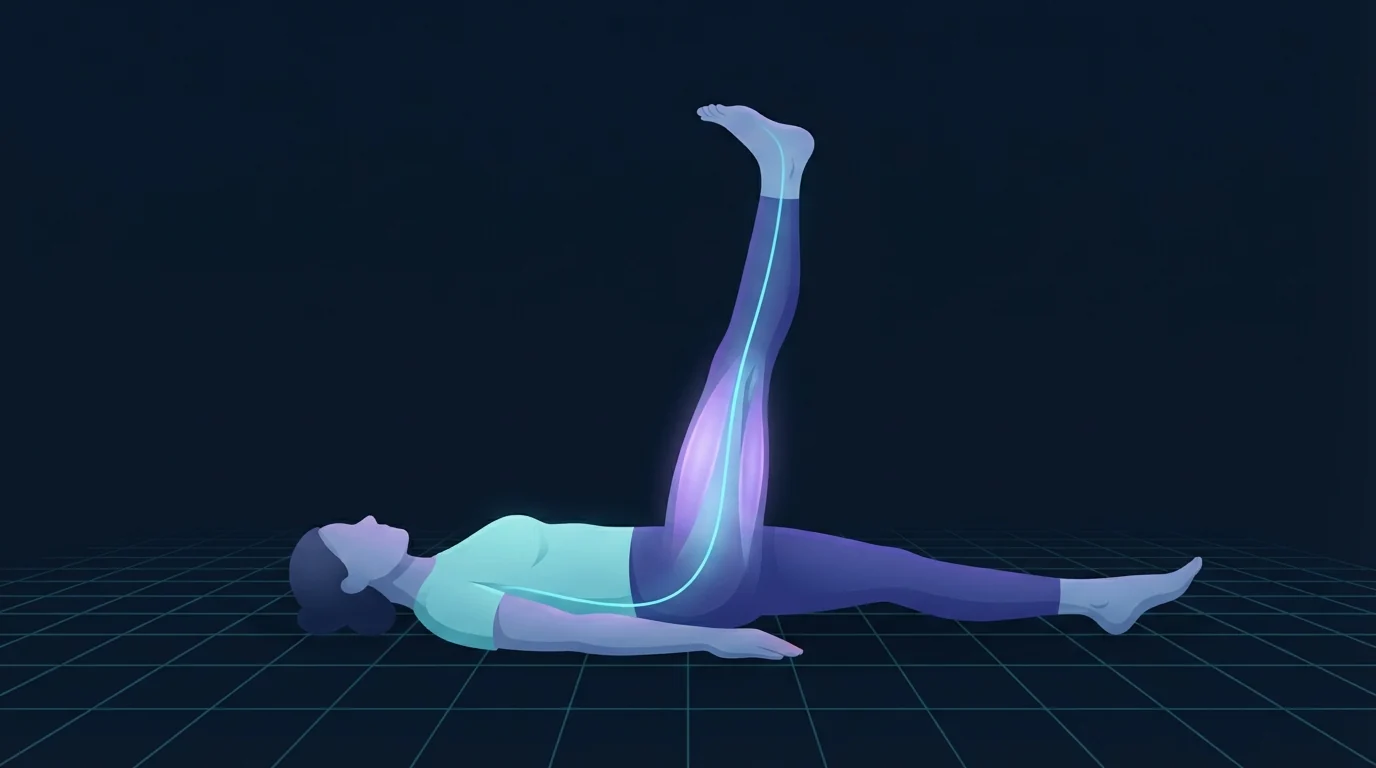
Static, Dynamic or PNF: Which Adds Range Fastest
Short version: they all work, and the differences between them are smaller than the difference between doing the work and not doing it.
Borges and colleagues (2018), meta-analysing the hamstring flexibility literature in the European Journal of Physiotherapy, compared static stretching against proprioceptive neuromuscular facilitation, the contract-relax method where you push against resistance for a few seconds before moving deeper. Both increased range. Neither pulled clearly ahead. Konrad and colleagues (2024) reached the same conclusion across the broader chronic stretching literature in the Journal of Sport and Health Science: meaningful range gains across protocols, no strong evidence that one stretch type wins.
Where the type does matter is timing. Behm and colleagues (2016), in Applied Physiology, Nutrition, and Metabolism, found consistent acute reductions in strength and power after static holds longer than 60 seconds, while shorter holds inside a complete warm-up produced no meaningful decrement. So the split is simple: dynamic hinges before you train, long holds after or in a separate session. Our review of static versus dynamic stretching goes through the performance, injury and soreness evidence in detail.
| Method | What it involves | Best placed |
|---|---|---|
| Static | Hold at the end of range, 30 sec, relaxed | After training, or a separate session |
| Dynamic | Slow reps in and out of range, 8-10 per side | Warm-up, before anything fast or heavy |
| PNF contract-relax | Push against a strap 5 sec, relax, move deeper | Separate session, when you have time |
| Nerve glide | Tension one end while releasing the other | Twice daily, only if the nerve test is positive |
How Long and How Often to Stretch Hamstrings
Thirty seconds per hold. That number comes from a study aimed at exactly this muscle: Bandy, Irion and Briggler (1997), publishing in Physical Therapy, randomised 93 adults with limited hamstring range across five weeks of stretching at different durations and frequencies. Thirty-second holds produced significantly more range than 15-second holds. Sixty-second holds added nothing over 30.
The weekly total is what decides the outcome. Ingram and colleagues (2025), in a meta-regression of 189 studies and 6,654 adults published in Sports Medicine, found chronic static stretching improved flexibility with a large pooled effect, and that gains flattened out near four minutes per session and about ten minutes per week per muscle group. They also found the least flexible people improved the most, which is the most encouraging finding in this whole literature if you're starting from a long way off the floor.
Put those together and the prescription is unglamorous. Ten minutes a week on your hamstrings, split however suits you, in holds of about 30 seconds. That's three short sessions. Most people who believe stretching doesn't work for them have been doing about a tenth of that and concluding the method failed.
Loaded Lengthening: The Half Most People Skip
Passive stretching is the famous half of flexibility work. Loading a muscle through its full range is the half that makes the range stick, and the evidence for it's surprisingly strong.
O'Sullivan, McAuliffe and DeBurca (2012), reviewing eccentric training and lower limb flexibility in the British Journal of Sports Medicine, found every included study reported increased range of motion or increased muscle fascicle length after eccentric work. Afonso and colleagues (2021), pooling 11 randomised trials with 452 participants in Healthcare, found strength training and stretching produced comparable improvements in range of motion. Lifting through a full range is a flexibility intervention, and it happens to also build a muscle that can hold the position you just unlocked.
For hamstrings specifically there's a second dividend. van Dyk, Behan and Whiteley (2019), meta-analysing 8,459 athletes in the British Journal of Sports Medicine, found that injury prevention programmes including the Nordic hamstring exercise roughly halved hamstring injury rates. Stretching has never produced a result like that. If you sprint, play a field sport, or have strained a hamstring before, eccentric loading belongs in your week ahead of another static hold. Our deep dive on the Nordic hamstring curl research covers the progressions for building it from zero at home.
The practical version, if you have no equipment: single-leg Romanian deadlifts holding anything with a handle, three sets of eight per side, twice a week, lowering for three slow seconds each rep. Pair that with ten minutes of weekly static work and you're running both halves. A no-equipment workout app can put the loading sessions and the mobility sessions in the same week so you're not designing it yourself.
If You Sit All Day, Check the Hip Flexors First
Here's a pattern worth knowing about before you spend another eight weeks on the back of your legs. Sitting holds the hip flexors at the front of your hip in a shortened position for hours. When the front of the hip resists, the pelvis often sits tipped forward, which pre-tensions the hamstrings from above before you've even moved. They feel tight because they're being held long all day, and pulling harder on the far end doesn't address the part that's holding.
The tell is simple. If deep hip flexion pinches at the front of your hip rather than pulling at the back of your thigh, or if your hamstrings feel worse at the end of a long desk day than after a run, work the front of the hip in parallel. Our guide to tight hip flexors covers the testing, the positions and the loading work. Doing both is faster than doing either one twice as hard.
What Eight Weeks Actually Looks Like
Weeks one and two produce changes that vanish by the next morning. That's normal and it's not a failure signal: acute range improves immediately after almost any stretch, and the lasting adaptation takes longer to bank.
Around week four you start noticing it outside the stretch itself. Picking something up off the floor stops involving a small negotiation. Sitting on the floor gets less annoying. This is usually the first real evidence that something changed, and it arrives about two weeks after most people quit.
By week eight, with ten weekly minutes of holds plus twice-weekly loaded hinging, expect a visible change in how far you can fold and a hamstring that holds the position rather than just visiting it. If the nerve test was positive and you've been gliding rather than grinding, expect the change sooner and the sharp sensations to fade first.
The Bottom Line
The best stretches for hamstrings are the supine strap stretch as a default, a doorway 90/90 if you want the hip angle set for you, a half-kneeling hinge if your back rounds, a dynamic split-stance hinge in the warm-up, a nerve glide if the toes-and-chin test lights up, and a single-leg Romanian deadlift to make any of it stick. Thirty-second holds, roughly ten minutes a week.
You're not built differently from people who can fold in half. You've been given one position and a dose about a tenth of what the research uses. Change both and watch what happens by week four.
Frequently Asked Questions
What are the best stretches for hamstrings?
The supine strap stretch is the best default because it isolates the hamstring without letting your low back round. Add a doorway or wall version if you want the hip angle fixed for you, a half-kneeling hinge if seated folds make your back round, a standing split-stance hinge as a warm-up, a sciatic nerve glide if nerve tension is your limiter, and a single-leg Romanian deadlift to make the new range stick. Which one is best depends on your limiter, not on the stretch.
How long should I hold a hamstring stretch?
Thirty seconds per hold is enough. Bandy and colleagues (1997) randomised 93 adults with limited hamstring range across five weeks and found 30-second holds produced significantly more range than 15, while 60-second holds added nothing over 30. What matters much more is the weekly total: roughly four minutes per session and about ten minutes per week per muscle group is where the gains flatten out.
Why do my hamstrings feel tight even though I stretch every day?
Three different things produce the same tight feeling: a genuinely short muscle, a nervous system that raises the alarm early, and sciatic nerve tension that has nothing to do with muscle length at all. The quick test is to raise one straight leg until you feel the pull, then pull your toes toward your shin and tuck your chin to your chest. If the pull spikes, nerve tension is contributing, and a nerve glide will do more for you than another static hold.
Is PNF stretching better than static stretching for hamstrings?
Barely, and not enough to matter for most people. Borges and colleagues (2018) meta-analysed the trials comparing static stretching with proprioceptive neuromuscular facilitation for hamstring flexibility and found both methods increased range, with no clear winner between them. PNF needs a partner or a strap and more attention per rep, so pick it if you enjoy it and pick static holds if you want the dose to actually happen.
Should I stretch my hamstrings before or after a workout?
Use dynamic hinges before and save the long holds for after or for a separate session. Behm and colleagues (2016) found static holds longer than 60 seconds produced consistent acute drops in strength and power, while shorter holds inside a complete warm-up did not. If you only have one window in the day, stretch whenever you will actually do it: the weekly total beats the timing.
I also have tight shoulders. What are the best stretches for shoulders?
The same logic transfers: find the limiter before you pick the position. Overhead range is usually blocked by the lats, the thoracic spine or the shoulder blade rather than the shoulder joint itself, so a doorway pec stretch or a sleeper stretch may be aimed at the wrong tissue. Our shoulder mobility guide has a floor test that tells you which link is yours, plus eight positions with sets and reps.