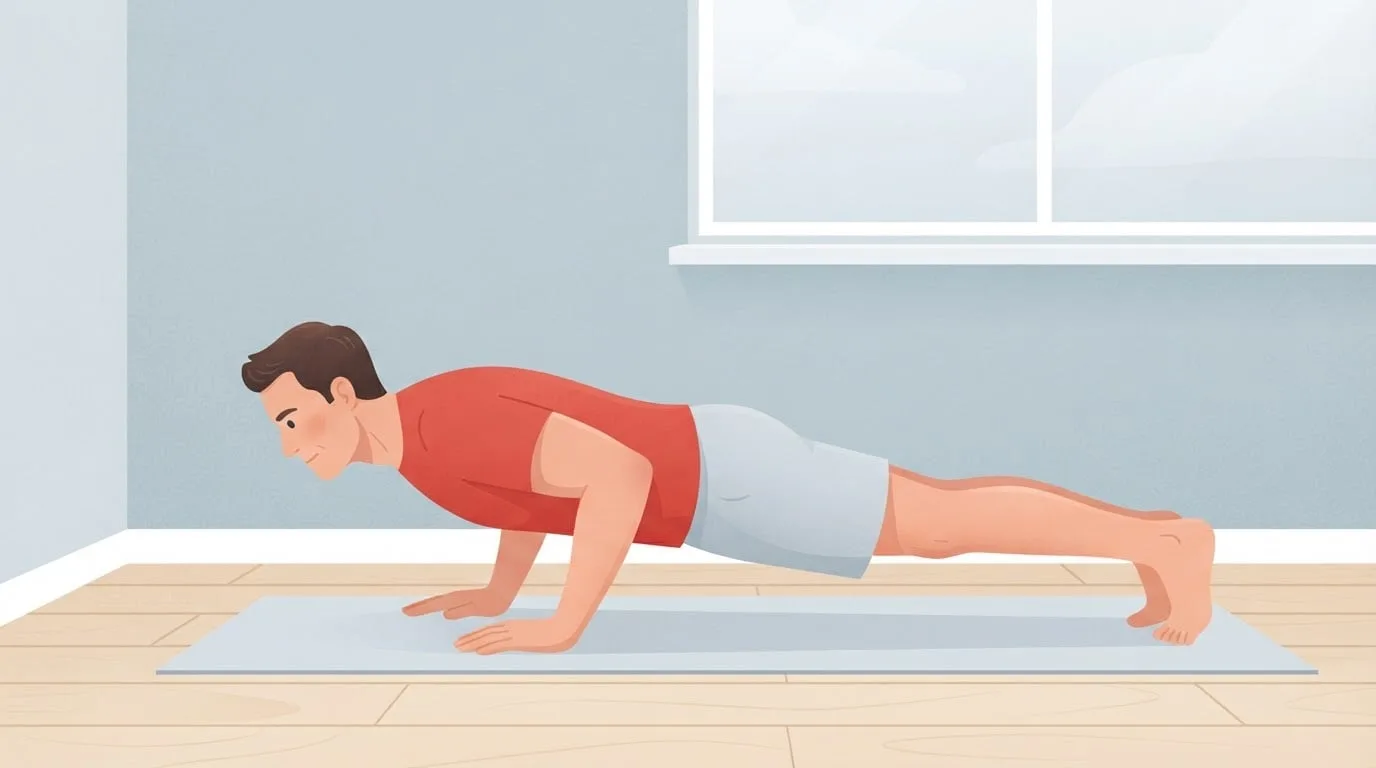
Push-ups are the first strength exercise most people learn, and gym culture treats them as a warm-up for the bench press. So it's fair to ask whether push ups build muscle or just endurance. And if they do, what muscles do push ups work, and how many push ups should you do a day to make them grow?
The answer is yes, and the evidence is better than most people expect. Several randomized trials have put push-ups head to head with the bench press. The results hold up, with one condition that decides almost everything: the sets have to be hard.
If you've done push-ups for months and look the same, you haven't failed some genetic test. Most likely your sets stopped long before your muscles had to work hard. Below you'll find the trials, which muscles grow, how hard and how often to train, how to keep push-ups challenging without a gym, what changes for women, how long it takes and what to eat.
Are Push-Ups Better Than Bench Press?
For building muscle, push-ups and the bench press come out about even when the effort is matched. For maximal strength, the bench press has the edge, because you can keep adding weight to it in small steps.
Kikuchi and Nakazato (2017) split 18 young men into two groups. One did the bench press at 40% of their one-rep max. The other did push-ups, with the position (standard, kneeling, or kneeling with the hands raised) chosen so the load matched. Both groups did 3 sets to failure with 2 minutes of rest, twice a week for 8 weeks. Chest and triceps thickness grew significantly in both groups, bench press strength went up in both, and the authors judged push-ups comparably effective. Our push-up progression guide lists the millimeter changes.
Calatayud and colleagues (2015) asked the same question in 30 university students with advanced lifting experience. One group trained a 6-rep-max bench press. A second did push-ups with an elastic band across the back, set so each set was also a 6-rep max with muscle activity similar to the bench press. A third didn't train. After 5 weeks, both training groups had raised their 1RM and 6RM by similar amounts, roughly 14% to 22%, and the untrained group hadn't changed.
Not every trial found growth. In Kotarsky and colleagues (2018), 23 moderately trained men did progressive push-up variations or the bench press 3 days a week for 4 weeks. Both groups got stronger, but neither group's muscle thickness changed significantly. That says more about 4 weeks being short than about push-ups. Strength shows up before size does.
Across the three trials the pattern holds. Push-ups made hard enough grow muscle like a light-to-moderate bench press. The barbell keeps one advantage: you can add 5 pounds whenever you're ready, which is why heavy loading builds more maximal strength.
What Muscles Do Push Ups Work, and Which Ones Grow?
Push ups work the chest (pectoralis major), the front of the shoulders (anterior deltoids) and the triceps as the main movers. The serratus anterior holds the shoulder blades against the ribs, and the abdominal wall and hips work to keep your body rigid. The muscles that grow are the ones doing the pressing: chest, front shoulders and triceps. The trunk muscles work hard to hold the plank, but that holding effort mostly builds endurance and control rather than size.
Where you put your hands shifts the work. In Cogley and colleagues (2005), 40 adults did push-ups at three hand widths, and a narrow base drew more electrical activity from both the chest and the triceps than a wide base did. Fancier versions add something else. Freeman and colleagues (2006) measured 12 push-up styles and found that the more dynamic ones, with clapping or moving hands, raised muscle activity and also raised the load on the lower spine, while unstable balls under the hands added only a modest amount of spine load.
- Hands close together: more triceps and chest.
- Feet raised on a step: more load overall, with a bias toward the upper chest and front shoulders.
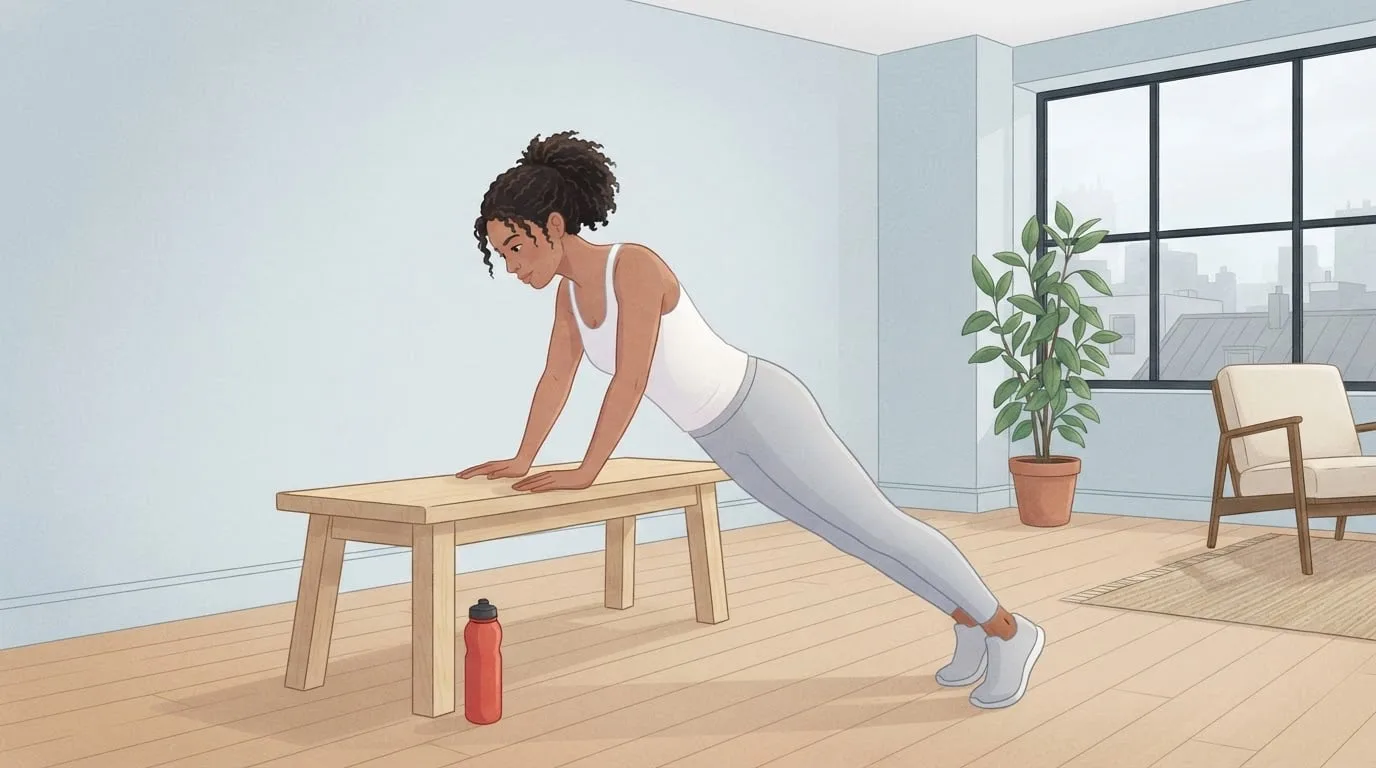
- Hands raised on a bench or counter: less load, a good place for beginners to build up.
- Hips piked high: the shoulders take over and the chest does less.
Our push-up exercise page covers the setup, form faults and the full list of muscles worked.
Can you build chest with just pushups?
Yes, especially in your first year or two of training. The chest grew in the push-up group of the 8-week trial above, and nothing about the movement caps growth until the variation gets too easy for you. People who need more after that usually add load with a backpack, a band or dumbbells, which the section on keeping push-ups hard covers below.
Why Push-Ups Stop Building Muscle: The Rep Ceiling
A push-up's load is set by your body weight, so the thing you control from set to set is how close you get to your limit. That turns out to be the variable that matters most.
Lopez and colleagues (2021) pooled 28 studies with 747 adults in which every set went to failure. Light loads (more than 15 reps per set), moderate loads (9 to 15) and heavy loads (8 or fewer) built similar muscle, while heavy and moderate loads built more strength. Untrained people grew the most. So high-rep push-ups can grow muscle.
There's a floor, though. In Lasevicius and colleagues (2018), 30 men trained one arm and one leg at 20% of their one-rep max and the opposite limbs at 40%, 60% or 80% for 12 weeks, with the total work matched. At 20%, the elbow flexors grew 11.4% and the thigh 8.9%. At 40%, 60% and 80%, the same muscles grew about 25% and 20%. The very light load built less than half as much muscle.
Effort per set matters too. A 2024 series of meta-regressions estimated how many reps each study's sets left in reserve, and muscle growth rose as sets ended closer to failure (Robinson and colleagues, 2024). You don't need to grind to total failure every time, though. A meta-analysis of 15 studies found only a trivial edge for sets taken to failure over sets stopped a little short (Refalo and colleagues, 2023).
That gives a practical rule for push-ups. Pick a variation you can do for roughly 6 to 30 reps, and end each set with 0 to 3 good reps left. Once a variation lets you go past about 30, make it harder instead of adding more sets of the same thing. The 30-rep cut-off is our coaching rule rather than a number from one study, but it keeps every set inside the range where the research shows growth.
How Many Push-Ups to Build Muscle?
Count hard sets per week, not push-ups per day. Pelland and colleagues (2026) pooled 67 studies with 2,058 people and found that muscle growth kept rising as weekly sets went up, with diminishing returns, while spreading those sets over more days did little extra for size.
A sensible start is 6 to 12 hard push-up sets a week across 2 to 4 sessions, which is about 3 sets on 3 days. Add a set or two every few weeks if your shoulders and elbows feel fine. Daily totals are a different tool, and our page on what happens if you do 100 pushups a day covers what that kind of volume does over 30 and 90 days.
| Where you are | Variation | Sets and reps | Days a week |
|---|---|---|---|
| Fewer than 10 floor push-ups | Hands on a bench or counter | 3 sets of 8 to 15, last reps hard | 3 |
| 10 to 30 floor push-ups | Floor push-up with a 3-second lowering | 3 or 4 sets of 8 to 20 | 3 |
| More than 30 floor push-ups | Feet raised, deficit or backpack push-up | 4 sets of 6 to 15 | 2 or 3 |
If you're wondering where your own number sits, our page on how many push-ups you should be able to do has the published norms by age and sex.
Knowing what to do is the easy part.
FitCraft, our mobile fitness app, pairs you with an AI coach who builds you a personalized plan around your goals, schedule, and fitness level. Every FitCraft program is designed by Domenic Angelino, MPH (Brown University) and NSCA-CSCS, with research published in the Journal of Strength and Conditioning Research and Medicine & Science in Sports & Exercise.
Take the Free Assessment Free • 2 minutes • No credit cardHow to Keep Push-Ups Hard Enough to Build Muscle
When a push-up gets easy, you have two choices: add weight or change the leverage. Both work, and you can do either at home. Here they are, from the cheapest option to the one that needs a little gear:
- Slow it down. Take 3 seconds to lower and hold the bottom for a second, which removes the bounce that makes reps easier.
- Put your feet on a step or chair. More of your weight moves onto your hands.
- Shift the work to one side. Move one hand forward or onto a book so that arm does more, then switch sides.
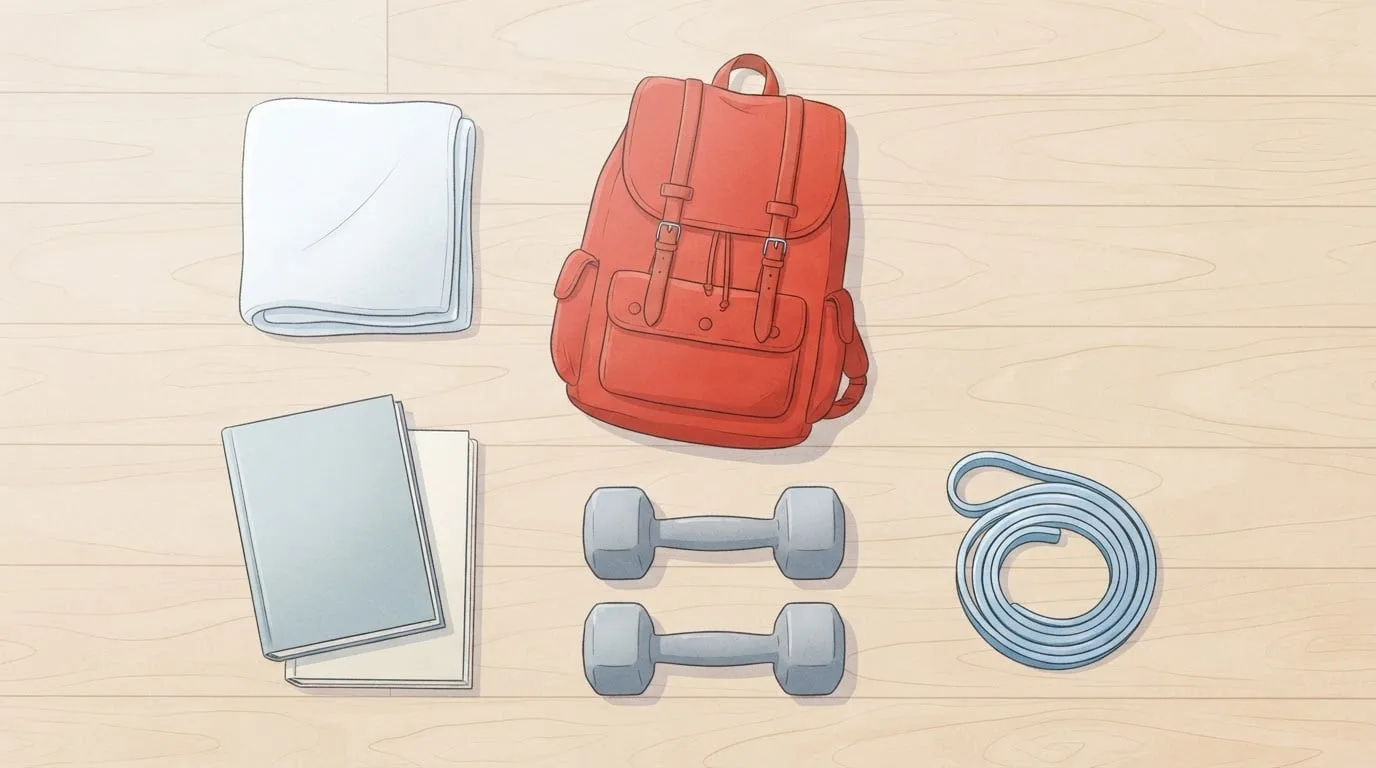
- Go deeper. With your hands on two books or dumbbell handles, your chest can sink below hand level and the muscle works through a longer range.
- Wear a backpack. Books or water bottles in a backpack add weight the way plates do on a barbell, and you can add a little at a time.
- Add a band. A resistance band across your upper back, with the ends under your palms, gets harder as you press, which is how the Calatayud trial loaded its push-ups.
- Pick up dumbbells. A dumbbell floor press trains the same muscles with weight you can raise in small steps.
Our push-up progression guide orders every bodyweight variation from easiest to hardest, and our chest workout at home builds a full session around depth, angle and one-arm loading.
Do Push Ups Build Muscle for Females?
Yes. Women build muscle from push-ups by the same rules as men. Roberts, Nuckols and Krieger (2020) pooled studies that put men and women on the same program and found similar muscle growth in both sexes, with women gaining more upper-body strength relative to where they started.
The practical difference is the starting point. Many women begin with their hands on a bench or counter, or from the knees, and that's a real training load rather than a lesser version. The same rule applies: hard sets, then a harder variation once the reps pass about 30. Visible size takes months of deliberate hard training and enough food, so nobody gets bulky from push-ups by accident.
How Long Does It Take to Get Pecs With Pushups?
Expect strength first and visible size later. In the trials above, strength rose within 4 to 5 weeks, measurable chest growth showed up by 8 weeks, and the 4-week trial was too short to detect any growth at all. Visible change usually takes 8 to 12 weeks of steady, hard sets, and longer if a layer of body fat hides the muscle underneath.
Your first months are the fastest. Lopez's analysis found bigger gains in untrained people, so a beginner doing hard push-ups three times a week often sees more change in a season than a trained lifter sees in a year.
What Else You Need: Protein, Food and Sleep
Push-ups supply the signal, and food supplies the material. Morton and colleagues (2018) pooled 49 trials with 1,863 people and found that extra protein during resistance training added muscle and strength, with no further gain beyond about 1.6 grams per kilogram of body weight per day. For a 160-pound person, that's roughly 115 grams of protein a day from all sources.
If you're trying to gain weight, eat a little more than you burn. A big surplus mostly adds fat. And sleep counts: muscle is rebuilt during recovery, not during the set.
What This Means for You
Push-ups are a real muscle-building exercise that you never have to outgrow. If the last few reps of each set are hard, and you change the variation when they stop being hard, push-ups will build your chest, shoulders and triceps for a long time, at home, with no gym.
What decides your result is whether you keep doing hard sets for three months straight. Most people who stall on push-ups stall around week six, when life gets busy and nothing pulls them back. As one FitCraft user, Matt, put it: "The real win is I actually want to work out now. That's never happened before."
FitCraft's no-equipment home workout app builds strength workouts around bodyweight and dumbbells, with an AI coach who demonstrates each exercise as an interactive 3D model you can pinch and zoom, and workouts that adjust as you progress. Streaks and leaderboards help with the three months.
Frequently Asked Questions
Will I gain muscle if I do push-ups every day?
You can, if some of those sets are hard, but daily training doesn't add growth by itself. At the same weekly number of hard sets, spreading them over more days does little extra for muscle size (Pelland et al., 2026). Three or four sessions a week with sets that end near failure builds as much muscle as a daily routine, with more recovery time for the elbows and shoulders.
Will 3 sets of 20 pushups build muscle?
Yes, if 20 is close to your limit, and very little if you could do 40. A set builds muscle when it ends within a few reps of failure, so 3 sets of 20 works for someone whose max is about 22 to 25. Once 20 gets easy, switch to a harder variation, such as feet raised or a slow 3-second lowering, rather than adding more easy sets.
What will 10 pushups a day do?
For a beginner who can barely do 10, a daily set of 10 builds strength and some muscle over the first months. For anyone who can do 25 or more, 10 a day is too easy to grow muscle, though it keeps the habit and maintains what you have. To grow, do 2 to 4 sets that end close to failure on three days a week.
How many pushups should a 200 lb man do?
A 200-pound man presses roughly 130 pounds on every standard push-up, because the hands carry about two thirds of body weight. For building muscle, the right number is whatever ends near failure: 3 or 4 sets of 6 to 20 reps on a variation hard enough to stop him there. For fitness norms by age, a man in his thirties rates Good at 17 to 21 push-ups in a row.
Do push-ups make you lose belly fat?
Not directly. Exercising a muscle doesn't burn the fat lying over it or over your stomach, and 100 push-ups burn only about 30 to 50 calories. Belly fat comes down with an overall calorie deficit, daily walking and strength training that keeps your muscle while you lose fat.
What are the benefits of doing a wall push-up?
A wall push-up puts only a small share of your body weight on your hands, so it lets beginners, older adults and people returning from a shoulder injury practice the movement safely. It builds muscle only while it's hard for you. Most people move from the wall to a counter, then a bench, then the floor as their strength grows.