Every women's health feed in 2026 has a "creatine changed my life" post. Every comment section under one of those posts has a "but is it safe for women?" reply. The two questions do not travel well together, which is why the safety question is the one that keeps not getting answered.
The short answer is yes. Creatine is one of the most-studied supplements in sports nutrition, the female-specific safety data is now good, and the long-term studies in general adult populations are extensive enough that the major bodies (the International Society of Sports Nutrition, the International Olympic Committee's supplement paper) call it safe at 3 to 5 grams a day for years. The rest of this page walks through the specific worries women bring, one at a time, with what the research actually shows.
What the Female-Specific Safety Research Shows
The single most useful paper on this question is de Guingand and colleagues (2020), a systematic review and meta-analysis published in Nutrients. The authors screened for randomised trials in female participants who took oral creatine monohydrate and reported adverse events. Twenty-nine trials met the inclusion criteria, covering 951 women across athletes, general adults, older adults and clinical populations. Pooled across studies, there was no statistically significant increase in the risk of any adverse event on creatine compared with placebo. Body mass increased by a small amount (as expected, from intramuscular water), and everything else looked identical to placebo.
Sitting behind that female-specific meta-analysis is the general safety literature, which is much bigger. The International Society of Sports Nutrition's 2017 position stand reviewed the long-term studies (some up to 5 years) and concluded that creatine at doses up to 30 grams a day for up to 5 years is safe for healthy adults. And Antonio and colleagues (2021) in the same journal walked through the specific misconceptions (kidneys, hair loss, dehydration, cramps, bloating) and found none of them held up against the clinical data.
The takeaway is boring, which is the correct answer for a safety question. Creatine has one of the strongest safety records of any supplement on the shelf. The women-specific trials confirm the general finding.
The Kidney Question, Where the Fear Started
The kidney worry has a real origin, and understanding it usually settles the anxiety. Creatine in the body breaks down at a steady daily rate into a compound called creatinine, which is filtered by the kidney and shows up in a routine blood test. Doctors use blood creatinine as an easy proxy for kidney function: healthy kidneys clear it, so blood levels stay low. Take a creatine supplement and blood creatinine goes up a bit because there is more of it to clear, not because the kidney has slowed down.
If you check the more direct markers of kidney function (cystatin C, measured glomerular filtration rate, urinary albumin) they do not change on creatine at 3 to 5 grams a day. Kreider and colleagues (2017) reviewed the long-term monitoring studies and found no effect on any of these more specific markers, in healthy adults, at long-term doses. If you get a routine blood test after starting creatine and the doctor sees a bumped creatinine number, tell them you take creatine. They will either ask for a cystatin C test or adjust their interpretation.
The one place the picture changes is existing kidney disease. If your kidney filter is already impaired, adding a supplement whose main effect is on that system is a conversation to have with a nephrologist, not a decision to make from a wellness reel.
Water Weight and the Bloating Question
Most women see a 1 to 2 pound bump on the scale in the first 5 to 10 days of taking creatine. That is not bloat, it is not fat, and it is not water under the skin. It is water pulled into the muscle cell alongside the creatine, which is one of the mechanisms by which creatine works: a slightly better-hydrated muscle contracts a bit harder and recovers a bit faster between sets. Antonio and colleagues (2021) noted that subcutaneous water retention is not a documented effect at standard doses, which matches what a mirror will tell you a couple of weeks in. If you look softer after two weeks of creatine, it is almost never the creatine; it is usually a change in salt intake, hormonal timing, or how much you slept last night.
A minority of women feel mild bloating in the gut in the first few days. That one is usually a signal that you took the whole day's dose at once on an empty stomach. Split it across two servings, take it with food, and the feeling almost always resolves inside a week. If it does not, drop to a smaller daily dose and rebuild.
Find out what's really holding you back
FitCraft, our mobile fitness app, pairs you with an AI coach who builds you a personalized plan around your goals, schedule, and fitness level. Every FitCraft program is designed by Domenic Angelino, MPH (Brown University) and NSCA-CSCS, with research published in the Journal of Strength and Conditioning Research and Medicine & Science in Sports & Exercise.
Take the Free Assessment Free • 2 minutes • No credit card
Perimenopause, Menopause and Older Women
Perimenopause and menopause are the life stages where the safety question hits hardest, because most of the "is this okay for me?" reels are aimed at women in their forties, fifties and sixties. The short answer is that the safety picture does not change. Nothing about the drop in estrogen makes the kidney process creatine differently, and nothing about post-menopause increases the risk of side effects that were low to begin with.
If anything, the reasons to take creatine get stronger. Smith-Ryan and colleagues (2021) in Nutrients reviewed creatine across the female lifespan and highlighted that peri- and postmenopausal women may benefit more than premenopausal women, because estrogen decline is linked to lower muscle mass, lower bone density, and shifts in mood and cognition. Creatine has small positive effects on each. Candow and colleagues (2021) reviewed the older-adult literature and concluded that creatine combined with resistance training produces better gains in muscle mass, strength and bone density than resistance training alone in this population, without safety signals.
Standard 3 to 5 grams a day is what the trials use. If you want a picture of the specific effects rather than only the safety story, our companion post on creatine for women covers what changes on the scale, in strength, and in the training log.
Pregnancy, Breastfeeding, and Teens
Two groups sit outside the standard safety picture. Pregnant and breastfeeding women are the first. There is active research on whether creatine may protect the fetus during oxygen stress during birth, and animal work is genuinely encouraging, but the human trials that would let a professional society write a general recommendation have not been done yet. Most bodies default to "do not start during pregnancy or breastfeeding without a doctor's sign-off," which is the honest position to take when the data set is thin.
Teens are the second. Creatine at standard doses appears safe in adolescents based on the studies that exist, and the ISSN's position stand explicitly does not warn against it, but the sensible move for a teenage athlete is to add creatine only with a parent and a doctor in the loop, especially if she takes any prescription medication. We pulled every published youth trial into one place in our companion post on whether creatine is safe for teens, including the growth plate question and the rules the NCAA and high school associations actually wrote.
Everyone else, the safety story is the boring one: 3 to 5 grams a day of creatine monohydrate, take it whenever you want, keep training.
Other Common Worries
Hair loss. The worry traces back to a single 2009 study in male rugby players that found a rise in dihydrotestosterone (DHT), a hormone associated with pattern hair loss, without measuring hair loss itself. That result has never replicated in follow-up work, and no trial has ever shown creatine causes hair loss in women or men. Antonio and colleagues (2021) discuss this specifically in their misconceptions review.
Dehydration and cramps. The claim was that creatine pulls water into the muscle and leaves less for the rest of the body, causing dehydration or cramping. Multiple hot-weather studies in athletes have shown the opposite: creatine users had slightly better hydration markers and no increase in cramping frequency.
Liver stress. Long-term safety monitoring studies have followed liver enzymes on creatine for years and found no changes at standard doses. The liver metabolises creatine as part of its normal daily workflow.
Heart or blood pressure effects. There is no documented negative effect on cardiovascular markers at 3 to 5 grams a day. Some small-trial data suggests possible mild positive effects on endothelial function, but nothing that would change the safety picture either way.
The Dose That Actually Works
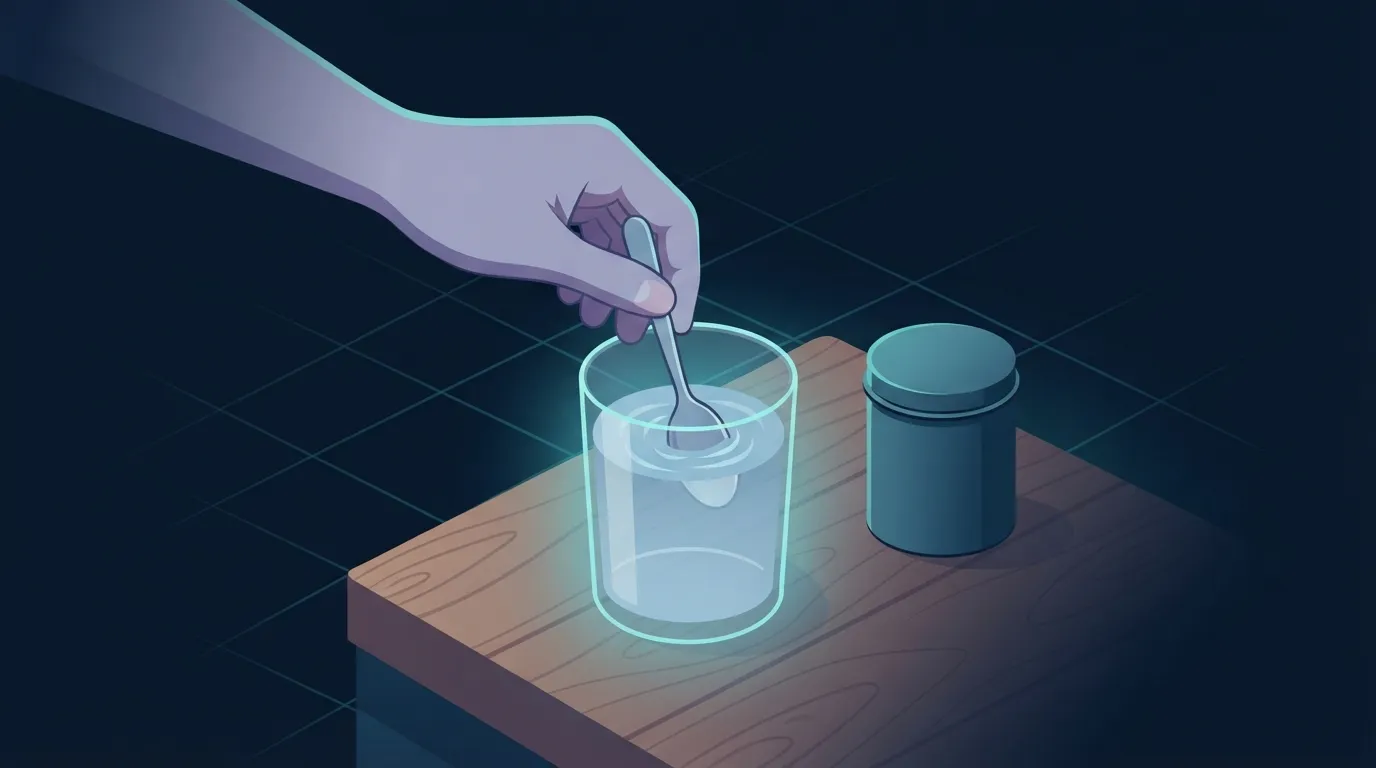
Three to five grams of creatine monohydrate a day is the whole prescription. Bigger women who train hard sit closer to 5 grams; smaller women sit closer to 3. Body size matters more than sex here; a 200 pound rugby player and a 130 pound Pilates instructor need different amounts, but two 145 pound women lifting three times a week are on the same dose.
Timing does not really matter. Take it with breakfast, with a post-workout meal, or with dinner. What matters is that you take it most days, because saturation is a stock, not a flow: your muscle creatine stores fill up over about four weeks of daily use and drain over about four weeks off it. If a day slips, it is not a problem. If a week slips, no big deal. If a month slips, you start over.
The loading phase (20 grams a day for 5 to 7 days) is a leftover from performance research where researchers needed saturated muscle by the end of the week. For an everyday user there is no reason to do this and it is the specific dose most likely to cause stomach discomfort. Skip it.
Monohydrate is the form the studies use. It is also the cheapest, at somewhere around a dollar a week. The exotic "buffered" and "HCL" forms are more expensive without a matching evidence base.
Who Should Ask a Doctor First
- Existing kidney disease or reduced kidney function, at any age.
- Pregnancy or breastfeeding: the data is not there yet, so a healthcare provider decision.
- Teens, particularly those on prescription medication.
- Prescription medication that affects kidney or liver function (some diabetes drugs, some NSAIDs at chronic doses, some blood pressure medications).
- A history of an eating disorder, if the 1 to 2 pound early water bump could set off a restriction cycle; the physical effect is small, but the emotional one may not be.
Everyone else, this is one of the lower-friction supplement decisions in the whole aisle. Get monohydrate, take 3 to 5 grams a day, train.
The Bottom Line
Creatine monohydrate at 3 to 5 grams a day is safe for healthy women. The female-specific meta-analysis by de Guingand and colleagues (2020) is unusually clean on this point, and it sits on top of a large general safety literature summarised by the International Society of Sports Nutrition. The kidney worry is a misreading of a routine blood test. The water-weight bump is inside the muscle, not under the skin. Perimenopause and menopause do not change safety, and if anything the case for taking it gets stronger. The three groups who should ask a doctor before starting are people with kidney disease, women who are pregnant or breastfeeding, and teens on medication.
If the real question underneath "is it safe?" is actually "am I supposed to be doing something to get stronger and stay strong?", the honest answer is yes, and creatine is the third or fourth-order decision. The first two are the ones that keep slipping. Our roundup of the best fitness apps for women walks through the options that make the training itself easier to keep.
Frequently Asked Questions
Is creatine safe for women to take daily?
Yes. Creatine monohydrate is one of the most studied supplements in sports nutrition and it has a long safety record in healthy women. A 2020 systematic review and meta-analysis by de Guingand and colleagues in Nutrients pooled 29 studies in 951 female participants and found no increased risk of adverse events compared with placebo. The International Society of Sports Nutrition's 2017 position stand concluded 3 to 5 grams a day is safe for long-term use in healthy adults. Women who have kidney disease, are pregnant or breastfeeding, or take prescription medication that affects kidney function should ask their doctor before starting.
Does creatine hurt your kidneys?
In healthy people, no. The myth started because creatine slightly raises serum creatinine, a common blood marker of kidney function. But that rise is the creatine itself showing up in the blood, not damage to the kidney filter. Kreider and colleagues (2017) reviewed the long-term safety data and concluded creatine at 3 to 5 grams per day has no adverse effect on kidney function in healthy adults, and the more sensitive markers (cystatin C, glomerular filtration rate) stayed stable across studies up to 5 years. People with existing kidney disease are a separate case and should not add creatine without a doctor's sign-off.
Does creatine cause water retention or bloating in women?
Creatine draws a small amount of water into muscle cells, which shows up as roughly 1 to 2 pounds on the scale in the first week for most women. That water is inside the muscle, not under the skin, so it does not look like bloat. Antonio and colleagues (2021) reviewed the misconception literature in the Journal of the International Society of Sports Nutrition and found no evidence of subcutaneous water retention or a puffy appearance from standard doses. If you feel bloated in the gut after starting, split the daily dose across two smaller servings or take it with a full meal.
Is creatine safe during perimenopause and menopause?
Yes, and the case for taking it actually gets stronger in this life stage. Smith-Ryan and colleagues (2021) in Nutrients reviewed creatine across a woman's lifespan and highlighted that peri- and postmenopausal women may benefit more than premenopausal women, because estrogen decline is linked to lower muscle mass, lower bone density and shifts in mood and cognition, and creatine has small positive effects on all four in this population. There are no known safety concerns specific to perimenopause or menopause. The standard 3 to 5 gram daily dose is what the research uses.
Is creatine safe during pregnancy or breastfeeding?
The honest answer is that there is not enough human data to make a confident call, so most bodies do not recommend adding creatine during pregnancy or breastfeeding without a doctor's sign-off. Animal work suggests creatine may protect the fetus during oxygen stress during birth, and there is active research in this area, but the human trials needed to write a general recommendation have not been done yet. If you are already pregnant or breastfeeding and want to take creatine, ask your OB-GYN. If you were taking it before pregnancy, the same conversation applies.
Are there side effects women should watch for?
Most women feel nothing new after starting creatine. The two side effects that occasionally show up are mild stomach discomfort in the first few days (usually from a loading dose or from taking the whole dose at once on an empty stomach) and a small early bump on the scale from intramuscular water. Neither is dangerous. Split the dose across two servings taken with meals if the stomach is unhappy. If you notice any real symptom (persistent pain, unusual swelling, blood in the urine), stop and see a doctor, but those are rare and not documented in the trial literature at standard doses.
What is the safe dose of creatine for a woman?
Three to five grams of creatine monohydrate a day is the standard evidence-based dose for a healthy adult, and body size scales this down more than sex does. A smaller woman is closer to 3 grams; a larger, actively training woman is closer to 5. Skip the 20 grams a day loading phase unless you need saturated stores fast for a specific reason. The daily dose gets you to the same place inside a month with no stomach upset.