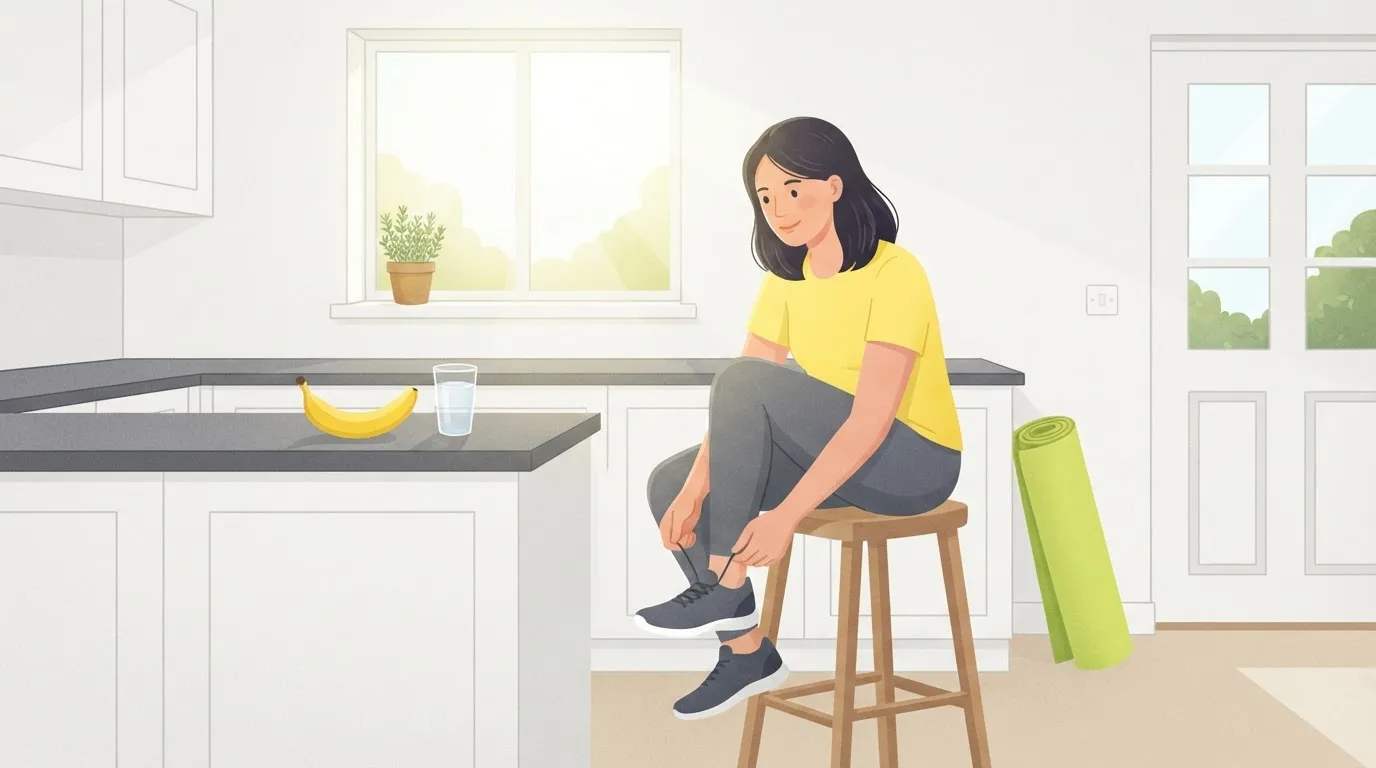
Your alarm goes off at 6. You've got half an hour before the house wakes up, and making breakfast would use most of it. So you wonder whether a fasted workout is smart, risky or a waste of effort, and whether the dizzy spell you had last time means you shouldn't try it again.
Some people swear that training on an empty stomach burns more fat, and others say it ruins the session. The research gives a clearer answer that depends on the kind of workout, how long it lasts and a few facts about your health. It's worth getting right, because a routine that leaves you shaky or starving is a routine you'll quit.
This page gives a verdict for each type of session. Then it covers what an overnight fast does in your body, why some people feel lightheaded, who should always eat first and what to eat if you do. If your real question is fat loss, our answer to are fasted workouts good for weight loss walks through those trials.
Can You Workout on an Empty Stomach? It Depends on the Session
Yes, you can work out on an empty stomach for most everyday sessions. The strongest evidence comes from a 2018 meta-analysis by Aird, Davies and Carson that pulled together 46 studies of fasted and fed exercise. Eating beforehand gave a small performance boost in aerobic sessions longer than 60 minutes, pooled across 25 comparisons. In sessions shorter than 60 minutes, 22 comparisons showed no effect at all. The trials on intervals and lifting further down fill in the rest.
| Session | Fasted? | What the studies show |
|---|---|---|
| Walking, yoga, mobility or an easy bike ride | Fine | Easy effort runs mostly on fat, so a recent meal isn't needed |
| Cardio under an hour, such as a jog or a cardio class | Fine | No performance difference across 22 comparisons (Aird 2018) |
| Cardio over an hour, such as a long run, ride or hike | Eat first | Eating helped across 25 comparisons (Aird 2018) |
| Hard intervals and sprints | Workable | About 5 percent less work in fasted sprints (Terada 2019), but the same 6-week results from fasted or fed intervals (Gillen 2013) |
| Weight training | Fine for most | About 15 percent fewer squat reps after skipping breakfast (Bin Naharudin 2019), but the same 12-week gains (Vieira 2025) |
| A race, a match or an all-day hike | Eat first | Long, hard efforts depend on carbohydrate (Kerksick 2017) |
What Happens If I Workout on an Empty Stomach?
When you work out on an empty stomach, your body runs on stored fuel, and it handles that well for an hour or more. With no recent meal your insulin is low, so your muscles burn a bigger share of fat. Your liver keeps your blood sugar steady by releasing the sugar it stores as glycogen and by making new glucose.
That liver store rises and falls with your meals. In a magnetic resonance study by Taylor and colleagues (1996), a meal raised liver glycogen by about half, from 207 to 316 mmol per liter. It peaked about 5 hours after the meal and then fell. The liver doesn't rely on that store alone, though. Rothman and colleagues (1991) found that newly made glucose supplied 64 percent of the body's glucose output during the first 22 hours of a fast.
How hard you work matters as much as when you last ate. Romijn and colleagues (1993) found that fat release from body fat stores peaked at the lowest intensity they tested, while muscle glycogen use climbed as the effort got harder. That's why a walk feels the same fed or fasted and a hard interval session doesn't.
Fat burning goes up too. Vieira and colleagues (2016) pooled 27 studies and found about 3 more grams of fat burned in a fasted session, an effect that doesn't add up to extra fat loss over weeks. Our review of the fasted cardio research explains why.
An empty stomach isn't only a morning thing, either. Most of a light meal has left your stomach within about 4 hours, so a workout before dinner can be close to fasted. Our guide to how long after eating you should work out gives the wait for each kind of meal.
Cardio on an Empty Stomach: Under an Hour or Over
Fasted cardio in the morning works well when the session is short. A brisk walk, a 30-minute jog or a cardio class falls in the range where Aird's review found no benefit from eating first. If you feel good, there's no performance reason to force down breakfast.
Past an hour, food starts to pay off. Eating beforehand improved performance in the longer sessions, and all four studies that fed people 3 to 4 hours ahead found better performance. The authors think a meal that early has time to top up the glycogen in your muscles and liver.
A classic study shows what happens when a long, hard session runs on empty. Coyle and colleagues (1986) had trained cyclists ride hard while drinking only flavored water. They gave out after about 3 hours, just after their blood sugar dropped to 2.5 mmol per liter. With a carbohydrate drink, their blood sugar stayed normal and they rode for another hour.
So for a Saturday long run or a two-hour hike, eat breakfast and bring a snack. The International Society of Sports Nutrition advises about 30 to 60 grams of carbohydrate an hour during hard sessions that last longer than an hour.
Knowing what to do is the easy part.
FitCraft, our mobile fitness app, pairs you with an AI coach who builds you a personalized plan around your goals, schedule, and fitness level. Every FitCraft program is designed by Domenic Angelino, MPH (Brown University) and NSCA-CSCS, with research published in the Journal of Strength and Conditioning Research and Medicine & Science in Sports & Exercise.
Take the Free Assessment Free • 2 minutes • No credit cardHIIT and Intervals on an Empty Stomach
Hard intervals burn mostly carbohydrate, so this is where training fasted costs you something. Terada and colleagues (2019) put 20 male cyclists through 4 weeks of all-out 30-second sprints, three sessions a week. One group trained after breakfast with a sports drink, and the other trained after an overnight fast with water. The fasted group did about 5 percent less total work across its sprints.
The fasted group still got fitter. After training it lasted longer at a hard, steady effort, 19.7 minutes against 16.6 for the fed group, and its peak aerobic fitness ended up no different. Doing a little less in each session didn't erase the gains.
Moderate intervals show even less difference. Gillen and colleagues (2013) gave 16 women with overweight or obesity 18 interval sessions over 6 weeks, each made of ten 1-minute efforts at about 90 percent of maximum heart rate. The fasted and fed groups lowered their body fat percentage by similar amounts and got the same boost in their muscles' ability to burn fuel. Aird's review also found no performance difference in the three interval studies it included.
A 20-minute interval workout at home is fine on an empty stomach. If you want your best numbers on all-out sprints, eat a small carb snack first.
Lifting Weights on an Empty Stomach
Fasted weight training is fine for most people, though you may get a few fewer reps. Bin Naharudin and colleagues (2019) tested 16 resistance-trained men who normally ate breakfast. Two hours after either a carb-rich breakfast or just water, they did 4 sets of squats and bench presses to failure. Without breakfast they managed 58 squat reps instead of 68, and 38 bench press reps instead of 40.
Part of that drop seems to be in the mind. In a follow-up, Naharudin and colleagues (2020) gave 22 trained men water, a carb breakfast or a thick placebo with almost no calories that they were told contained energy. The placebo did almost as well as real food, with 43 squat reps against 44 for the carb breakfast and 38 for water. The authors concluded that breakfast helped mainly through a psychological effect, though feeling less hungry may play a part.
Over months, those lost reps don't seem to matter. In a 12-week trial by Vieira and colleagues (2025), 28 young adults lifted twice a week, either after an overnight fast or 1 to 2 hours after a carb-rich meal. Both groups gained the same thigh muscle thickness and the same strength.
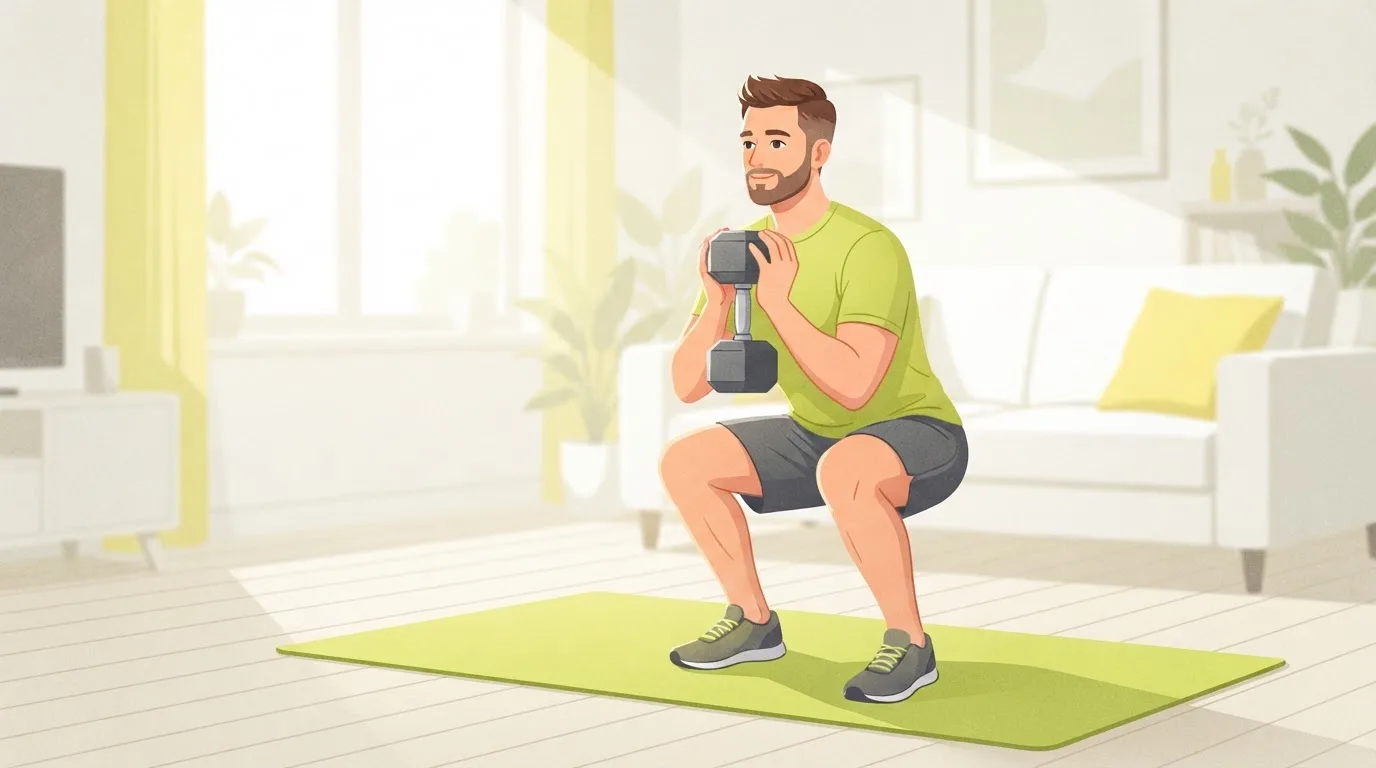
If you lift early and feel strong, keep doing it. If you're a breakfast eater who feels flat without food, have something small first, or save your heaviest sets for a day when you've eaten. For bodyweight and dumbbell sessions at home, fasted works for most people.
Why You Feel Dizzy or Shaky When Exercising While Hungry
Hunger and low fuel are different signals. Hunger follows your usual meal times. Cummings and colleagues (2001) found that the hunger hormone ghrelin nearly doubled right before each scheduled meal and dropped within an hour of eating. A growling stomach at 7 a.m. often just means you usually eat at 7 a.m.
Exercise often turns that signal down. In a study by Broom and colleagues (2007), nine young men ran for an hour after an overnight fast. Compared with a rest day, their hunger stayed lower for about 3 hours.
Feeling lightheaded is a different matter. The American Diabetes Association defines low blood sugar as a reading below 70 mg/dL. The National Institute of Diabetes and Digestive and Kidney Diseases lists its signs as feeling shaky, hungry, tired, dizzy, lightheaded, confused or irritable, along with a fast heartbeat and a headache. In healthy people the liver defends blood sugar well, which is why the cyclists in the Coyle study held out for hours.
The symptoms often show up without a true low. Jeukendrup and Killer reviewed studies of carbs eaten 30 to 60 minutes before exercise, which can cause a short dip in blood sugar once you start, called rebound hypoglycemia. Performance almost never suffered, and the symptoms some athletes felt were rarely linked to a truly low reading. So the snack, not the empty stomach, is sometimes what leaves you shaky. Moving the snack outside that window or trying a different food is a fair experiment, since the authors concluded that each person needs their own approach.
If you feel faint, stop, sit down and have something sweet, such as juice or a sports drink. People with diabetes treat a low with the ADA's 15-15 rule, which means 15 grams of fast-acting carbs and then 15 minutes before checking again. If dizziness keeps coming back, fed or fasted, see a doctor, since dehydration, blood pressure and some medicines can cause it too.
Who Should Eat Before Working Out?
Most healthy adults can go either way. These groups should eat first, or check with a doctor before trying fasted workouts:
- People who take insulin or sulfonylureas. The American Diabetes Association's position statement says exercise-related low blood sugar is common in type 1 diabetes. It's less common in type 2 diabetes treated with insulin or insulin secretagogues, the pills that make your pancreas release more insulin. Your care team should set your plan.
- Pregnant women. In a 1982 study by Metzger and colleagues, women in late pregnancy skipped breakfast after an overnight fast. Their blood sugar fell and their ketones rose over the next 6 hours, while women who weren't pregnant stayed steady. The authors advised against skipping breakfast in pregnancy.
- Anyone eating too little overall. The 2023 International Olympic Committee consensus statement on relative energy deficiency links eating too little for your training to health and performance problems in women and men. If you're dieting hard, fasted sessions deepen the deficit.
- Anyone with a history of disordered eating. A fasted-workout rule can turn into one more food rule, so eat before you train.
- Anyone doing a long or very hard session. Sessions over an hour and all-out efforts go better with food.
- Anyone who feels sick, shaky or starving afterward. If a fasted workout leaves you nauseous, or so hungry that you overeat later, your body has answered the question for you.
Should Women Workout on an Empty Stomach?
Women can work out on an empty stomach too, as long as they eat enough across the day. The few trials in women found the same pattern seen in men. In the Gillen trial above, women did interval training fasted or fed and got the same results. Schoenfeld and colleagues (2014) had 20 young women do an hour of cardio three times a week for 4 weeks, fasted or fed, and both groups lost similar amounts of fat.
For women, the bigger risks are eating too little overall and pregnancy, both covered above. If your periods change while you're training hard and eating less, talk to a doctor.
Is It Better to Exercise Before or After Breakfast?
It depends on what you want from the workout. For long or hard sessions, after breakfast usually wins on performance. For fat loss, the timing makes no real difference over weeks. For blood sugar control, exercising before breakfast may have an edge.
Edinburgh and colleagues (2020) randomized 30 men with overweight or obesity to no exercise or to moderate cycling three times a week for 6 weeks, done either before or after a carbohydrate drink. Only the before-breakfast group cut its insulin response to the drink. A measure of its insulin sensitivity rose by 25 units, while the after-breakfast group's fell by 21. Blood sugar after the drink didn't differ between the two exercise groups.
That's one small study in men, so treat it as a promising lead. A review by Wallis and Gonzalez (2019) found too few long-term training studies to be sure, especially in people with heart or metabolic disease.
For most people, the best time is the one you'll keep. A workout you do before breakfast five days a week will do more for you than a better-timed one you keep skipping.
What to Eat If You'd Rather Not Train Fasted
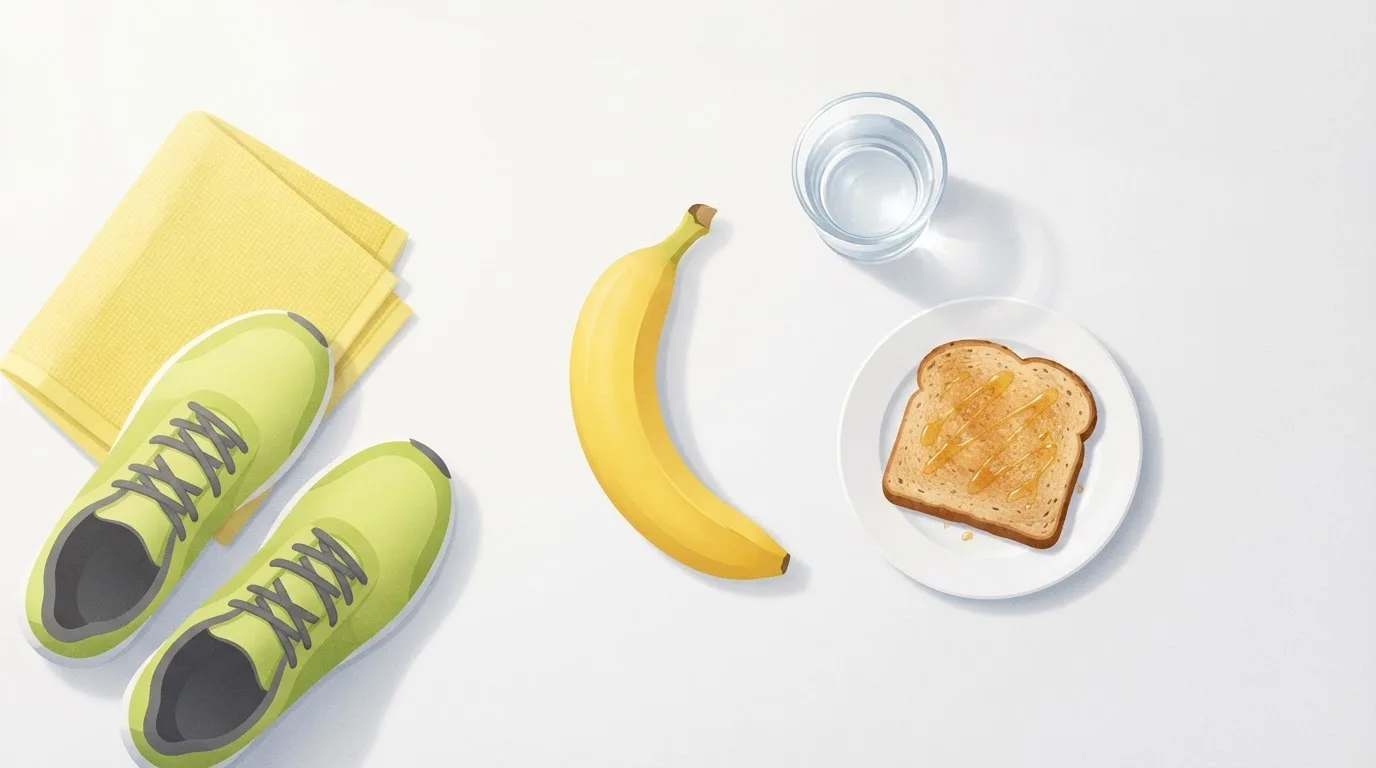
Keep it small if you're short on time. A mostly carbohydrate snack in the hour before, such as a banana, toast with honey or a small bowl of cereal, leaves your stomach quickly and gives you something to work with. A full breakfast needs longer. In Aird's review, the four studies that fed people 3 to 4 hours before exercise all found better performance. Our guide to what to eat before a workout has a menu for each time window.
Can't face food at dawn? A sports drink can help even if you don't swallow it. In a study by Lane and colleagues (2013), 12 competitive cyclists swished a carbohydrate drink around their mouths and spat it out during a 1-hour time trial. Their power rose 3.4 percent when they'd started fasted and 1.8 percent when they'd eaten. Eating and rinsing together gave the best result of all.
Drink a glass of water either way, since you've gone all night without one.
After a Fasted Workout: How Soon to Eat
Eat a meal with protein within about 2 hours. The ISSN's 2017 position stand says 20 to 40 grams of protein in a meal gives muscle building its biggest boost, and protein eaten from right after exercise to 2 hours later works well. It also notes that the size and timing of your pre-workout meal change how much the post-workout meal matters. After a fasted session no earlier meal is still being digested, so breakfast matters more.
Eggs on toast, Greek yogurt with fruit or oatmeal made with milk all work.
What This Means for You
You don't need breakfast to start moving. If your best chance at a workout is 20 minutes before the house wakes up, take it on an empty stomach and eat afterward. Eat first for long sessions, all-out sprints and heavy lifting days, and every time if you take insulin or a sulfonylurea, you're pregnant or you're eating too little.
The bigger question is whether you're still working out in March. That's hard when every morning starts with a debate about food, time and what to do. In FitCraft, a 3D AI coach demonstrates each strength, cardio, yoga or mobility exercise and says your name during the workout. Your workouts adapt as you progress, and streaks and XP give you a reason to come back tomorrow. If you're weighing apps, our ranking of the best workout apps for weight loss compares which ones help people keep going. As one FitCraft user, Stacy, 41, put it: "After my second kid, I needed something stupidly simple."
Frequently Asked Questions
Is it okay to workout 30 minutes after waking up?
Yes, working out 30 minutes after waking up is fine if you warm up first. Your lower back is stiffer early in the day. Adams and colleagues (1987) estimated that the bending stress on your spinal discs is about 300 percent higher in the early morning than later in the day. Start with 5 to 10 minutes of easy movement and save deep toe touches for later in the session.
Is 5am too early to workout?
No, 5 a.m. isn't too early to work out if you still sleep enough. For adults that means 7 or more hours a night, according to the American Academy of Sleep Medicine and the Sleep Research Society. Some performance peaks later in the day. A 2022 meta-analysis found jump height and sprint power highest between about 1 and 8 p.m., with little sign of a best time for endurance. For most people, the hour you can repeat matters more.
What is the golden hour after exercise?
The golden hour is the idea that you must eat within 60 minutes of a workout or lose the benefit. The real window is wider. The International Society of Sports Nutrition says protein eaten from right after exercise to 2 hours later strongly boosts muscle protein synthesis, and that a recent pre-workout meal makes the timing less urgent. After a fasted workout, aim for a protein-rich meal within about 2 hours.
Will I lose muscle if I workout on an empty stomach?
No, not if you eat enough protein across the day. In a 12-week trial by Vieira and colleagues (2025), young adults lifted twice a week, either after an overnight fast or after a carb-rich meal. Both groups gained the same thigh muscle thickness and strength. Have a protein-rich meal after a fasted session.
Is it better to workout on an empty stomach for weight loss?
No, working out on an empty stomach doesn't lead to more weight loss over time. A fasted session burns a few extra grams of fat, but trials lasting weeks found the same fat loss fasted or fed when calories were matched. Our answer to are fasted workouts good for weight loss covers those trials.