Most lower-body training moves forward and back. Squats, lunges, deadlifts, and step-ups all live mostly in that lane. The side lunge toe touch fills the side-to-side gap. You step wide, load one hip, keep the other leg long, and reach toward the toes without forcing the range.
That makes it useful in two places: as a dynamic warm-up before lower-body training, or as a low-equipment conditioning move in a bodyweight circuit. It builds lateral control while giving the hips and hamstrings a real mobility signal.
Quick Facts: Side Lunge Toe Touches
- Equipment needed: None
- Difficulty: Beginner to Intermediate
- Modality: Conditioning and mobility
- Body region: Lower body and core
- FitCraft quest category: Cardio
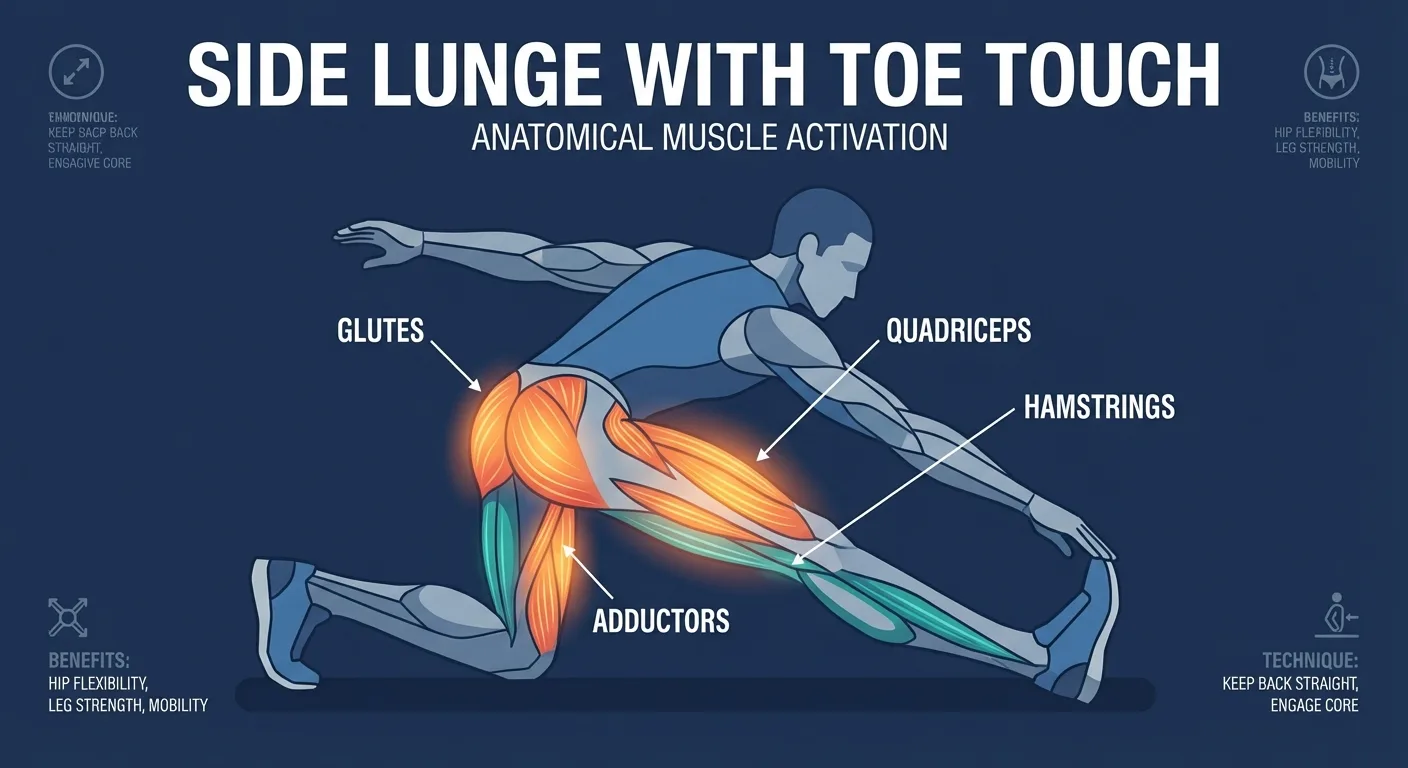
Muscles & Systems Worked
Primary movers: the quadriceps, gluteus maximus, gluteus medius, and adductors of the lunging leg. They control the descent as the knee and hip bend, then drive the body back to standing as you push through the heel and midfoot.
Secondary movers: the hamstrings, adductors, and calf complex on the straight leg help manage the long-leg position. The reach also brings in the obliques and hip flexors as the trunk rotates and folds slightly toward the lunging foot.
Stabilizers: the deep core, spinal erectors, ankle stabilizers, and small hip stabilizers work isometrically to keep the knee tracking, the foot planted, and the torso from collapsing during the toe reach.
Conditioning mechanism: repeated side-to-side reps raise heart rate through continuous lower-body work. The lateral step loads the frontal plane, the toe reach adds trunk control, and the return to standing trains deceleration and re-acceleration without jumping.
Step-by-Step: How to Do a Side Lunge Toe Touch
Move slowly at first. The goal is a clean lateral lunge with a controlled reach, then speed can come later.
Step 1: Set Your Starting Position
Stand tall with feet together, arms relaxed, and ribs stacked over hips. Lightly brace your core before the first step.
Coach Ty's cue: "Start tall before you move. Don't begin the rep already folded forward."
Step 2: Step Out Wide
Take a wide step to one side. Push your hips back as the stepping knee bends, and keep the opposite leg long with the foot flat on the floor.
Coach Ty's cue: "Sit into the side hip, then keep the straight-leg foot heavy on the ground."
Step 3: Reach Toward the Toes
Reach the opposite hand toward the toes of the lunging foot. Touch your shin or ankle if the toes are out of range. Keep the reach smooth and stop before your back rounds hard.
Coach Ty's cue: "Reach to your current range. The toe touch is earned, not forced."
Step 4: Drive Back to Standing
Press through the heel and midfoot of the bent leg to return to standing. Keep the knee tracking over the toes as you come up.
Coach Ty's cue: "Push the floor away and stand tall before the next side."
Step 5: Alternate with Control
Switch sides or complete all reps on one side before changing. Keep every rep consistent: same step width, same depth, same controlled reach.
Coach Ty's cue: "Make the last rep look like the first one."
Get this exercise in a personalized workout
FitCraft, our mobile fitness app, uses its AI coach Ty to program conditioning work like this into your plan at the right volume and intensity, based on your level, goals, and equipment. Ty was designed and trained by Domenic Angelino, MPH (Brown University) and NSCA-CSCS, with research published in the Journal of Strength and Conditioning Research and Medicine & Science in Sports & Exercise.
Take the Free Assessment Free • 2 minutes • No credit card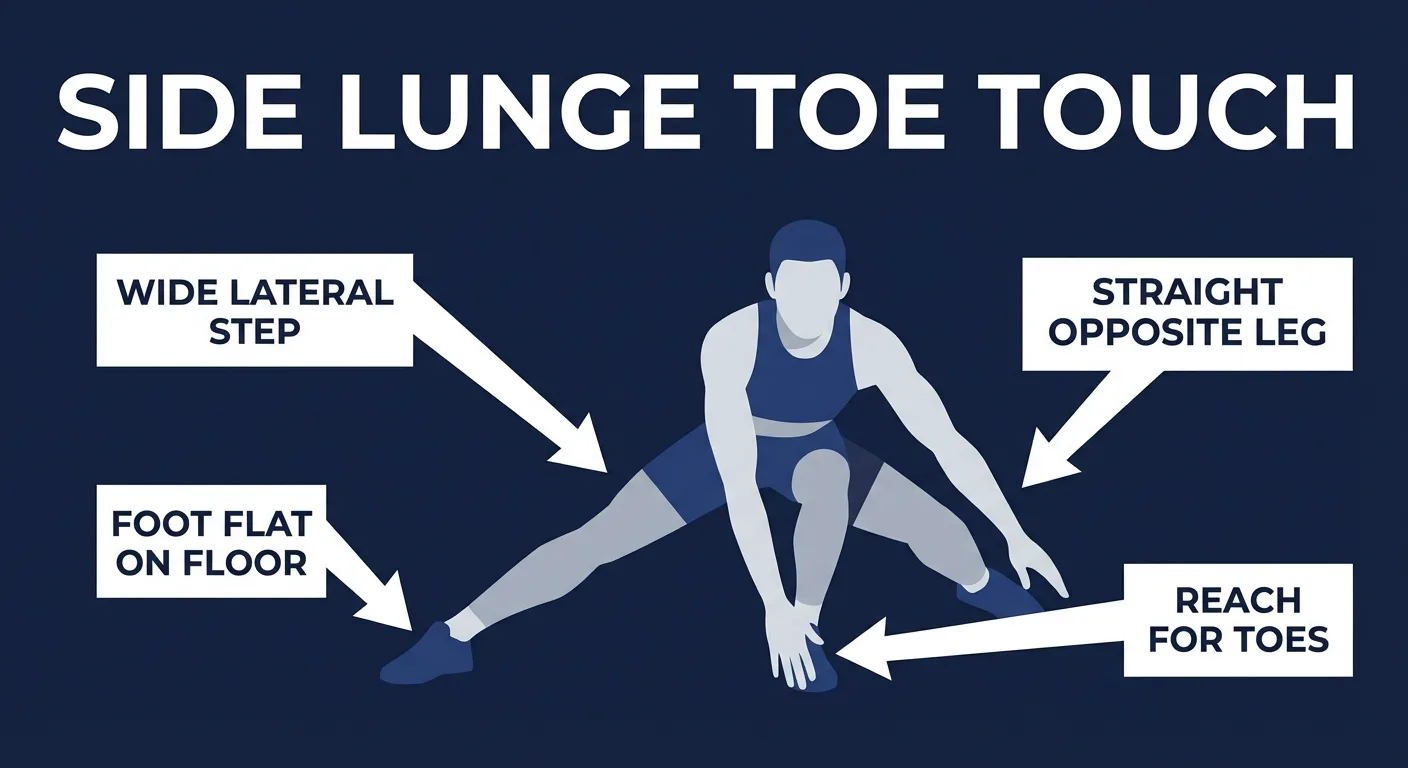
Common Mistakes (and How to Fix Them)
- Stepping too narrow. A small step turns the movement into a shallow squat. Fix it by stepping wider than shoulder-width so the side hip has room to load.
- Letting the straight-leg foot roll up. The opposite foot lifting or rolling inward removes the adductor stretch and balance challenge. Keep the whole foot planted and reduce the depth if needed.
- Rounding the back to reach lower. The toe touch should come from hip range and trunk control. Reach to the shin if touching the toes makes the spine collapse.
- Knee collapsing inward. The lunging knee should track in the same direction as the toes. Shorten the step, slow down, and drive through the heel and midfoot.
- Bouncing out of the bottom. A bounce hides poor control and can irritate the knee or groin. Pause for a split second, then stand up with a clean push.
- Turning it into a speed drill too soon. Fast reps only work after the pattern is stable. Earn speed by keeping depth, balance, and foot position consistent.
Side Lunge Toe Touch Variations: Regressions and Progressions
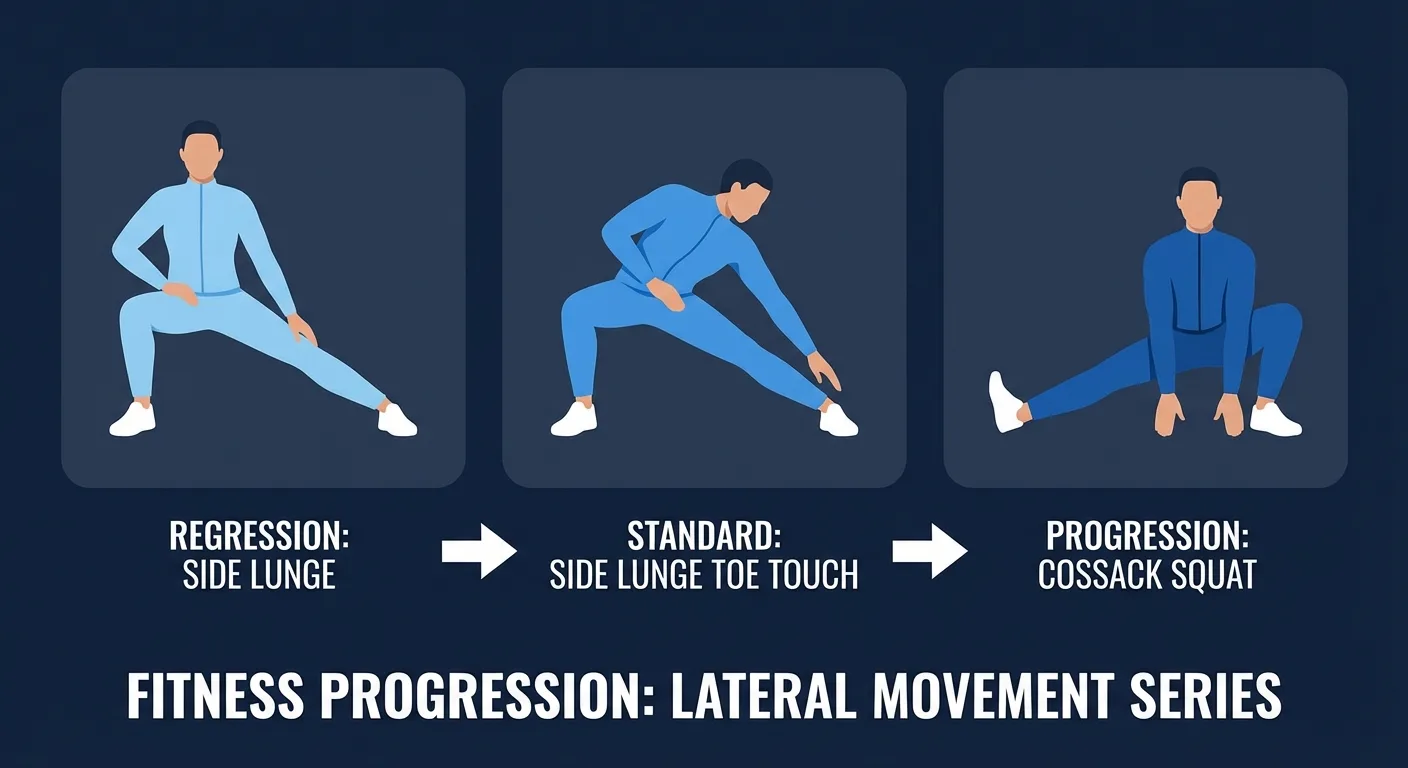
Use the version that lets you keep the knee tracking clean and the straight-leg foot flat.
Supported Side Lunge Toe Touch (Beginner Regression)
Hold a wall, rack, or sturdy chair with one hand while you step to the side. Use the support for balance, then reach only to the shin or ankle.
Side Lunge Lean (Pattern Builder)
Keep the reach smaller and focus on loading the hip. This is a good bridge if the full toe touch pulls you out of position.
Alternating Side Lunge Toe Touch (Standard)
Alternate left and right reps at a steady pace. This version works well in warm-ups and conditioning circuits because it keeps the heart rate moving without impact.
Light Loaded Side Lunge Toe Touch (Advanced Progression)
Hold a light dumbbell or kettlebell close to the chest while keeping the reach smaller. Add load only after the bodyweight version stays smooth.
When to Avoid or Modify Side Lunge Toe Touches
Side lunge toe touches are useful for most healthy adults, but the lateral step, hip shift, and toe reach can expose knee, groin, balance, or cardiovascular limits. Always consult your physician or physical therapist for personalized guidance.
- Knee or hip pain during lateral movement. Use a shorter step, keep the reach higher, or switch to side lunge leans until the side-to-side pattern is pain-free.
- Groin strain or irritated adductors. The straight leg and wide step lengthen the inner thigh. Keep the stance narrower and use gentle hip abductor stretches instead until sharp pulling settles.
- Ankle instability or poor foot control. If the foot rolls or balance breaks, slow the rep down and build lower-leg capacity with calf raises before using faster intervals.
- Known cardiovascular disease or uncontrolled hypertension. Fast alternating reps can elevate heart rate quickly. Get medical clearance and use slower, lower-volume sets within your prescribed intensity range.
- Pregnancy, early postpartum, or pelvic-floor symptoms. Wide lateral steps and repeated changes of direction can feel unstable. Use supported, low-impact reps, avoid breath-holding, and prioritize pelvic-floor guidance from a qualified clinician.
- Vertigo or balance disorders. The toe reach shifts the head and torso. Hold a support, reduce the reach, or choose walking-in-place style conditioning until balance is reliable.
Related Exercises
These movements build the same lateral-control, conditioning, and support qualities:
- Lower-impact lateral alternative: Side Lunge Lean keeps the side-to-side hip pattern but reduces the toe-reach demand.
- Dynamic lunge progression: Rear Lunge Knee Drive adds more single-leg balance and heart-rate demand in a forward-back pattern.
- Beginner conditioning pattern: Step-N-Lunge keeps the rhythm of a cardio circuit with less mobility demand.
- Core stability foundation: Forearm Planks and Deadbugs build the trunk control needed for the reach.
- Ankle and lower-leg capacity: Calf Raises and Calf Hops help prepare the feet and calves for faster conditioning work.
How to Program Side Lunge Toe Touches
Side lunge toe touches work best as time-based conditioning or dynamic mobility. Use the broader progression model from the ACSM resistance-training position stand by matching work, rest, and frequency to your current fitness level (Ratamess et al., 2009).
| Level | Work | Rest between sets | Frequency |
|---|---|---|---|
| Beginner | 20-30 seconds, supported or shin reach | 60-90 seconds | 2-3 sessions/week |
| Intermediate | 30-45 seconds, alternating reps | 45-60 seconds | 3-4 sessions/week |
| Advanced | 45-60 seconds, faster tempo or light load | 30-45 seconds | 3-5 sessions/week |
Where in your workout: use side lunge toe touches in a dynamic warm-up, as one station in a low-impact conditioning circuit, or as a short metabolic finisher after strength training. Keep them after heavy lower-body lifting if the session includes squats, hinges, or loaded lunges.
Form floor over rep targets: stop the interval when the lunging knee caves, the straight-leg foot lifts, the back rounds to force the reach, or the pace makes every rep look different.
How FitCraft Programs This Exercise
FitCraft uses side-to-side conditioning drills as part of balanced lower-body and cardio programming when they match your level and available equipment. Ty adjusts the variation and volume to fit your current capacity, so a supported reach can build toward cleaner alternating reps over time.
The key is progression without chasing range too early. The app can place lateral drills beside core work, lower-leg prep, and other low-impact conditioning so the movement supports your plan instead of turning into a random warm-up filler.
Frequently Asked Questions
What muscles does the side lunge toe touch work?
Side lunge toe touches work the quads, glutes, and adductors on the lunging leg. The hamstrings and adductors on the straight leg lengthen under control, while the obliques, deep core, ankle stabilizers, and hip stabilizers keep the torso balanced during the reach.
Why can't I touch my toes in the side lunge?
The usual limit is hip adductor stiffness, hamstring stiffness, or a lunge depth that is too deep for your current range. Reach to your shin, keep the back long, and let the toe touch improve gradually instead of forcing the floor.
Is the side lunge toe touch good for flexibility?
Yes. It combines lateral leg strength with a dynamic stretch for the adductors and hamstrings. It works especially well in a warm-up because it raises temperature while rehearsing a range your hips need for lateral movement.
How deep should I go in the side lunge?
Go only as deep as you can while the lunging foot stays flat, the knee tracks over the toes, and the straight leg stays long. A lower position is useful only if you can still stand up with control.
Can I do side lunge toe touches with knee or hip pain?
Modify them if knee or hip pain shows up. Use a shorter step, reach to the shin, hold a support for balance, or switch to lower-impact lateral drills. Stop if pain changes your knee tracking, balance, or ability to stand back up smoothly.