The single-leg iso ham raise is an advanced bench-elevated bridge variation for the hamstrings, gluteus maximus, and pelvis-control muscles. You keep one heel on a bench, lift the other leg, then bridge without letting the pelvis tilt or rotate. The defining cue is simple: drive the working heel down and keep both hip bones level. No exercise-specific PubMed, PMC, or DOI citation is included in the verified FitCraft citation library, so this guide uses mechanism-based biomechanics instead of a proxy citation. Scale from glute bridges to bilateral iso ham raises, then use the single-leg version once both sides can stay controlled.
The single-leg iso ham raise is the advanced version of the standard iso ham raise. You lie on your back, place one heel on a bench, lift the other leg, and bridge with only the working side.
That small setup change makes the exercise much harder. The working hamstring and glute have to lift the hips, while the trunk and lateral hip muscles keep your pelvis from twisting. If the regular version feels easy but one side drops or cramps here, you found a useful strength gap.
Quick Facts: Single-Leg Iso Ham Raise
- Equipment needed: Bench, sturdy chair, or low box
- Difficulty: Intermediate to Advanced
- Modality: Strength and mobility (isometric-dominant)
- Body region: Lower body and posterior chain
- FitCraft quest category: Mobility
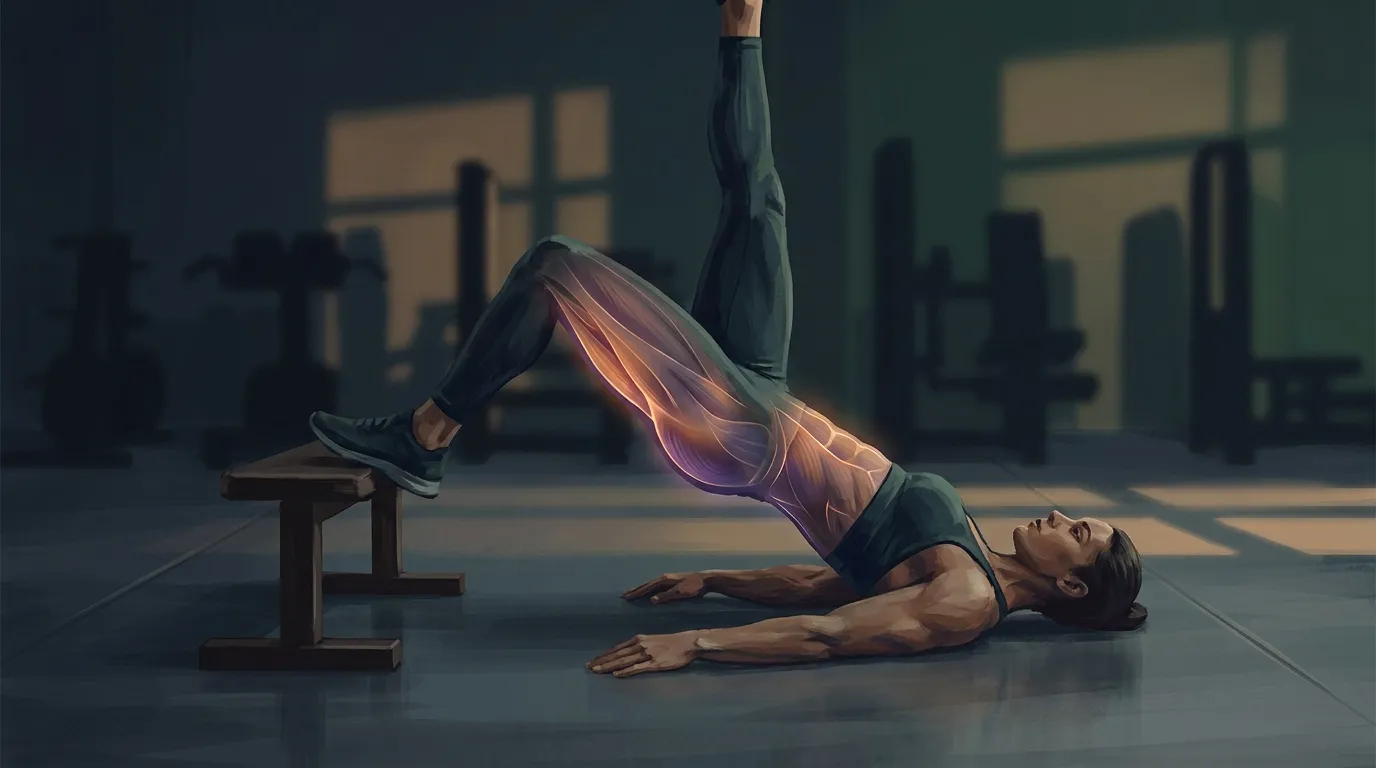
Areas Stretched & Mobilized
Primary movers: the working-side hamstrings (semitendinosus, semimembranosus, and biceps femoris) and gluteus maximus. They drive hip extension as you lift the hips and lengthen under control as you lower back down.
Secondary movers: the adductor magnus assists hip extension, while the gluteus medius and deep hip rotators keep the pelvis from rolling toward the lifted leg. The calf on the planted side helps keep steady pressure through the heel.
Stabilizers: the transverse abdominis, obliques, diaphragm, spinal erectors, and pelvic floor work isometrically to keep the ribs down and the pelvis level. This is why the exercise feels like hamstring work and trunk control at the same time.
Mechanism: elevating the heel changes the knee angle and makes the hamstrings contribute through hip extension while also resisting knee motion. Removing one leg increases the load per side and adds an anti-rotation demand. Keep the goal on controlled tension through the posterior chain while the lower back stays quiet.
Step-by-Step: How to Perform a Single-Leg Iso Ham Raise
Step 1: Set Up the Single-Leg Base
Lie on your back with one heel on a sturdy bench, chair, or low box. Lift the other leg toward the ceiling with a soft knee and keep both hip bones square.
Coach Ty's cue: "Start square before you lift. If your hips are already twisted, the rep has nowhere good to go."
Step 2: Brace Before the Lift
Rest your arms at your sides with palms down for balance. Gently brace your core so your ribs stay down and your lower back stays neutral.
Ty's cue: "Ribs down, belt buckle slightly up. Make the bridge come from your hamstring and glute."
Step 3: Drive Through the Planted Heel
Press the working heel into the bench and lift your hips. Stop when your body forms a straight line from shoulder to working knee.
Ty's cue: "Crush the bench with your heel before your hips move."
Step 4: Hold a Level Pelvis
Pause for one to two seconds at the top. Keep the lifted-leg side from dropping or rotating open, even if that means using a smaller range.
Ty's cue: "Both hip bones face the ceiling. That is the rep."
Step 5: Lower With Control
Lower your hips over two to three seconds. Finish all reps on one side before switching so you can compare left and right control honestly.
Ty's cue: "Own the way down. The lowering phase is where the hamstring gets trained."
Get this exercise in a personalized workout
FitCraft, our mobile fitness app, uses its AI coach Ty to program mobility work like this into your plan at the right volume and intensity, based on your level, goals, and equipment. Ty was designed and trained by Domenic Angelino, MPH (Brown University) and NSCA-CSCS, with research published in the Journal of Strength and Conditioning Research and Medicine & Science in Sports & Exercise.
Take the Free Assessment Free · 2 minutes · No credit card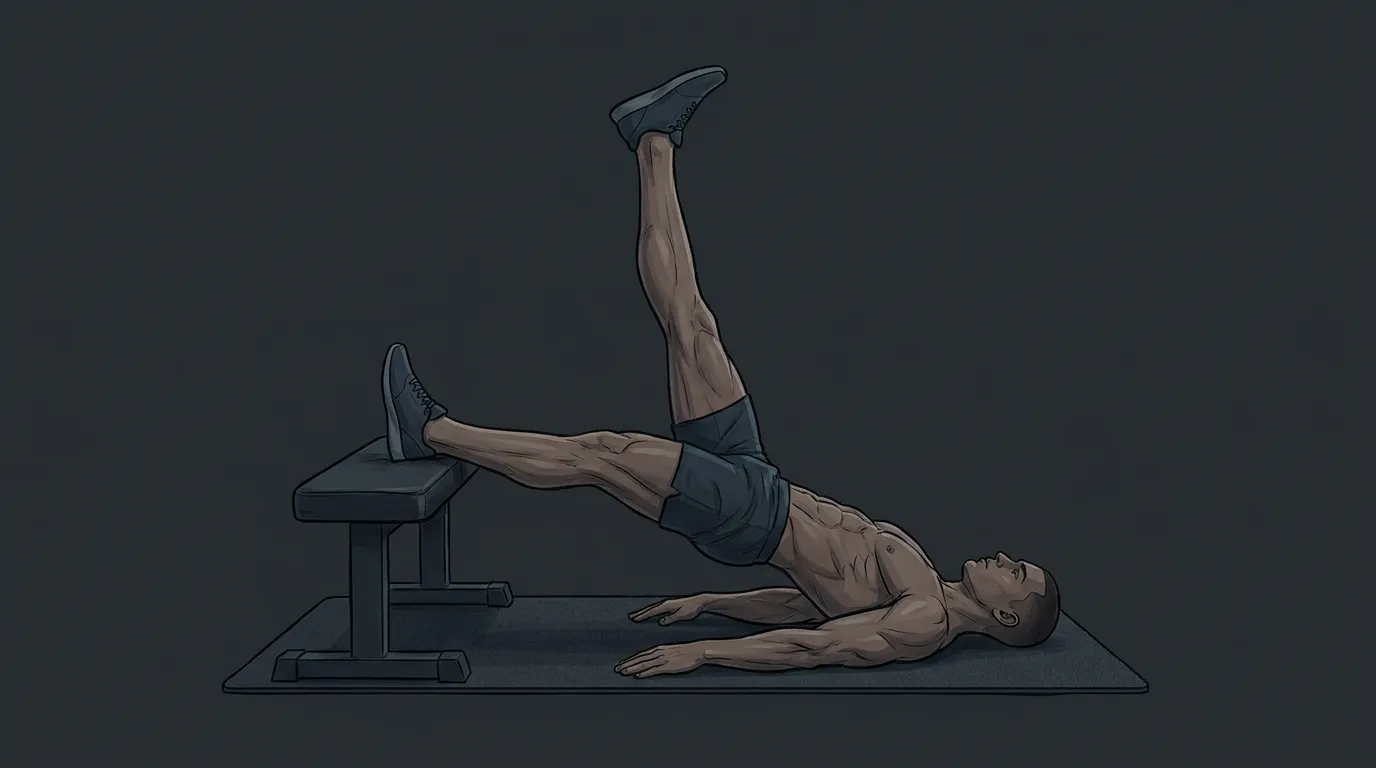
Common Mistakes
- Letting one hip drop. The lifted-leg side often sinks as fatigue builds. Use a smaller range or return to the bilateral iso ham raise until both hip bones stay level.
- Arching the lower back at the top. A higher bridge is not better if it comes from lumbar extension. Stop at a straight shoulder-to-knee line and finish with a glute squeeze.
- Pushing through the toes. Toe pressure shifts work away from the hamstrings and can make the calf cramp. Keep the planted heel heavy on the bench.
- Using a bench that is too high. A high platform can pull you into an awkward knee angle and reduce control. Start around chair height and adjust from there.
- Rushing the descent. Dropping quickly removes the eccentric hamstring work. Lower for two to three seconds on every rep.
- Training through cramps or sharp pain. Mild hamstring effort is expected. Cramping, tendon pain, or sharp pulling means regress the exercise or stop for the day.
Single-Leg Iso Ham Raise Variations: Regressions and Progressions
Glute Bridges
Start here if the single-leg version makes your lower back take over. Keep both feet on the floor and learn to finish hip extension with the glutes.
Iso Ham Raises
The bilateral bench-elevated version is the main prerequisite. Use it until you can keep both hips level for clean, controlled reps.
Short-Range Single-Leg Iso Ham Raise
Lift only halfway up and pause. This keeps the unilateral challenge while reducing the peak hamstring load.
Long-Hold Single-Leg Iso Ham Raise
Hold the top position for 10 to 20 seconds per side. Use this when you want more isometric endurance without adding external load.
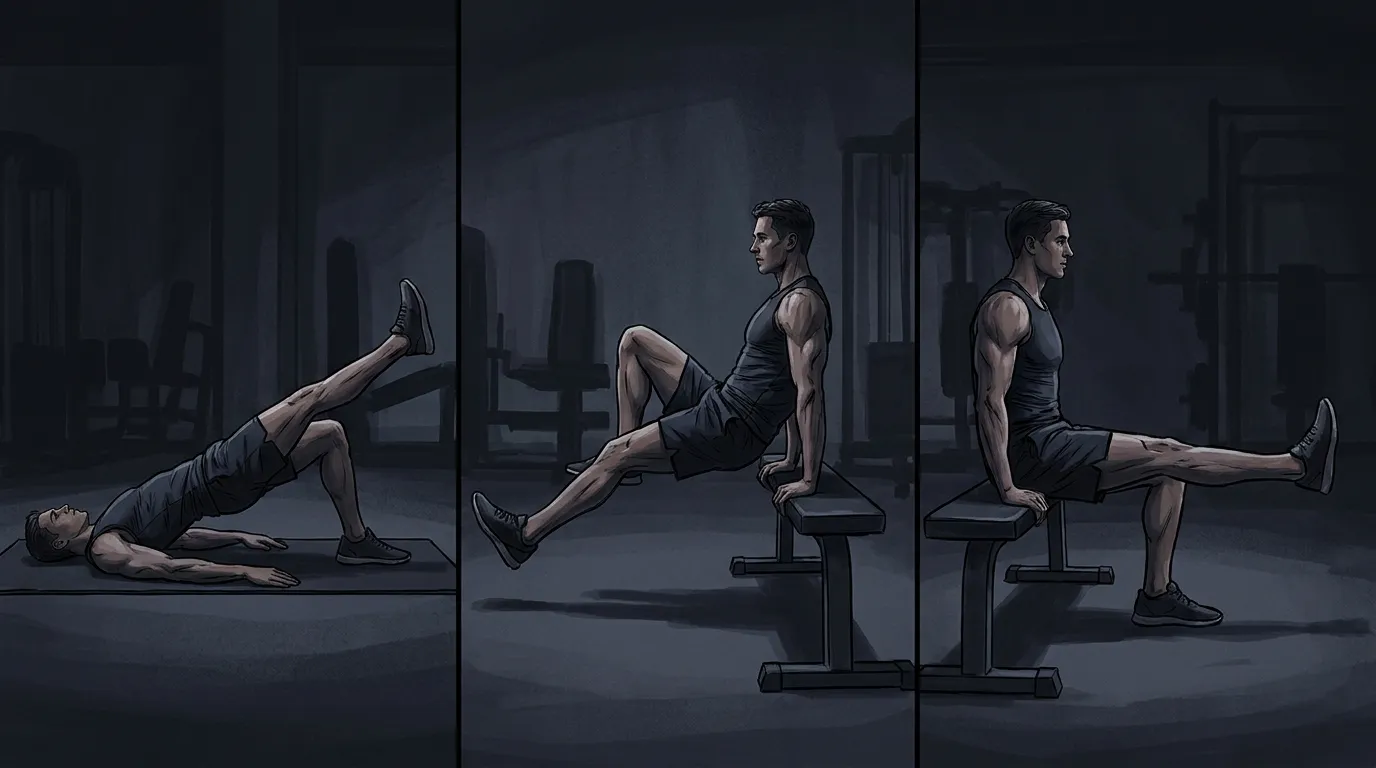
Single-Leg Deadlift
Progress here when you can control the pelvis in a supported bridge and want to train unilateral hip-hinge strength from standing.
When to Avoid or Modify Single-Leg Iso Ham Raises
Single-leg iso ham raises are useful for healthy adults who already own the bilateral version, but a few situations call for a regression. Always consult your physician or physical therapist before returning to exercise after pain, injury, or surgery.
- Acute hamstring strain. Skip the single-leg variation until walking, light bridging, and clinician-approved hamstring loading are pain-free. Rebuild with glute bridges first.
- Lower-back pain or active sciatica. If the bridge turns into a back arch, regress to deadbugs, bird-dogs, and bilateral iso ham raises.
- Recent hip, knee, or pelvic surgery. Wait for clearance before loading one side at a time. Unilateral bridging can stress healing tissue around the pelvis and hamstring origin.
- Cramping with every rep. Reduce the bench height, shorten the range, or return to the regular iso ham raise. Persistent cramping can signal fatigue or a progression jump that is too large.
- Pregnancy or early postpartum. Use a supported bridge variation only if cleared by your clinician, especially if pelvic girdle pain, diastasis symptoms, or SI joint discomfort are present.
- Hypermobility or connective tissue disorder. Keep the range small and active. Avoid hanging into end range or chasing the highest bridge position.
Related Exercises
- Same pattern, easier: iso ham raises and glute bridges.
- Hamstring mobility pairing: straight-leg pull backs.
- Posterior-chain control: bird-dogs and deadbugs.
- Standing hinge progressions: single-leg deadlifts and Romanian deadlifts.
- Lower-body compounds that benefit: squats and rear lunges.
How to Program Single-Leg Iso Ham Raises
Ratamess et al., 2009, the ACSM Position Stand on Resistance Training, supports matching volume, frequency, and progression to training level. For this mobility-strength drill, treat the table below as a range-quality target. Clean pelvis control matters more than chasing reps.
| Level | Sets × Reps or Holds | Rest between sets | Frequency |
|---|---|---|---|
| Beginner | 1-2 sets of 15-30 second bilateral holds or 4-6 short-range reps per side | 45-60 seconds | 2-4 sessions/week |
| Intermediate | 2-3 sets of 6-8 controlled reps per side | 60-90 seconds | 2-3 sessions/week |
| Advanced | 3-4 sets of 8-10 reps per side or 10-20 second top holds | 60-120 seconds | 2-3 sessions/week |
Where in your workout: use single-leg iso ham raises after heavier lower-body work, as a posterior-chain accessory, or during a focused warm-up if the volume is light. Avoid fatiguing the hamstrings before heavy hinges like Romanian deadlifts.
Form floor over rep targets: end the set when the pelvis drops, the lower back arches, the heel loses pressure, or the lowering phase speeds up. A shorter clean set beats a longer twisted set.
Frequently Asked Questions
Can I do single-leg iso ham raises if I have a hamstring strain?
Don't use the single-leg version during an acute hamstring strain. Start with pain-free walking, gentle range of motion, and clinician-approved rehab work. Return to glute bridges or bilateral iso ham raises before loading one hamstring at a time.
What muscles do single-leg iso ham raises work?
They primarily train the hamstrings and gluteus maximus on the working side. The gluteus medius, adductors, spinal erectors, and deep core keep the pelvis level while one leg is lifted.
Why is the single-leg iso ham raise harder than the regular version?
The regular iso ham raise spreads the load across both legs. The single-leg version asks one hamstring and glute to create hip extension while the pelvis resists rotation, so strength and balance demands rise quickly.
How many single-leg iso ham raises should I do?
Start with two to three sets of six to eight controlled reps per side. Add reps only if both hips stay level and the lowering phase remains slow. Advanced trainees can use longer holds or light loading.
Should I feel single-leg iso ham raises in my lower back?
No. You should feel the working hamstring and glute. If your lower back takes over, reduce the range, lower the bench height, return to bilateral iso ham raises, or use deadbugs and bird-dogs to rebuild trunk control.