Walking in place is the fallback cardio move that still counts. You can use it when the weather is bad, when you have only a small patch of floor, when your body needs low impact, or when you want a simple warm-up before strength work.
Quick Facts: Walking in Place
- Equipment needed: None
- Difficulty: Beginner
- Modality: Low-impact cardio
- Body region: Full body, lower-body emphasis
- FitCraft quest category: Cardio
Muscles & Systems Worked
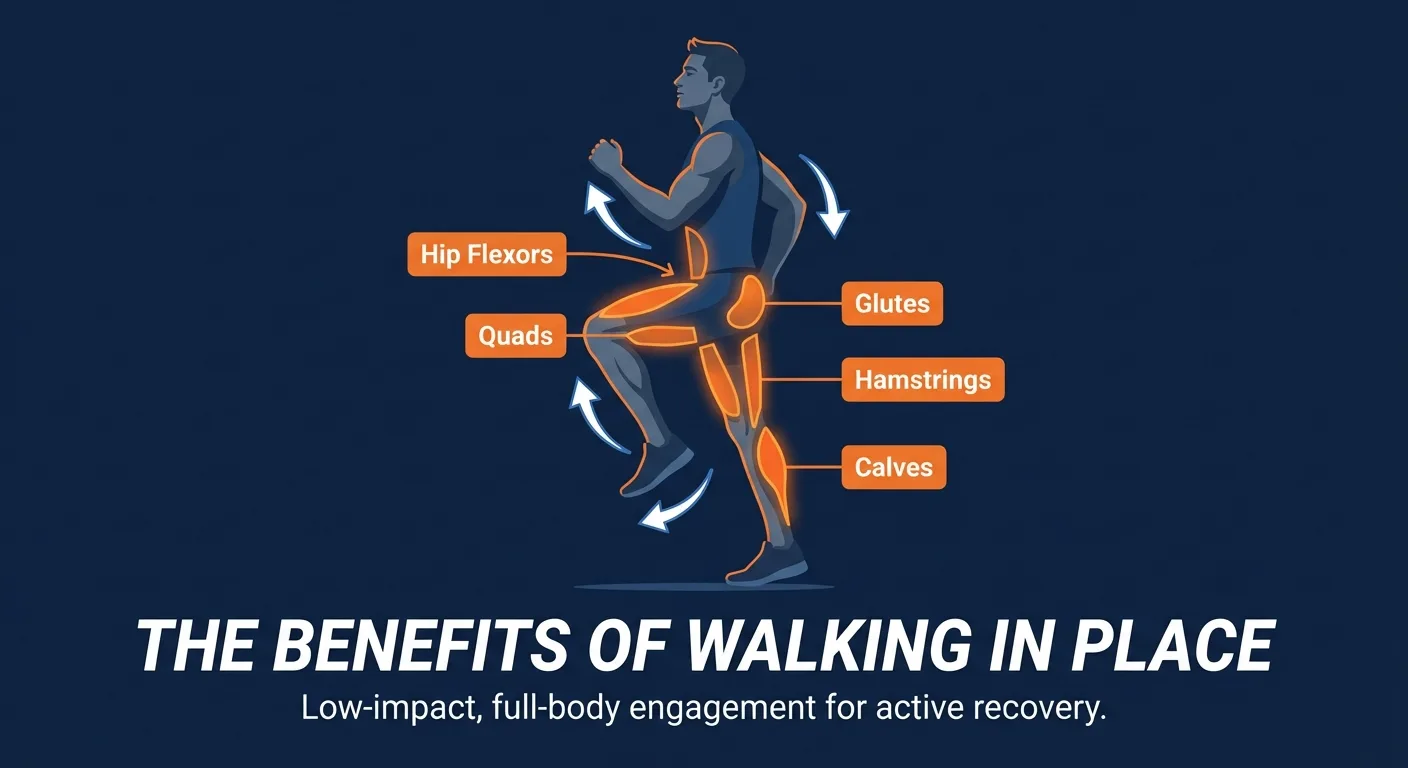
Primary movers: the hip flexors lift each thigh, the quadriceps help control knee position, and the calves push the foot lightly off the floor. The glutes and hamstrings contribute as each foot returns under the hip. Because the movement alternates side to side, one leg is lifting while the other is stabilizing and accepting body weight.
Secondary movers: the shoulders, biceps, triceps, and upper back work when you pump your arms. A stronger arm swing raises the cardiovascular demand and helps keep the cadence athletic instead of turning the drill into a passive shuffle.
Stabilizers: the rectus abdominis, transverse abdominis, obliques, spinal erectors, and small ankle stabilizers keep the trunk upright and the foot strike quiet. This is not heavy strength training, but good posture still matters because slumping shortens breathing space and makes the movement feel less controlled.
Conditioning effect: walking in place trains the heart, lungs, and oxidative energy system through continuous rhythmic work. Faster cadence, higher knees, and a bigger arm swing move the drill closer to moderate cardio. Slower cadence keeps it in the warm-up, recovery, or movement-snack zone.
Step-by-Step: How to Walk in Place
- Set your posture. Stand tall with your feet hip-width apart, knees soft, chest lifted, chin level, and eyes forward. Bend your elbows to about 90 degrees. Coach Ty's cue: "Maintain a confident posture as you walk."
- Start the cadence. Lift your right foot a few inches, set it back down under your hip, then lift the left foot. Keep the rhythm smooth, like you are walking down a hallway without moving forward.
- Pump the arms. Swing the opposite arm with each step. Right arm forward as the left foot lifts, left arm forward as the right foot lifts. Coach Ty's cue: "Pump those arms. They raise your heart rate."
- Land quietly. Keep your steps light and controlled. Avoid stamping the feet or locking the knees. Quiet steps usually mean the joints are sharing the load well.
- Breathe and sustain. Breathe through a steady cadence and continue for your target time. Use 2 to 5 minutes as a warm-up, 10 to 20 minutes for steady cardio, or short brisk intervals when you want more intensity.
Get this exercise in a personalized workout
FitCraft, our mobile fitness app, uses its AI coach Ty to program conditioning work like this into your plan at the right volume and intensity, based on your level, goals, and equipment. Ty was designed and trained by Domenic Angelino, MPH (Brown University) and NSCA-CSCS, with research published in the Journal of Strength and Conditioning Research and Medicine & Science in Sports & Exercise.
Take the Free Assessment Free • 2 minutes • No credit card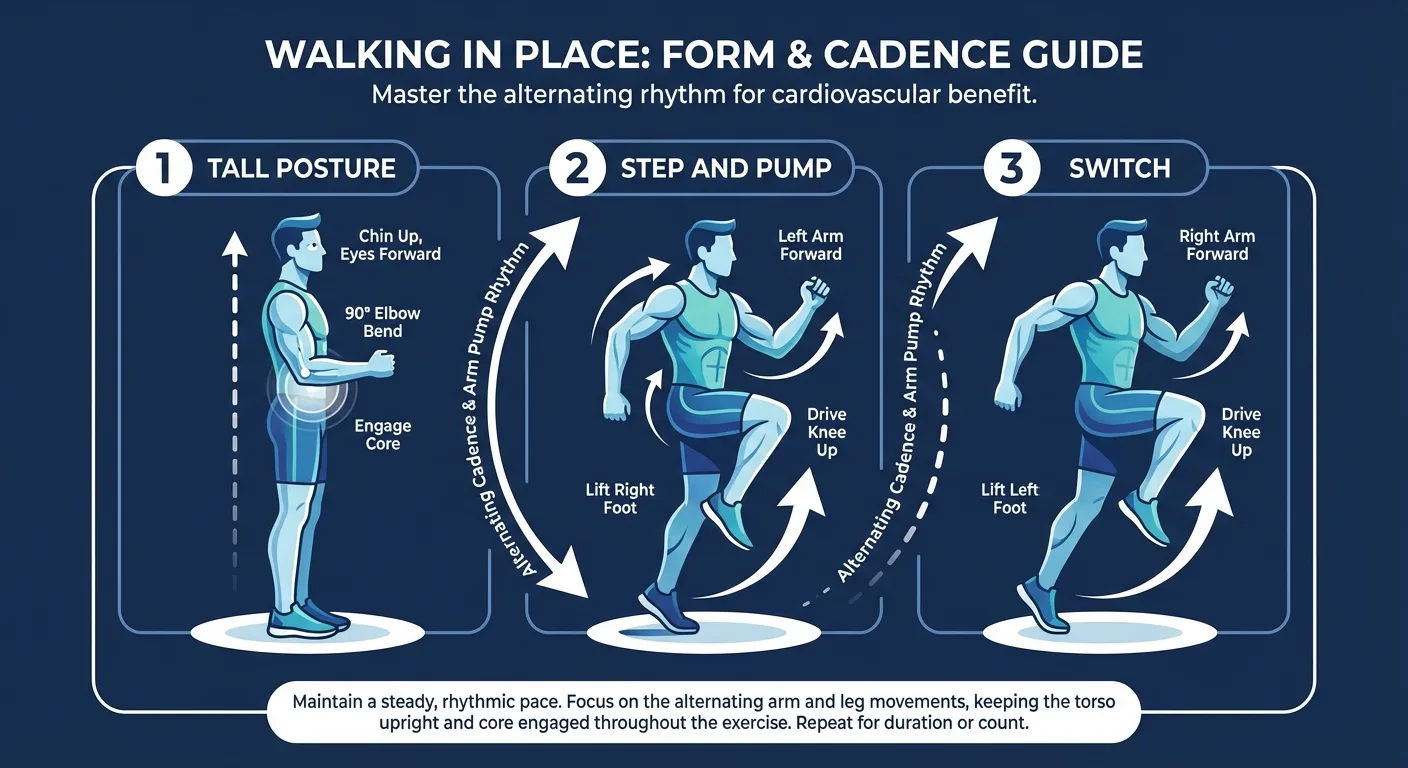
Common Mistakes
Slumping the Posture
What it looks like: chin dropped, shoulders rounded, and eyes on the floor.
Why it's a problem: slumping limits breathing room and makes a simple cardio drill feel heavier than it should.
The fix: keep the chest lifted and look forward. Imagine the upper body being filmed while the feet move underneath you.
Letting the Arms Hang
What it looks like: the feet are moving, but the arms stay still at your sides.
Why it's a problem: you lose intensity and rhythm. The arm swing helps raise heart rate without adding impact.
The fix: bend the elbows and pump the opposite arm with each foot lift.
Shuffling Instead of Stepping
What it looks like: the feet barely leave the ground and the movement becomes a side-to-side weight shift.
Why it's a problem: the hip flexors and calves do less work, and the cardio stimulus drops.
The fix: lift each foot cleanly a few inches. Keep it low if needed, but make it a real step.
Stamping the Feet
What it looks like: every step lands loudly or with a hard knee lock.
Why it's a problem: the drill is supposed to be joint-friendly. Hard foot strikes turn a low-impact option into unnecessary joint irritation.
The fix: soften the knees and land through the midfoot. Quiet is the target.
Going Too Fast Too Soon
What it looks like: cadence rises before posture, breathing, or balance can keep up.
Why it's a problem: fatigue changes gait quickly, especially for beginners.
The fix: earn speed by keeping clean posture for the full time block first.
Walking in Place Variations: Regressions and Progressions
Chair-Supported Walking in Place
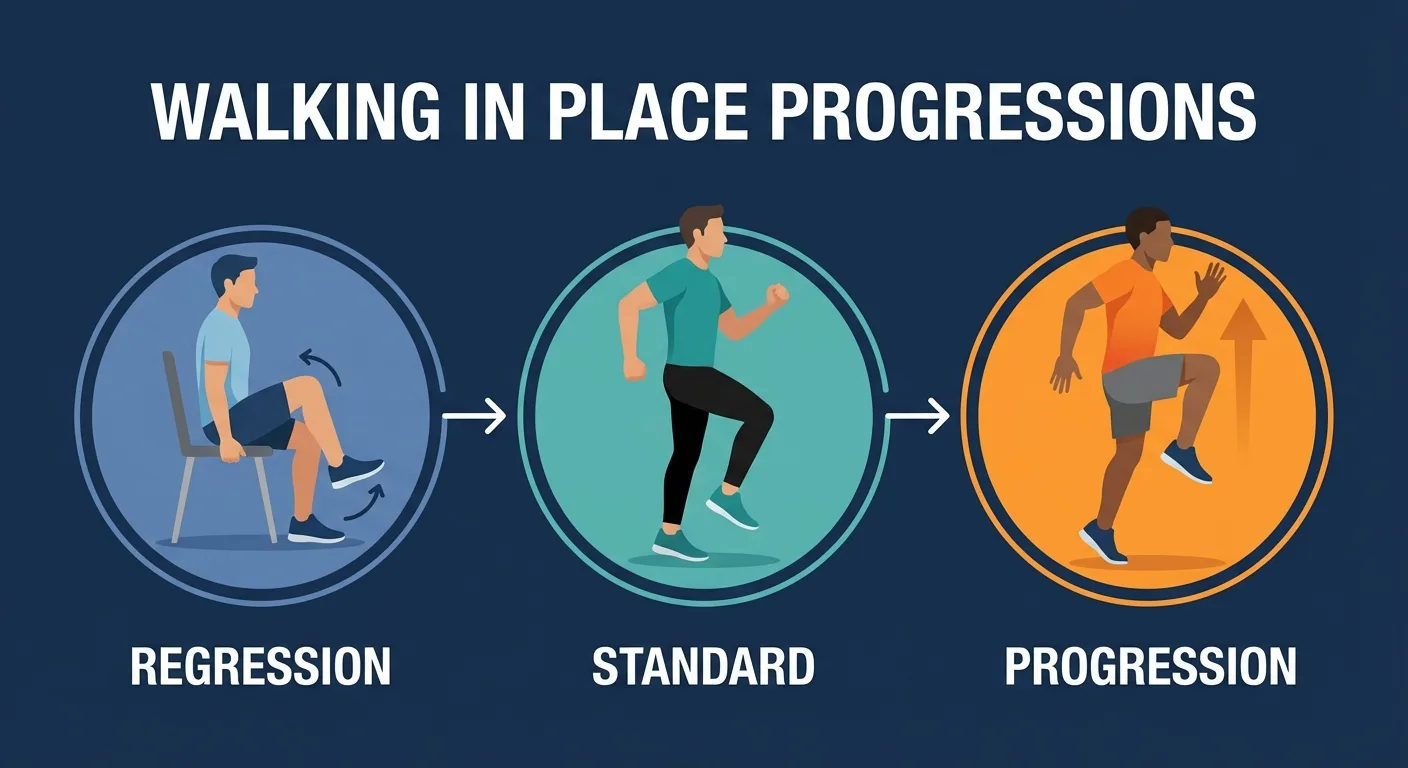
Hold a chair, counter, or wall lightly while you step. This is the best version when balance, confidence, or fatigue is the limiter.
Slow Walking in Place
Use a relaxed cadence and low foot lift. This works well as a warm-up, cooldown, or movement break between desk blocks.
Marching in Place
Lift the knees higher and keep the torso tall. This raises the hip-flexor and core demand without adding jumping impact.
High Knees
Drive the knees higher and faster with a strong arm pump. Use this as the harder conditioning progression once marching in place feels controlled.
Run in Place
Use a quicker, running-style cadence while staying in one spot. Keep this for short intervals if your joints tolerate the impact well.
When to Avoid or Modify Walking in Place
Walking in place is safe for most healthy adults, but a few situations call for a slower pace, a supported version, or medical guidance. Always consult your physician before starting or returning to exercise after symptoms, illness, injury, pregnancy, or a long break.
- Known cardiovascular disease or uncontrolled hypertension. Keep the cadence gentle and stay within clinician-approved heart-rate zones. Use short bouts with longer rest until cleared for more conditioning work.
- Acute knee, ankle, hip, shin, foot, or plantar fascia pain. Lower the foot lift, slow the cadence, or pause cardio until walking without symptom increase is comfortable. Use calf raises only if they are pain-free and already cleared.
- Balance disorders, vertigo, or vestibular symptoms. Hold a chair, counter, or wall. If symptoms increase, switch to seated marching and get clinical guidance before standing cardio.
- Pregnancy or early postpartum recovery. Use a slower, supported version and avoid breath-holding. Get pregnancy or pelvic-floor care guidance if pressure, leakage, pain, or heaviness appears.
- Asthma or exercise-induced bronchoconstriction. Use a longer warm-up, keep an inhaler accessible if prescribed, and avoid sudden high-cadence intervals until you know your response.
- Fatigue that changes your gait. If steps get loud, posture collapses, or balance gets sloppy, end the set and use deadbugs or forearm planks for lower-impact trunk work.
Related Exercises
- Lower-impact alternative: Step-N-Clap keeps the cardio rhythm low impact while adding a simple arm pattern.
- Same pattern, more knee drive: Marching in Place increases hip-flexor and core demand.
- Higher-intensity progression: High Knees and Run in Place raise cadence and heart rate.
- Core stability foundation: Deadbugs and Forearm Planks help you keep the ribs and pelvis stacked during upright cardio.
- Ankle and calf support: Calf Raises build lower-leg capacity for quieter steps.
- Mobility prep: Cat-Cow can loosen the spine before longer walking-in-place sessions.
How to Program Walking in Place
Ratamess et al., 2009 outlines progression principles that still apply here: start with a workload you can perform cleanly, then increase volume, intensity, or frequency gradually. For walking in place, progression usually means more time, faster cadence, higher knees, or shorter rests.
| Level | Sets x reps or time | Rest between sets | Frequency |
|---|---|---|---|
| Beginner | 3-5 minutes continuous or 4 x 30 seconds | 30-60 seconds as needed | 3-5 days/week |
| Intermediate | 10-20 minutes continuous or 8 x 45 seconds brisk | 30-45 seconds for intervals | 4-6 days/week |
| Advanced | 20-30 minutes steady or 10 x 60 seconds brisk | 15-30 seconds for intervals | 5-7 days/week if recovery stays good |
Where in your workout: use walking in place before strength training as a 2 to 5 minute warm-up, after strength training as a cooldown, or on its own as low-impact conditioning. If you also do harder cardio, keep walking in place as the recovery or base-building option.
Form floor over time targets: do not chase duration after posture falls apart. End the bout when steps get loud, knees lock, breathing gets ragged, or balance feels unreliable.
Frequently Asked Questions
Is walking in place a real workout?
Yes. Walking in place uses a real gait pattern, keeps the large muscles of the legs moving, and can raise heart rate enough to count as low-impact cardio. The training effect depends on cadence, duration, and consistency.
What muscles does walking in place work?
Walking in place primarily uses the hip flexors, quadriceps, glutes, hamstrings, and calves. The core helps keep the torso upright, and the shoulders, biceps, and upper back contribute when you pump your arms.
How long should I walk in place?
Start with 3 to 5 minutes if you are new or using it as a warm-up. Build toward 10 to 20 minutes for steady cardio, or use 30 to 60 second brisk intervals when you want a short conditioning block.
Is walking in place good for seniors or beginners?
Yes. Walking in place is beginner-friendly because it needs no equipment, no floor work, and no jumping. Anyone with balance concerns can hold a chair, counter, or wall and use a slower cadence.
Can I do walking in place with knee, ankle, or balance issues?
Often, but modify the range and support. Keep the foot lift low, slow the cadence, hold a stable surface if balance is limited, and stop if knee, ankle, hip, foot, or dizziness symptoms increase. Get medical or physical therapy guidance if pain or balance symptoms persist.