
Every few months fruit gets reclassified. It's nature's candy, then it's a blood sugar trap, then someone's podcast says the fructose is doing something sinister to your liver, and by the end of the week you're standing in front of a bowl of grapes doing calorie math.
If you've been cutting fruit out of your diet to lose weight, that guilt is misplaced, and it's costing you one of the few foods with a clean, consistent signal in the research. The question worth asking isn't whether fruit is allowed. It's which fruits, in what form, and in place of what.
So here's the honest version. The data on this is unusually good, because a handful of very large cohorts have tracked what people ate and what happened to their weight for decades, and a smaller set of controlled trials have actually fed people fruit and measured the result.
Why Fruit Helps at All
The whole thing comes down to energy density, meaning calories per gram. Your stomach measures volume and weight, not calories. Fruit is roughly 80 to 90 percent water, wrapped in fiber, which means a serving occupies real space and takes real chewing time for a small calorie cost. A cup of strawberries is about 50 calories. A handful of almonds is about 170. Both are healthy. Only one of them fills you up.
The clearest single demonstration comes from Flood-Obbagy and Rolls (2009) in Appetite. They gave people apple in four different forms before lunch: whole apple slices, applesauce, apple juice, and apple juice with the fiber added back, all matched for weight, calories and energy density. Whole apple slices beat every other form. People who ate the whole apple ate 15 percent fewer calories at the lunch that followed, about 187 calories less, and they reported feeling fuller. The same calories in a glass did almost nothing.
That's the practical rule. Fruit's advantage lives in its structure, and processing removes the structure.
The Fruits That Track With the Most Weight Loss
The biggest study to look at this by fruit type is Bertoia and colleagues (2015) in PLOS Medicine. They pooled three Harvard cohorts, 133,468 US men and women, and looked at what happened to body weight over successive four-year windows when people changed what they ate. Because each person acts as their own comparison across windows, it handles a lot of the confounding that usually makes nutrition cohorts hard to read.
| Food | Weight change per extra daily serving, over 4 years | Why |
|---|---|---|
| Apples and pears | 1.24 lb less gained | High fiber, high water, very slow to eat |
| Berries | 1.11 lb less gained | Lowest calorie density of common fruit |
| Fruit overall | 0.53 lb less gained | Displaces denser foods |
| Non-starchy vegetables | 0.25 lb less gained | Very high water, very low calories |
| Corn, peas, potatoes | Associated with weight gain | Starch-dense, usually eaten with fat |
These are associations, not prescriptions, and the effect per serving is small. That's the honest framing. But a pound per four years per daily serving compounds quietly in the direction most people are trying to go, and the ranking is exactly what the energy-density mechanism predicts, which is the kind of agreement that makes a finding more believable.
A practical shortlist
- Berries. Raspberries and blackberries lead on fiber, roughly 8 grams per cup. Frozen is nutritionally equivalent and far cheaper. Our piece on how many blueberries per day covers dosing if you eat them daily.
- Apples and pears. Eaten whole with the skin on, these take longer to eat than almost anything else in the produce aisle, which is most of the point.
- Citrus. Grapefruit, oranges and clementines are mostly water and carry a peeling tax that slows you down.
- Kiwi and stone fruit. Good fiber for the calories, and kiwi has a decent evidence base for digestion.
- Melon. Highest water content of the lot, so the biggest volume for the fewest calories, though it's lower in fiber than the rest.
Bananas, grapes and mango are denser and easier to eat quickly, which makes them worse for filling you up and completely fine for everything else. They are not the problem in anyone's diet.
Find out what's really holding you back
FitCraft, our mobile fitness app, pairs you with an AI coach who builds you a personalized plan around your goals, schedule, and fitness level. Every FitCraft program is designed by Domenic Angelino, MPH (Brown University) and NSCA-CSCS, with research published in the Journal of Strength and Conditioning Research and Medicine & Science in Sports & Exercise.
Take the Free Assessment Free • 2 minutes • No credit card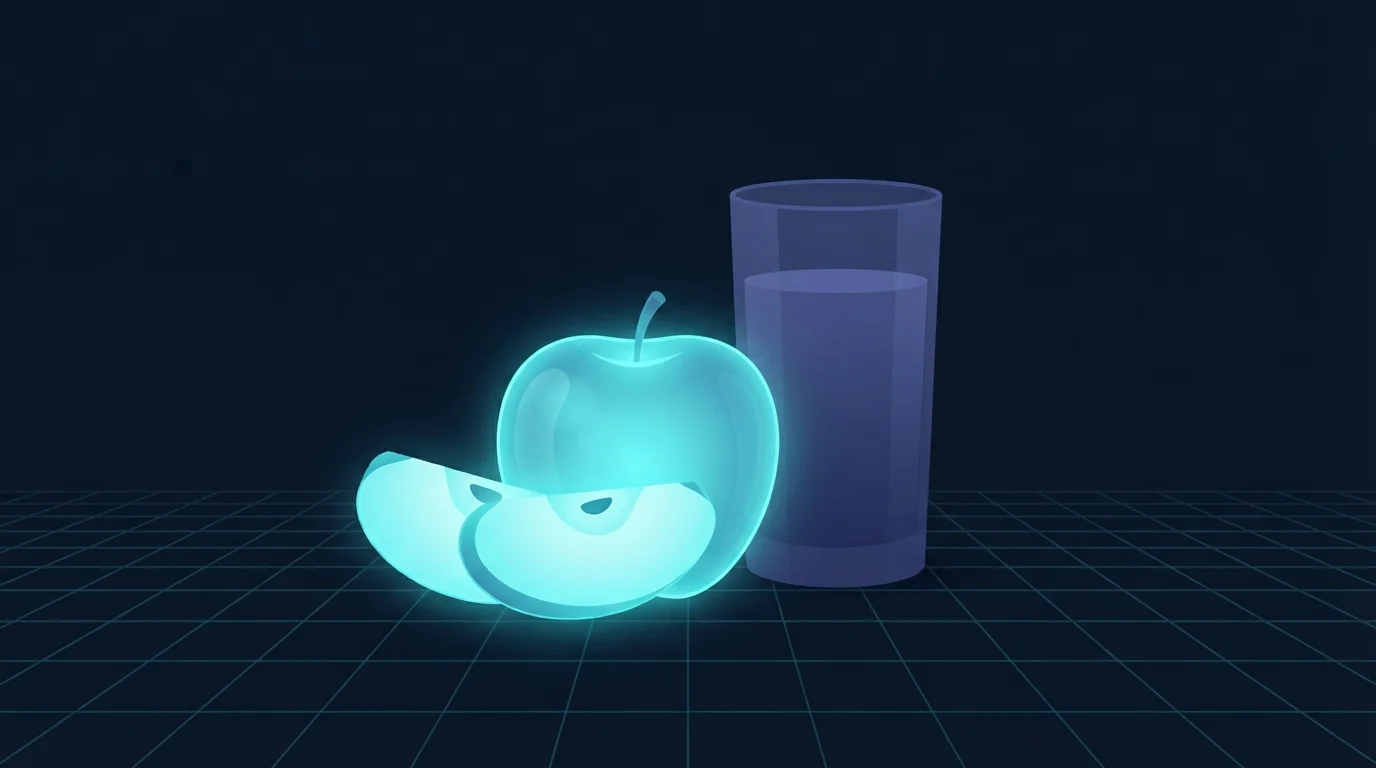
Whole Fruit, Juice and Smoothies Are Three Different Foods
This is where most fruit advice goes wrong, because it treats an orange and a glass of orange juice as the same thing with different packaging.
Muraki and colleagues (2013), publishing in the BMJ, followed the same three cohorts and looked at individual fruits against type 2 diabetes risk. Every three weekly servings of blueberries was associated with a 26 percent lower risk, grapes and raisins 12 percent lower, apples and pears 7 percent lower. Fruit juice went the other direction: more juice, higher risk. Same fruit, same sugars, opposite association.
Smoothies sit in the middle. They keep the fiber, which juicing removes, but they still turn 20 minutes of chewing into 90 seconds of drinking, and it's trivially easy to put three servings of fruit plus a banana plus honey into one glass. If you drink smoothies, build them around a protein source and one or two fruits rather than four.
Best Vegetables for Weight Loss
Vegetables win on the same mechanism, more extremely, with one important exception.
In the Bertoia data, an extra daily serving of vegetables tracked with 0.25 pounds less weight gained per four-year window, smaller than the fruit effect. Split it by type and the picture sharpens: non-starchy vegetables drove the benefit, while starchy ones, specifically corn, peas and potatoes, were associated with weight gain. That's not a moral judgment on potatoes. It reflects both their starch density and the fact that in a US dataset, potatoes usually arrive fried.
The best vegetables for weight loss, ordered by how much food you get per calorie:
- Leafy greens. Spinach, kale, romaine, arugula. Roughly 10 calories a cup. Nothing else competes.
- Cruciferous vegetables. Broccoli, cauliflower, cabbage, Brussels sprouts. High fiber, high volume, and cauliflower and cabbage both work as bulk in dishes that would otherwise be all starch.
- Watery vegetables. Cucumber, zucchini, celery, tomatoes, peppers. Best used as volume added to meals you already eat.
- Mushrooms. Unusually good at replacing part of the meat in a dish without anyone noticing.
- Carrots and beets. Denser than the above, still excellent, still nowhere near a problem.
The controlled evidence that this strategy works comes from Ello-Martin and colleagues (2007) in the American Journal of Clinical Nutrition. They randomized 97 women with obesity to one of two counseling approaches for one year: reduce fat, or reduce fat and deliberately add water-rich foods, mainly fruit and vegetables. Both groups lost weight. The group adding produce lost 7.9 kg against 6.4 kg, and the finding that reached significance was the one that matters for adherence: they reported significantly less hunger while eating 25 percent more food by weight.
That's the whole argument for vegetables in one sentence. More food, less hunger, fewer calories, for a year.
How Much Fruit Is Too Much?
Higher than you think. Guyenet (2019), reviewing the randomized trials in Frontiers in Nutrition, found 11 trials that measured body weight after adding whole fresh fruit. The doses were not shy: up to a kilogram of guava daily in one trial, three apples a day in another, half a grapefruit with every meal in a third, with the highest intake reaching about 30 percent of total calories from fruit. Seven of the 11 trials showed numerical weight reductions and three reached statistical significance, at 0.33 to 2.6 kg over 6 to 12 weeks. His conclusion was that whole fresh fruit is unlikely to contribute to excess energy intake and adiposity, and more likely to modestly constrain it.
So the practical ceiling is not really a nutritional one. Two to four servings a day covers most people. The only person who needs to think harder about fruit volume is someone eating six servings on top of everything else rather than instead of anything, and someone managing blood glucose under medical guidance.
Where Fruit Actually Fits in Your Day
Knowing berries are good doesn't change anything by itself. These four moves do.
- Eat it before the meal, not after. The apple preload effect is a real, measured 15 percent reduction in what you eat next. Dessert fruit doesn't get that.
- Displace, don't add. Fruit helps when it replaces the 300-calorie thing you were going to eat at 3pm. Added on top of that thing, it's just more calories, and it's the most common way this advice fails.
- Pair it with protein. Berries with plain Greek yogurt, apple with peanut butter. Protein and fiber together hold fullness longer than either alone, and our guide to how much protein per day covers the amount to aim for.
- Buy frozen. The single biggest reason people don't eat berries is that fresh ones go bad in four days and cost a fortune. Frozen berries are picked ripe, keep for months and cost a fraction.

What Fruit Can't Do
No food burns fat. Fruit and vegetables help by making a calorie deficit easier to hold, which is a real and underrated advantage, and that's the whole of their mechanism. Grapefruit doesn't have a fat-burning enzyme. Pineapple's bromelain doesn't digest your body fat. If those sound familiar, our roundup of foods that seem healthy but aren't covers the rest of that genre.
If you're eating well and the scale hasn't moved, the issue is almost never your fruit choice. Our breakdown of why you might not be losing weight in a calorie deficit works through the actual culprits, and the weight loss plateau guide covers what to change when progress stops. Both start in the same place: the deficit is smaller than you think, usually because of liquids, oils and portions rather than produce.
Training matters here too, mostly for what you keep rather than what you lose. A deficit without resistance training costs you muscle alongside the fat. If you'd rather have the workout side handled for you, our comparison of the best workout apps for weight loss walks through the options.
The Bottom Line
Berries, apples and pears carry the strongest weight-loss signal of any fruit, non-starchy vegetables carry a slightly smaller one, and corn, peas and potatoes go the other way. Eat fruit whole, eat it before the meal instead of after, and let it replace something rather than join it. Two to four servings a day, and no, the sugar isn't the problem.
Sarah, 27, lost 18 pounds in three months and described it this way: "First app that made exercise feel like something I chose, not forced." Food works the same way. The version you'll actually keep doing beats the optimal version you abandon in week three.
Frequently Asked Questions
What are the best fruits for weight loss?
Berries, apples and pears have the strongest signal. Tracking 133,468 US adults for up to 24 years, Bertoia and colleagues (2015) found each extra daily serving of berries tracked with 1.11 pounds less weight gained over each four-year window, apples and pears with 1.24 pounds less, and fruit overall with 0.53 pounds less. They're high in water and fiber and low in calories per bite, which is the mechanism doing the work. Citrus, kiwi, stone fruit and melon fit the same profile.
Is peanut butter good for weight loss?
Peanut butter doesn't cause weight gain the way its calorie density suggests it should. A meta-analysis of randomized nut-feeding trials by Flores-Mateo and colleagues (2013) found nut-enriched diets did not increase body weight, BMI or waist circumference, and in the NEJM cohort analysis by Mozaffarian and colleagues (2011) each extra daily serving of nuts tracked with 0.57 pounds less weight gained per four-year period. The catch is portion control: two tablespoons is roughly 190 calories and it's very easy to eat four. Measure it, buy the version whose ingredients are peanuts and salt, and treat it as a fat source rather than a snack you eat from the jar.
Is Greek yogurt good for weight loss?
Yes, and it has the best per-serving signal of any food in the largest cohort analysis on this question. Mozaffarian and colleagues (2011) followed 120,877 adults in the New England Journal of Medicine and found yogurt was the single food most strongly associated with less weight gain, at 0.82 pounds less per extra daily serving over each four-year window. The protein is why: Ortinau and colleagues (2014) found a high-protein afternoon yogurt snack delayed the next eating occasion by about 30 minutes compared with chocolate and cut dinner intake by roughly 100 calories. Buy it plain and add fruit yourself, because flavoured versions often carry as much added sugar as dessert.
Is oatmeal good for weight loss?
Yes, for the same reason berries and apples are: it's filling per calorie, thanks to beta-glucan fiber that slows gastric emptying. The variables that decide whether it helps are the portion of oats, whether you add sugar, and what you put on top. We work through all three in our full breakdown of whether oatmeal is good for weight loss.
Does the sugar in fruit make you gain weight?
Not in whole-fruit form. Guyenet (2019) reviewed 11 randomized trials of whole fresh fruit, including protocols feeding up to three apples a day or half a grapefruit at every meal, and found fruit either had little effect on body weight or produced modest losses of 0.33 to 2.6 kg over 6 to 12 weeks. The fiber, water and chewing time make whole fruit hard to overeat. Juice is a different food: Muraki and colleagues (2013) found whole fruit was linked to lower type 2 diabetes risk while fruit juice was linked to higher risk.
How much fruit should you eat a day to lose weight?
Two to four servings a day is a practical target, where a serving is one medium piece or about a cup of berries. In the cohort data the association keeps improving as intake rises, and in the trial data intakes as high as three apples a day did not cause weight gain. The useful move is displacement rather than addition: fruit works best when it replaces something denser, not when it sits on top of everything you already eat.