You already know cardio helps with fat loss. What nobody tells you is how much, and that gap is where most attempts die. Three twenty-minute sessions feels like a real commitment when you're starting from zero. It's also well under the dose that shifted body composition in the trials, which is why month two arrives with sore shins and an unchanged waistband.
The frustrating part isn't the effort. It's doing the effort and getting nothing back, then concluding that your metabolism is broken or that cardio doesn't work for you. Neither is usually true. The dose was too small, or appetite quietly ate it, or the mode you picked hurt too much to repeat.
This page is the programming side. If you want the cardio versus weights argument settled, we did that in is cardio or weights better for fat loss. If you're choosing between two feet and two wheels, walking vs running for weight loss compares them properly. What follows assumes you've decided to do cardio and want to know exactly how much, of what, arranged how.
How Much Cardio for Fat Loss Do You Actually Need Each Week?
The most useful number in this whole area comes from the American College of Sports Medicine's position stand on physical activity and weight loss, which pooled the trial literature and landed on a dose response (Donnelly et al., 2009). More than 150 minutes a week of moderate activity produces modest weight loss, around 2 to 3 kg. Between 225 and 420 minutes a week produces the biggest losses, around 5 to 7.5 kg. After you've lost weight, 200 to 300 minutes a week is what the evidence supports for keeping it off. Those numbers assume your eating stayed roughly where it was, which is exactly the scenario most people are actually in.
The cleanest single trial behind that is STRRIDE. Sedentary overweight adults were randomised to eight months of exercise at three different doses, told not to change their diet, and measured (Slentz et al., 2004). The high-amount group, about 20 miles a week of jogging at 65 to 80 percent of peak oxygen uptake, lost 2.9 kg of body mass and 4.8 kg of fat mass. Both low-amount groups, about 12 miles a week, lost weight and fat too, just less. The controls gained 1 kg. That last detail is the one worth keeping: doing nothing was not neutral.
Intensity is the part people overweight in their planning. Ross and colleagues randomised 300 abdominally obese adults to 24 weeks of five weekly sessions at matched energy costs but different intensities (Ross et al., 2015). Waist circumference dropped 3.9 cm in the low-amount low-intensity group and 4.6 cm in both high-amount groups, and the differences between the exercise groups weren't significant. Only the high-intensity group improved two-hour glucose tolerance. Translation: intensity buys you metabolic health and fitness. Minutes buy you the fat.
The three doses worth knowing
| Weekly dose | What it buys you | What it looks like |
|---|---|---|
| 150 minutes moderate | The health floor from the US physical activity guidelines. Prevents weight gain in most people. Modest fat loss at best. | Five 30-minute brisk walks |
| 200 to 300 minutes moderate | The working range for visible fat loss with diet held steady, and the range that holds a loss in place afterwards. | Four 45-minute sessions plus a weekend walk |
| 300 minutes and up | The top of the ACSM band. Bigger losses, and the point where compensation stops swallowing the work. | Five 50-minute sessions, mixed modes |
That last row has direct evidence behind it. When researchers gave overweight adults either 1,500 or 3,000 calories a week of prescribed exercise for 12 weeks, only the 3,000-calorie group lost body fat, and the compensation rate fell from 63 percent to 34 percent of the energy they had expended (Flack et al., 2018). Resting metabolic rate didn't drop in either group. The gap was behaviour, not metabolism, and a bigger dose outran it.
One honest caveat before you write 300 minutes on a calendar. If you're currently doing 40, jumping to 300 is how people end up injured in week three. The dose is the destination, not the starting line. The progression section below covers how to get there.
Choosing Your Cardio Modality: Joints, Time, and What You'll Repeat
There's no fat-burning machine. Energy is energy, and every mode below can deliver the weekly dose if you give it the minutes. What separates them is joint load per minute, how many minutes you need, and whether you'll still be doing it in March.
| Mode | Joint load | Minutes for the same energy | Best for |
|---|---|---|---|
| Brisk or incline walking | Low | Highest | Almost everyone starting out, heavier bodies, cranky knees, people with time but not tolerance |
| Cycling, upright or stationary | Very low | Moderate | Knee and foot issues, high weekly volume, lifting days |
| Rowing | Low, but loads the back | Low | Upper-body involvement, small spaces, people who get bored quickly |
| Elliptical | Very low | Moderate | Running feel without the impact, shin splint history |
| Running | High | Lowest | Time-poor people whose joints already tolerate it |
| Jump rope or step work | High | Low | Short sessions at home, no equipment, healthy ankles and knees |
| Swimming | Minimal | Moderate | Joint pain, larger body mass, anyone who can already swim well |
Read that table with one question: which row can I do five times next week without dreading it? That's your mode. Running is the most time-efficient row and also the row that sidelines the most beginners, because impact accumulates faster than tendons adapt. Walking sits at the other end. It needs the most minutes and it almost never breaks anyone.
Two more selection rules matter more than the machine. First, pick something you can do without leaving the house at least twice a week, because the sessions that survive bad weather and long workdays are the ones with no travel step. Second, have a backup mode. People who only run stop entirely when a knee complains. People who run and cycle just cycle that week.
HIIT or Steady State for Fat Loss?
Short version: for fat itself it's a coin flip, so choose on time and tolerance. A 2017 systematic review and meta-analysis pooled 13 trials comparing high-intensity intervals against moderate-intensity continuous training in overweight and obese adults, averaging ten weeks of three sessions a week (Wewege et al., 2017). Both reduced whole-body fat mass and waist circumference significantly. Neither beat the other on any body composition measure. What intervals did do was get there with roughly 40 percent less training time, which is a genuine advantage if your problem is the calendar rather than the effort. Our deeper review of the HIIT vs steady-state research has the full breakdown, including why the running trials and the cycling trials diverge.
The practical read: use one hard interval session a week as a time-saver and a fitness builder, and let easier zone 2 work carry the volume. Two or three interval sessions a week from a standing start mostly buys you fatigue that eats into the rest of your dose.
Find out what's really holding you back
FitCraft, our mobile fitness app, pairs you with an AI coach who builds you a personalized plan around your goals, schedule, and fitness level. Every FitCraft program is designed by Domenic Angelino, MPH (Brown University) and NSCA-CSCS, with research published in the Journal of Strength and Conditioning Research and Medicine & Science in Sports & Exercise.
Take the Free Assessment Free • 2 minutes • No credit card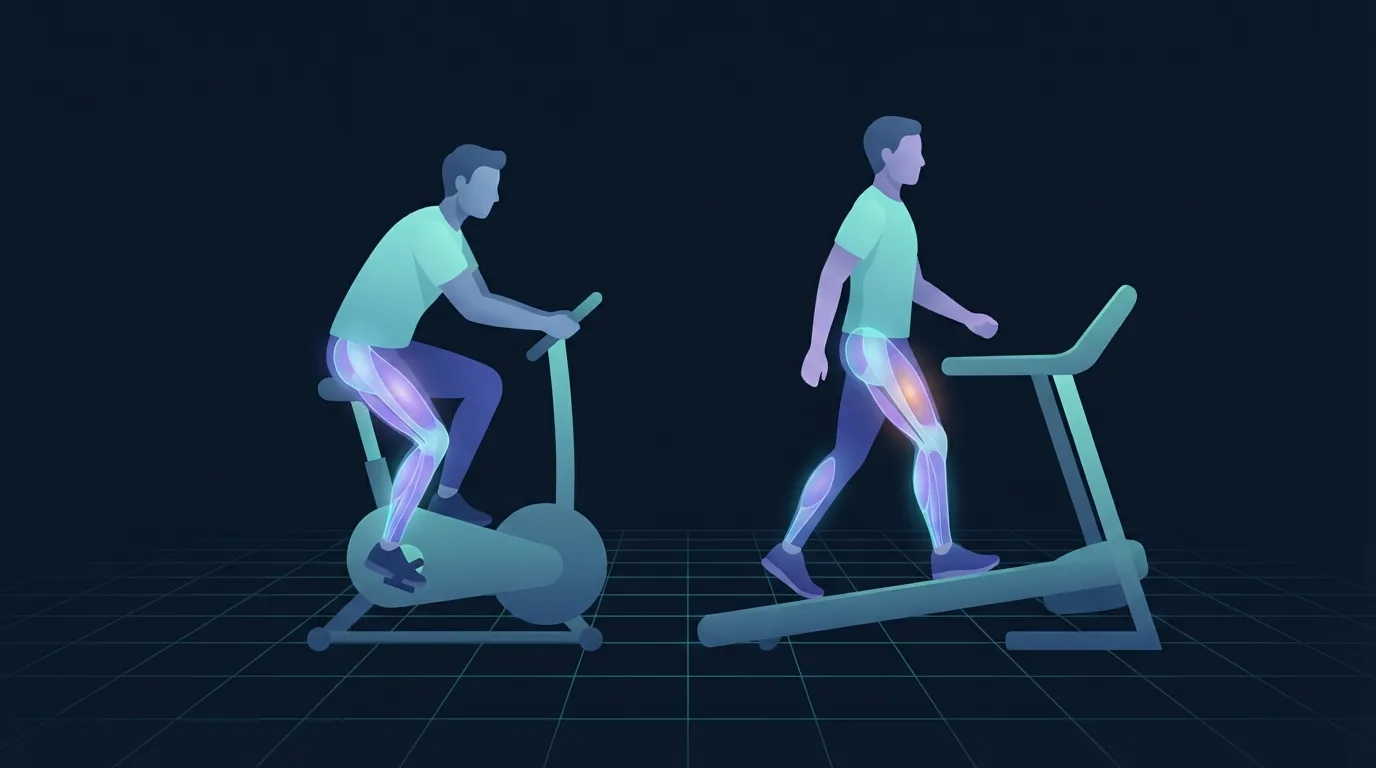
Why the Scale Lags: Appetite and Energy Compensation
Here's the part that makes people feel crazy. You do the sessions, the watch says you burned 400 calories, and four weeks later the scale has moved about a pound. You're not imagining it, and it isn't a slow metabolism.
Start with what exercise does not do. A meta-analysis of 29 studies covering 51 trials found that a single bout of exercise has a trivial effect on how much you eat afterwards, alongside a large effect on relative energy intake, meaning the session really does create a short-term deficit (Schubert et al., 2013). People don't immediately eat back a workout in the hours after it. So far so good.
The compensation shows up over weeks, and it's wildly individual. In a 12-week supervised trial, 35 overweight and obese adults exercised five times a week under supervision (King et al., 2008). The group average was a 3.7 kg loss, right about what the maths predicted. Hidden inside that average was a range from minus 14.7 kg to plus 1.7 kg. Splitting the group into compensators and non-compensators, the non-compensators lost 6.3 kg and the compensators 1.5 kg. The compensators had raised their daily food intake by about 268 calories and reported feeling hungrier. Resting metabolic rate barely moved in either group.
A broad review of the appetite literature adds a useful reassurance. Body fatness and sex don't appear to change how appetite responds to exercise, though people who are already habitually active seem to adjust their intake more precisely (Dorling et al., 2018). This isn't something your body type doomed you to.
What actually helps, in order of how much it matters:
- Raise the dose past the compensation. The Flack data is the clearest guidance here. Compensation ate 63 percent of a small dose and 34 percent of a large one, and only the large dose produced fat loss.
- Don't let the session become a reason to eat. Post-workout smoothies, recovery bars and "I earned this" dinners routinely cost more than the session did. Eat your normal meals.
- Keep protein high. Protein is the most satiating macronutrient, and it defends lean mass while you're in a deficit.
- Watch the rest of the day. A big chunk of compensation is behavioural rather than dietary. You move less in the hours after training, take the elevator, sit longer. Deliberately keeping your step count up on training days closes part of the gap.
- Judge the trend, not the morning. Weigh several times a week and read the weekly average. Day-to-day water swings of 1 to 2 kg will hide a real result completely.
How to Pair Cardio With Strength Without Blunting Either One
The interference effect is real and it's smaller than gym folklore claims. An updated systematic review and meta-analysis of 43 studies compared concurrent aerobic plus strength training against identical strength training alone (Schumann et al., 2022). Muscle hypertrophy showed essentially no difference. Maximal strength showed essentially no difference. Only explosive strength was meaningfully attenuated, and that attenuation was significant mainly when the two sessions ran back to back rather than separated by at least three hours. For someone trying to lose fat, none of that is a reason to cut cardio.
The older meta-analysis that built the interference reputation still carries a useful detail. Across 21 studies, running concurrently with resistance training produced significant decrements in hypertrophy and strength while cycling didn't, and both the frequency and the duration of the endurance work correlated negatively with strength outcomes (Wilson et al., 2012). Impact and volume are the levers, not the existence of cardio. Our review of the concurrent training interference research goes deeper into why running is the outlier.
On what strength training contributes to the fat loss itself, the STRRIDE AT/RT trial ran 119 overweight adults through eight months of aerobic training, resistance training, or both (Willis et al., 2012). Aerobic training and the combination reduced body mass and fat mass more than resistance training alone. Resistance training and the combination increased lean body mass more than aerobic training alone. The combination took double the time and didn't beat cardio alone on fat. So lifting isn't your fat-loss engine. It's the thing that decides what's left when the fat comes off.
Four rules cover almost every schedule:
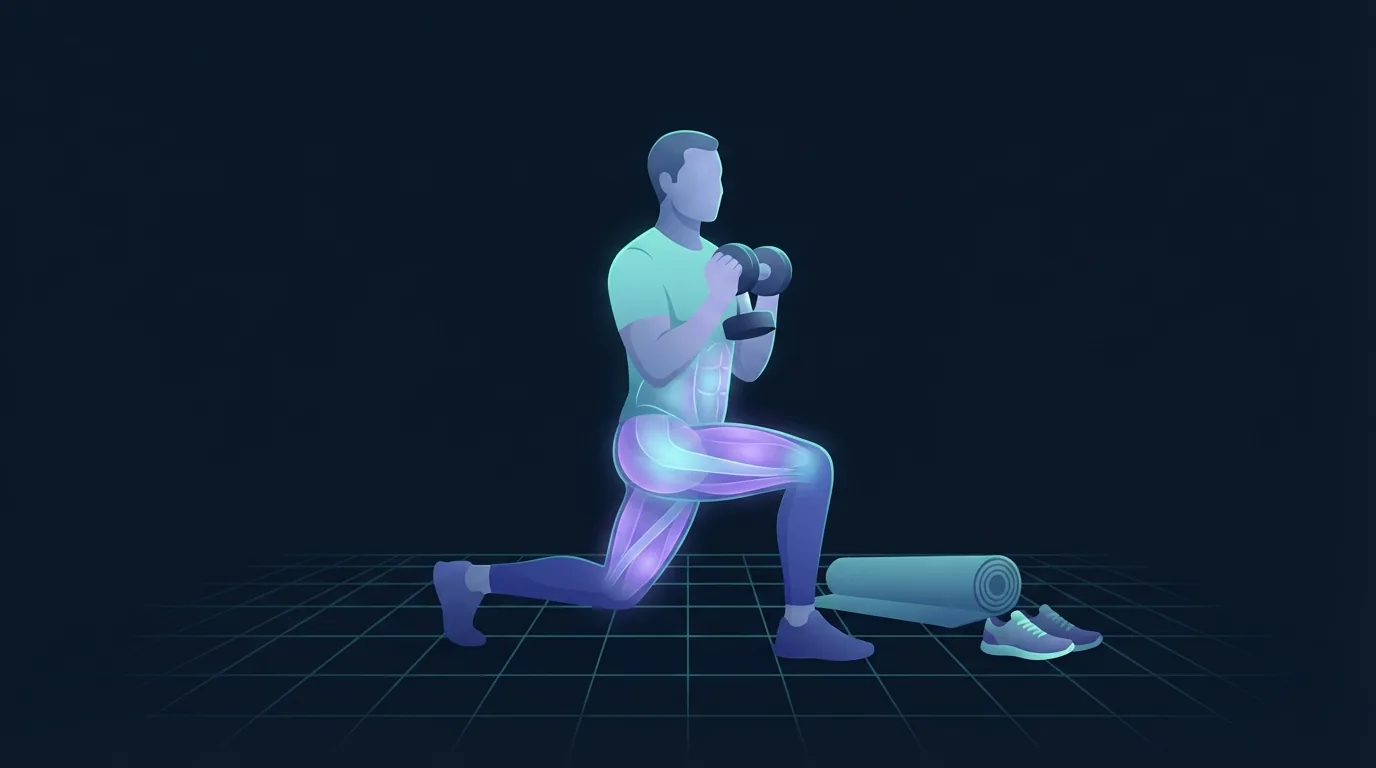
- Lift two or three times a week, full body. That's enough to hold lean mass in a deficit without eating your cardio time.
- Separate hard cardio from lifting by at least three hours, or put them on different days. If they have to share a session, lift first.
- Make your lifting-day cardio low impact. Cycling, elliptical or a walk. Save the intervals and the running for non-lifting days.
- Cut cardio volume before you cut lifting frequency if recovery starts slipping. Losing muscle is the one mistake in a fat-loss block you can't fix quickly.
Three Weekly Cardio Templates You Can Start Monday
All three land inside the 200 to 300 minute working range, all three include two strength sessions, and all three can be run at home with nothing more than a pair of dumbbells.
| Day | The walker | Home cardio, no equipment | The runner |
|---|---|---|---|
| Monday | 50 min brisk walk | 30 min low-impact circuit | 35 min easy run |
| Tuesday | Full body dumbbells, 40 min | Full body dumbbells, 40 min | Full body dumbbells, 40 min |
| Wednesday | 45 min walk, add hills or incline | 25 min intervals: 40 seconds hard, 80 seconds easy, 10 rounds | 30 min intervals: 4 x 4 min hard, 3 min easy |
| Thursday | 40 min walk | 30 min steady step-ups and shadow boxing | Rest, or 30 min easy bike |
| Friday | Full body dumbbells, 40 min | Full body dumbbells, 40 min | Full body dumbbells, 40 min |
| Saturday | 60 to 75 min longer walk | 40 min continuous low-impact work | 50 to 60 min easy long run |
| Sunday | 30 min easy walk | 25 min mobility and easy movement | 40 min walk |
| Weekly cardio | About 265 min | About 210 min | About 225 min |
The walker column is the one most people should start with. It carries the highest weekly minutes and the lowest risk of the injury that ends the block, and brisk means brisk: you can talk in sentences but not sing. The home column suits small spaces and no gear. The runner column assumes your legs already tolerate running and keeps the hard sessions well away from lifting days.
How to Progress Without Digging a Hole
Progression for fat loss is mostly bookkeeping. Three rules cover it.
Add about 10 percent a week, and only to one variable. Minutes first. When the minutes are where you want them, add intensity, hills or incline. Adding minutes and intensity in the same week is how a good block becomes four weeks off with shin splints.
Take an easier week every fourth or fifth week. Drop volume by about a third and keep the frequency. Adherence is a physical resource and it gets spent like any other.
Hold the dose once you get there. The goal isn't endless escalation. Once you're at 250 to 300 minutes a week and the trend is moving, the winning move is repeating that week for three months. Most people who fail here didn't fail to progress. They failed to repeat.
The Fat Loss Plateau Checklist
Four weeks of a flat weekly average with the same training is a plateau. Work this list from the top before you change anything about your training.
- Are your minutes still what you think they are? Sessions shrink quietly. Count the last 14 days off your watch or calendar, not off memory.
- Has the pace slipped? The same 45-minute walk done more slowly is a smaller dose. Check against a known distance or the talk test.
- Did food creep? A 268-calorie daily drift is about one snack, and in the King data that was the whole difference between compensators and non-compensators.
- Are you moving less the rest of the day? Compare your step count on training days now against two months ago.
- Are you sleeping? Short sleep raises appetite and lowers training quality at the same time.
- Are you still lifting? Cardio-only fat loss costs you lean mass, and losing lean mass is what makes the next stall harder.
- Is the scale the wrong instrument? Waist circumference and how clothes fit often move while weight sits still, especially in the first three months of training.
- Has it genuinely been four weeks? Two flat weeks is noise.
If the answer to most of those is "yes, nothing changed", the honest next lever is the dose, not a different machine. Add 30 to 45 minutes a week, or add the harder session you've been skipping. If the answer is that the plan quietly dissolved, the problem is adherence, and the fix is structural rather than motivational. Our roundup of the best workout apps for weight loss compares how the main options handle scheduling, progression and the week-six drop-off.
The Bottom Line
Cardio for fat loss works, and it works on a schedule of minutes rather than a choice of machine. Get to 200 to 300 minutes a week of something your joints tolerate, keep two or three dumbbell sessions in there so the weight you lose is fat, expect appetite to take a cut, and repeat the same week for three months. That's the whole method. Everything else is detail.
You're not failing at this because you lack discipline. Most plans fail because they were built at a dose that was never going to work, on a mode that hurt, with no plan for the week the scale sat still. Build the week you can actually repeat. Then repeat it.
Frequently Asked Questions
How much cardio should I do a week to lose fat?
Aim for 200 to 300 minutes a week of moderate cardio if fat loss is the goal and your diet is holding steady. The American College of Sports Medicine's position stand puts modest weight loss at more than 150 minutes a week, roughly 2 to 3 kg, and the largest losses at 225 to 420 minutes a week, roughly 5 to 7.5 kg. Below about 150 minutes, cardio is protecting your health and your fitness more than it's moving the scale.
Is cardio or lifting better for fat loss?
For fat mass specifically, cardio wins. In the STRRIDE AT/RT trial, eight months of aerobic training and of aerobic plus resistance training both reduced body mass and fat mass more than resistance training alone, which produced no significant fat loss. Lifting earns its place by adding and holding lean mass while you lose fat, so the best plan is not one or the other but both, with cardio carrying the energy deficit.
Does cardio burn muscle?
Not at the doses most people do. A 2022 meta-analysis of 43 studies found that adding aerobic training to a strength program didn't compromise muscle size or maximal strength. Only explosive strength was blunted, and mostly when both sessions were crammed into the same hour. Separate the two by a few hours or a day, keep the cardio mostly low impact on lifting days, and eat enough protein.
What is the best cardio for fat loss?
The one you can repeat four or five times a week for months without your knees, your schedule or your mood calling it off. Energy burned is what drives fat loss, and every modality can deliver it if you give it enough minutes. Brisk incline walking, cycling, rowing and elliptical work are the usual picks for people carrying extra weight, because they deliver the minutes at a fraction of the joint load running asks for.
Is HIIT better than steady-state cardio for fat loss?
Not for fat itself. A 2017 meta-analysis of 13 trials found high-intensity intervals and moderate-intensity continuous training produced similar reductions in whole-body fat mass and waist circumference, with no significant difference between them. Intervals got there in about 40 percent less training time, which is the real reason to use them. Pick whichever one you will finish.
How long does it take for cardio to show up on the scale?
Expect three to six weeks before the trend is readable, and expect it to be smaller than a calorie calculator promised. In a 12-week supervised trial of 35 overweight adults the average loss was 3.7 kg, but individual results ran from minus 14.7 kg to plus 1.7 kg, and the people who lost least had raised their food intake by about 268 calories a day without noticing. Weigh several times a week, average the week, and judge the trend rather than any single morning.