- Intensity moves VO2 max, not volume. With four groups matched for total work over eight weeks, only the interval groups improved significantly: 7.2 percent for four-minute intervals and 5.5 percent for 15-second efforts.
- Steady aerobic work still improves VO2 max. Pooled across 28 controlled trials and 723 adults, continuous endurance training added about 4.9 mL/kg/min and interval training about 5.5. The gap is real and smaller than the internet implies.
- Most of the gain lands in three weeks. The rise has a half-time near 10 days and flattens by week three unless the training gets harder, longer or more frequent.
- Non-response is usually a dose problem. Across 78 adults, non-response ran 69 percent in the lowest-dose group and zero in the highest, and adding two weekly sessions eliminated it in everyone who had not responded.
- Age does not close the door. Across 41 controlled trials in 2,102 older adults, endurance training added 3.78 mL/kg/min, a 16.3 percent improvement over controls.
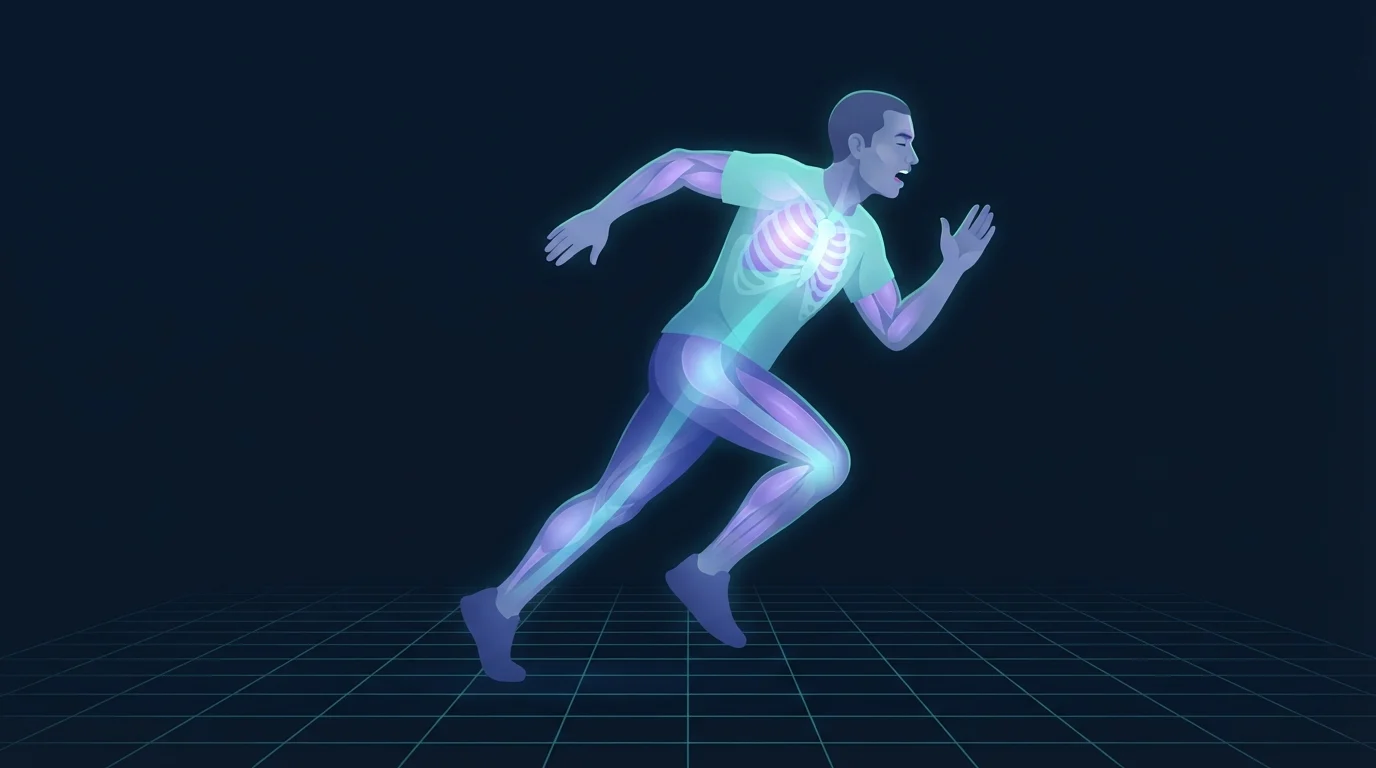
Take 40 moderately trained men, split them into four groups, and give every group the same total training work three days a week for eight weeks. Change nothing except how hard each session is. At the end, the two groups doing intervals had improved their VO2 max significantly more than the two groups doing steady moderate work, and stroke volume had climbed about 10 percent in the interval groups alone. That trial is the cleanest answer anyone has produced to how to improve VO2 max, and it has been quietly setting cardio programming ever since.
It matters because VO2 max is not just an endurance stat. It is one of the strongest single predictors of how long people live, which our review of VO2 max and longevity works through in detail. It is also one of the few health markers you can genuinely move in a couple of months. So the practical question is not whether a higher number is better. It's how to boost VO2 max efficiently, how much is realistic, and how fast it shows up.
This article stays on the intervention evidence. What the head-to-head trials found, what the pooled meta-analyses say when you stop cherry-picking single studies, how much training it takes, how quickly the number rises and then stalls, what changes after 50, how fast you lose it when you stop, and where the genuine ceiling sits. Testing protocols live on a separate page, and the practical answer to the measurement question gets a short section here.
What VO2 Max Is, and What Actually Limits It
VO2 max is the most oxygen your body can take in, transport and use per minute during hard exercise, reported in millilitres of oxygen per kilogram of body weight per minute. Physiologically it is the product of two things: how much blood your heart can pump at maximum effort, and how much oxygen your working muscles pull out of that blood.
Which of those two limits you is the whole reason interval training works. In their review of the biology, Lundby, Montero and Joyner (2017) in Acta Physiologica argue that training-driven increases in VO2 max are largely facilitated by expansion of red blood cell volume and the improvement in stroke volume that goes with it. Muscle mitochondria adapt too, and they are rarely the binding constraint in an untrained or moderately trained person. The bottleneck is delivery.
That single fact explains most of what follows. Sessions that park you near maximum cardiac output for several minutes at a time stress the delivery system hardest. Sessions that keep you comfortable stress it less per minute, which is not the same as not at all.
Intervals Versus Continuous Training: What the Trials Found
Helgerud 2007: the same work, four different intensities
Helgerud et al. (2007) in Medicine & Science in Sports & Exercise randomised 40 healthy, non-smoking, moderately trained men into four running groups, all matched for total oxygen consumption and all training three days a week for eight weeks:
- Long slow distance at 70 percent of maximum heart rate.
- Lactate threshold work at 85 percent of maximum heart rate.
- 15/15 intervals: 15 seconds hard, 15 seconds easy, repeated.
- 4x4 intervals: four 4-minute efforts at 90 to 95 percent of maximum heart rate with 3 minutes of easy jogging between them.
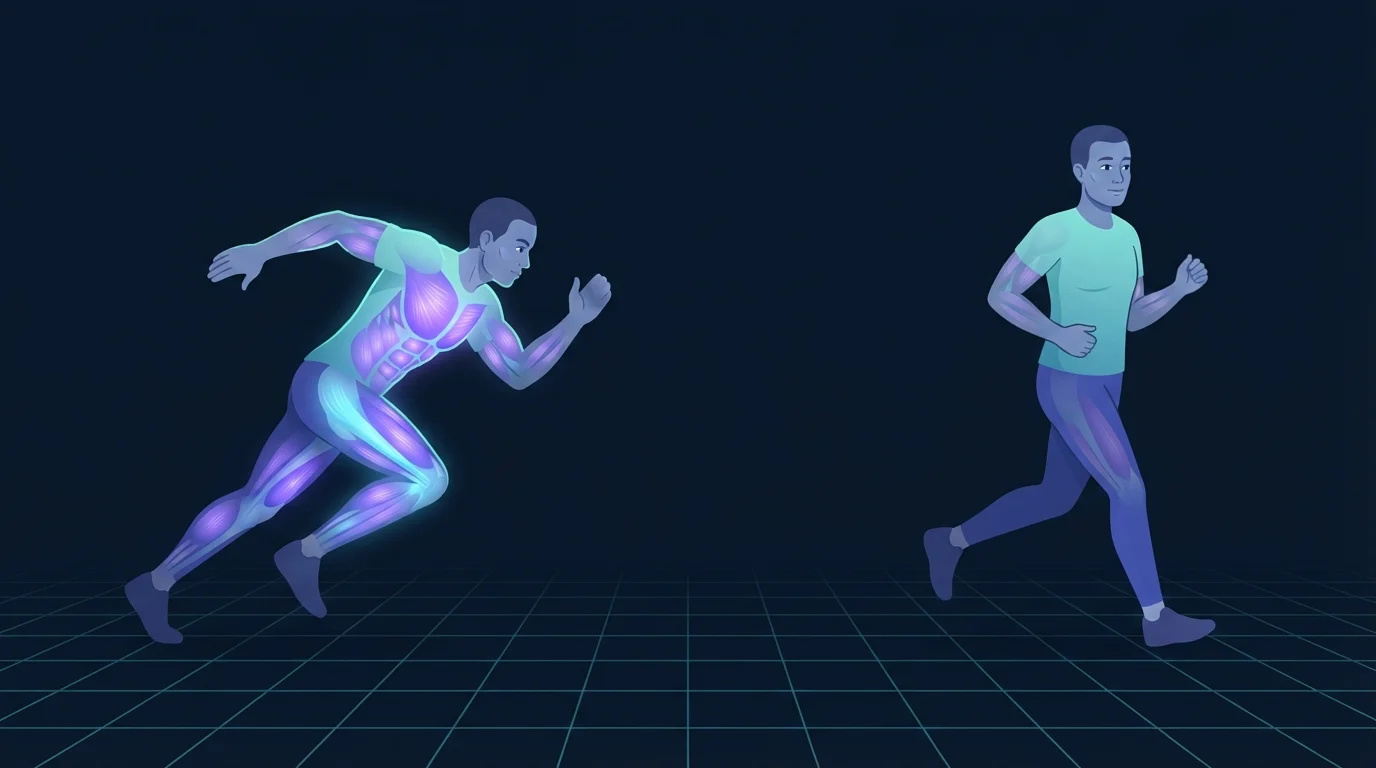
VO2 max rose 5.5 percent in the 15/15 group and 7.2 percent in the 4x4 group, and both interval groups improved significantly more than the two moderate groups (p < 0.01). Stroke volume increased roughly 10 percent, and only after interval training. Every group ran faster at their lactate threshold, by about 9.6 percent on average, so the moderate sessions were not wasted. They just did not move maximum oxygen uptake.
The design is what makes this study load-bearing. Total work was held constant, so the result cannot be explained by the interval groups simply training more. The 4x4 protocol from this trial is the most replicated VO2 max workout in the literature, and we break the session itself down in our guide to the Norwegian 4x4 protocol.
Milanovic 2015: the pooled picture is kinder to steady work
One trial in trained young men is a narrow base. Milanovic, Sporis and Weston (2015) in Sports Medicine pooled 28 controlled trials covering 723 participants with a mean age of 25.1 years. Both approaches produced large improvements: about 4.9 mL/kg/min from continuous endurance training and about 5.5 mL/kg/min from interval training, with the edge going to intervals.
Two moderators from that analysis are worth more than the headline. Gains were larger in people who started with lower fitness, and larger with longer interventions. If you're coming off a sedentary stretch, almost any consistent aerobic training will move your number, and the intensity argument matters more once the easy gains are banked.
Bacon 2013: interval programs leave fewer people behind
Bacon and colleagues (2013) in PLOS ONE analysed 37 interval and combined interval-plus-continuous studies published between 1965 and 2012, covering 334 healthy sedentary or recreationally active adults under 45 in 40 distinct training groups. Mean VO2 max increase was 0.51 L/min (95% CI 0.43 to 0.60).
The buried finding is the one worth carrying around. In a subset of nine studies that used longer intervals, gains reached roughly 0.8 to 0.9 L/min, with evidence of a marked response in all subjects. The authors' point was that the popular story about untrainable people mostly comes from low-intensity, low-dose protocols rather than from human biology.
Wen 2019: interval length is the dial that matters
Wen et al. (2019) in the Journal of Science and Medicine in Sport pooled 53 randomised controlled trials to compare interval formats directly. Short protocols worked against control: efforts of 30 seconds or less, five minutes or less of total work, four weeks or less. Longer protocols did more: work intervals of two minutes or more, 15 minutes or more of hard work per session, four to 12 weeks of training, and those beat continuous training rather than merely beating nothing.
Translated into a week of your life: if you have ten minutes, short sprints are a real option. If you want the biggest VO2 max change available, build sessions around efforts of two to five minutes and accumulate at least 15 minutes of hard work in them.
How Much Training It Actually Takes
Here is the evidence condensed into the formats people actually run, with what each one produced and where the number comes from.
| Approach | What a session looks like | Per week | What the evidence shows |
|---|---|---|---|
| 4x4 intervals | Four 4-minute efforts at 90 to 95% of max heart rate, 3 minutes easy between | 2 to 3 | 7.2% in 8 weeks on matched work (Helgerud 2007) |
| Long intervals, general | Efforts of 2 to 5 minutes, 15+ minutes of hard work total | 2 to 3 | Largest pooled effects; beat continuous training (Wen 2019) |
| Short intervals | Efforts of 30 seconds or less, up to 5 minutes of hard work | 3 | Effective against control, smaller than long intervals (Wen 2019) |
| Continuous moderate | Conversational to steady effort, 30 to 60 minutes | 3 to 5 | About 4.9 mL/kg/min pooled across 28 trials (Milanovic 2015) |
| Stalled and adding dose | Two extra aerobic sessions on top of current training | +2 | Non-response eliminated in every previous non-responder (Montero 2017) |
The blend that fits almost everyone: one or two interval sessions a week, with the rest of your aerobic time spent easy enough to hold a conversation. Easy work is what makes the hard sessions repeatable, and it carries its own adaptations, which our review of zone 2 training research covers. Intensity is only worth arguing about once the schedule is stable.
Set the hard efforts by heart rate rather than feel for the first few weeks, because most people run their intervals too slow and their easy days too fast. If you need the bands, our heart rate zone calculator builds them from your own numbers. If you'd rather not assemble the week yourself, a personalized training program puts the hard days and the easy days on a calendar for you.
How Long It Takes to Increase VO2 Max
Faster than almost any other adaptation, and it stops faster too. Hickson et al. (1981) in Medicine & Science in Sports & Exercise trained nine people 40 minutes a day, six days a week, holding the work rate constant for four weeks and then raising it for another five.
In both blocks, VO2 max climbed for the first three weeks and then sat flat. The half-time of the rise was 10.3 days in the first block and 10.8 days in the second. Total improvement across nine weeks was 23 percent, but the authors were explicit about the mechanism: unless the training stimulus is increased, even a hard daily program produces no further increase in VO2 max after about three weeks.
So the realistic timeline looks like this. Three to four weeks to a change you could measure. Eight to 12 weeks for the kind of gain the trials report, which lands between 5 and 16 percent depending on where you started. Beyond that, the number moves when the training moves, which is what the longer-intervention moderator in Milanovic's meta-analysis is really describing.
Get an evidence-based plan built for you
FitCraft, our mobile fitness app, pairs you with an AI coach who builds you a personalized plan around your goals, schedule, and fitness level. Every FitCraft program is designed by Domenic Angelino, MPH (Brown University) and NSCA-CSCS, with research published in the Journal of Strength and Conditioning Research and Medicine & Science in Sports & Exercise.
Take the Free Assessment Free • 2 minutes • No credit cardWhy Isn't My VO2 Max Increasing?
This is the most common follow-up question, and it usually has one of four answers.
The stimulus stopped moving
Hickson's plateau is the default explanation. Three weeks of the same intervals at the same pace is three weeks of maintenance. Add a fifth interval, raise the pace, or add a session, and the curve starts again.
The dose is too low
Montero and Lundby (2017) in The Journal of Physiology put 78 healthy adults through six weeks of endurance training at doses ranging from 60 to 300 minutes a week. Non-response ran 69 percent in the lowest-dose group and 0 percent in the highest. Then they took the people labelled non-responders and gave them a second six-week block with two extra weekly sessions. Non-response was eliminated in every one of them, and total haemoglobin mass was the strongest independent determinant of the change.
Read that finding carefully, because it reframes the whole conversation. Non-responder is usually a description of a training program, not of a person.
The hard days are not hard, or the easy days are not easy
Most self-directed cardio drifts into a moderate middle: too hard to accumulate volume comfortably, too easy to stress maximum cardiac output. If every session finishes in the same fuzzy place, you have one training zone rather than two. The fix is uncomfortable in both directions.
You're watching an estimate, not a measurement
A wristwatch does not measure oxygen uptake. Molina-Garcia et al. (2022) in Sports Medicine, the INTERLIVE network's review of consumer wearables, found that devices using resting information in their algorithms significantly overestimated VO2 max, and that exercise-based estimates were better but still carried individual error too large for clinical or sport decisions. Their conclusion was that these estimates work at the population level. Treat yours as a trend line with noise on it, not a lab result, and never judge four weeks of training on a two-point change.
How to Increase VO2 Max After 50
The pooled answer in older adults is encouraging and slightly different from the answer in trained 25-year-olds. Huang et al. (2005) in Preventive Cardiology combined 41 controlled trials covering 2,102 sedentary older adults with a within-group mean age of 60 or above. Endurance training produced a net VO2 max increase of 3.78 mL/kg/min over controls, a 16.3 percent improvement, and the outcomes were homogeneous across trials.
The moderators are the interesting part. Greater improvement was associated with training longer than 20 weeks and with intensities around 60 to just under 70 percent of VO2 max, not with the hardest protocols. In a previously sedentary older population, consistency over five months outperformed intensity over eight weeks.
That's not an argument against intervals after 50. Weston, Wisloff and Coombes (2014) in the British Journal of Sports Medicine pooled 10 studies of 273 patients with lifestyle-induced cardiometabolic disease, including coronary artery disease, heart failure, hypertension, metabolic syndrome and obesity. Interval training raised VO2 peak 3.03 mL/kg/min more than moderate continuous training, a 9.1 percent advantage, in exactly the population most often told to avoid hard efforts.
The sensible sequence is to earn the intervals. Eight to 12 weeks of comfortable aerobic work first, then one interval session a week, then two. Keep lifting alongside it, since the muscle and bone case for strength training after 60 runs on a separate track from the oxygen one.
How Fast You Lose It If You Stop
Quickly at first, then it levels off well above where you started. Coyle et al. (1984) in the Journal of Applied Physiology followed seven trained endurance athletes through 84 days of complete training cessation, testing at 12, 21, 56 and 84 days.
VO2 max fell 7 percent in the first 21 days and then stabilised about 16 percent below trained values by day 56. Even after 12 weeks off, the former athletes were still well clear of sedentary controls, at 50.8 versus 43.3 mL/kg/min. The early loss tracked stroke volume falling back toward untrained values. The later, smaller loss tracked reduced oxygen extraction. Muscle capillary density stayed about 50 percent above sedentary levels the whole time.
The practical read: the delivery-side adaptations that came fastest also go fastest, which is the same asymmetry our review of the science of detraining describes across other fitness qualities. One hard aerobic session a week during a busy stretch protects most of what you built.
How VO2 Max Is Measured and Calculated
The reference method is a graded exercise test to exhaustion with a mask collecting expired gas, which gives oxygen uptake directly. The calculation behind it is the Fick relationship: maximum cardiac output multiplied by the difference in oxygen content between arterial and mixed venous blood. That equation is why the delivery side dominates, and why stroke volume shows up in nearly every training study as the variable that moved.
Outside a lab, the field tests estimate VO2 max from pace or from heart rate at a known workload. The Cooper 12-minute run, the Rockport one-mile walk and the 20-metre shuttle test all have published regression equations, and our walkthrough of testing VO2 max at home has the protocols and the arithmetic.
Whichever method you pick, pick one and keep it. A lab value, a Cooper test estimate and a watch number for the same person on the same day can differ by several points, so comparing across methods produces fake progress and fake plateaus in equal measure.
Common Misconceptions
Misconception 1: "VO2 max is genetic, so training barely moves it"
Genetics shape the response, and the response is still large. Bouchard et al. (1999) trained 481 sedentary adults from 98 families for 20 weeks in the HERITAGE Family Study. Mean VO2 max increase was about 400 mL/min, with wide heterogeneity: some people gained almost nothing, others gained more than 1.0 L/min. There was 2.5 times more variance between families than within them, and the heritability of the training response came out near 47 percent.
Half of the variation in how much you improve is familial. That is a statement about rate, not about possibility, and Montero's dose experiment is the practical rebuttal to using it as an excuse.
Misconception 2: "If some intervals are good, more must be better"
Wen's meta-analysis found the effect scaled with interval length and session volume up to a point, and the protocols that won were two to five minute efforts done two or three times a week, not daily suffering. Hard sessions borrow recovery from the rest of your week. Two quality interval sessions plus easy aerobic work is where nearly all of the supporting evidence sits.
Misconception 3: "Lifting will raise my VO2 max"
Not much on its own, and that's fine. Resistance training builds the muscle, bone and strength qualities that aerobic work neglects, and it belongs in your week for those reasons. The adaptations that raise maximum oxygen uptake, though, are blood volume and cardiac filling, and those respond to sustained hard aerobic efforts. Expect your lifting to protect your VO2 max, not to drive it.
What the Research Suggests Going Forward
For a training question, this literature is unusually settled. Intervals produce more VO2 max per unit of work than moderate continuous training, the effect replicates across healthy adults, older adults and cardiometabolic patients, the adaptation arrives within weeks, and apparent non-responders respond when the dose goes up.
What's thinner is the long view. Most trials run six to 12 weeks, which tells you about the fast delivery-side adaptations and almost nothing about where an individual's ceiling sits after two or three years. Most participants have been young and male, Huang's older-adult synthesis being the useful exception. And the wearable data now driving most people's sense of progress has not been validated to the precision people give it credit for.
Three things to actually do. Put two hard aerobic sessions a week on the calendar and make the rest genuinely easy. Change something every third week, since a fixed stimulus buys about three weeks of progress. And retest the same way you tested last time, because most reported plateaus are measurement noise wearing a lab coat.
References
- Helgerud J, Høydal K, Wang E, et al. "Aerobic high-intensity intervals improve VO2max more than moderate training." Medicine & Science in Sports & Exercise 39.4 (2007): 665-671. DOI: 10.1249/mss.0b013e3180304570
- Milanovic Z, Sporis G, Weston M. "Effectiveness of High-Intensity Interval Training (HIT) and Continuous Endurance Training for VO2max Improvements: A Systematic Review and Meta-Analysis of Controlled Trials." Sports Medicine 45.10 (2015): 1469-1481. DOI: 10.1007/s40279-015-0365-0
- Bacon AP, Carter RE, Ogle EA, Joyner MJ. "VO2max trainability and high intensity interval training in humans: a meta-analysis." PLOS ONE 8.9 (2013): e73182. DOI: 10.1371/journal.pone.0073182
- Wen D, Utesch T, Wu J, et al. "Effects of different protocols of high intensity interval training for VO2max improvements in adults: A meta-analysis of randomised controlled trials." Journal of Science and Medicine in Sport 22.8 (2019): 941-947. DOI: 10.1016/j.jsams.2019.01.013
- Hickson RC, Hagberg JM, Ehsani AA, Holloszy JO. "Time course of the adaptive responses of aerobic power and heart rate to training." Medicine & Science in Sports & Exercise 13.1 (1981): 17-20. DOI: 10.1249/00005768-198101000-00012
- Montero D, Lundby C. "Refuting the myth of non-response to exercise training: 'non-responders' do respond to higher dose of training." The Journal of Physiology 595.11 (2017): 3377-3387. DOI: 10.1113/JP273480
- Huang G, Gibson CA, Tran ZV, Osness WH. "Controlled endurance exercise training and VO2max changes in older adults: a meta-analysis." Preventive Cardiology 8.4 (2005): 217-225. DOI: 10.1111/j.0197-3118.2005.04324.x
- Weston KS, Wisløff U, Coombes JS. "High-intensity interval training in patients with lifestyle-induced cardiometabolic disease: a systematic review and meta-analysis." British Journal of Sports Medicine 48.16 (2014): 1227-1234. DOI: 10.1136/bjsports-2013-092576
- Coyle EF, Martin WH 3rd, Sinacore DR, Joyner MJ, Hagberg JM, Holloszy JO. "Time course of loss of adaptations after stopping prolonged intense endurance training." Journal of Applied Physiology 57.6 (1984): 1857-1864. DOI: 10.1152/jappl.1984.57.6.1857
- Bouchard C, An P, Rice T, et al. "Familial aggregation of VO2max response to exercise training: results from the HERITAGE Family Study." Journal of Applied Physiology 87.3 (1999): 1003-1008. DOI: 10.1152/jappl.1999.87.3.1003
- Lundby C, Montero D, Joyner M. "Biology of VO2 max: looking under the physiology lamp." Acta Physiologica 220.2 (2017): 218-228. DOI: 10.1111/apha.12827
- Molina-Garcia P, Notbohm HL, Schumann M, et al. "Validity of Estimating the Maximal Oxygen Consumption by Consumer Wearables: A Systematic Review with Meta-analysis and Expert Statement of the INTERLIVE Network." Sports Medicine 52.7 (2022): 1577-1597. DOI: 10.1007/s40279-021-01639-y
Frequently Asked Questions
What is the fastest way to increase VO2 max?
Hard intervals of two to four minutes, two or three times a week, on top of easy aerobic work the rest of the week. In the cleanest head-to-head trial, four groups did identical total work three days a week for eight weeks and only the interval groups improved significantly: 7.2 percent for four-minute intervals at 90 to 95 percent of maximum heart rate and 5.5 percent for 15-second efforts (Helgerud et al., 2007). Stroke volume rose about 10 percent, and only after interval training. Intensity is doing the work there, because total training load was held constant across all four groups.
What is a good VO2 max?
Good is relative to your age and sex, and the more useful question is which direction your own number is moving. As a rough orientation, untrained adults in their 30s and 40s commonly sit in the high 20s to high 30s in mL/kg/min, regular recreational exercisers in the 40s, and well-trained endurance athletes above 55. Because a lab test and a wristwatch estimate can disagree by several points, compare a number only with earlier numbers taken the same way. Our walkthrough of VO2 max at home has the age and sex bands alongside the test protocols.
How long does it take to increase VO2 max?
Three to four weeks for a measurable change, then progress or plateau. Hickson and colleagues (1981) trained nine people 40 minutes a day, six days a week, and found VO2 max rose for the first three weeks and then held flat until the work rate was raised, with a half-time of 10.3 and 10.8 days across the two training blocks. Total gain over nine weeks was 23 percent, but only because the stimulus was increased at week four. Longer programs keep paying: pooled trials show bigger gains from longer interventions.
Can you increase VO2 max after 50?
Yes, and the pooled effect in older adults is large. Huang and colleagues (2005) combined 41 controlled trials covering 2,102 adults with a within-group mean age of 60 or older and found endurance training added 3.78 mL/kg/min over controls, a 16.3 percent improvement. In that dataset the bigger gains came from programs longer than 20 weeks at roughly 60 to just under 70 percent of VO2 max, so patience beat intensity for previously sedentary older adults. Intervals are still on the table once a base exists: in people with cardiometabolic disease, interval training beat continuous training by 3.03 mL/kg/min.
How is VO2 max calculated and measured?
The reference method is a graded exercise test to exhaustion wearing a mask that measures expired gas, which gives oxygen uptake directly in mL/kg/min. Physiologically it is the product of maximum cardiac output and the difference in oxygen content between arterial and mixed venous blood, which is why oxygen delivery sets the ceiling for most people. Field tests such as the Cooper 12-minute run and the Rockport one-mile walk estimate it from pace and heart rate. Consumer wearables estimate it too, and a 2022 INTERLIVE review found devices using resting information overestimate VO2 max while even exercise-based estimates carry enough individual error to be a trend tool rather than a measurement.
Why is my VO2 max not increasing?
The four usual causes are a stimulus that stopped moving, a dose that is too low, hard days that are not actually hard, and a watch estimate rather than a measurement. VO2 max plateaus after about three weeks at a fixed work rate (Hickson et al., 1981), so the session has to get longer, faster or more frequent. Dose matters more than most people expect: in 78 adults, non-response ran 69 percent in the lowest-dose group and zero in the highest, and adding two sessions a week eliminated non-response in every previously non-responding person (Montero and Lundby, 2017).