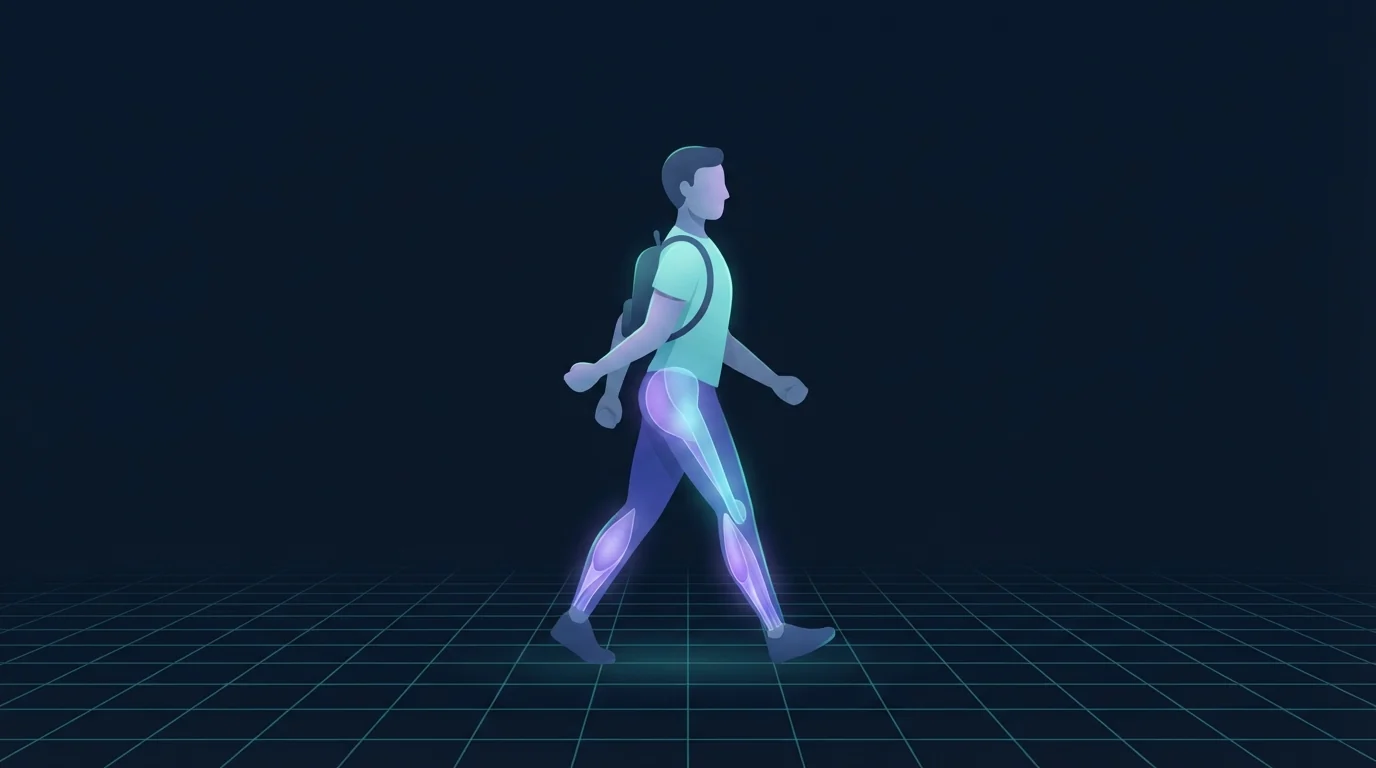
This question usually gets asked defensively. Someone walks 45 minutes a day, feels good, then hears a coworker say walking "doesn't really count" and starts wondering if they've been fooling themselves. They haven't. But the coworker isn't entirely wrong either, and the useful version of the answer explains which half each of them has.
Walking is unambiguously exercise by the definition public health agencies actually use. It's also genuinely limited in ways that matter if your goals include muscle, bone or getting meaningfully fitter than you are now. Below: what "counts" means in the guidelines, what the step-count evidence shows, what walking does and doesn't do for your body, and three ways to make it count for more.
What "Counts" Means in the Guidelines
Public health guidance doesn't classify activities by whether they look like exercise. It classifies them by energy cost, measured in METs, where 1 MET is roughly what you burn sitting quietly.
The Physical Activity Guidelines for Americans set the moderate-intensity band at 3.0 to 5.9 METs and vigorous at 6.0 and above. They ask adults for 150 to 300 minutes a week of moderate activity, or 75 to 150 minutes of vigorous, plus muscle-strengthening work on 2 or more days. The WHO guidelines (Bull et al., 2020) use the same numbers.
Now put walking against that band, using the Compendium's measured values:
| Walking pace | MET cost | Does it count as moderate? |
|---|---|---|
| Under 2 mph, strolling | 2.0 | No. Light activity. Still better than sitting. |
| 2.0 mph, slow | 2.8 | Just under the line. |
| 2.5 mph | 3.0 | Yes, exactly at the threshold. |
| 2.8 to 3.2 mph, moderate pace | 3.5 | Yes. |
| 3.5 mph, brisk | 4.3 | Yes, solidly in the band. |
| 4.0 mph, very brisk | 5.0 | Yes, near the top of moderate. |
| 3 mph on a 1 to 5 percent incline | 5.3 | Yes, and close to vigorous. |
| 3 mph on a 6 to 15 percent incline | 8.0 | This is vigorous activity. |
So the threshold isn't "walking" versus "exercise". It's pace. And the guidelines don't merely permit walking: brisk walking is the canonical example they give for moderate intensity, the thing everything else gets compared against.
If you'd rather not do arithmetic on a treadmill display, the talk test does the same job. At moderate intensity you can hold a conversation in full sentences but can't comfortably sing. At vigorous intensity you can manage a few words between breaths. Cadence works too: roughly 100 steps per minute is the usual moderate threshold for healthy adults.
What the Step-Count Evidence Shows
The MET math tells you walking qualifies. The cohort data tell you it matters. The strongest current synthesis is Ding and colleagues (2025) in The Lancet Public Health, which pooled 57 studies and more than 160,000 adults and modelled the dose-response curve for daily steps against eight outcomes. Compared with about 2,000 steps a day, 7,000 steps was associated with:
- 47 percent lower all-cause mortality.
- 38 percent lower dementia risk.
- 28 percent lower risk of falls.
- 25 percent lower cardiovascular disease.
- 22 percent lower risk of depression.
- 14 percent lower risk of type 2 diabetes.
Two caveats belong with those numbers. The certainty rating was low for several of the outcomes, and observational step data can't fully separate "walks more" from "is healthy enough to walk more". Reverse causation is a real problem in this literature. Still, the shape is consistent across cohorts, and it matches the older work: Paluch and colleagues (2022) pooled 15 cohorts and 47,471 adults and found the mortality curve flattening at 6,000 to 8,000 steps for adults over 60 and 8,000 to 10,000 for younger adults.
Note where the plateau sits, and where it doesn't. For most outcomes the curve levels off around 7,000 steps, though cardiovascular benefit kept climbing past it. Nothing in the data supports treating 10,000 as a pass mark, which is the argument our review of the 10,000 steps target works through in detail.
What Walking Does, and What It Doesn't
What it does well
- Aerobic fitness, if you're starting below average. For a deconditioned adult, brisk walking sits at a high enough percentage of maximum heart rate to drive real improvement in aerobic capacity. For someone already fit, flat walking is recovery, not training.
- Cardiovascular and metabolic risk. This is where the step-count associations are strongest and most consistent across cohorts.
- Glucose handling. Walking after eating is one of the better-evidenced small habits in the whole behaviour-change literature.
- Mood and cognition. The dementia and depression associations above are among the larger effects in the 2025 pooled analysis.
- Total daily energy expenditure. Walking is the largest lever most people have over non-exercise activity, which usually dwarfs the calories burned in a structured session.
- Adherence. Walking has no learning curve, no equipment and almost no barrier to starting. The best exercise is still the one you actually repeat.
Does walking build muscle?
Barely, and only from a low baseline. Walking loads the calves, quads, glutes and hip flexors at a fraction of body weight, far below the mechanical tension that triggers hypertrophy. A previously sedentary or older adult who starts walking daily will gain some leg strength and function in the first several weeks, then plateau, because the load never increases and progressive overload is what keeps adaptation going. Walking is an aerobic stimulus that happens to involve your legs, not a resistance stimulus.
Bone is the bigger gap
Walking's effect on bone is smaller than most people assume. Martyn-St James and Carroll (2008) pooled ten trials in Bone and found walking as a standalone intervention had no significant effect on lumbar spine bone mineral density, none at the radius, and none for the whole body. Femoral neck density did improve, but only in interventions running six months or longer. Bone responds to strain magnitude and strain rate, and the ground reaction forces in walking are simply too low and too repetitive to provide much of either.
That's not an argument against walking. It's an argument for pairing it with something that loads the skeleton, which matters most for exactly the people who walk the most: older adults and postmenopausal women.
Knowing what to do is the easy part.
FitCraft, our mobile fitness app, pairs you with an AI coach who builds you a personalized plan around your goals, schedule, and fitness level. Every FitCraft program is designed by Domenic Angelino, MPH (Brown University) and NSCA-CSCS, with research published in the Journal of Strength and Conditioning Research and Medicine & Science in Sports & Exercise.
Take the Free Assessment Free • 2 minutes • No credit cardHow to Make Walking Count for More
If walking has stopped feeling like anything, that's information. It means your fitness has outgrown the stimulus. Three ways to fix that, in rough order of how much they cost you.
1. Pick up the pace
The jump from 2.5 mph to 3.5 mph takes you from 3.0 METs to 4.3, a 43 percent increase in energy cost for the same amount of time. Most people's "normal" walk drifts slower over the years without them noticing. Use the talk test each time you head out: if you could sing along, you're going too easy for this to register as moderate.
2. Add grade
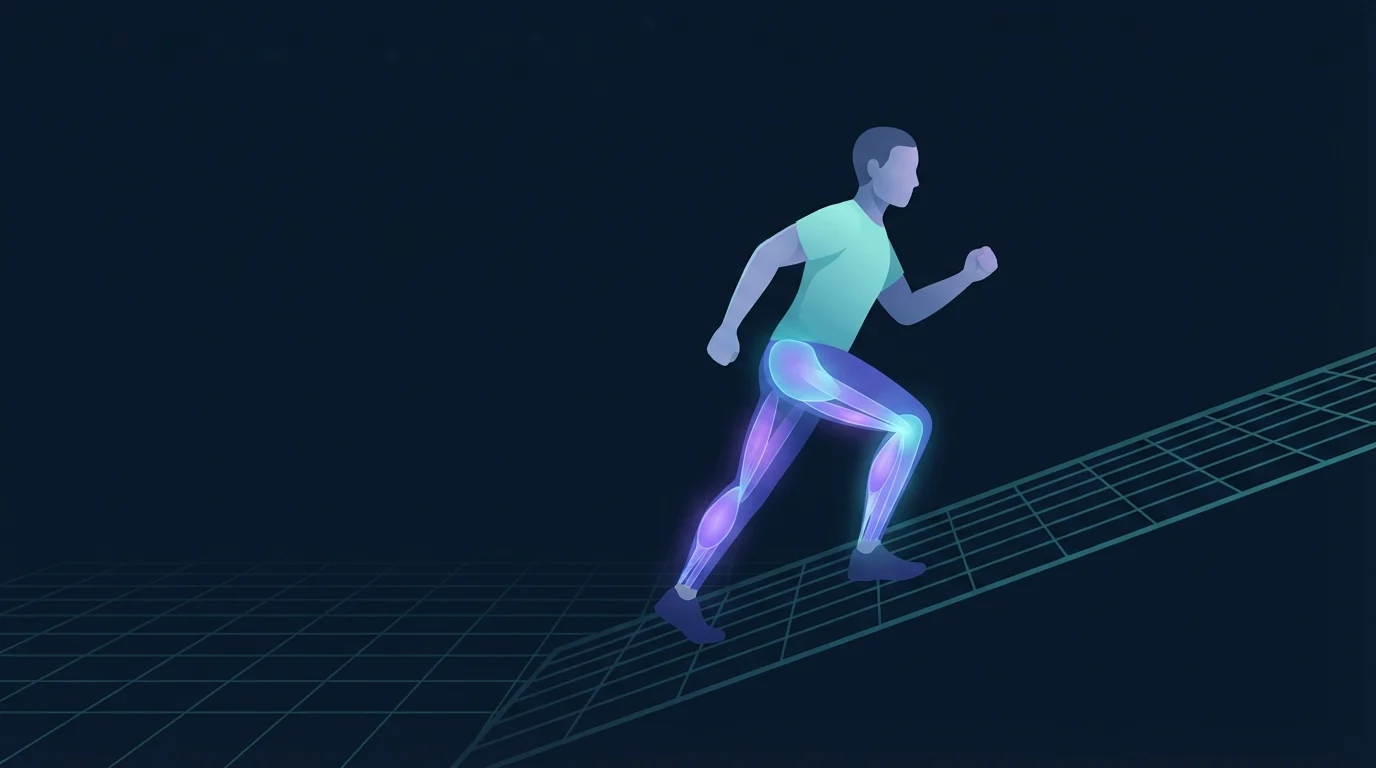
This is the best value on the list. A 1 to 5 percent incline at the same 3 mph takes you from 4.3 METs to 5.3, and a 6 to 15 percent grade puts you at 8.0 METs, which is genuinely vigorous. Hills also recruit the glutes and hamstrings far more than flat ground does. Our review of the incline walking research covers what the treadmill studies actually found, including where the popular incline protocols oversell themselves.
3. Walk in intervals
The best-controlled trial here is Nemoto and colleagues (2007) in Mayo Clinic Proceedings. They randomized 246 middle-aged and older adults, mean age 63, into no walking training, moderate continuous walking, or interval walking that alternated 3 minutes near maximum effort with 3 minutes easy, four or more days a week for five months. The interval group came out ahead on peak aerobic capacity, thigh muscle strength and systolic blood pressure. Same activity, same shoes, different structure.
A fourth option worth naming: carry something. A loaded pack raises the energy cost and adds some vertical loading, though the bone literature on weighted walking is thinner than the enthusiasm for it. If you want the distance side of this rather than the intensity side, our guide to how many miles to walk a day by goal lays out the targets.
Pair It With Two Strength Sessions
Here's the cleanest way to think about it. The guidelines have two halves. Brisk walking satisfies the aerobic half completely and the muscle-strengthening half not at all. The strength requirement is specific: activities that work all the major muscle groups on 2 or more days a week. Walking works some of your lower body at low intensity and essentially none of your upper body.
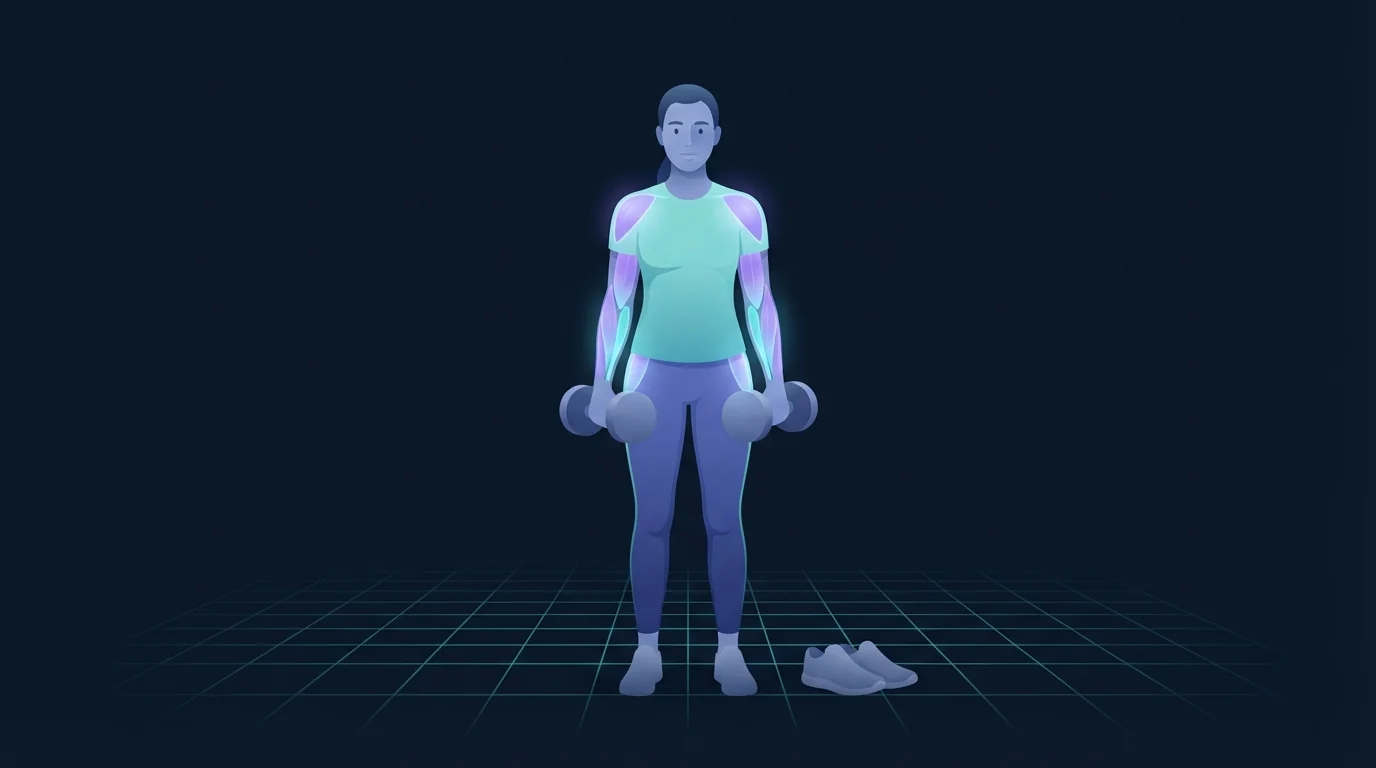
Two sessions a week is not a big ask. It doesn't need a gym. Bodyweight squats, push-ups at whatever angle you can manage, a hip hinge, a row with a band or a pair of dumbbells, and a carry covers the major patterns in about 25 minutes. Done twice weekly alongside your walking, that combination satisfies both halves of the guidelines, protects the bone and muscle that walking alone won't, and makes the walking itself easier.
The pairing matters for body composition too. If weight loss is part of why you're walking, walking creates the energy deficit and strength training protects the lean mass inside it. Our post on whether you can lose weight by walking covers the deficit side honestly, including why walking alone tends to stall. For a plan that programs both halves, the roundup of the best workout apps for weight loss compares what's available.
What This Means for You
If you walk briskly for 30 to 45 minutes most days, you're meeting the aerobic guidelines, you're in the step range where the mortality curve flattens, and nobody gets to tell you it doesn't count. Keep going. Add a hill when it starts feeling easy.
If you're walking because you're rebuilding from a long layoff, an illness or an injury, walking is the correct first step and the ceiling will come later. Your only job for now is frequency.
And if you've been using walking as your whole program for a year and wondering why nothing about your body has changed, this is the answer. Walking maintains. It doesn't remodel. The change you're looking for lives in the two strength sessions you haven't added yet, and they're the cheapest thirty minutes in fitness.
Frequently Asked Questions
Does walking count as exercise?
Yes, as long as the pace clears roughly 2.5 mph. The Physical Activity Guidelines for Americans define moderate-intensity activity as anything costing 3.0 to 5.9 METs, and the 2011 Compendium of Physical Activities puts walking at 2.5 mph at exactly 3.0 METs, 2.8 to 3.2 mph at 3.5 METs and 3.5 mph at 4.3 METs. Brisk walking is the example the guidelines themselves use for moderate activity. A slow stroll under 2 mph comes in at about 2.0 METs and doesn't clear the bar, though it still beats sitting.
How fast is brisk walking?
Roughly 3 to 4 mph, or a 15 to 20 minute mile. The simplest field test is the talk test used in the Physical Activity Guidelines: at moderate intensity you can talk in full sentences but you can't comfortably sing. If you can belt out a chorus, speed up. If you can only manage three or four words at a time, you've crossed into vigorous intensity, which is fine but is a different dose. Cadence works too: about 100 steps per minute is the usual moderate-intensity threshold for healthy adults.
Does walking build muscle?
Barely, and only if you're starting from deconditioned. Walking loads the calves, quads, glutes and hip flexors at a fraction of body weight, well below the mechanical tension that drives hypertrophy. A sedentary or older adult who starts walking daily will gain some leg strength and function in the first weeks, then plateau quickly because the load never increases. If muscle is the goal, walking is the aerobic base and resistance training is the stimulus. They aren't substitutes for one another.
How many steps a day should I walk?
About 7,000 is the number the current evidence supports. Ding and colleagues (2025) pooled 57 studies in The Lancet Public Health and found that 7,000 steps a day was associated with 47 percent lower all-cause mortality, 25 percent lower cardiovascular disease, 38 percent lower dementia risk and 22 percent lower depression risk compared with about 2,000 steps. For most outcomes the curve flattened past 7,000. Paluch and colleagues (2022) put the plateau at 6,000 to 8,000 steps for adults over 60 and 8,000 to 10,000 for younger adults.
Is walking enough exercise on its own?
It covers the aerobic half of the guidelines and none of the strength half. The Physical Activity Guidelines ask for 150 to 300 minutes of moderate activity a week plus muscle-strengthening work on 2 or more days that hits all the major muscle groups. Brisk walking satisfies the first requirement completely and the second not at all. It also does very little for bone: Martyn-St James and Carroll (2008) found walking had no significant effect on lumbar spine bone density in postmenopausal women. Two short strength sessions a week fill both gaps.
How can I make walking count more?
Add grade, add pace variation, or add load. A 1 to 5 percent incline takes walking from about 4.3 METs to 5.3 METs at the same speed, which is nearly vigorous. Interval walking works even better: Nemoto and colleagues (2007) had 246 middle-aged and older adults alternate 3 minutes fast with 3 minutes slow, four days a week for five months, and that group gained more peak aerobic capacity and thigh strength and dropped systolic blood pressure more than the moderate continuous walking group. Carrying a loaded pack raises the cost again.
Does walking count as cardio?
Yes, for as long as it challenges your aerobic system, which depends on how fit you already are. For a deconditioned adult, brisk walking sits at a meaningful percentage of maximum heart rate and reliably improves aerobic capacity. For a trained runner, flat walking is barely above resting cost and provides recovery rather than training. This is why fit people often feel walking has stopped counting: it hasn't stopped being healthy, it has stopped being a stimulus. Adding hills or a weighted pack puts it back in training range.