There is a version of post-workout tiredness that feels earned. You sit down, you eat something, and 45 minutes later you're fine and slightly pleased with yourself. And there is a version where you get home, sit on the edge of the sofa still in your shoes, and the rest of the evening quietly disappears.
Both are common. Only one of them is a problem, and the difference has almost nothing to do with how tough you are.
This piece covers what ordinary post-exercise fatigue looks like, the six things that turn it into the other kind, how to restructure training so it gives you energy rather than taking it, and the point at which fatigue stops being a training question and becomes a medical one.
What normal post-workout tiredness looks like
After a hard session you have spent muscle glycogen, your core temperature is elevated, blood pressure often sits slightly below baseline for a while, and the central nervous system has been driving a lot of motor output. A dip in alertness and drive for roughly 30 to 120 minutes is the expected result. Food, fluid and a bit of sitting down resolve it.
A few markers of the normal version:
- You feel flat but not unwell, and your mood is fine or better than before you started.
- Eating a proper meal makes a noticeable difference within an hour.
- You sleep normally that night rather than lying awake wired, and you wake up roughly as rested as usual.
- The next session, two or three days later, feels about as hard as the last one did. Not harder.
- Any soreness peaks a day or two later and sits in the muscles you trained, not in your whole body.
The long-run direction should be upward. Puetz, O'Connor and Dishman's 2006 meta-analysis found chronic exercise raised feelings of energy and lowered fatigue across 70 trials, with a mean effect of 0.37. That review is honest about its own limits: trials that used a placebo control and tested exercise on its own did not show the effect, so some of the benefit is likely expectation. The randomized trial that followed is the more striking one. Puetz, Flowers and O'Connor (2008) recruited 36 sedentary adults who reported persistent fatigue with no medical explanation, and randomized them to low-intensity cycling at 40 percent of peak oxygen uptake, moderate-intensity cycling at 75 percent, or no exercise. Twenty minutes, three times a week, for six weeks. Both exercise groups reported about 20 percent more energy. Fatigue fell 65 percent in the low-intensity group and 49 percent in the moderate group, and the improvements did not track with gains in aerobic fitness.
Read that last part twice, because it reverses the usual instinct. The easier training made people less tired than the harder training did, and neither result depended on getting fitter. If your workouts are leaving you wrecked, the evidence says the answer is rarely to push harder through it.
When the tiredness is more than normal
The pattern matters more than any single bad day. Look for a cluster of these running for two weeks or more:
- Fatigue that lasts the rest of the day after most sessions, not just the hard ones.
- Waking up unrefreshed, or sleeping badly on training nights despite normal habits.
- Loads that felt manageable a month ago now feeling heavy at the same weight.
- Resting heart rate in the morning sitting noticeably above your normal.
- Appetite dropping off, or food stopping being appealing.
- Irritability, low motivation, or dread before sessions you used to like.
- Getting sick more often than usual, or minor niggles that won't settle.
Any one of those has innocent explanations. Several together for a fortnight means something in the load, fuel or sleep column is off.
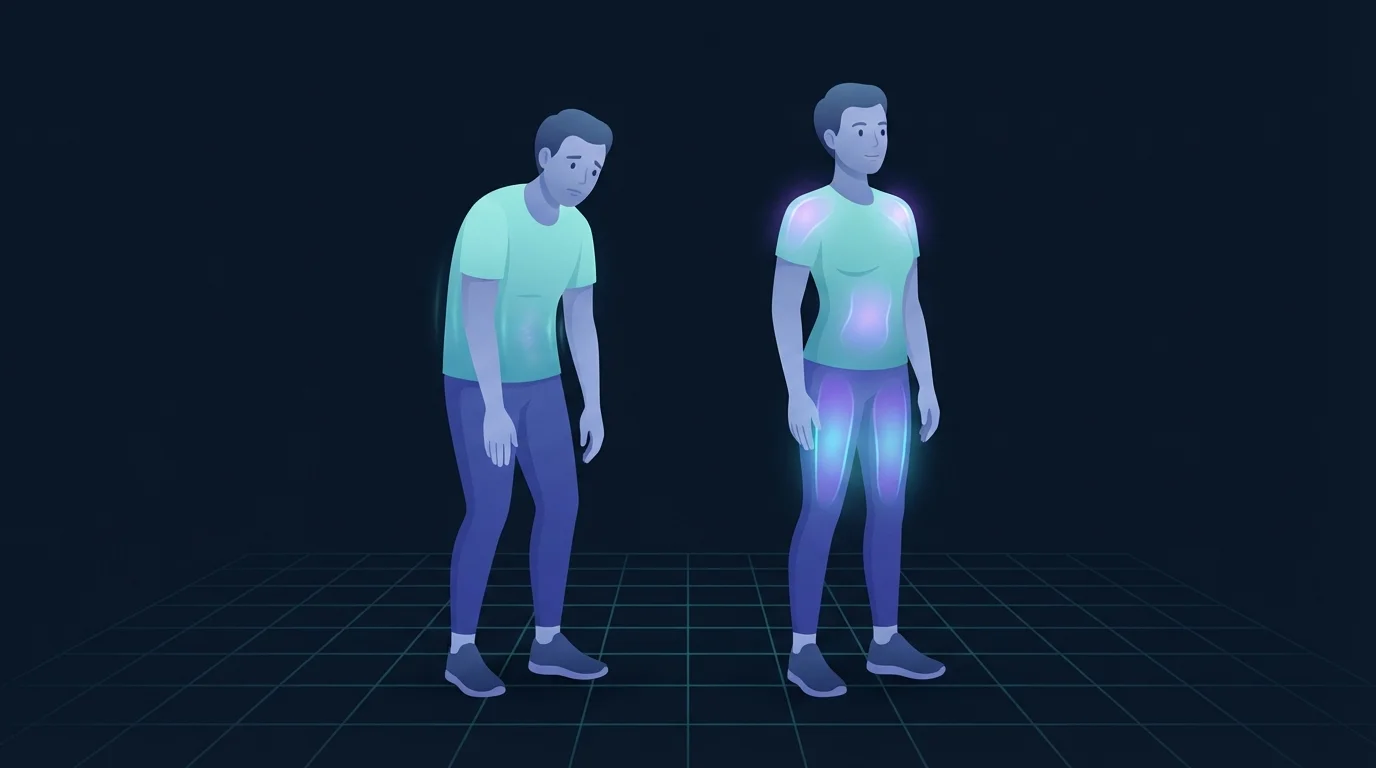
Six reasons you are wiped out
1. The session was harder than your current fitness
This is the most common and the least discussed. A workout that's appropriate for someone six months in will flatten someone three weeks in, even if both people complete it. Beginner sessions also carry more unfamiliar movement, which costs more neurologically than the same work does once the pattern is learned. If your sessions regularly end with you unable to hold a conversation, the intensity is the variable to move first.
2. You are not eating enough
Training on top of an aggressive calorie deficit is the fastest route to being permanently tired. When intake falls below what training plus basic physiology need, the body starts economising. The 2023 IOC consensus statement on Relative Energy Deficiency in Sport (Mountjoy et al.) in the British Journal of Sports Medicine describes low energy availability sitting on a spectrum from adaptable to problematic, with consequences across endocrine, metabolic, immune, bone, cardiovascular and psychological systems. Fatigue and a flat training response are among the earliest things people notice.
The two practical failures are eating too little in total, and eating enough in total but nowhere near the session. Carbohydrate before and a carbohydrate plus protein meal after isn't complicated, and it changes how the rest of the day feels. Our guide to what to eat before a workout covers the timing windows.
3. You are carrying sleep debt into training
Fullagar and colleagues (2015) reviewed the sleep and performance literature in Sports Medicine and found sleep loss degrades endurance performance more consistently than maximal strength, and reliably worsens perceived exertion, mood and cognitive function. So a short-sleep week makes the same workout feel harder and cost more, which is exactly the experience people describe as being wiped out by training that used to be fine.
4. You have added load faster than you recover
Training fatigue sits on a continuum. Meeusen and colleagues (2013), in the joint European College of Sport Science and American College of Sports Medicine consensus statement, describe three stages: functional overreaching, where a planned dip is followed by a rebound within days to about two weeks; non-functional overreaching, where performance stays suppressed for weeks to months with no rebound; and overtraining syndrome, where it persists for months or longer. Most tired people are in the first stage or the early part of the second. The marker that distinguishes them is what happens after an easy week.
5. Dehydration and heat
Finishing a session meaningfully dehydrated leaves you with lower blood volume, a higher heart rate for the rest of the day and a headache that reads as tiredness. Training in heat compounds it, because cooling costs cardiac output that would otherwise go to the muscles. Both are cheap to fix and easy to overlook.
6. Something medical
Sometimes the training is fine and the fatigue was already there. Iron deficiency is the classic example, and it causes real fatigue well before it causes anemia. Houston and colleagues (2018) reviewed randomized trials in BMJ Open and found iron supplementation reduced subjective fatigue in non-anemic iron-deficient adults, though objective work capacity did not consistently improve. Thyroid disease, B12 deficiency, sleep apnea, poorly controlled blood sugar, depression and a recent viral illness all belong on the same list. Training while genuinely unwell is its own trap, and our guide to working out while sick covers where that line sits.
Knowing what to do is the easy part.
FitCraft, our mobile fitness app, pairs you with an AI coach who builds you a personalized plan around your goals, schedule, and fitness level. Every FitCraft program is designed by Domenic Angelino, MPH (Brown University) and NSCA-CSCS, with research published in the Journal of Strength and Conditioning Research and Medicine & Science in Sports & Exercise.
Take the Free Assessment Free • 2 minutes • No credit cardHow to scale training so it gives you energy
The 2008 trial is the design brief here. Twenty minutes, three times a week, easy enough to talk through, produced the biggest fatigue reduction of anything tested. Most people trying to fix exhaustion reach for the opposite. Here is the order to work in.
Make most of your week easy
Keep one or two genuinely hard sessions and make everything else conversational. If you can't speak in full sentences, it's a hard session, whatever you labeled it. This single change fixes more cases of all-day fatigue than any supplement will.
Shorten before you skip
A 20-minute version of the session beats cancelling it, and it keeps the habit intact. Half the sets, two exercises instead of five, or a walk instead of intervals all count as training weeks.
Put a floor under sleep and food
Seven hours as a floor, not a target. A real meal within a couple of hours of finishing. Neither is glamorous and both outperform anything else on this list.
Raise load by one variable at a time
Add sets, or add weight, or add a session. Not all three in the same week. The moment a program moves on two axes at once it becomes impossible to tell which change is costing you.
Take the rest days on purpose
Rest days are where the adaptation actually happens, and bunching them at the end of a five-day block is the worst common pattern. Our post on how many rest days a week you need works through where to put them, and our guide to recovering faster from a workout covers what to do on them.
Run the two-week test
Cut your hard sessions to one a week, keep everything else easy, sleep seven hours or more, and eat a normal amount. If you feel meaningfully better inside two weeks, the problem was load. If nothing changes, that's genuinely useful information to take to a doctor, because it points away from training.
If you'd rather not redesign the program yourself, that's a reasonable position. A plan that adds load at a rate you can absorb is the whole job, and our personalized training program page explains how FitCraft builds one around your schedule and current fitness level.
When to see a doctor
Latimer, Gunther and Kopec (2023) in American Family Physician note that fatigue is among the top ten reasons adults visit primary care, and that the workup should be guided by history rather than a broad panel of tests. Book an appointment if any of the following apply:
- Unexplained fatigue lasting more than about two weeks despite reasonable sleep, food and a reduced training load.
- Chest pain or pressure, breathlessness out of proportion to the effort, palpitations, or fainting during or after exercise. These warrant urgent assessment rather than a routine appointment.
- Unintended weight loss, fever, night sweats or swollen glands alongside the fatigue.
- Heavy periods, a vegetarian or vegan diet, or high-volume endurance running plus persistent fatigue. Ask for ferritin as well as a full blood count, since iron can be low while hemoglobin is still normal.
- Loud snoring, witnessed pauses in breathing, or falling asleep during the day. Sleep apnea is common, treatable and frequently missed in people who assume they are just training hard.
- Low mood, loss of interest, or anxiety that arrived with or before the fatigue. Depression is one of the most common causes of persistent tiredness and doesn't respond to a deload.
- Missing periods, or a long history of restricting food. Mountjoy and colleagues (2023) flag menstrual disruption as a key indicator of problematic low energy availability, and it needs proper assessment rather than more discipline.
Common initial tests include a full blood count, a metabolic panel, thyroid function and ferritin. Going in with a two-week log of sleep, sessions and food is more useful than any of them, because it tells the clinician what the pattern actually is.
What this means for you
If you're exhausted after workouts, the program is almost certainly wrong for where you are right now rather than anything to do with grit. That's a fixable problem and a fairly quick one. Two weeks of easier sessions, seven hours of sleep and eating like someone who trains will sort out the large majority of cases.
Keep the frame from the 2008 trial in mind while you do it. The people who got the biggest reduction in fatigue were the ones doing the gentlest work. Consistency at an intensity you can repeat beats intensity you have to recover from for two days, and it compounds. Six weeks of 20-minute sessions you actually completed will leave you with more energy than six weeks of brutal sessions you kept having to skip.
Frequently Asked Questions
Why am I so tired after working out?
A dip in energy for 30 to 120 minutes after a hard session is normal. Your fuel stores are lower, your nervous system has been working, and body temperature and blood pressure are still settling. Tiredness that wipes out the rest of your day, every time, usually means one of three things: the session was harder than your current fitness, you did not eat enough before or after it, or you are carrying sleep debt into training. Load, food and sleep explain the large majority of cases before anything medical does.
How long should you feel tired after a workout?
Most people feel an energy dip for 30 minutes to two hours, then return to baseline once they have eaten and rehydrated. Muscle soreness can peak 24 to 48 hours later without any accompanying whole-body fatigue. If you are still flat 24 hours after every session, or you wake up more tired than you went to bed for several days running, the training load is outpacing your recovery rather than building it.
Does working out give you more energy or less?
More, over weeks, even though each individual session costs you something on the day. Puetz, O'Connor and Dishman (2006) pooled 70 randomized trials covering 6,807 participants in Psychological Bulletin and found chronic exercise raised feelings of energy and lowered fatigue by a mean effect of 0.37, though the effect shrank in placebo-controlled exercise-only trials. In a six-week randomized trial, Puetz, Flowers and O'Connor (2008) had 36 sedentary adults with persistent fatigue do 20 minutes of cycling three times a week: the low-intensity group reported 65 percent less fatigue and the moderate-intensity group 49 percent less, with energy up about 20 percent in both.
Am I too tired after workouts because I am not eating enough?
It is one of the most common explanations, especially in people training while trying to lose weight. When energy intake stays below what training and basic physiology need, the body reduces spending elsewhere: the 2023 IOC consensus statement on Relative Energy Deficiency in Sport (Mountjoy et al.) describes effects across endocrine, metabolic, immune, bone, cardiovascular and psychological systems, with fatigue and poor training response among the earliest signs. Eating a carbohydrate and protein meal within a couple of hours either side of training and not stacking a hard block on top of an aggressive deficit fixes this for most people.
Could low iron be why I am so tired after exercise?
Possibly, and it is worth testing rather than guessing. Iron deficiency can cause significant fatigue before it ever causes anemia. Houston et al. (2018) reviewed randomized trials in BMJ Open and found iron supplementation reduced subjective fatigue in non-anemic iron-deficient adults, although objective work capacity did not consistently improve. Ask for ferritin alongside a full blood count rather than hemoglobin alone, particularly if you have heavy periods, are vegetarian or vegan, or do a lot of endurance running.
When should I see a doctor about tiredness after exercise?
See a doctor if unexplained fatigue lasts more than about two weeks despite normal sleep and food, or if it comes with chest pain or pressure, breathlessness out of proportion to the effort, fainting, palpitations, unintended weight loss, fever, night sweats, or loud snoring with witnessed pauses in breathing. Latimer, Gunther and Kopec (2023) in American Family Physician list anemia, iron and B12 deficiency, thyroid disease, diabetes, sleep apnea, depression and chronic infection among the common secondary causes, and suggest a workup guided by history rather than a broad panel of tests.