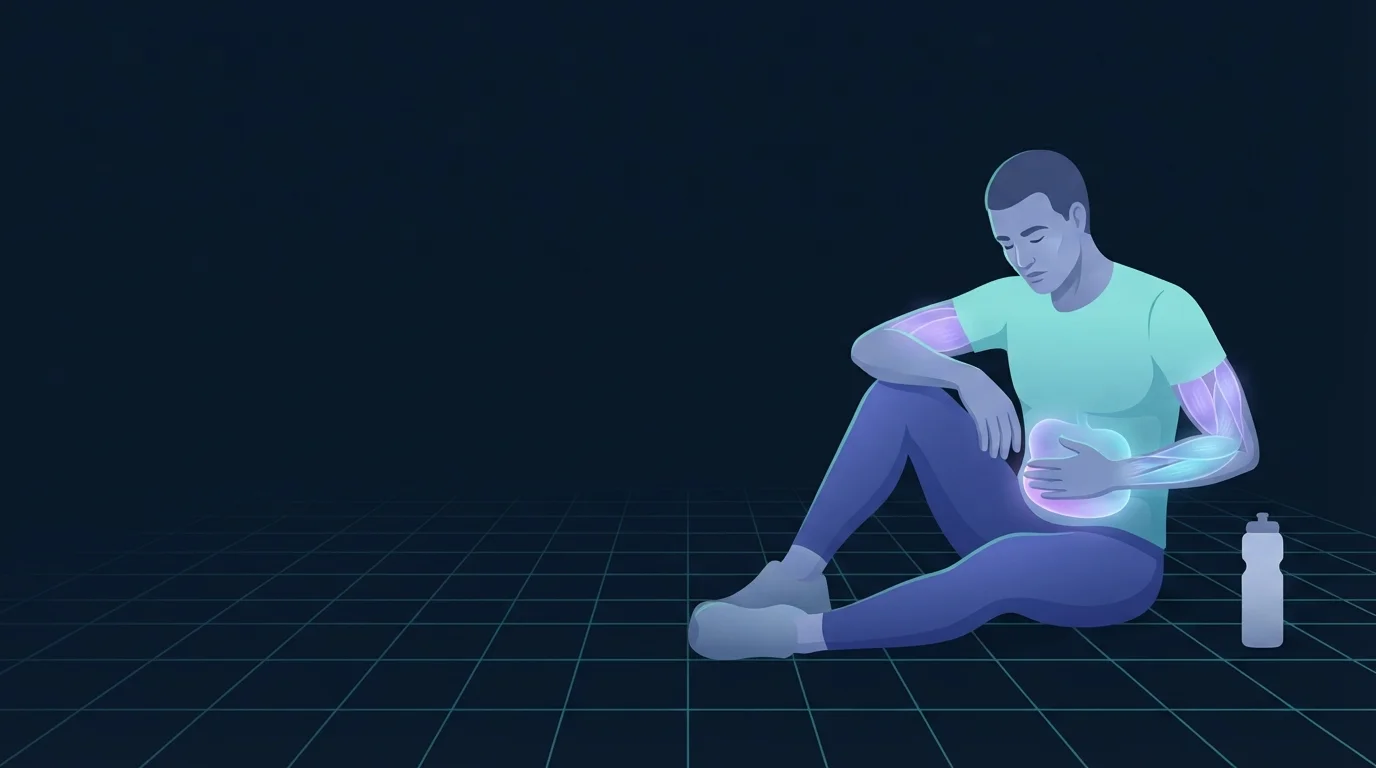
There is a specific kind of misery that shows up about 40 seconds after a hard set, or halfway through the drive home from the gym. Your stomach turns over. You go quiet. You start doing the mental arithmetic on how close the nearest bathroom is. And then, usually within half an hour, it's just gone, which makes the whole thing feel both alarming and slightly ridiculous.
Worth knowing: this doesn't mean you're unfit, and you didn't break anything. It's a predictable consequence of asking your body to do two expensive jobs at once. Digestion needs blood. So do your legs. When the legs win, the stomach pays for it.
What follows is the mechanism, the six causes ranked roughly by how often they turn out to be the answer, the changes that fix it, and the short list of symptom combinations where nausea stops being a nuisance and becomes a reason to get help.
How common is it?
Common enough that the sports medicine literature has its own name for the family of problems it belongs to. de Oliveira, Burini and Jeukendrup (2014) in Sports Medicine put the share of endurance athletes reporting gastrointestinal complaints at 30 to 50 percent, with nausea specifically reported by 4 to 21 percent in the upper-gut symptom surveys they reviewed.
The numbers climb steeply with effort and duration. Wilson's 2019 narrative review in Sports collected them across event types:
- Marathon running: about 12 percent reported nausea during hard efforts, compared with 1.8 percent during easy runs.
- Half-iron-distance triathlon: 21 percent during the bike leg, rising to 30 percent on the run.
- 161 km ultramarathons: 60 percent reported nausea and 25 percent vomited.
Two things fall out of that list. Intensity matters more than most people assume, and running is harder on the gut than cycling at a matched effort because of the mechanical jostling. If you only ever feel sick on run days, that's real.
Why hard training makes your stomach turn
Your gut loses its blood supply
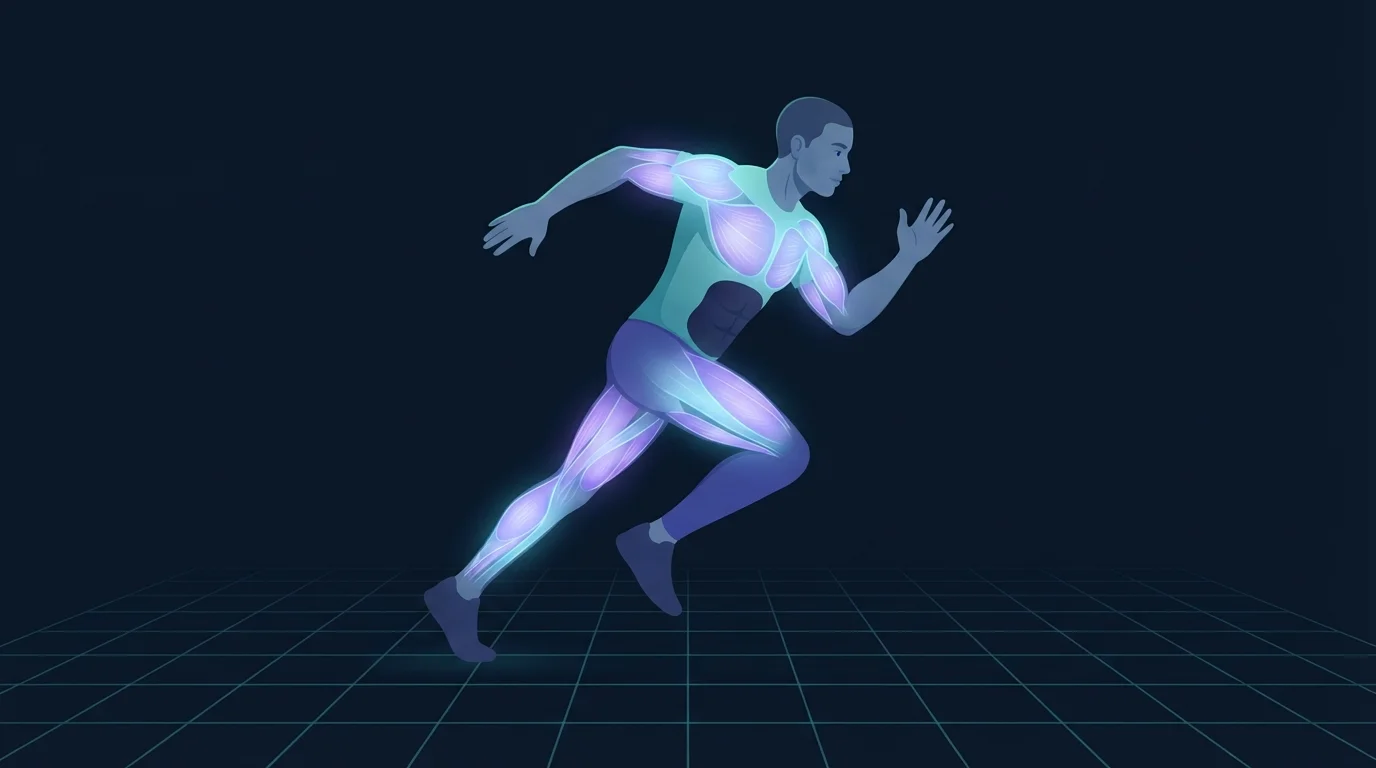
This is the main event. During exercise your cardiovascular system reallocates blood toward skeletal muscle, and the biggest donor in that reallocation is the splanchnic circulation, the vessels that feed the stomach, intestines and liver. van Wijck and colleagues (2012) in the American Journal of Physiology describe the consequences in detail: reduced gut perfusion slows motility, impairs absorption, and at higher intensities stresses the intestinal lining itself.
Their earlier experiment is the cleanest illustration. van Wijck et al. (2011) had 20 trained young men cycle for 60 minutes at 70 percent of maximum workload. Markers of gut hypoperfusion rose sharply, with the steepest change in the first 10 minutes of exercise. Plasma intestinal fatty acid binding protein, a marker of intestinal cell stress, roughly doubled from 309 to 615 pg/mL. Then it recovered, fastest in the first 10 minutes after they stopped, and back to baseline by about 50 minutes.
That recovery curve is why your nausea disappears on the drive home. Nothing was damaged in a lasting way. The blood simply came back.
Adrenaline, on its own
Blood flow is not the whole story, because nausea also spikes at intensities too brief to starve the gut. Wilson's review points at catecholamines: hard efforts drive large rises in epinephrine and norepinephrine, and those hormones are independently nauseogenic. That's the best explanation for the six-fold gap between hard and easy running, and for why a single brutal set of squats or a maximal interval can do it when an hour of walking never will.
Heat and dehydration
Heat competes for the same blood supply, because cooling means sending blood to the skin. Add fluid loss and the available volume shrinks further. Wilson reports nausea incidence rising from roughly 10 percent to 40 percent when the same exercise was done in hot rather than temperate conditions. Dehydration also raises arginine vasopressin, a hormone that provokes nausea directly when administered to humans.
Whatever is still in your stomach
Gastric emptying slows during hard exercise, so the contents of a recent meal sit longer than they would at rest. Fat and protein are the slowest to leave, and fat also triggers cholecystokinin release, which reduces gastric motility further. Wilson notes that about 75 grams of protein taken 90 minutes before exercise intensified nausea compared with carbohydrate. Fluid volume matters too: intakes around 1,000 mL per hour roughly doubled reports of stomach discomfort, and concentrated carbohydrate drinks were worse than dilute ones or glucose-fructose blends.
The causes people miss
Beyond the four mechanisms above, a handful of explanations come up often enough to check before you blame your fitness.
- Stopping dead at the end. When you finish a hard effort and stand still, blood pools in the legs, venous return drops and blood pressure can dip. Lightheadedness and nausea travel together. Three to five easy minutes of walking prevents most of it.
- Training completely fasted for too long. A short fasted session is fine for most people. A long or intense one on an empty stomach, especially in the morning, tends to produce a shaky, queasy, slightly clammy feeling that food fixes within minutes. Wilson lists prolonged fasting as an aggravating factor for nausea severity.
- Stimulants and buffers. High caffeine doses, roughly 500 mg and above, raise catecholamines on top of what exercise already does. Sodium bicarbonate reliably increases gastrointestinal symptoms with a peak 60 to 90 minutes after ingestion, and in the trials Wilson reviewed, every participant given sodium citrate reported nausea. Pre-workout blends frequently contain two of those three.
- Duration past a threshold. Costa, Snipe, Kitic and Gibson (2017) pooled the evidence in Alimentary Pharmacology and Therapeutics and concluded that exercise of at least two hours at 60 percent of VO2max is the point where meaningful gut disturbance shows up, regardless of how fit you are. Below that, symptoms usually trace back to intensity spikes or food rather than accumulated stress.
- Breath-holding under load. Bracing hard and holding your breath through heavy reps raises intra-abdominal pressure and can push stomach contents upward, which some people feel as reflux and others as nausea.
Lower-gut symptoms have overlapping but not identical causes. If your problem is urgency and cramping rather than queasiness, our post on how to prevent runner's trots works through the colonic side of the same blood flow story.
Knowing what to do is the easy part.
FitCraft, our mobile fitness app, pairs you with an AI coach who builds you a personalized plan around your goals, schedule, and fitness level. Every FitCraft program is designed by Domenic Angelino, MPH (Brown University) and NSCA-CSCS, with research published in the Journal of Strength and Conditioning Research and Medicine & Science in Sports & Exercise.
Take the Free Assessment Free • 2 minutes • No credit cardWhat to change
Work through these in order. Most people find their answer in the first two.
1. Move the meal before you change the food
The joint position statement from the American College of Sports Medicine, the Academy of Nutrition and Dietetics and Dietitians of Canada (Thomas, Erdman and Burke, 2016) puts the pre-exercise meal one to four hours ahead of the session. The closer you get to training, the smaller and simpler it should be: mostly carbohydrate, low fat, low fiber, modest protein. A full meal at three hours and a banana at 45 minutes is a pattern that works for a lot of people who can't tolerate anything larger. Our guide to what to eat before a workout lays out the timing windows in more detail.
2. Drink to thirst, not to a schedule
Both directions cause problems. Arriving dehydrated makes nausea more likely, and so does pouring in fluid at 750 to 1,000 mL per hour to prevent it. Aim to start well hydrated, sip during the session, and avoid losing more than about 2 to 3 percent of body mass on long efforts. If you use a sports drink and it makes you queasy, dilute it before you abandon it.
3. Ramp the intensity inside the session
Nausea tracks the rate of change as much as the absolute effort. Going from sitting in a car to an all-out interval in four minutes is a much bigger catecholamine spike than the same interval after eight minutes of progressive warm-up. Give yourself the ramp.
4. Respect the heat
On hot days, drop the intensity target rather than the session. Train earlier, move indoors, or trade the intervals for steady work. Fitness built in cool conditions still counts.
5. Cool down instead of stopping
Three to five minutes of easy walking at the end keeps the muscle pump working while your heart rate falls. It's the cheapest fix on this list and the one people skip most.
6. Audit the supplements
If nausea started when a new pre-workout did, that's your suspect. Halve the dose or take the caffeine further from the session and see whether the symptom moves with it. Test buffers like sodium bicarbonate well away from anything that matters.
One more variable sits behind all six: whether the session itself was a reasonable ask. A program that jumps you straight into near-maximal work is going to produce nausea regardless of how well you eat around it. If you want a plan that builds intensity at a survivable rate, our roundup of the best fitness apps for beginners compares the options that ramp you rather than dropping you in.
When nausea is a red flag
Ordinary exercise nausea is short-lived, tied to the effort, and resolves as you recover. These patterns are different, and they are worth acting on rather than explaining away.
- Nausea with chest pressure, tightness or pain, or pain spreading to the jaw, neck, back or arm. Call emergency services. Nausea is a recognized presenting symptom of cardiac events, and it's more likely to be the headline symptom in women than in men.
- Nausea with confusion, slurred speech, a stumbling gait, or skin that is hot and dry or unusually flushed during hard exercise in heat. This is the picture of exertional heat stroke, which the National Athletic Trainers' Association position statement (Casa et al., 2015) treats as a medical emergency requiring immediate cooling.
- Nausea and vomiting with headache or altered behavior after a long event where you drank a lot. The Third International Exercise-Associated Hyponatremia Consensus statement (Hew-Butler et al., 2015) lists these among the early features of low blood sodium. Do not treat it by drinking more water.
- Fainting or near-fainting during or immediately after exercise. Worth a same-week medical assessment even if you feel fine afterwards.
- Vomiting blood, coffee-ground vomit, black or tarry stools, or severe abdominal pain. Same-day care.
- Nausea that persists for hours after every session, or comes with unintended weight loss, night sweats or a change in bowel habit. That pattern is no longer about exercise physiology and should be investigated.
Being in the habit of exercising is good for your gut over the long run, which is a separate question from how your gut feels during a hard session. Our review of how exercise changes your gut microbiome covers the long-run side.
What this means for you
If you take one thing from this, take the ranking. Before you worry about your health, check the four boring variables: how recently you ate and what it was, how much fluid you had and how fast, how hot it was, and how quickly you went from zero to your hardest effort. In most cases one of those four is the whole answer, and changing it fixes the problem inside a week.
The second thing to take is permission to stop treating nausea as proof you worked hard enough. It's feedback that the session outran your circulation, and a session you can actually repeat on Thursday is worth more than one that leaves you hunched over a bin. The people who stay consistent are rarely the ones who train to the edge of vomiting. They are the ones who found a load they can come back to.
Frequently Asked Questions
Why do I feel sick after working out?
Most of the time it is blood flow. Hard exercise redirects blood from your digestive tract to your working muscles, so the gut slows down and anything still sitting in your stomach stays there. Adrenaline, heat, dehydration and a meal eaten too close to the session all stack on top of that. Wilson (2019) in Sports found nausea was about six times more common during hard running than easy running, roughly 12 percent versus 1.8 percent. The feeling normally fades within 10 to 30 minutes of stopping and is not a sign that you damaged anything.
How long should nausea after exercise last?
Ordinary exercise nausea fades within about 10 to 30 minutes once your heart rate comes down and blood returns to the gut. van Wijck and colleagues (2011) measured gut blood flow recovering fastest in the first 10 minutes after a hard hour of cycling, with their marker of intestinal stress back to baseline by roughly 50 minutes. Nausea that lasts several hours, comes back after every session, or arrives with vomiting you cannot stop is worth a conversation with a clinician.
Should I eat before a workout if it makes me nauseous?
Yes, but change the timing and the composition rather than skipping food entirely. The ACSM, Academy of Nutrition and Dietetics and Dietitians of Canada joint position statement (Thomas, Erdman and Burke, 2016) suggests eating one to four hours before exercise. Fat, fiber and large protein loads slow gastric emptying, so the closer you are to training the smaller and simpler the meal should be. Wilson (2019) notes that about 75 grams of protein 90 minutes before exercise made nausea worse than carbohydrate did. Training completely fasted is also a common trigger, so a small carbohydrate snack 60 to 90 minutes out suits most people better than nothing.
Can drinking too much water make you feel sick during exercise?
It can. Wilson (2019) reports that fluid intakes around 1,000 mL per hour roughly doubled stomach discomfort, and concentrated carbohydrate drinks make it worse than dilute ones. At the far end, drinking far more than you lose can cause exercise-associated hyponatremia, where blood sodium falls. The 2015 international consensus statement (Hew-Butler et al.) lists nausea and vomiting among its early symptoms, alongside headache and confusion. Drinking to thirst rather than to a schedule avoids both problems for almost everyone.
Why am I so tired after working out as well as nauseous?
Nausea and heavy post-session fatigue often share a cause: the session was harder than your current fitness, you were under-fueled going in, or you were training in heat. All three raise the stress response and all three leave you flat afterwards. If the tiredness is the bigger problem, our post on why you feel so tired after working out works through total weekly load, sleep and food before it looks at the workout itself.
When is nausea after exercise a medical emergency?
Treat nausea as an emergency when it arrives with chest pressure or pain, pain spreading to the jaw, neck or arm, breathlessness out of proportion to the effort, fainting, confusion, slurred speech or a stumbling gait. Those combinations can signal a cardiac event, exertional heat stroke (Casa et al., 2015) or exercise-associated hyponatremia (Hew-Butler et al., 2015). Vomiting blood, black stools or severe abdominal pain also need same-day care rather than a wait-and-see approach.