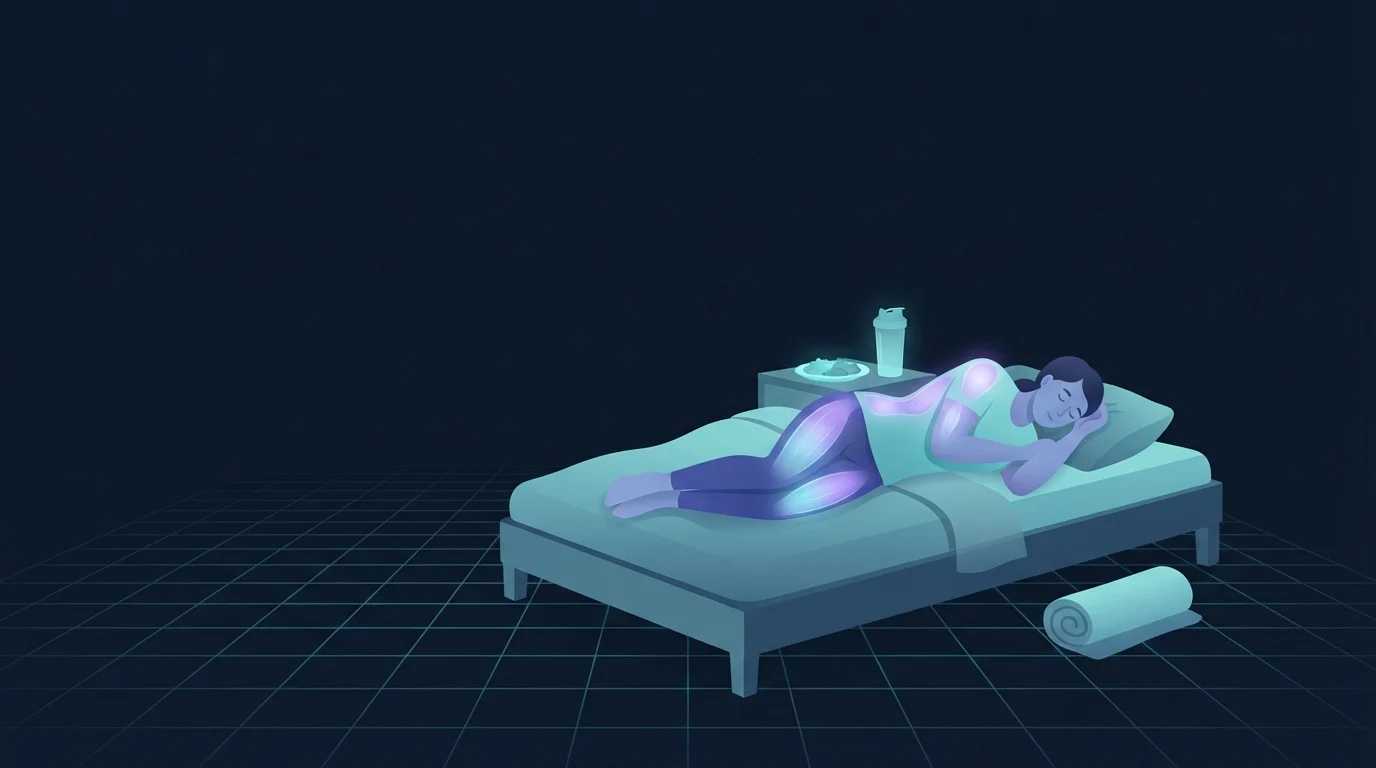
You had a good session on Monday. By Wednesday your legs still feel like someone filled them with wet sand, the next workout is on the calendar, and you're quietly wondering whether you're just getting old.
So you start shopping. A massage gun, maybe. Compression sleeves. A cold plunge tub if the internet gets to you on a bad night. And underneath all of it sits a feeling that recovery is a thing other people have figured out and you haven't, which is a strange kind of guilt to carry about your own body.
Here is the reframe. Recovery isn't a product problem. It's a sequencing problem. There's a real ranking of what works, it has been meta-analysed repeatedly, and the top of the list is free while the bottom of the list is what gets advertised. Start at the top and the wet-sand Wednesdays mostly stop.
What Recovery Actually Is
"Recovery" bundles three separate processes that run on different clocks, and knowing which one is holding you back changes what you should do about it.
Refuelling. Muscle glycogen, the carbohydrate stored inside the muscle, drops during hard or long sessions and refills over roughly 24 hours when you eat enough. This is the fastest of the three and the one most people accidentally sabotage by under-eating on rest days.
Tissue repair. Hard training causes microscopic damage to muscle fibres and connective tissue. Repairing and rebuilding it takes somewhere between 24 and 72 hours depending on how hard, how long and how unfamiliar the session was. This is the clock that decides when you can train that muscle hard again.
Central and neural fatigue. Your nervous system and your motivation are also depleted by hard work, and they recover on their own schedule, heavily influenced by sleep and by everything else going on in your life. This is why a stressful week at work makes a normal training week feel impossible.
One more distinction, because almost every recovery argument on the internet turns on it. Soreness isn't the same as recovery. Delayed onset muscle soreness peaks around 24 to 48 hours after a session, and by then your ability to produce force has often already returned. Something can reduce how sore you feel without speeding up a single repair process, and most of the recovery industry lives in exactly that gap. Our deeper review of what delayed onset muscle soreness actually is covers why the two come apart.
The Recovery Ladder: What the Evidence Ranks First
The single most useful paper here is a 2018 systematic review and meta-analysis in Frontiers in Physiology by Dupuy and colleagues, which pooled 99 studies and compared eight recovery techniques against each other on soreness, perceived fatigue, muscle damage markers and inflammation. It's the closest thing the field has to a head-to-head league table. What follows uses it as the spine, with sleep and nutrition slotted in from their own literatures.
1. Sleep
Nothing else on this list is close. Sleep is when growth hormone pulses, when protein synthesis runs without competing demands, and when central fatigue actually clears. Cut it and everything downstream gets worse.
The performance evidence is unusually direct. Mah et al. (2011) had Stanford basketball players extend to 10 hours in bed for five to seven weeks. Sprint times dropped from 16.2 to 15.5 seconds and three-point shooting went from 10.2 to 11.6 makes out of 15, in athletes who were already training full time. Running it the other direction, a 2018 review in the Journal of Science and Medicine in Sport by Knowles and colleagues found that inadequate sleep consistently impairs maximal strength, with the effect largest on multi-joint compound lifts.
Seven to nine hours is the working floor for anyone training hard. If you take one thing from this page, make it that number, and protect it before you buy anything. Our review of sleep and muscle growth covers the hormonal mechanism in detail.
2. Protein and total calories
Repair needs raw material and it needs energy. Most people who feel chronically unrecovered are short on one or both, and the second one is the sneakier problem.
For protein, the ceiling is well established. A 2018 meta-analysis of 49 studies in the British Journal of Sports Medicine by Morton and colleagues found that protein intake improved resistance-training gains up to roughly 1.6 grams per kilogram of body weight per day, with no further benefit beyond that. For a 75 kilogram adult that's about 120 grams across the day. Spread it over three or four meals rather than stacking it into one.
Calories are the part people skip. If you're in a deep deficit, recovery slows no matter how good your protein number looks, because the body prioritises staying alive over rebuilding a quadricep. A rest day isn't a low-calorie day. The rebuild happens on rest days, so that's exactly when the food needs to show up.
3. Easy movement on the day after
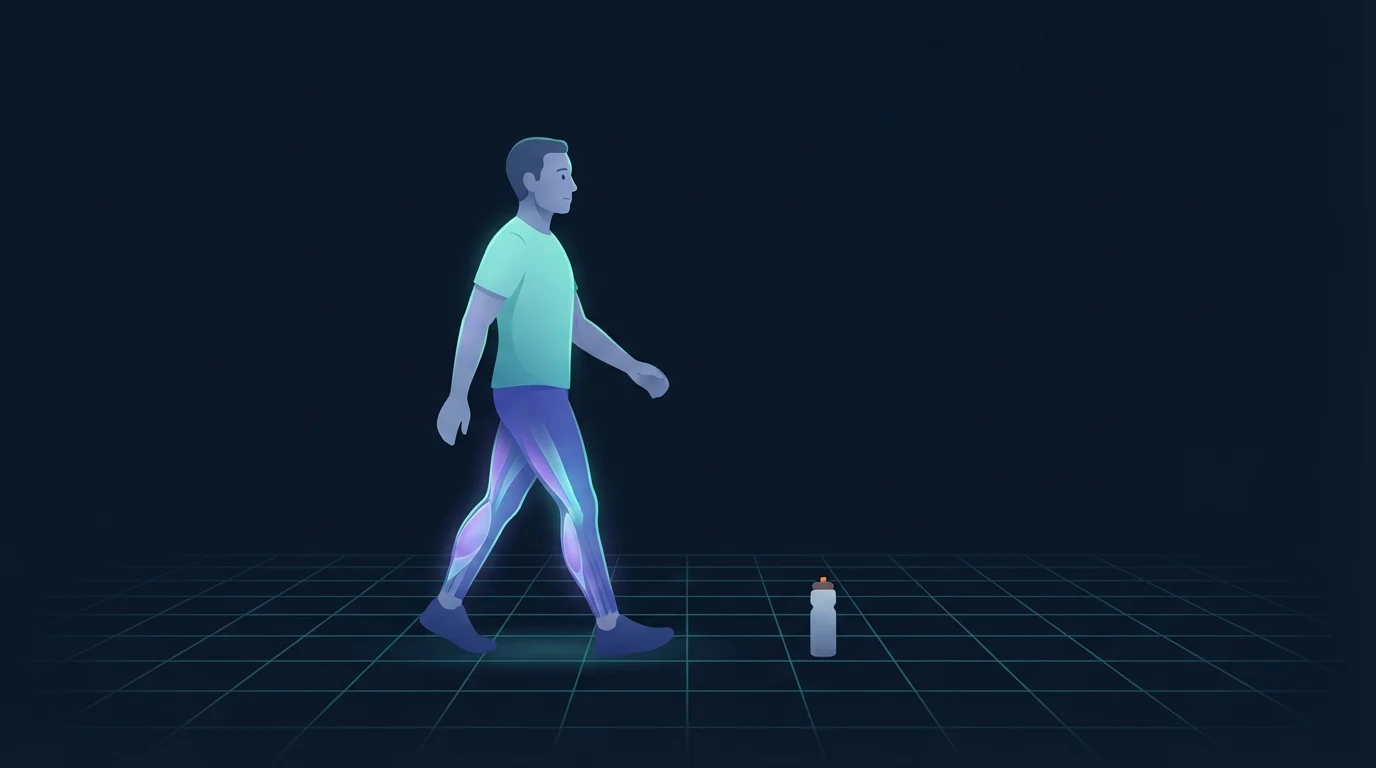
Light activity is the right default, though not for the reason it's usually sold. In the Dupuy pooled data, active recovery barely outperformed doing nothing on the damage and inflammation markers. What it reliably does is keep blood moving through the tissue, reduce the stiffness that makes you feel worse than you are, and hold the habit together on a day when doing nothing would be easy.
The dose is 20 to 30 minutes of something you could hold a conversation through. A walk, an easy spin, a gentle mobility flow. If it leaves you breathing hard, it stopped being recovery and became a second workout. Our full breakdown of what the active recovery research actually found goes through the 99-study comparison in detail.
Find out what's really holding you back
FitCraft, our mobile fitness app, pairs you with an AI coach who builds you a personalized plan around your goals, schedule, and fitness level. Every FitCraft program is designed by Domenic Angelino, MPH (Brown University) and NSCA-CSCS, with research published in the Journal of Strength and Conditioning Research and Medicine & Science in Sports & Exercise.
Take the Free Assessment Free • 2 minutes • No credit card4. Massage
Of the eight techniques Dupuy's team compared, massage came out on top for both soreness and perceived fatigue, and it wasn't close. It also lowered creatine kinase, a blood marker of muscle damage, which suggests it's doing more than masking sensation. A separate 2017 meta-analysis in the same journal by Guo and colleagues reached the same conclusion for delayed onset muscle soreness specifically.
The catch is practical, not scientific. Massage needs another person or a device, it takes time, and it's the most expensive item on this list per session. It earns its place at the top of the paid tools. It doesn't earn a place above sleep.
5. Cold water, with one real caveat
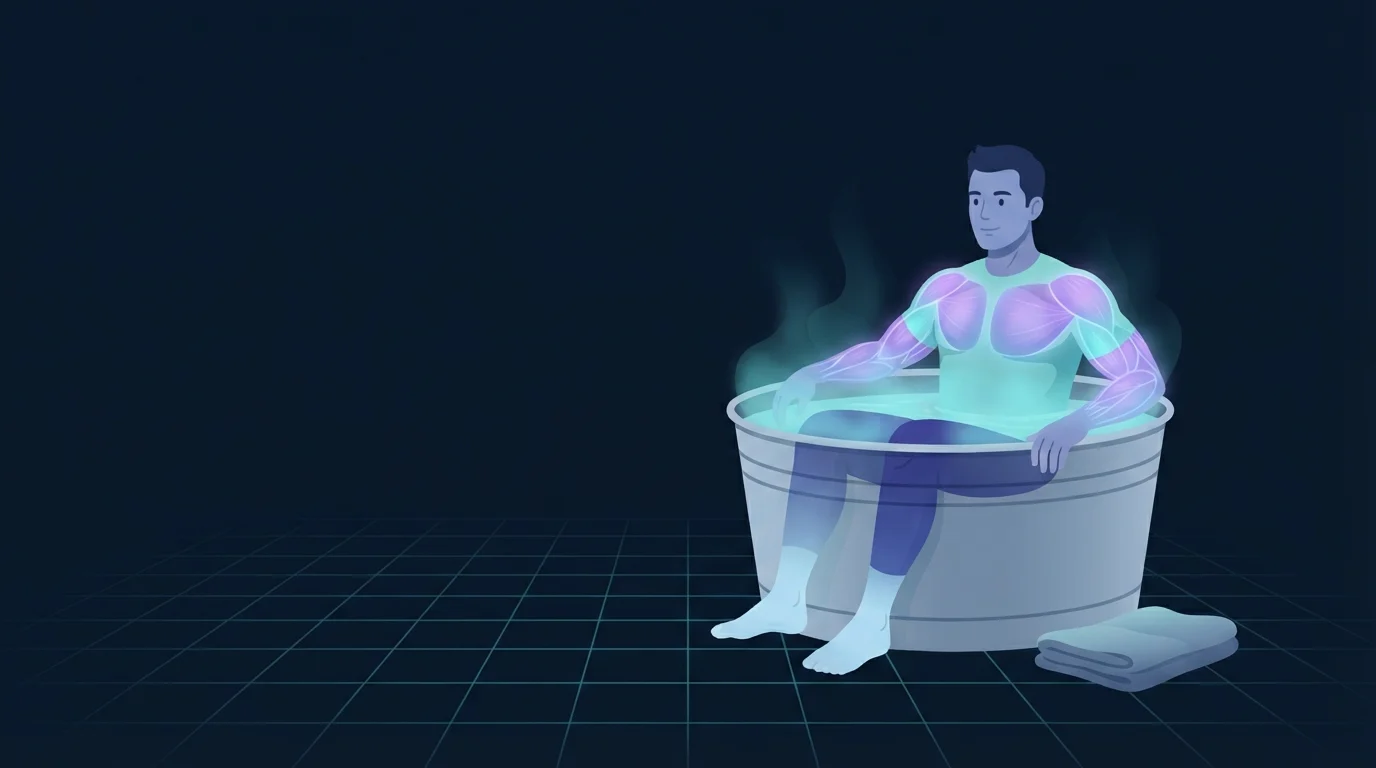
Cold water immersion ranked second in the Dupuy comparison and has a deep trial base behind it for soreness and short-term functional recovery. Ten to fifteen minutes at 10 to 15 degrees Celsius is the protocol most of the research used.
Then there's the caveat, and it matters more than the benefit for most people reading this. Roberts et al. (2015) in The Journal of Physiology found that cold water immersion right after resistance training dampened the anabolic signalling that turns a session into muscle, and over a 12-week training block the cold group gained less muscle and strength than the group that did easy cycling instead. A 2024 systematic review with meta-analysis in the European Journal of Sport Science by Piñero and colleagues pooled the trials and found the same direction of effect on hypertrophy.
This is a timing constraint, not a ban. The signalling window is the first few hours after the session. Wait four to six hours, or plunge on a non-lifting day, and you keep the soreness benefit without paying for it in muscle. Our full review of the cold plunge recovery research covers the dose and the open questions.
6. Compression garments
Quietly useful and badly marketed. A 2017 meta-analysis of 23 studies in Sports Medicine by Brown and colleagues found that wearing compression garments for 24 hours after exercise produced moderate reductions in soreness and perceived fatigue, with the effect strongest after resistance training. The effect sizes on strength and power recovery are small but consistently positive across later reviews.
Nobody is going to build a training career on tights. But they are cheap, passive, have no downside, and unlike cold water they don't interfere with adaptation. If you want one paid tool and massage is out of reach, this is a reasonable place to spend. Our review of the compression garment research has the numbers by outcome.
7. Foam rolling
Real, small, and worth about what it costs. A 2019 meta-analysis of 21 studies in Frontiers in Physiology by Wiewelhove and colleagues found that rolling after exercise produced a small reduction in soreness and a small benefit to performance recovery, with most effect sizes below 0.4. Rolling before exercise gave a small bump to flexibility and sprint performance.
Ten minutes on the muscles you trained is fine. It's not releasing fascia, it's not breaking up scar tissue, and it's not going to rescue a week of five-hour nights.
What Does Not Work
Four things that get recommended constantly and don't survive contact with the trial data.
Stretching for soreness. A Cochrane review of randomised studies by Herbert, de Noronha and Kamper (2011) concluded that stretching before, after, or before and after exercise doesn't produce clinically important reductions in delayed onset muscle soreness. The average effect was about one point on a 100-point scale at one day. Stretch for range of motion. Don't stretch expecting recovery.
Chasing the recovery score on your watch. These scores are built from proprietary algorithms and they disagree with each other on the same night of sleep, on the same wrist. Use them as a rough trend over weeks, never as permission or a veto for today's session. We compared the devices in our piece on why recovery scores differ between devices.
Adding more protein past the ceiling. Past roughly 1.6 grams per kilogram per day, the Morton meta-analysis found no additional benefit. Extra scoops are expensive urine, not faster recovery.
Total inactivity as the whole plan. Lying on the couch for two days isn't a recovery protocol, it's an absence of one. It also quietly costs you the habit, which is the thing that actually decides whether you're fitter in a year. If the reason you keep needing long recovery breaks is that your week is stacked wrong, our guide on how many rest days a week you actually need is the better fix.
A Recovery Checklist by Training Day
Everything above, sequenced into something you can actually run. This is the version to keep.
| When | Do this | Skip this |
|---|---|---|
| Within 2 hours after | Eat a normal meal with protein and carbohydrate. Rehydrate to pale urine. Walk for five minutes instead of sitting straight down. | Cold plunge if you lifted for size. Judging the session by how sore you are. |
| That evening | Protect the sleep window. Screens down, room cool and dark, in bed early enough for seven to nine hours. | A late second workout. Using soreness as a reason to eat less. |
| Day after a hard session | 20 to 30 minutes of easy movement you could talk through. Full protein target. Compression sleeves if you own them. | Another hard session for the same muscles. A forced march that turns into cardio. |
| Two days after | Test with a light warm-up set. If loads and technique feel normal, train. Soreness alone isn't a veto. | Waiting for zero soreness before you train again. |
| Every fourth or fifth week | Cut volume by roughly a third for a week. Keep the sessions, drop the sets. | Pushing through a flat week because the plan says so. |
One practical note on the "test with a light set" row. Performance is a far better readout than sensation. If you can move your normal load for your normal reps with the same bar speed and the same technique, you're recovered enough, even if the muscle still complains on the stairs. If you're sore enough that technique changes, train something else that day. Our guide on whether you should work out when sore walks through the decision.
Signs You Are Under-Recovered
Under-recovery doesn't announce itself with one dramatic symptom. It shows up as a cluster that persists. The joint consensus statement on overtraining from the European College of Sport Science and the American College of Sports Medicine (Meeusen et al., 2013) describes a continuum, and the earliest, most reversible end of it's where you want to catch yourself.
- Performance sliding on familiar work. The loads that felt fine three weeks ago now feel heavy, and it's not one bad day. This is the most reliable single signal.
- Resting heart rate elevated in the morning. Up by roughly 8 to 10 beats over your normal baseline, for several days running.
- Sleep that gets worse as fatigue gets deeper. Exhausted but wired, waking at 3am, unrefreshed at 7. This one confuses people because it feels backwards.
- Soreness that never fully clears. Not sore from the last session, just permanently at a low simmer.
- Mood and appetite changes. Short temper, low motivation for training you normally enjoy, appetite either gone or unreasonable.
- Small illnesses stacking up. Every cold going around finds you.
One of these has a dozen ordinary explanations. Four at once for two weeks or more means the program is asking for more than your sleep, food and life stress can pay for. The fix is almost always the same and almost never popular: cut volume by about a third for a week, keep the sessions so the habit survives, and fix the sleep. If an illness is part of the picture, our guide on working out while sick covers when to scale down and when to stop.
The Bottom Line
Recovering faster from workout to workout isn't a purchase. It's four habits in a specific order: sleep seven to nine hours, eat enough total calories, hit your protein target across the day, and move gently instead of sitting still. Those four are where nearly all of the available effect lives. Massage, compression, cold water and foam rolling are real but small, and one of them can cost you muscle if you get the timing wrong.
The reason this matters isn't the soreness. It's that under-recovery is one of the quietest ways a training habit dies. You get tired, the sessions get worse, the worse sessions get skipped, and three weeks later you're telling yourself you fell off again. Mike, 23, put it simply after four months: "The streak system got me hooked. I didn't want to break my chain." That only works if the week is survivable, and survivable is a recovery question before it's a motivation one. If you would rather have the week planned for you than improvise it, our personalized training program page covers what that looks like.
You're not fragile and you're not old. You have been running a good training plan on a bad recovery plan, and only one of those two needed fixing.
Frequently Asked Questions
How long does it take to recover from a workout?
For a normal hard session, the muscles you trained are ready for hard work again in roughly 24 to 72 hours, and the harder or more novel the session, the closer you sit to 72. Soreness is a poor guide, because it peaks around 24 to 48 hours after the session while your force output has often already come back. The better test is performance: if you can hit the same loads and reps with the same technique, you are recovered enough to train that muscle again.
What is the fastest way to recover from a workout?
Sleep seven to nine hours, eat enough total calories, hit roughly 1.6 grams of protein per kilogram of body weight across the day, and move gently rather than sitting still. Those four cover most of the available effect. Massage has the largest pooled effect of any hands-on method in a meta-analysis of 99 studies, but it reduces how sore and tired you feel more than it speeds the underlying tissue repair.
Does an ice bath help you recover faster?
It helps with soreness and short-term fatigue, and that is well supported. The catch is timing. Cold water immersion in the hours right after resistance training dampens the anabolic signalling that turns a lifting session into muscle, and the pooled trial data shows smaller hypertrophy gains over a training block. If you lift for size or strength, wait four to six hours after the session or move the cold to a non-lifting day.
Does stretching reduce muscle soreness?
No, not to any degree you would notice. A Cochrane review of randomised trials found that stretching before, after, or before and after exercise reduced soreness the next day by about one point on a 100-point scale. Stretch because you want range of motion or because it feels good. It is not a recovery intervention.
Is it better to rest completely or do active recovery?
Light movement is the better default, but not because it dramatically speeds repair. In the pooled data, active recovery barely outperforms doing nothing on the damage markers. What it does is keep blood moving, reduce stiffness, and protect the habit, which matters more over a year than any single session. A 20 to 30 minute easy walk or an easy spin is the right dose.
How do I know if I am not recovering between workouts?
Look for a cluster of signals over two weeks or more, not a single bad day: performance that keeps sliding on the same loads, a resting heart rate that stays elevated in the morning, broken sleep despite being tired, appetite changes, irritability, and soreness that never fully clears. One of those has ordinary explanations. Four at once for a fortnight means the program is asking more than your recovery can pay for.