Cold plunge went mainstream fast. Ten years ago, an ice tub was something you saw in a locker room after an NFL game or in a physical-therapy clinic. Now it is a $6,000 backyard fixture, a $200 inflatable, or a modified chest freezer in a suburban garage. Search interest for "cold plunge" has grown roughly 20x since 2020, and the biohacking podcast circuit has spent the last three years telling everyone within earshot that a daily cold plunge fixes soreness, sleep, mood, fat loss, and roughly everything else.
The science is not that ambitious. But the science is finally big enough to make specific claims. Since 2011, at least four major meta-analyses and one large network meta-analysis have pooled the randomized trials on cold water immersion (the umbrella term the literature uses for cold plunges, ice baths, and cold immersion showers). The signals are clear on soreness, functional recovery, and short-term readiness. The signals are also clear (and less flattering) on long-term muscle growth. This article walks through those studies, what they actually measured, and how to fit a plunge into a training week if you are chasing hypertrophy, endurance, or general recovery.
The Research: What the Studies Show
Wang 2025: The Network Meta-Analysis That Finally Pinned Down Dose
The compression literature had Hill 2014. The cold-plunge literature has Wang, Wang, and Pan (2025), published in Frontiers in Physiology. They screened trials against pre-registered inclusion criteria and ended up pooling 55 randomized controlled trials (1,139 participants) in a network meta-analysis. The design matters. A network meta-analysis lets researchers compare interventions that were never head-to-head in a single trial, by anchoring everything to a shared control. So instead of just "does CWI help?" the paper can answer "which temperature and duration of CWI helps most?"
The team classified every trial into one of six CWI protocol categories, crossing three durations (short: under 10 min, medium: 10 to 15 min, long: over 15 min) with two temperature bands (low: 5 to 10 degrees Celsius, moderate: 11 to 15 degrees Celsius, and a higher band at 16 to 20 degrees Celsius). SUCRA (surface under the cumulative ranking curve) scores let them rank the protocols against each other. The claims that sit outside recovery run on a thinner and much newer evidence base, which our review of ice bath benefits takes apart for mood, immunity and metabolism.
The results are the closest thing the field has to a protocol prescription. For delayed onset muscle soreness, medium-duration moderate-temperature CWI ranked highest (SUCRA 84.3%). Ten to fifteen minutes at 11 to 15 degrees Celsius. Not colder, not longer. For jump performance recovery, the winner was medium-duration low-temperature CWI (SUCRA 70.4%). Ten to fifteen minutes at 5 to 10 degrees Celsius. For creatine kinase clearance (a blood marker of muscle damage), the same low-temperature medium-duration protocol ranked highest (SUCRA 75.7%). Long-duration protocols (over 15 minutes) did not consistently beat medium-duration ones. The stereotype of "colder and longer is always better" does not hold up in the pooled data.
Leeder 2012: The First Meta-Analysis That Established the Soreness Signal
Before Wang 2025 pinned down dose, the field's reference point was Leeder, Gissane, van Someren, Gregson, and Howatson (2012), published in the British Journal of Sports Medicine. They meta-analyzed randomized trials on CWI after strenuous exercise, including 14 studies that met inclusion criteria. The core finding: CWI produced a significant reduction in DOMS at 24, 48, 72, and 96 hours post-exercise, with the effect most consistent after high-intensity intermittent exercise (sprint sports, interval training, plyometrics) and after eccentric muscle-damaging protocols.
What the paper did not find: a strong effect on subjective ratings of perceived exertion during subsequent exercise. That is a distinction worth holding onto. CWI helps how you feel between sessions. It does not appear to help how hard the next session feels once you are actually in it.
Roberts 2015: The Study That Started the Hypertrophy Conversation
The tradeoff story starts here. Roberts, Raastad, Markworth, Figueiredo, Egner, Shield, Cameron-Smith, Coombes, and Peake (2015), published in The Journal of Physiology, ran a 12-week resistance training trial in young men. One group did 10 minutes of CWI at 10 degrees Celsius after every lifting session. The other did 10 minutes of low-intensity active cycling. Same lifting program, same total volume, only the recovery modality differed.
Over 12 weeks, the active-recovery group gained more muscle strength and more muscle mass than the CWI group. A separate acute experiment in the same paper showed the mechanism. CWI reduced the numbers of NCAM+ and Pax7+ satellite cells (the muscle stem cells responsible for hypertrophy) 24 to 48 hours after exercise. It also blunted post-exercise phosphorylation of key anabolic-signaling kinases. Cold shrinks the acute anabolic response, and if you do that after every lift for months, the long-term adaptations shrink too.
This is one study, not a meta-analysis. But it framed the question that the next decade of research would try to answer: does the pattern generalize?
Piñero 2024: The Meta-Analysis That Confirmed the Pattern
Nine years and several follow-up trials later, Piñero, Burke, Augustin, Mohan, Sapuppo, Weisenthal, Coleman, Androulakis-Korakakis, Grgic, Sokmen, and Schoenfeld (2024) published in the European Journal of Sport Science a systematic review with meta-analysis of the effect of postexercise cold water immersion on resistance-training-induced hypertrophy. The team pooled 8 trials that met inclusion criteria and used a Bayesian analysis to estimate the comparative effect.
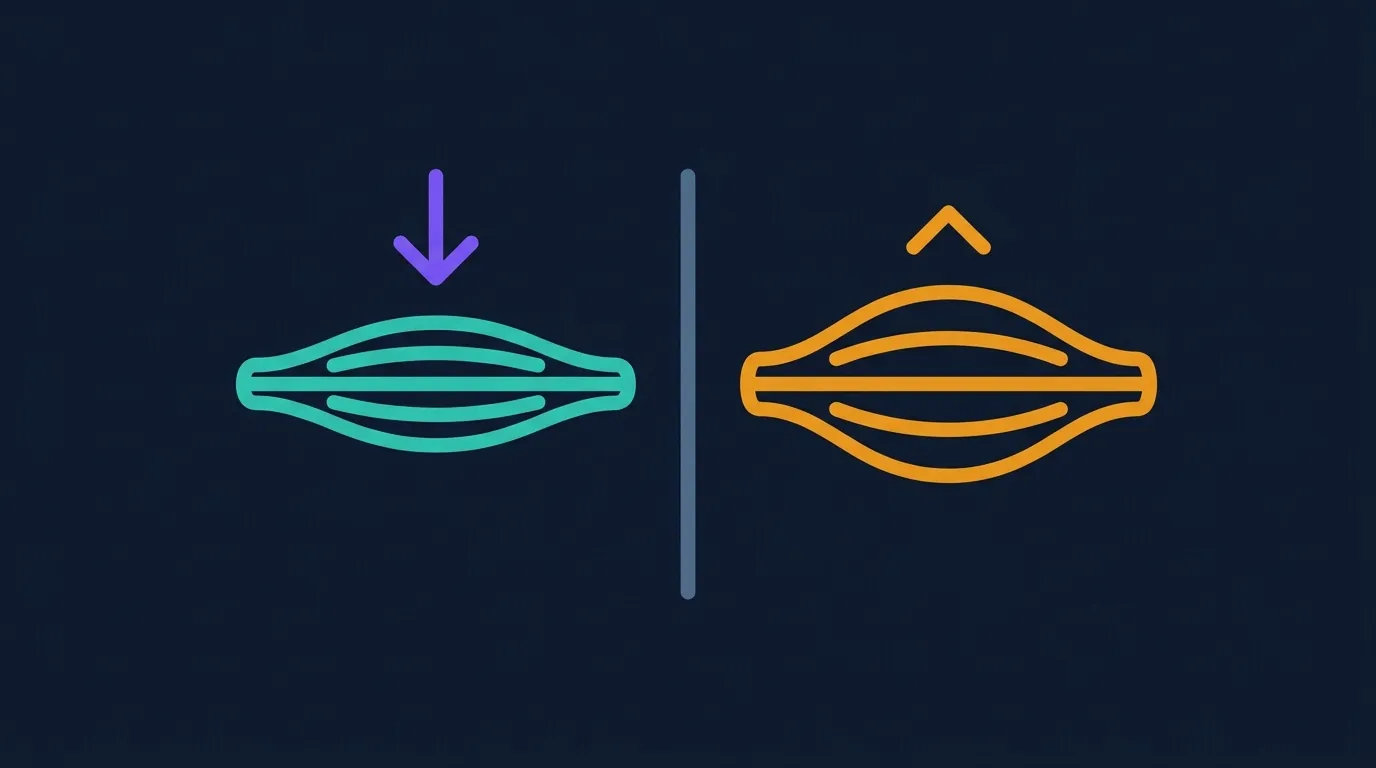
The pooled comparative effect was cSMD0.5 = -0.22 (95% CrI: -0.47 to 0.04) favoring resistance training alone over resistance training plus CWI. The probability that the true difference was less than zero (in favor of RT alone) was 0.957. The probability that the true difference was of at least a small magnitude (below -0.1) was 0.834. In plain English: the pooled data support a small but real reduction in hypertrophy when CWI is applied immediately after lifting, and the direction of the effect is highly consistent across trials. Meta-regression did not find that training status (novice vs. trained) meaningfully moderated the effect.
The authors are appropriately cautious. The quality of evidence across the 8 trials was fair to poor, sample sizes were mostly small, and the trials used a range of immersion protocols. But the direction of the effect is now settled, and the mechanism (Roberts 2015) explains why. The practical takeaway is unchanged. Don't plunge in the 4 to 6 hours right after a hypertrophy session.
Cain 2025: The Broader Health and Wellbeing Picture
Not everyone plunging is chasing hypertrophy. A lot of people are chasing sleep, mood, and "feeling reset." Cain, Brinsley, Bennett, Nelson, Maher, and Singh (2025) in PLOS ONE pooled 11 studies (3,177 participants) on cold water immersion for general health and wellbeing outcomes. It is the biggest non-sport CWI review to date.
The signals were mixed but leaned positive on the outcomes that people actually claim to notice. Cold water immersion was associated with improvements in sleep quality and quality of life scores. Stress dropped significantly at the 12-hour post-exposure mark, though not immediately, at 1 hour, at 24, or at 48. Mood was not significantly different from control. Immune outcomes were mostly null in the immediate window, but one included cold-shower trial reported a 29% reduction in sickness absence over the follow-up period. Inflammation actually went up acutely at the immediate and one-hour post-exposure marks (the body reacts to cold as a stressor before it adapts).
The authors flag the same caveats every honest CWI reviewer flags: small studies, protocol variability, and populations that are mostly male. The takeaway is that a daily cold plunge for general wellbeing is defensible if you enjoy it, but the health-outcome literature is smaller and less consistent than the sports-recovery literature. Enjoying it is not a small factor. Adherence to a habit you dread will fall apart in about three weeks.
Why This Matters for Your Recovery Stack
For a FitCraft user training three to five times a week at home, cold plunge is a modality with a timing rule attached. The rule matters more than the temperature. Here is how to think about it.
Get an evidence-based plan built for you
FitCraft, our mobile fitness app, pairs you with an AI coach who builds you a personalized plan around your goals, schedule, and fitness level. Every FitCraft program is designed by Domenic Angelino, MPH (Brown University) and NSCA-CSCS, with research published in the Journal of Strength and Conditioning Research and Medicine & Science in Sports & Exercise.
Take the Free Assessment Free • 2 minutes • No credit card| Your goal | What the research suggests |
|---|---|
| Hypertrophy (building muscle) | Skip the plunge in the 4 to 6 hours after a lifting session. Piñero (2024) and Roberts (2015) both point the same direction. Use it on non-lifting days if you want it in the week. |
| Tournament weekends or back-to-back interval days | Plunge after the session. Ten to fifteen minutes at 11 to 15 degrees Celsius for soreness (Wang 2025), or at 5 to 10 degrees Celsius for jump performance and CK clearance. This is the strongest use case in the literature. |
| Endurance training block (running, cycling) | Use sparingly. The recovery effect is real, but chronic post-endurance CWI may also blunt some mitochondrial adaptations. Reserve it for the days after your hardest sessions or races. |
| General wellbeing, sleep, stress | Cain (2025) supports modest improvements in sleep and quality of life. Timing versus training does not matter here. Do it when you enjoy it. |
| Recovery from a hard yoga or mobility session | Probably unnecessary. The muscle damage is low, and the plunge's best-supported effects target the aftermath of higher-damage sessions. |
Cold plunge sits differently from a few of the modalities we've reviewed. Compression garments (see the compression garments research) produce a smaller effect but do not appear to blunt hypertrophy. Active recovery is what the Roberts group used as the control arm, and the CWI group lost to it. Sauna, from a longevity and cardiovascular standpoint (see the sauna cardiovascular research), does different work. If you enjoy heat and are chasing hypertrophy, sauna is the friendlier post-lift choice.
How Cold Water Immersion Actually Works
The mechanism story is short and has two chapters: what cold does that helps, and what cold does that hurts.
What helps. Immersion in water at 5 to 15 degrees Celsius drops the temperature of the immersed limbs, triggers peripheral vasoconstriction, and reduces the delivery of blood and inflammatory mediators to the muscle. Fluid shifts out of the interstitial space and into circulation, which reduces the edema that follows muscle damage. Nerve conduction slows slightly, which dampens pain signaling. Over the hours that follow, when the tissue rewarms, blood flow returns and the accumulated metabolic byproducts clear. The net effect is a lower perceived soreness score, faster return of jump and sprint performance, and lower blood levels of creatine kinase (Wang 2025).
What hurts (if you are building muscle). The same vasoconstriction and reduced inflammatory signaling that dampens soreness also dampens the acute anabolic response to resistance exercise. Roberts (2015) traced the effect to satellite cell recruitment (blunted) and to phosphorylation of anabolic signaling kinases (blunted). The lifting stimulus is unchanged. The body's response to the stimulus is quieter. Repeat that quieting after every session for months and the total hypertrophy is smaller, as Piñero (2024) confirms in the pooled trial data.
This is not a fatal flaw of cold plunge. It is a timing constraint. The signaling window that CWI dampens is the first few hours post-exercise. Wait 4 to 6 hours after a hypertrophy session, or move the plunge to a non-lifting day, and the effect is largely avoided. The Piñero and Roberts findings both apply specifically to immediate post-exercise immersion.
Common Misconceptions
Misconception: "Colder is always better."
Not in the pooled data. Wang (2025) ranked six different protocols and found that medium-duration moderate-temperature CWI (10 to 15 minutes at 11 to 15 degrees Celsius) ranked highest for soreness. Colder temperatures ranked higher for jump performance and CK, but not by much. Longer immersions over 15 minutes did not consistently beat the 10-to-15 minute window. The idea that shivering yourself into a stupor is more effective is not supported.
Misconception: "Cold plunge burns fat."
Cold does activate brown adipose tissue and modestly raises resting energy expenditure while you are cold. The magnitude is small. A 10-to-15 minute cold plunge does not produce a fat-loss effect large enough to matter against a poorly designed diet. Cold plunge is a recovery modality with plausible mood and sleep benefits. It is not a weight-loss intervention. If a podcast pitches it as one, the underlying study almost always shows a tiny caloric-expenditure difference that would take months to move body composition.
Misconception: "You need to plunge every day."
The daily-plunge protocol comes from wellness culture, not the training literature. In the sports-recovery trials, CWI is used after specific hard sessions, and even in those trials the effect on the next hard session is inconsistent. If you are a lifter chasing hypertrophy, daily CWI is actively counterproductive per Roberts (2015) and Piñero (2024). If you are chasing sleep or stress relief per Cain (2025), a few sessions a week is what the pooled data actually tested. Daily as a fixed prescription is not something the research supports.
Misconception: "A cold shower does the same thing."
Cold showers and cold immersions are related but not equivalent. A shower cools skin without immersing the muscle in a stable temperature bath, which limits the depth of tissue cooling. Some Cain 2025 wellness trials did use cold showers and did report benefit. But the sports-recovery meta-analyses (Wang 2025, Leeder 2012) are almost entirely on full immersion. If you want the recovery effect, plan on actual immersion (bathtub, cold plunge tub, chest freezer conversion, lake). If you want mood or sleep effects, a cold shower is a reasonable low-cost entry point.
What the Research Suggests Going Forward
The cold-plunge literature has matured to the point where the honest summary can fit in three sentences. First: CWI at 10 to 15 minutes and 5 to 15 degrees Celsius reduces DOMS and speeds short-term functional recovery after high-intensity or muscle-damaging exercise (Wang 2025, Leeder 2012). Second: CWI applied immediately after resistance training blunts long-term strength and hypertrophy adaptations, so timing matters if muscle growth is a goal (Roberts 2015, Piñero 2024). Third: the general-wellbeing benefits (sleep, quality of life, stress reduction, possibly immunity) are promising but the trial base is smaller and mostly male (Cain 2025).
The next generation of trials should settle a few open questions. How long is the "safe" post-lift window before CWI is fine for hypertrophy? Roberts and the current meta-analyses only rule out immediate post-lift CWI, so the practical 4-to-6-hour rule is inference from mechanism rather than direct evidence. Does CWI on the day after a hard session (24 hours post) preserve the recovery effect while avoiding the anabolic-blunting effect? Do the wellbeing benefits generalize to women, older adults, and clinical populations? These are answerable questions with more trials.
For the trainee deciding whether to plunge this week, the framework is clean. If you are chasing hypertrophy, skip the plunge for at least 4 to 6 hours after any lifting session (ideally, put the plunge on a non-lifting day). If you are chasing recovery for a next-day competition or a hard interval block, plunge after the session at 10 to 15 minutes and 5 to 15 degrees Celsius. If you are chasing sleep or stress relief, a few sessions a week is what the literature actually tested. Match the tool to the goal. That is where the effect either shows up or disappears.

References
- Wang H, Wang L, Pan Y. "Impact of different doses of cold water immersion (duration and temperature variations) on recovery from acute exercise-induced muscle damage: a network meta-analysis." Frontiers in Physiology 16 (2025): 1525726. doi:10.3389/fphys.2025.1525726.
- Leeder J, Gissane C, van Someren K, Gregson W, Howatson G. "Cold water immersion and recovery from strenuous exercise: a meta-analysis." British Journal of Sports Medicine 46.4 (2012): 233-240. doi:10.1136/bjsports-2011-090061.
- Roberts LA, Raastad T, Markworth JF, Figueiredo VC, Egner IM, Shield A, Cameron-Smith D, Coombes JS, Peake JM. "Post-exercise cold water immersion attenuates acute anabolic signalling and long-term adaptations in muscle to strength training." The Journal of Physiology 593.18 (2015): 4285-4301. doi:10.1113/JP270570.
- Piñero A, Burke R, Augustin F, Mohan AE, Sapuppo M, Weisenthal M, Coleman M, Androulakis-Korakakis P, Grgic J, Sokmen B, Schoenfeld BJ. "Throwing cold water on muscle growth: A systematic review with meta-analysis of the effects of postexercise cold water immersion on resistance training-induced hypertrophy." European Journal of Sport Science 24.2 (2024): 177-189. doi:10.1002/ejsc.12074.
- Cain T, Brinsley J, Bennett H, Nelson M, Maher C, Singh B. "Effects of cold-water immersion on health and wellbeing: A systematic review and meta-analysis." PLOS ONE 20.1 (2025): e0317615. doi:10.1371/journal.pone.0317615.
Frequently Asked Questions
Does cold plunge actually help with recovery?
For soreness and short-term functional recovery, yes. Wang, Wang, and Pan (2025) in Frontiers in Physiology pooled 55 randomized trials (1,139 participants) in a network meta-analysis and found that cold water immersion at 10 to 15 minutes and 11 to 15 degrees Celsius ranked highest for reducing DOMS (SUCRA 84.3%). Leeder et al. (2012) in the British Journal of Sports Medicine reached the same conclusion. For long-term muscle growth after resistance training, the answer flips. Piñero et al. (2024) in the European Journal of Sport Science meta-analyzed 8 trials and found post-lift CWI attenuated hypertrophy compared to lifting alone.
How long and how cold should a cold plunge be?
Wang et al. (2025) identified 10 to 15 minutes as the medium-duration protocol category that produced the best pooled recovery effects. For soreness, 11 to 15 degrees Celsius (52 to 59 degrees Fahrenheit) ranked highest. For creatine kinase clearance and jump performance recovery, 5 to 10 degrees Celsius (41 to 50 degrees Fahrenheit) ranked highest. Longer durations over 15 minutes did not consistently outperform the 10-to-15 minute window across outcomes.
Does cold plunge hurt muscle growth?
If used immediately after a resistance training session, likely yes. Roberts et al. (2015) in The Journal of Physiology showed that 10 minutes of CWI at 10 degrees Celsius after strength training blunted satellite cell activation and reduced long-term muscle strength and hypertrophy gains compared to an active recovery group. Piñero et al. (2024) meta-analyzed 8 trials and found a small effect favoring resistance training alone over resistance training plus CWI (cSMD0.5 = -0.22). The takeaway is timing. If you are chasing hypertrophy, avoid the plunge for at least 4 to 6 hours after lifting, or use it on non-lifting days.
Is cold plunge better than an ice bath?
Cold plunge and ice bath describe the same intervention in the research literature. Both fall under cold water immersion (CWI). Studies use standardized water temperatures rather than actual ice, and the meta-analyses treat the two labels interchangeably. What matters is water temperature and immersion duration, not the branding. A dedicated cold plunge tub, a chest freezer conversion, a bathtub with cold water, or a bag of ice in the tub all produce the same recovery effect if the temperature and duration match the protocols in the trials.
Can cold plunge help sleep, mood, or immunity?
Cain et al. (2025) in PLOS ONE pooled 11 studies (3,177 participants) on cold water immersion for general health and wellbeing. They found improvements in sleep quality and quality of life, a significant stress reduction at the 12-hour post-exposure mark, and a 29% reduction in sickness absence in one included cold-shower trial. Mood effects were not significantly different from control. The evidence base is smaller and more variable than the recovery literature, so treat these as promising rather than settled.
Is cold plunge better than compression garments or foam rolling?
Different tools, different windows. Compression garments produce a smaller effect than cold plunge but do not blunt hypertrophy, so they sit in a friendlier position for lifters. Foam rolling has a small acute effect on soreness and range of motion. Cold plunge has the largest short-term effect on soreness and CK clearance but comes with the timing constraint against post-lift use. Match the tool to the goal: compression for muscle-building blocks with hard sessions, cold plunge for hard interval days or competition weekends, foam rolling for general session-to-session maintenance.