The Hollow Hold is the foundational anti-extension core position in gymnastics and one of the highest-yield isometric exercises in any strength program. You lie on your back, press your lower back into the floor, and lift your legs and arms into a shallow dish shape. Hold. That's it. The simplicity hides how brutal it is when done correctly.
Most people think they can hold a plank for two minutes, then try a Hollow Hold and break at 20 seconds. The reason: the long-lever overhead arms and extended legs amplify the demand on the rectus abdominis and hip flexors far beyond what a plank requires, and the posterior pelvic tilt (lower back pressed flat into the floor) needs constant attention from the transverse abdominis throughout the hold.
This guide walks through the exact form cues, the most common mistakes that turn a Hollow Hold into a back-arching ab workout, the regressions that get beginners safely into the pattern, and the progressions that turn the static hold into Hollow Rocks and beyond.
Quick Facts
Quick Facts: Hollow Holds
- Equipment needed: Bodyweight only (mat optional for comfort)
- Difficulty: Intermediate to Advanced
- Modality: Strength (isometric anti-extension)
- Body region: Core (rectus abdominis, transverse abdominis, obliques, hip flexors)
- FitCraft quest category: Core stability
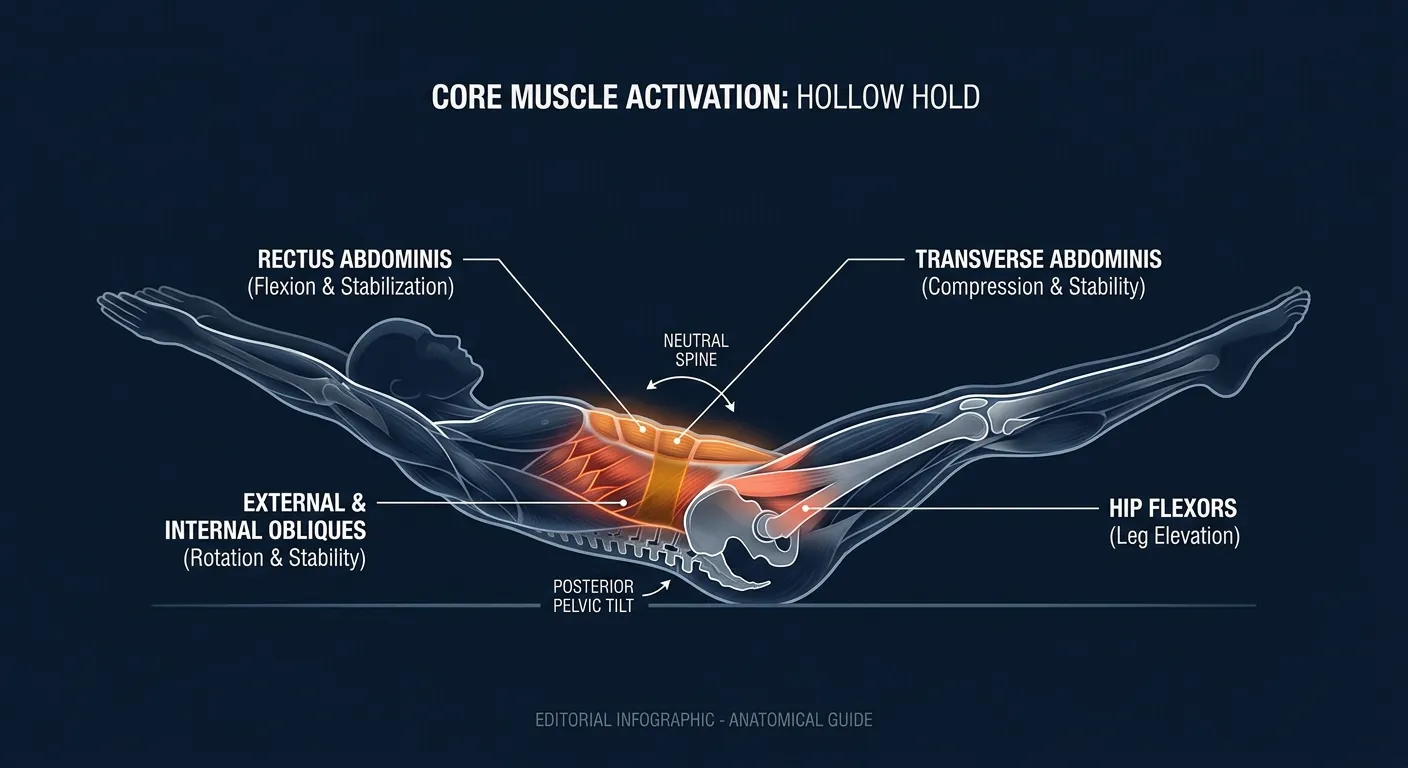
Muscles Worked
Primary movers: the rectus abdominis works isometrically to flex the lumbar spine and maintain the posterior pelvic tilt that defines the hollow position. The transverse abdominis (the deep core's natural weight belt) fires continuously to keep the abdominal wall drawn in and the lower back glued to the floor. These two muscles together do the majority of the work.
Secondary movers: the internal and external obliques brace laterally, preventing the torso from twisting under the asymmetric load of fatiguing hip flexors. The hip flexors (psoas major, iliacus, rectus femoris) work isometrically to keep the extended legs elevated. For most people, this is the muscle group that fatigues first. The serratus anterior and lats engage to keep the arms extended overhead, especially in the full advanced position.
Stabilizers: the diaphragm and pelvic floor form the deep core canister that maintains intra-abdominal pressure throughout the hold. The breath is part of the stabilizer system: short, shallow nasal breathing keeps the canister pressurized while still allowing oxygen exchange. The neck flexors (sternocleidomastoid, scalenes) hold the head off the floor in the proper chin-tucked position.
Mechanism: Hollow Holds are an isometric anti-extension exercise. The combined weight of the elevated legs and overhead arms creates a moment arm that tries to extend the lumbar spine; the anterior core resists that extension by holding the posterior pelvic tilt. The longer the levers (legs straight, arms overhead), the higher the torque the core must resist, which is why beginners regress by tucking the knees (shortening the leg lever) and bringing the arms down (shortening the upper lever). The exercise transfers directly to gymnastics skills like the handstand, the L-sit, and the front lever, where holding a rigid hollow body position is non-negotiable.
Step-by-Step Instructions
- Lie on your back and find a neutral start. Lie face up on the floor with your legs extended and arms by your sides. Take a breath and feel where your lower back sits. For most people, there's a small gap between the lumbar spine and the floor.
Coach Ty's cue: "Reset before you load. Know where neutral is before you try to leave it."
- Press your lower back into the floor. Exhale and tilt your pelvis back so that your lower back presses firmly into the ground. The gap should disappear. This posterior pelvic tilt is the foundation of the hollow position and must be maintained throughout the entire hold.
Coach Ty's cue: "Bury your lower back in the floor. If you can slide a hand under it, the hold hasn't started."
- Curl your shoulder blades off the floor. Lift your head and shoulder blades a few inches off the ground, eyes looking toward your toes. Keep the chin slightly tucked (don't crane the neck). The lower portion of your shoulder blades should still be in contact with the floor; only the upper back curls up.
Coach Ty's cue: "Chin gently tucked, eyes on your toes. The neck shouldn't strain; the abs should."
- Lift your legs and extend your arms. Raise both legs a few inches off the floor with toes pointed and knees locked. Extend your arms straight overhead near your ears (biceps brushing the ears). Your body should now form a shallow dish or banana shape: only your lower back and a small portion of your glutes are in contact with the floor.
Coach Ty's cue: "Long banana, not a U-shape. The lower back stays down; the rest curls up."
- Hold and breathe. Hold the position for the prescribed time, breathing in short, shallow breaths through the nose. The lower back must stay glued to the floor. If it lifts even slightly, the hold is over. Build duration in 5- to 10-second increments across sessions, not all at once.
Coach Ty's cue: "The hold ends when the back lifts, not when the timer beeps."
Get this exercise in a personalized workout
FitCraft, our mobile fitness app, uses its AI coach Ty to program core stability work like this into your plan at the right hold time and frequency, based on your level, goals, and equipment. Ty was designed and trained by Domenic Angelino, MPH (Brown University) and NSCA-CSCS, with research published in the Journal of Strength and Conditioning Research and Medicine & Science in Sports & Exercise.
Take the Free Assessment Free · 2 minutes · No credit card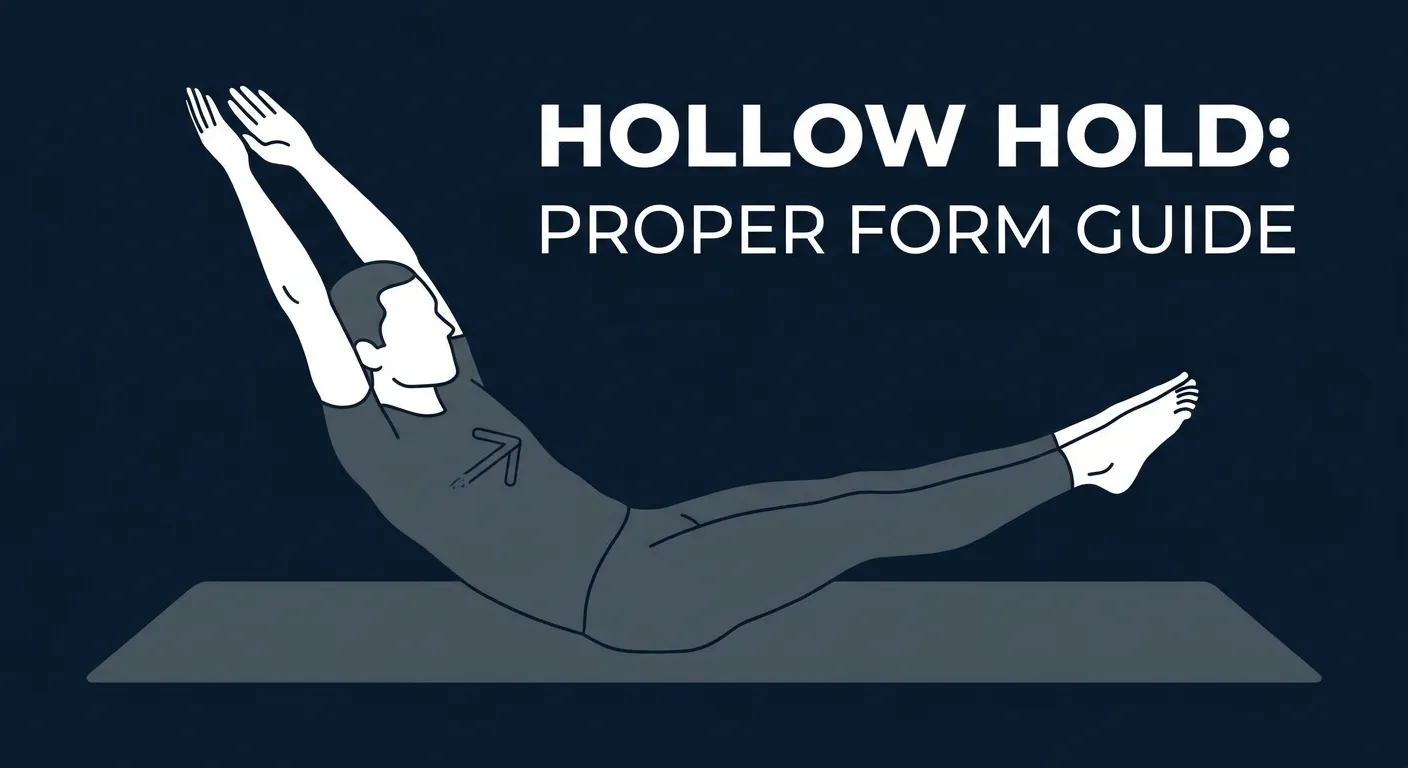
Common Mistakes
- Lower back lifting off the floor. The single biggest mistake. The moment your lumbar spine arches up, the hold is broken and the load shifts dangerously onto the lower back instead of the anterior core. Fix: regress to the Tuck Hollow Hold or shorten the levers (bend the knees, bring the arms down by your sides) until you can hold the posterior pelvic tilt for the full duration.
- Cranking the neck. Pulling the chin to the chest with the neck flexors strains the cervical spine and tells you nothing about your core. Fix: keep the chin slightly tucked, eyes on your toes, and lift through the upper back, not the neck.
- Holding the breath. A common reflex when bracing, but breath-holding spikes intra-abdominal pressure to uncomfortable levels and shortens your hold time. Fix: breathe in short, shallow nasal breaths throughout. The brace stays on; the breath flows under it.
- Trying for too long, too soon. A 30-second hold with the back glued to the floor is dramatically more effective than a 60-second hold with the back arching for the last 40 seconds. Fix: stop when the form breaks. Bank the clean seconds; add 5 to 10 seconds across sessions, not within one set.
- U-shape instead of banana shape. Some people pike up at the hips, lifting both legs and shoulders high while leaving the lower back arched. This is a sit-up position, not a hollow hold. Fix: think "long and shallow, not tall and short." The body should look almost flat with a tiny upward curl at each end.
- Skipping the regression. Jumping straight to the full overhead position when you don't have the strength to hold the posterior pelvic tilt produces 30 seconds of bad practice and a sore lower back. Fix: spend 2 to 4 weeks at the Tuck Hollow Hold and arms-by-sides variation before adding the overhead component.
Variations
Easier (Regression)
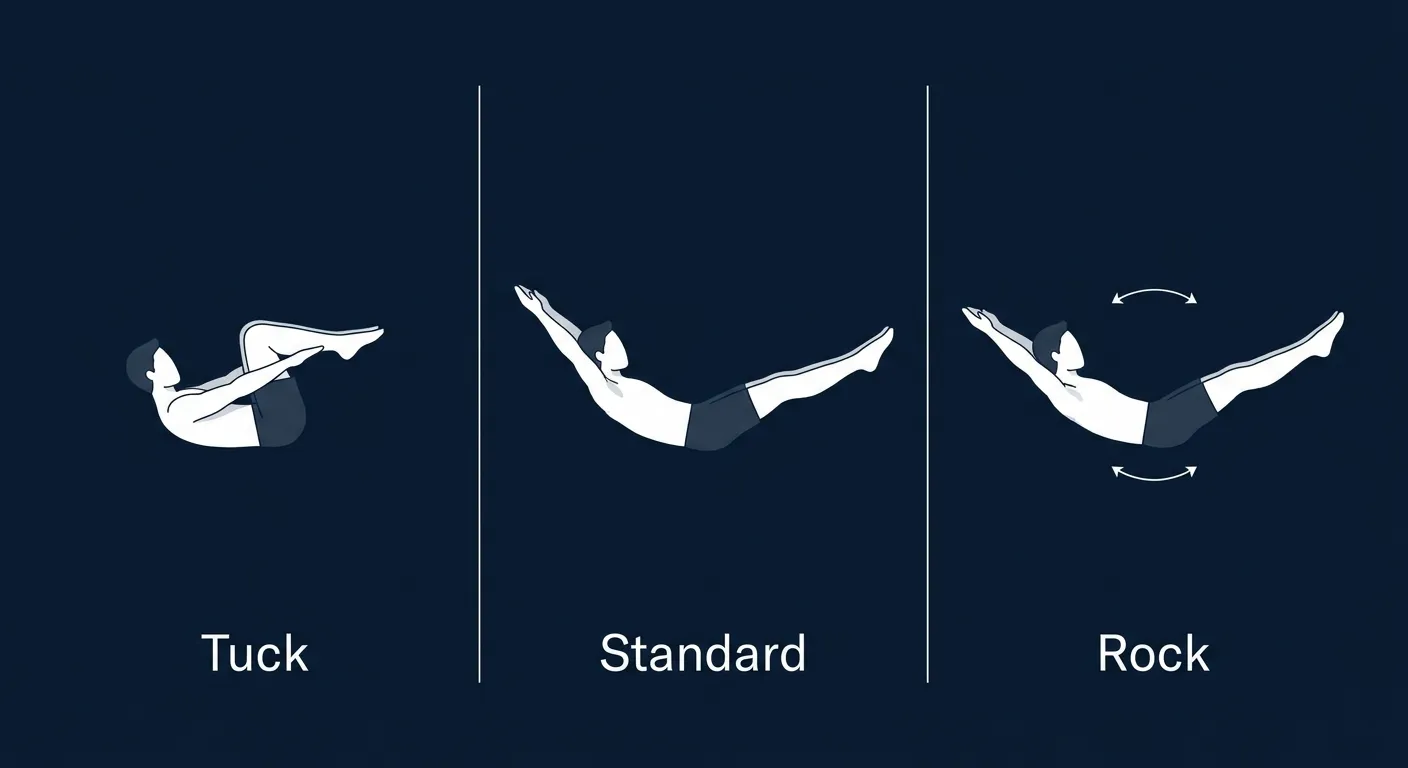
- Tuck Hollow Hold: Bend the knees toward the chest (90-degree hip flexion, 90-degree knee flexion) and keep the arms reaching toward the thighs. This dramatically shortens the leg lever and reduces the hip flexor demand. Master this for 30 seconds with the lower back glued down before progressing.
- Hollow Hold with Arms by Sides: Straight legs but arms stay by the sides instead of overhead. The shorter upper lever cuts the rectus abdominis demand by roughly half.
- Dead Bugs: The universal entry point for anti-extension core. Build a clean Dead Bug pattern first if the Hollow Hold position feels chaotic.
Harder (Progression)
- Hollow Rocks: Hold the hollow position and add a small rocking motion forward and back, using shoulder and hip drive. The motion challenges the core to maintain the rigid dish shape while moving (a gymnastics foundational drill).
- Weighted Hollow Hold: Hold a light plate, dumbbell, or medicine ball in the extended arms overhead. Adds direct load to the upper lever and significantly increases the rectus abdominis demand. Start with 2.5 to 5 pounds.
- V-Up: A dynamic version: from the hollow position, fold up into a V-shape by simultaneously lifting the legs and torso, then return to hollow. Trains the same pattern with concentric and eccentric phases added.
Alternative Exercises
- Forearm Planks: Face-down isometric anti-extension. Different position, same anti-extension principle.
- Teaser Hold: The Pilates-derived V-position isometric. Higher demand, similar muscle pattern.
- Dead Bugs: The dynamic anti-extension foundation. Pairs well with Hollow Holds to cover both static and dynamic patterns.
When to Avoid or Modify Hollow Holds
Hollow Holds are safe for healthy adults with established core control, but a few conditions warrant modification or substitution. Always consult a qualified healthcare provider or physical therapist before starting or returning to advanced core training, especially in the situations below.
- Acute lower-back pain or known disc pathology. If the posterior pelvic tilt can't be maintained, the load shifts to the lumbar spine. Substitute with anti-rotation patterns like Bird-Dogs and Dead Bugs until cleared by a physical therapist.
- First 6 to 8 weeks postpartum or active diastasis recti. The high intra-abdominal pressure of a sustained hollow hold can widen abdominal separation. Restore deep-core function first with diaphragmatic breathing and Dead Bugs.
- Recent abdominal surgery (C-section, hernia repair, appendectomy). Get clearance from your surgeon. Progressive loading starts with breathing drills and gentle bracing, not isometric long-lever holds.
- Hernia (umbilical, inguinal, ventral). The pressure of the sustained brace can worsen symptoms. Consult your physician about safe core options.
- Pregnancy (second and third trimesters). Avoid supine positions for long durations (vena cava compression) and skip extended anti-extension holds. Use side-lying or standing alternatives cleared by your provider.
- Pelvic-organ prolapse or pelvic-floor dysfunction. The sustained intra-abdominal pressure can exacerbate symptoms. Work with a pelvic-floor PT before attempting Hollow Holds.
- Cervical (neck) injury or chronic neck pain. Holding the head off the floor loads the neck flexors. Modify by resting the head on the floor and only lifting the legs, or substitute with a Forearm Plank.
Related Exercises
- Same plane (anti-extension core): Forearm Planks, Hand Planks, Dead Bugs
- Easier regressions for the same pattern: Dead Bugs, Deadbug Partial, Bird-Dogs
- Foundational rotational core companions: Floor Wipers, Bicycle Crunches
- Lateral core companions: Side Planks, Side Plank Raise
- Posterior core (anti-flexion balance): Superman Holds, Back Extensions
- Advanced anterior core progression: Teaser Hold, Hundred
How to Program Hollow Holds
The Ratamess et al., 2009 ACSM Position Stand on Resistance Training establishes the general framework for isometric core training. For Hollow Holds, hold durations scale with training experience, and quality of position outranks duration at every level.
| Level | Hold Time | Sets | Rest | Frequency |
|---|---|---|---|---|
| Beginner (Tuck variation) | 15 to 30 seconds | 2 to 3 | 45 to 60 seconds | 2 to 3 sessions/week |
| Intermediate (straight legs, arms by sides) | 30 to 60 seconds | 3 | 60 seconds | 3 to 4 sessions/week |
| Advanced (full position, arms overhead) | 60 to 120 seconds | 3 to 5 | 60 to 90 seconds | 4 to 6 sessions/week |
Where in your workout: Hollow Holds work well as a warm-up activation (1 short set to wake up the deep core before compound lifts), as a finisher (2 to 3 sets at the end of a strength or gymnastics session), or as a primary movement on a dedicated core day. Pair with a posterior-chain isometric like Superman Holds in a superset to balance anti-extension and anti-flexion in the same set.
Form floor over duration. The hold ends the moment your lower back lifts off the floor, even if the timer says you have 20 seconds left. Bank the clean seconds; add 5 to 10 seconds across sessions, not within one set. A 30-second hollow hold with a perfect posterior pelvic tilt builds more core strength than a 90-second hold with the back arching for the last 60 seconds.
FitCraft's AI coach Ty adjusts the variation and hold time of core work like Hollow Holds based on your assessment results, so you don't have to guess which regression or progression is appropriate today. Ty also pairs anti-extension holds with anti-rotation and lateral patterns to cover the full core in time-efficient sessions.
Frequently Asked Questions
Can I do Hollow Holds if I have lower-back pain?
If you have acute lower-back pain, known disc pathology, or your lower back lifts off the floor during the hold (loss of posterior pelvic tilt), regress to the Tuck Hollow Hold with knees bent toward the chest, or build the pattern with Dead Bugs and Bird-Dogs first. Always consult a qualified healthcare provider or physical therapist before starting or returning to advanced core training, especially if you have current or recent back pain.
What muscles does the Hollow Hold work?
The Hollow Hold primarily targets the rectus abdominis (the visible "six-pack" muscle) and the transverse abdominis (the deep core stabilizer), with significant involvement from the internal and external obliques. Secondary movers include the hip flexors (psoas, iliacus, rectus femoris) keeping the legs elevated, and the serratus anterior and lats bracing the arms overhead. The diaphragm and pelvic floor work as part of the deep core canister.
How long should I hold a Hollow Hold?
Beginners: 15 to 30 seconds with the Tuck variation, 2 to 3 sets. Intermediate: 30 to 60 seconds with straight legs, 3 sets. Advanced: 60 seconds or more in the full overhead position, 3 to 5 sets. The hold ends the moment your lower back lifts off the floor, even if you haven't hit the target time. Build duration gradually in 5- to 10-second increments across sessions.
Why is the Hollow Hold so hard?
The Hollow Hold combines two demanding elements: a long-lever anti-extension challenge (arms overhead, legs extended), and a sustained isometric contraction across the entire anterior core. The long lever amplifies the load on the rectus abdominis and hip flexors, while the posterior pelvic tilt requires constant attention from the transverse abdominis. Most people fail not from lack of strength but from losing the posterior pelvic tilt; the lower back lifts and the hold is broken.
What's the difference between Hollow Holds and Planks?
Both are isometric anti-extension exercises, but the body position changes which muscles dominate. Forearm Planks load the core from a face-down position with the shoulders and forearms supporting the body; the rectus abdominis works hard, but the shoulder girdle is also under significant load. Hollow Holds load the core from a face-up position with no shoulder support, so the anterior core (rectus abdominis, transverse abdominis, hip flexors) does all the work. Hollow Holds are the gymnastics-foundation pattern for skills like the handstand, while Planks are the general-fitness anti-extension default.