The quarter pike pushup is a partial range pike pushup that loads the shoulders more than a flat pushup while keeping the depth manageable. It mainly trains the anterior deltoids, upper chest, and triceps, with help from the serratus anterior, upper traps, core, glutes, and rotator cuff. The defining cue is simple: keep the hips high and lower only a few inches. Use it after clean incline and standard pushups, then progress toward full pike pushups by adding depth slowly.
If a full pike pushup feels like your shoulders disappear halfway down, the quarter pike pushup fills the gap. It lets you practice the same vertical pressing angle in a smaller range, where you can still press with control.
Quick Facts: Quarter Pike Pushups
- Equipment needed: None
- Difficulty: Intermediate
- Modality: Bodyweight strength
- Body region: Upper body
- FitCraft quest category: Strength
Muscles Worked
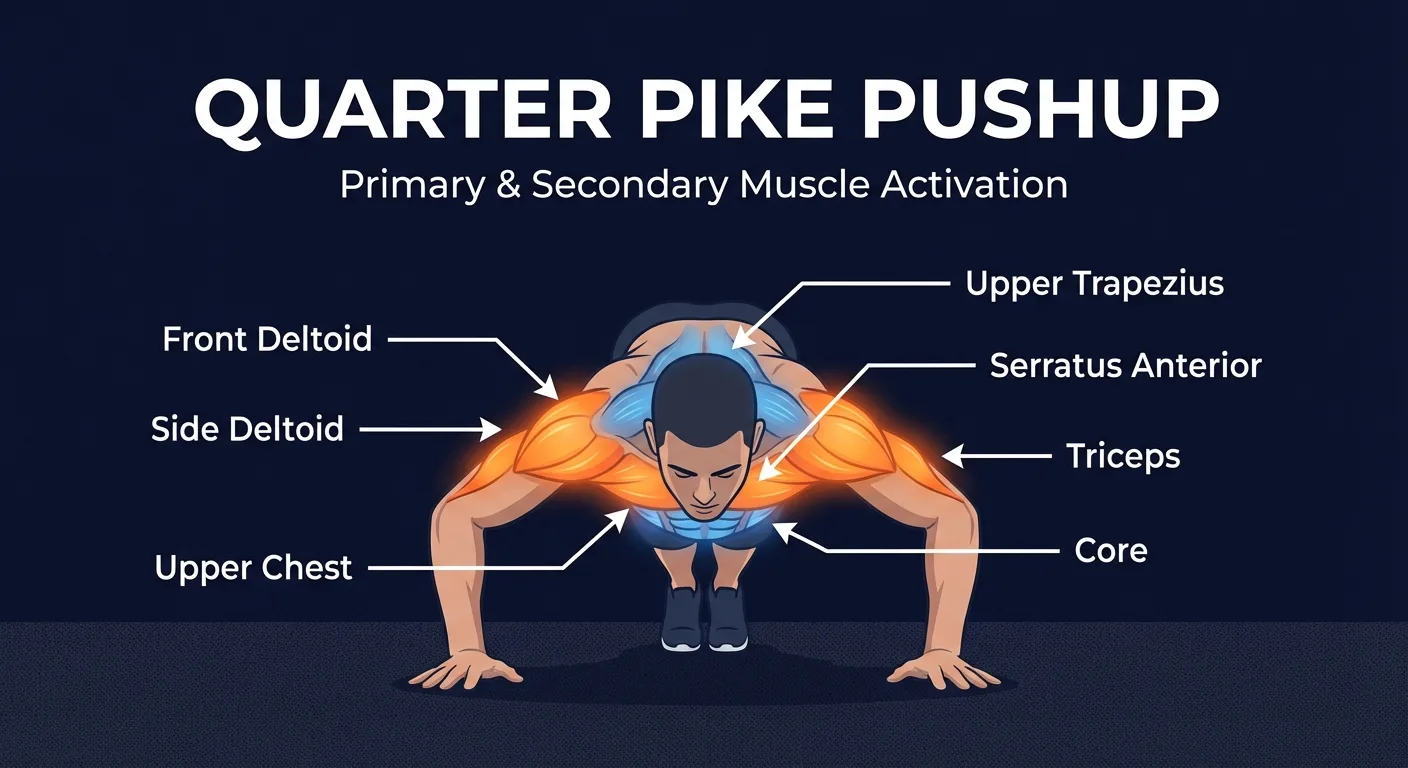
The anterior deltoids drive most of the press as your shoulders flex from the lowered position back to the high-hip start. The upper chest and triceps assist through the press, with the triceps finishing elbow extension at the top.
The serratus anterior and upper traps help rotate and stabilize the shoulder blades while your arms work overhead-ish. That scapular control is the main reason this feels closer to a bodyweight overhead press than a regular pushup.
The anterior core, transverse abdominis, obliques, glutes, posterior deltoids, and rotator cuff work isometrically to hold the pike shape. If the ribs flare, hips sag, or shoulders shrug hard, the stabilizers are losing the position.
No high-confidence quarter pike pushup EMG citation is available in the FitCraft citation library, so the best evidence framing is mechanical: raising the hips shifts more body mass toward the hands and changes the press angle from horizontal chest pressing toward shoulder-dominant vertical pressing.
Step-by-Step: How to Do a Quarter Pike Pushup
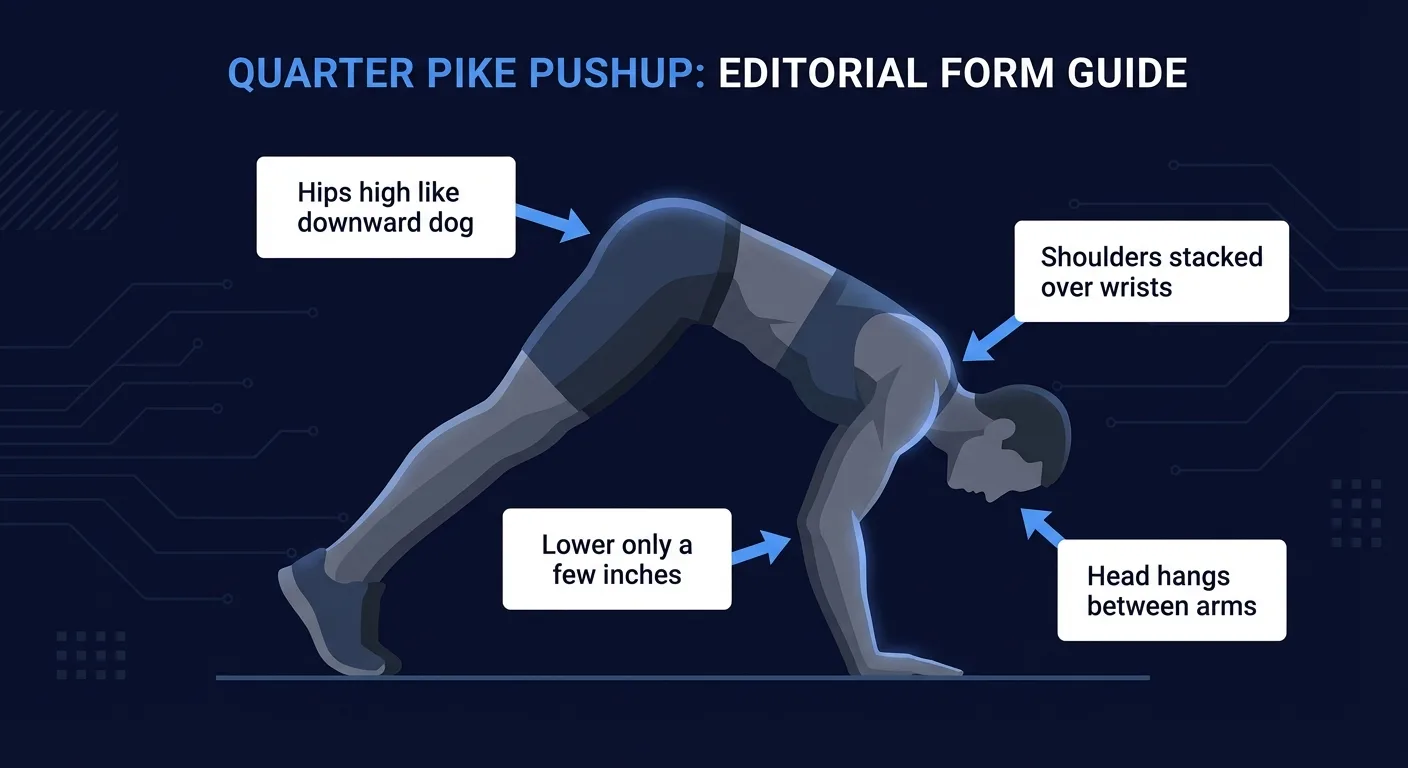
- Get into the pike position. Start on your hands and feet, then push your hips high so your body forms an inverted V. Think downward dog with a stronger pressing intent.
- Walk your feet in. Step your feet closer to your hands until your shoulders sit nearly over your wrists. The closer your feet are to your hands, the more the shoulders have to work.
- Set the spine. Keep your back as neutral as you can, with your head between your arms and your ribs tucked. Brace your core before you bend your elbows.
- Lower a quarter of the way. Bend your elbows and lower the top of your head a few inches toward the floor. Stop around a 30 to 45 degree elbow bend.
- Press back up. Drive your hands into the floor and press back to the starting pike position. Coach Ty's cue: "Push the floor away and keep your hips high."
- Control the tempo. Use a two-second lower, brief pause, and one- to two-second press. If your hips sag or your elbows flare, stop the set there.
Common Mistakes and How to Fix Them
Low Hips
What it looks like: Your hips drop until the shape looks more like a shallow plank than an inverted V.
Why it's a problem: Low hips shift the work back toward the chest and away from the shoulders.
The fix: Reset your hips before every rep. If tight hamstrings make the position hard, use downward dog and an incline setup first.
Going Too Deep
What it looks like: You lower your head close to the floor on every rep.
Why it's a problem: That turns the movement into a full pike pushup before your shoulders are ready for it.
The fix: Stop at the top quarter of the range. Add depth by a few inches only after you can keep the same position for every rep.
Elbows Flaring Wide
What it looks like: Your elbows drift out near 90 degrees from your torso.
Why it's a problem: Wide elbows place the shoulder in a weaker, more irritated position and reduce triceps contribution.
The fix: Track your elbows around 45 degrees from your torso. If you can't keep that line, move back to incline pushups.
Craning the Neck
What it looks like: You look forward instead of letting your head stay between your arms.
Why it's a problem: It adds cervical stress and pulls the body line out of position.
The fix: Let your gaze move slightly back between your feet. Keep the neck long and quiet.
Get this exercise in a personalized workout
FitCraft, our mobile fitness app, uses its AI coach Ty to program pressing exercises like this into your plan at the right volume and intensity, based on your level, goals, and equipment. Ty was designed and trained by Domenic Angelino, MPH (Brown University) and NSCA-CSCS, with research published in the Journal of Strength and Conditioning Research and Medicine & Science in Sports & Exercise.
Take the Free Assessment Free • 2 minutes • No credit cardQuarter Pike Pushup Variations: Regressions and Progressions
Easier Regressions
- Wall pike press. Place your hands on a wall, hinge slightly at the hips, and press in a short range. This keeps the wrists and shoulders lighter.
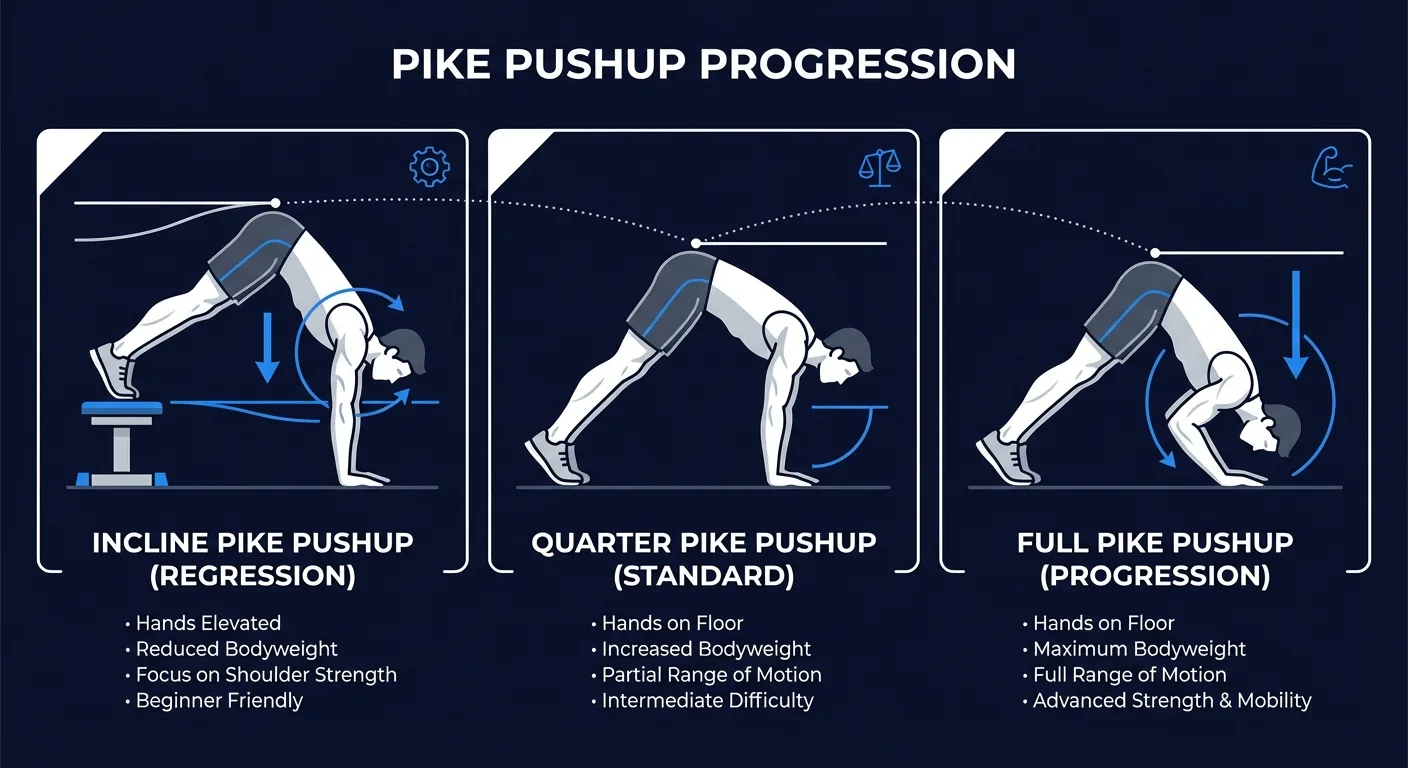
- Incline pike pushup. Put your hands on a bench, chair, or step. The higher surface reduces the load and gives you room to learn the angle.
Harder Progressions
- Full pike pushup. Use the same setup, then lower closer to the floor. Progress here only after the quarter range feels smooth.
- Feet-elevated pike pushup. Place your feet on a bench or box to put more weight into the hands. Start with quarter range before using full depth.
- Wall-supported handstand pushup negative. Kick up to a wall and lower slowly for a partial range. This is advanced and should come after strong full pike pushups.
Alternative Exercises
- Shoulder press. A loaded vertical press that is easier to dose precisely.
- Diamond push-ups. A triceps-heavy pressing variation that pairs well with shoulder-focused pike work.
When to Avoid or Modify Quarter Pike Pushups
Quarter pike pushups are safe for most healthy adults, but a few situations call for a smaller range, higher hand position, or medical guidance. Always consult your physician before starting or returning to exercise after pain, injury, surgery, or pregnancy.
- Wrist pain or carpal tunnel symptoms. Use push-up handles, dumbbell grips, fists, or a high-incline variation so the wrist can stay more neutral.
- Shoulder impingement or rotator cuff irritation. Keep the range short, avoid shrugging, and use a high incline. If symptoms persist, work with a physical therapist.
- Recent shoulder, wrist, or elbow surgery. Get clearance from your surgeon before loading the joint. Most progressions move from isometrics to wall pressing to incline pressing before floor work.
- Neck irritation or cervical sensitivity. Keep the neck relaxed and lower slowly. If dropping the head toward the floor triggers symptoms, use wall or incline pressing instead.
- First 6 to 8 weeks postpartum or active diastasis recti. Start with wall pressing and rebuild deep-core control with deadbugs and bird-dogs.
- Lower-back pain that worsens with bracing. If the hips sag even after cueing, use forearm planks, hand planks, and incline pressing first.
Related Exercises
- Same pattern: Push-ups and pike pushups build the base and the next step.
- Shoulder-focused press: Shoulder press trains the same broad overhead pattern with external load.
- Triceps-focused progression: Diamond push-ups and skullcrusher pushups strengthen elbow extension.
- Core foundation: Deadbugs, bird-dogs, and hand planks help you hold the pike line.
- Advanced push variation: Pseudo planche pushups and lateral pushups add harder bodyweight pressing angles.
How to Program Quarter Pike Pushups
Ratamess et al., 2009 recommends progressive resistance training that matches sets, reps, rest, and frequency to the lifter's level. For quarter pike pushups, keep the rep range modest enough that shoulder position stays clean.
| Level | Sets x Reps | Rest between sets | Frequency |
|---|---|---|---|
| Beginner (incline) | 2-3 x 5-10 | 60-90 seconds | 2-3 sessions/week |
| Intermediate (floor quarter range) | 3-4 x 6-12 | 60-90 seconds | 2-4 sessions/week |
| Advanced (deeper or feet elevated) | 3-5 x 6-10 | 90-120 seconds | 3-4 sessions/week |
Place quarter pike pushups early in an upper-body session, before higher-rep pushups or shoulder accessories. They need fresh shoulders, steady wrists, and enough core tension to keep the pike shape.
Use a form floor over rep targets. End the set when your hips drop, your elbows flare, or your neck starts reaching toward the floor.
FitCraft's AI coach Ty can place pressing exercises like this in a personalized plan and adjust the variation and volume to match your current level.
Frequently Asked Questions
Can I do quarter pike pushups with wrist pain?
Modify them if wrist extension hurts. Use push-up handles, hold dumbbell grips on the floor, move to a high incline, or use wall pike pressing until you can keep the wrist neutral without pain.
What muscles does the quarter pike pushup work?
The quarter pike pushup primarily trains the anterior deltoids, upper chest, and triceps. The serratus anterior, upper traps, core, glutes, and rotator cuff help keep the shoulder blades and trunk stable.
Why do a quarter pike pushup instead of a full pike pushup?
The quarter version lets you practice the shoulder-dominant pike press without dropping into a range you cannot control yet. It is a useful bridge between standard pushups and full pike pushups.
Is the quarter pike pushup a good beginner exercise?
It is usually best for early-intermediate users who already have clean standard pushups. New beginners should start with wall pushups, incline pushups, and basic plank strength first.
How do I progress from quarter pike pushup to full pike pushup?
First own 3 sets of 8 to 10 quarter pike pushups with high hips and quiet shoulders. Then add a few inches of depth at a time until you can lower with control through the full range.