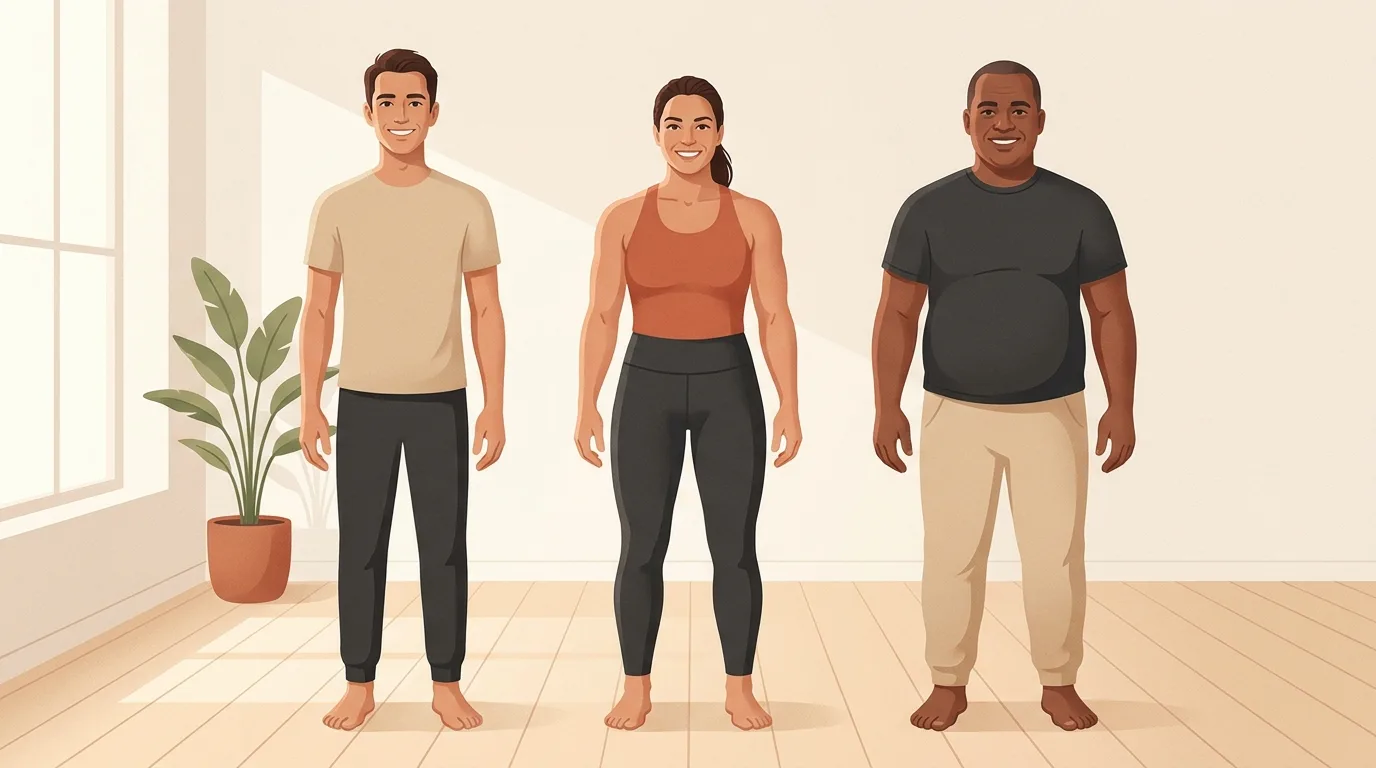
You took a body type quiz, and it told you you're an endomorph. Now every article says you gain fat easily and should cut carbs. Or the quiz called you an ectomorph, so you've decided you'll never build muscle. Maybe you're looking at your hips or your shoulders and wondering if your shape decides what's possible.
A label like that can feel like a verdict. It isn't one. The three body types describe what your body looks like today, and two of them change with training and food. Many people stall for a simpler reason: they pick a plan for a label, it doesn't fit their life, and they quit by week three.
This guide covers the ectomorph, mesomorph and endomorph body type, women's body shapes such as pear, apple and hourglass, and male body types. You'll see where the system came from and what the evidence says about training and eating for your type. You'll also get the three measurements that matter more for your health, and how to check them at home.
What Are the Three Body Types?
The three body types are ectomorph, mesomorph and endomorph. Scientists call them somatotypes. In the modern Heath-Carter method, you aren't one type. You get a rating on each of the three scales, so a score such as 3-6-2 means moderate fat, a lot of muscle relative to your height, and little linearity.
Ectomorph body type
An ectomorph is lean and linear: long limbs relative to the trunk, narrow shoulders and hips, light bones and little body fat. The ectomorphy rating comes from your height divided by the cube root of your weight, so a tall, light person scores high. A 2025 validation study by Ondrejova and colleagues lists the ten standard Heath-Carter measurements and the ectomorphy equation. People who call themselves "hardgainers" often describe themselves this way. Gaining weight takes more food than they expect, and that's the main practical difference.
Mesomorph body type
A mesomorph is muscular and solid for their height, with broad shoulders and a medium frame. The mesomorphy rating uses the width of your upper-arm and thigh bones at the elbow and knee, the girth of your arm and calf, and your height. Muscle adds to it, so this rating goes up when you build muscle. Many trained athletes rate high here because of the training, not only because of how they were born.
Endomorph body type
An endomorph is rounder and softer, with more body fat relative to their size, often around the middle, hips and thighs. The endomorphy rating is calculated from skinfold measurements at sites such as the back of the arm, below the shoulder blade and above the hip bone. In plain terms, it measures relative fatness. It falls when you lose fat, which is why "endomorph" describes a current state rather than a permanent type.
| Body type | What the rating measures | Typical description | Changes with training? |
|---|---|---|---|
| Ectomorph | Linearity: height relative to weight | Lean, long limbs, narrow frame | Somewhat: rises as you lose weight, falls as you gain it |
| Mesomorph | Muscle and bone relative to height | Muscular, broad shoulders, medium frame | Yes: rises as you build muscle |
| Endomorph | Relative fatness from skinfolds | Rounder, more body fat, softer outline | Yes: falls as you lose fat |
Where Body Types Came From: Sheldon's Somatotypes
The words come from William Sheldon, an American psychologist who introduced somatotypes in 1940. Sheldon didn't just describe bodies. He built a system linking physique to temperament, claiming that body type revealed a person's character. As historian Patricia Vertinsky (2007) describes, he drew on the nude "posture photos" that Ivy League colleges took of their students for his study. His eugenic views and his equation of physique with destiny made him increasingly unpopular after the Second World War.
The final blow came from his own former assistant, Barbara Honeyman Heath. She publicly denounced his methods as fraudulent and his somatotypes as inaccurate. She then built a better system with Lindsay Carter. The Heath-Carter method (1967) drops the personality claims and rates three components from height, weight, four skinfolds, two bone breadths and two girths. Sports scientists still use it to describe groups of athletes.
That history matters for you because most body type quizzes and diet plans online still use Sheldon's idea of fixed types. The research method that survived treats somatotype as a set of measurements you can move.
Do Body Types Predict How You Respond to Training or Diet?
Only partly, and the evidence is thin. We found two small studies that tested whether somatotype changes how much people gain from training, and the clearer one is a randomized trial in children. We found no randomized trial in adults that assigned training or diet by type. Here's what the research does and doesn't show.
A trial in children that tested somatotype and training
In a randomized trial of 125 children aged 10 to 11, Marta and colleagues (2013) rated each child's somatotype and then randomly assigned them to strength training, endurance training or a control group for 8 weeks. Children with higher endomorphy were less likely to improve their vertical jump. Children with higher ectomorphy were more likely to improve their aerobic fitness. That makes sense: carrying more fat makes jumping harder, and lighter, linear bodies run more easily. It's a short study in children before puberty, though. It doesn't tell an adult which program to follow.
Your ratings move when you train
Two of the three ratings measure fat and muscle, so they change with training. When Diaz-Martinez and colleagues (2024) measured 17 elite basketball players across a preseason, their endomorphy fell and their ectomorphy rose, along with drops in skinfolds and body fat. A label taken on one day is a snapshot.
People respond very differently to the same training
Training response does vary from person to person. In a 12-week arm training study of 585 adults, Hubal and colleagues (2005) found that biceps size changed by anywhere from -2 to +59 percent, and one-rep strength by 0 to +250 percent. In the HERITAGE Family Study (Bouchard 1999), 481 sedentary adults did the same 20 weeks of endurance training. Some gained little or no aerobic fitness and others gained more than a liter a minute, and up to 47 percent of that variation was heritable. Neither study measured somatotype, so neither can say whether body type explains any of that spread. They do show how much response to the same program varies between people.
Eating for your type has little support
"Endomorph diets" usually tell you to cut carbs because your body supposedly handles them badly. The closest test of that idea is the DIETFITS trial (Gardner 2018). It randomized 609 adults with overweight or obesity to a healthy low-fat or low-carb diet for 12 months. Weight loss was similar, 5.3 kg versus 6.0 kg. Neither a genetic pattern nor how much insulin people released after a glucose drink predicted which diet worked better for whom. We found no randomized trial in adults that assigned diets or workouts by somatotype.
How to Train and Eat for an Ectomorph or Endomorph Body Type
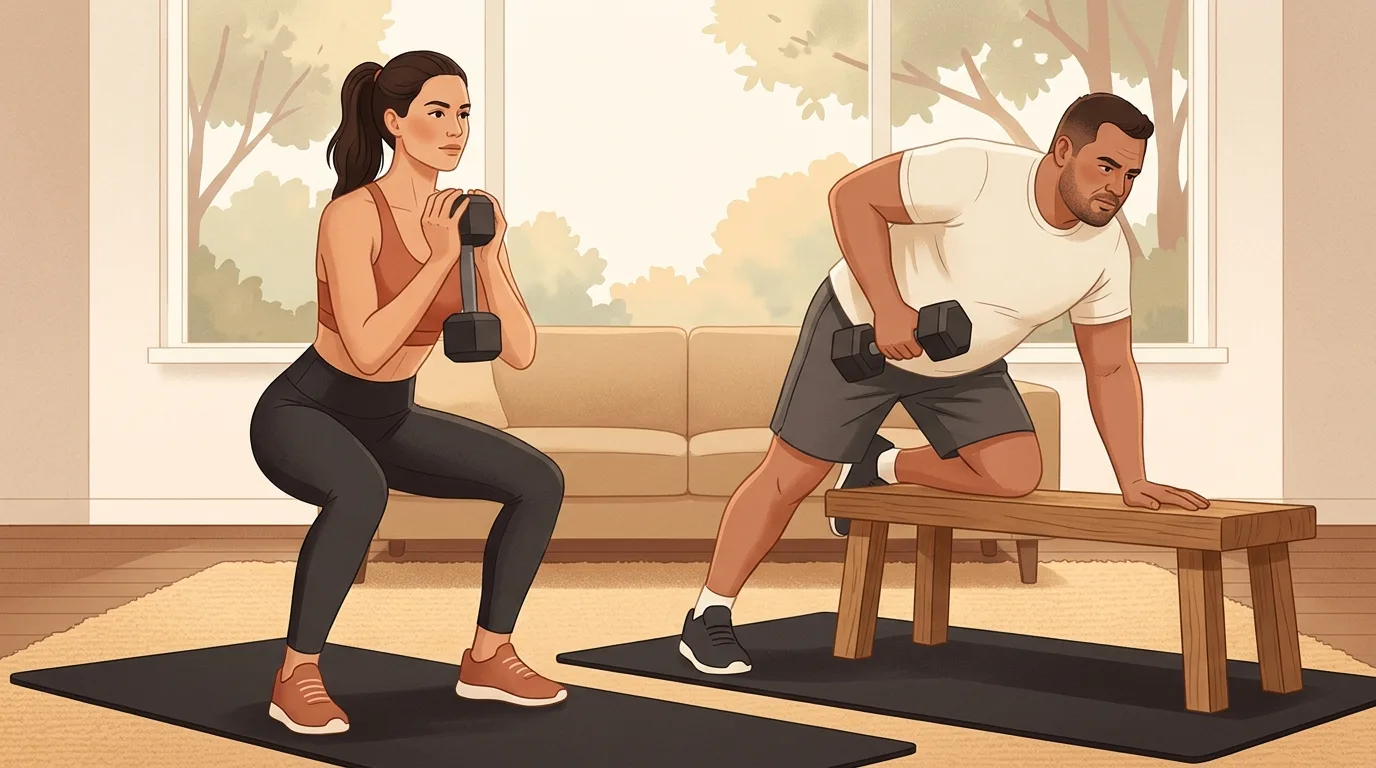
The principles are the same for everyone: lift with progressive overload, train each muscle often enough, and match your eating to your goal. What changes with your build is your starting point and which goal comes first.
If you're an ectomorph who struggles to gain muscle
- Eat in a modest surplus. You can't build much new tissue while eating too little. Weigh yourself weekly and aim for a slow, steady rise.
- Do enough hard sets. In a 2017 meta-analysis by Schoenfeld and colleagues of 15 studies, each extra weekly set per muscle added about 0.37 percent to muscle growth, with a trend favoring 10 or more sets a week.
- Keep cardio moderate. Walking and easy sessions are fine. Long, hard cardio on top of lifting makes the surplus harder to hit.
Our guide to gaining muscle without gaining fat covers how big that surplus should be.
If you're an endomorph who wants to lose fat
- Lift, don't only do cardio. Across 54 trials in healthy adults, Wewege and colleagues (2022) found that strength training alone cut body fat by about 1.5 percentage points, fat mass by 0.55 kg and visceral fat compared with no exercise.
- Eat a little less, on a diet you can keep. DIETFITS showed that low-carb and low-fat worked equally well on average, so pick the one you'll stick with.
- Track your waist as well as your weight. Muscle you gain can hide fat you lose on the scale, and the tape shows it.
If you're a mesomorph
A muscular frame gives you a head start, and you still need progressive overload, and many people who look muscular early on stop progressing when they stop adding load or reps. If you have a normal weight but have never lifted, read about skinny fat: a normal weight can hide low muscle and high body fat.
Find out what's really holding you back
FitCraft, our mobile fitness app, pairs you with an AI coach who builds you a personalized plan around your goals, schedule, and fitness level. Every FitCraft program is designed by Domenic Angelino, MPH (Brown University) and NSCA-CSCS, with research published in the Journal of Strength and Conditioning Research and Medicine & Science in Sports & Exercise.
Take the Free Assessment Free • 2 minutes • No credit cardWomen's Body Shapes: Pear, Apple, Hourglass and More
Body shapes are a different system from somatotypes. They describe how your bust, waist and hips compare, and they come from clothing design, where they guide fit. The standard in research is the Female Figure Identification Technique (FFIT), developed at North Carolina State University by Simmons, Istook and Devarajan (2004). It sorts women into nine shapes by subtracting one measurement from another, with inch thresholds published by Lee and colleagues (2007).
| Shape | What it looks like | Everyday name |
|---|---|---|
| Hourglass | Bust and hips about equal, waist clearly smaller than both | Hourglass, X-shape |
| Bottom hourglass | Hips larger than bust, defined waist | Hourglass with fuller hips |
| Top hourglass | Bust larger than hips, defined waist | Hourglass with a fuller bust |
| Spoon | Hips larger than bust with a shelf of hip just below the waist | Spoon |
| Triangle | Hips much larger than bust, waist not much smaller | Pear, A-shape |
| Inverted triangle | Bust clearly larger than hips | V-shape |
| Rectangle | Bust, waist and hips fairly similar | Straight, H-shape |
| Oval and diamond | Large midsection compared with the rest of the body | Apple, O-shape |
The single most common shape is not the hourglass. When apparel experts sorted the 3D scans of 531 randomly chosen American women from the SizeUSA survey, Devarajan and Istook (2004) counted 29 percent rectangles, 17 percent plain hourglasses and 17 percent spoons, with top and bottom hourglasses adding another 17 percent. Diamond was rarest, with 6 women.
Shape names are also less precise than they look. In a study of 1,679 body scans, Parker and colleagues (2021) found that small differences in where each measurement was placed put up to 40 percent of bodies into a different shape. Treat your shape as a guide for clothes, not a fact about your health. Our body shape calculator applies the FFIT rules to your measurements and flags results close to a dividing line.
Apple versus pear: the shape difference that matters for health
One part of body shape does matter medically: where you carry fat. In a study of 131 women, Thoma and colleagues (2012) found that women without obesity who saw themselves as pears had an average waist to hip ratio of 0.75, against 0.82 for those who saw themselves as apples. Self-rated shape tracked real fat distribution. Fat stored around the waist carries more risk than fat on the hips and thighs, which is the point of the next sections.
Male Body Types
Male body types are usually described in two ways. The first is the same three somatotypes, ectomorph, mesomorph and endomorph. The second is a set of shapes borrowed from tailoring:
- Inverted triangle (V-shape): chest and shoulders clearly wider than the waist and hips.
- Rectangle: chest, waist and hips close in width.
- Triangle: hips wider than the chest.
- Oval: waist wider than the hips.
- Hourglass: chest and hips similar, with a clearly narrower waist.
Menswear guides often add a trapezoid, a milder V-shape with broad shoulders that taper gently to the waist.
We found no widely used, validated measurement system for men's shapes, so treat these names as a tailoring convention. The useful part is knowing which pieces you can change. Your shoulder width is set largely by your skeleton, but the muscle on your shoulders, upper back and chest adds visible width. Your waist responds to fat loss. That's why a man who builds his upper back and loses fat around the middle moves from oval or rectangle toward a V-shape, without his skeleton changing at all.
For men, the waist is also the health number to watch. The World Health Organization treats a waist to hip ratio of 0.90 or more in men as a substantially increased risk of metabolic complications. Our guide to waist to hip ratio explains how that line was set.
What Matters More Than Your Body Type
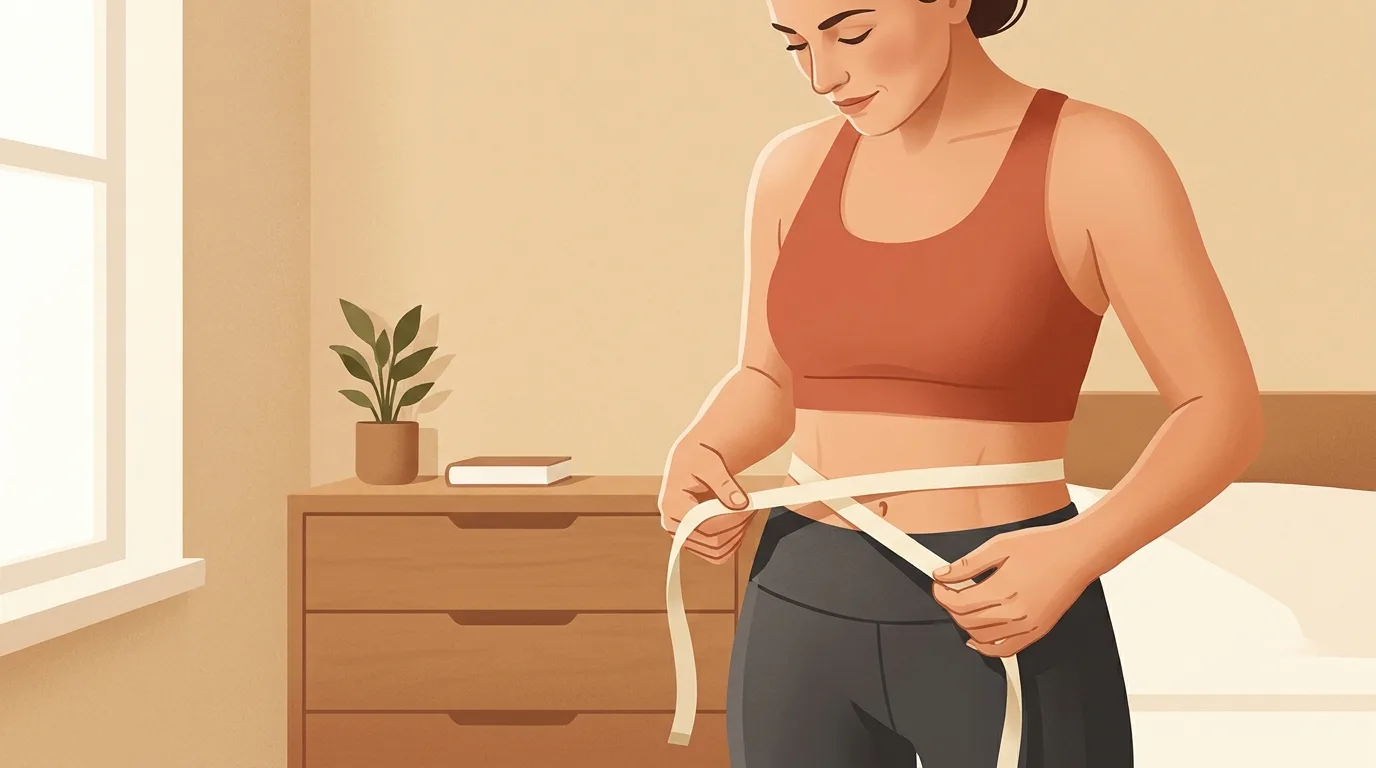
If you want to know where you stand, three measurements beat any body type label. All three can be checked at home, and all three change with training.
1. Your waist
In the INTERHEART study of 27,098 people in 52 countries, Yusuf and colleagues (2005) found that waist to hip ratio was a stronger predictor of heart attacks than body mass index. Each fifth of waist to hip ratio carried more risk than the one below it, and the top fifth had 2.52 times the odds of the bottom fifth. An international consensus statement led by Ross and colleagues (2020) calls waist circumference a vital sign that doctors should measure routinely. It also notes that moderate exercise, diet or both can bring it down. The World Health Organization uses 0.85 or more for women and 0.90 or more for men as its waist to hip risk lines. Check yours with our waist to hip ratio calculator.
2. Your body composition
Two people with the same weight and the same body type label can carry very different amounts of fat and muscle. Body fat percentage tells you which you have. Our body fat calculator uses the US Navy tape method, and our article on what a healthy body fat percentage is gives the ranges for your age and sex.
3. Your strength
Strength is the most underrated of the three. In a meta-analysis of 38 studies and about 1.9 million adults, Garcia-Hermoso and colleagues (2018) found that people with higher grip strength had a 31 percent lower risk of death from any cause than people with lower grip strength. Higher leg strength went with a 14 percent lower risk. No body type label predicts that, and every body type can build it.
How to Identify Your Body Type at Home
You can't get a true somatotype at home. The Heath-Carter rating needs skinfold calipers, bone-breadth calipers and a trained tester. Quizzes that ask whether your wrist is thin or whether you gain weight easily are guessing. Here's what you can measure accurately with a soft tape, a scale and five minutes:
- Your shape. Measure your bust or chest at the fullest point, your waist midway between your lowest rib and the top of your hip bone after a normal breath out, and your hips at the widest part of your buttocks, all in the same unit. Compare them, or enter them in the body shape calculator.
- Your waist risk. Divide your waist by your hips. Compare the result with the WHO lines of 0.85 for women and 0.90 for men.
- Your body fat. Estimate it from tape measurements with a body fat calculator, and repeat it every four to six weeks rather than daily.
- Your strength baseline. Count how many good push-ups you can do, or how long you can hold a plank. Retest after a month of training.
Write all four down. If you train consistently, the numbers will move, and your body type label would move with them.
What You Can Change and What You Can't
Some of your build is inherited. In a study of 624 pairs of adult twins, Schousboe and colleagues (2004) estimated that genes explained about half to two-thirds of the variation in waist size, hip size and body fat percentage, and even more of the variation in height. Where you store fat is partly genetic too. A study of up to 224,459 people by Shungin and colleagues (2015) found 49 genetic regions linked to waist to hip ratio. Of the 20 that worked differently by sex, 19 had a stronger effect in women.
Heritability describes differences between people in a population, though. It doesn't set your personal ceiling. Here's how it breaks down in practice:
| Mostly fixed | Changes with training and eating |
|---|---|
| Height and limb length | Body fat and your endomorphy rating |
| Bone breadth and shoulder width | Muscle mass and your mesomorphy rating |
| Where your body prefers to store fat first | Waist size and waist to hip ratio |
| Your general proportions | Strength, fitness and how your clothes fit |
The Bottom Line
Body types describe your build today, and they don't decide what you can become. The ectomorph, mesomorph and endomorph labels started with a discredited theory, and the version that survived measures fat, muscle and linearity you can partly change. We found no trial in adults showing that training or eating by type beats sound general advice. Measure your waist, estimate your body fat, test your strength, and train to move those numbers.
The hard part is doing it for long enough to see the change. If you want a plan built around your starting point, our page on getting a personalized training program shows how FitCraft sets one up. An AI coach demonstrates each exercise on an interactive 3D model and says your name as you train, your workouts adjust as you progress, and streaks help you keep showing up. Katie, one FitCraft user, put it this way: "I've tried everything. This is the first time I've stuck with something past two weeks."
Frequently Asked Questions
How do I identify my body type?
For your body shape, measure your bust or chest, waist and hips with a soft tape and compare them, or use a body shape calculator. A true somatotype needs the Heath-Carter method: skinfold calipers, bone-breadth calipers, girths, height and weight, taken by a trained tester, so no quiz or mirror check can give you one. For health, add your waist to hip ratio and an estimate of your body fat.
What is the rarest body type?
No dataset counts ectomorphs, mesomorphs and endomorphs in the general population, so claims about the rarest somatotype are guesses. For women's body shapes there is data: when apparel experts sorted the 3D scans of 531 randomly chosen American women, diamond was the rarest shape with 6 women, about 1 percent, while rectangle was the most common at 29 percent.
Am I meso or endomorph?
You can't tell from a quiz. The Heath-Carter method rates everyone on both scales at once, so most people score some of each, and the endomorphy number measures relative fatness while mesomorphy measures muscle and bone relative to height. If you carry more fat over a muscular frame, you'd probably rate high on both, and the endomorphy rating would drop as you lost fat.
Are endomorphs chubby?
Endomorphy is defined as relative fatness, so a high endomorphy rating does mean more body fat for your size. It's a measurement of where you are today, though, and it changes: in elite basketball players, endomorphy fell during a preseason of training. An endomorph label tells you nothing about how well you can train, how strong you can get or how healthy you are.
What is the unhealthiest body type?
No somatotype is unhealthy by itself, but carrying fat around the waist, the apple pattern, carries the most risk. In a study of 27,098 people in 52 countries, people in the top fifth for waist to hip ratio had 2.52 times the odds of a heart attack of those in the bottom fifth. The World Health Organization treats a ratio of 0.85 or more in women and 0.90 or more in men as raised risk.
How many body types are there for men?
Most guides name three male body types, the ectomorph, mesomorph and endomorph somatotypes, and about five shapes for fit: inverted triangle (V-shape), rectangle, triangle, oval and hourglass, with trapezoid as a common extra. We found no widely used, validated measurement system for men's shapes, so treat these names as a tailoring convention. Most men are a blend, and their somatotype rating shifts as they gain muscle or lose fat.
What body shape is 32-26-34?
A 32 inch bust, 26 inch waist and 34 inch hips is a rectangle under the Female Figure Identification Technique rules. The waist is 6 inches smaller than the bust and 8 inches smaller than the hips, short of the 9 and 10 inches an hourglass needs, and the bust and hips are only 2 inches apart. Its waist to hip ratio is 0.76, well under the WHO line of 0.85 for women.
Can you change your body type?
Partly. Your height, bone breadth and where your body prefers to store fat are largely inherited, but two of the three somatotype ratings measure fat and muscle, and both respond to training and eating. Strength training reduced body fat percentage by about 1.5 points compared with no exercise across 54 trials, and building muscle raises your mesomorphy rating over time.