
You ate a salty dinner on Saturday, and on Sunday morning the scale says you gained three pounds. Your rings feel tight. Your socks leave grooves around your ankles. None of that is fat, because three pounds of fat would take more than 10,000 extra calories you didn't eat.
It still feels like a setback. A jump like that can wipe out a week of motivation in one weigh-in, and plenty of people abandon a good plan on a Monday morning because of fluid that would have left on its own by Wednesday.
The fix is mostly unglamorous, and it works within days. Below you'll find what water weight actually is, the seven steps that release it in order of how much they move, how much you can realistically lose, and the kinds of swelling that need a doctor instead of a new plan.
What Is Water Weight?
Water weight is extra fluid held in the spaces between your cells, plus the water packed alongside the carbohydrate stored in your muscles and liver. When it's visible as puffiness, doctors call it fluid retention or edema. The everyday version, the kind that moves the scale after a weekend, is usually called water retention, and it has five common causes.
- Sodium. Your body keeps the fluid outside your cells in balance with the sodium in it, so a salty day means more water held until the kidneys excrete the extra sodium.
- Glycogen. Carbohydrate is stored as glycogen, and glycogen is stored with water attached.
- Hormones. Fluid retention follows the menstrual cycle for many women.
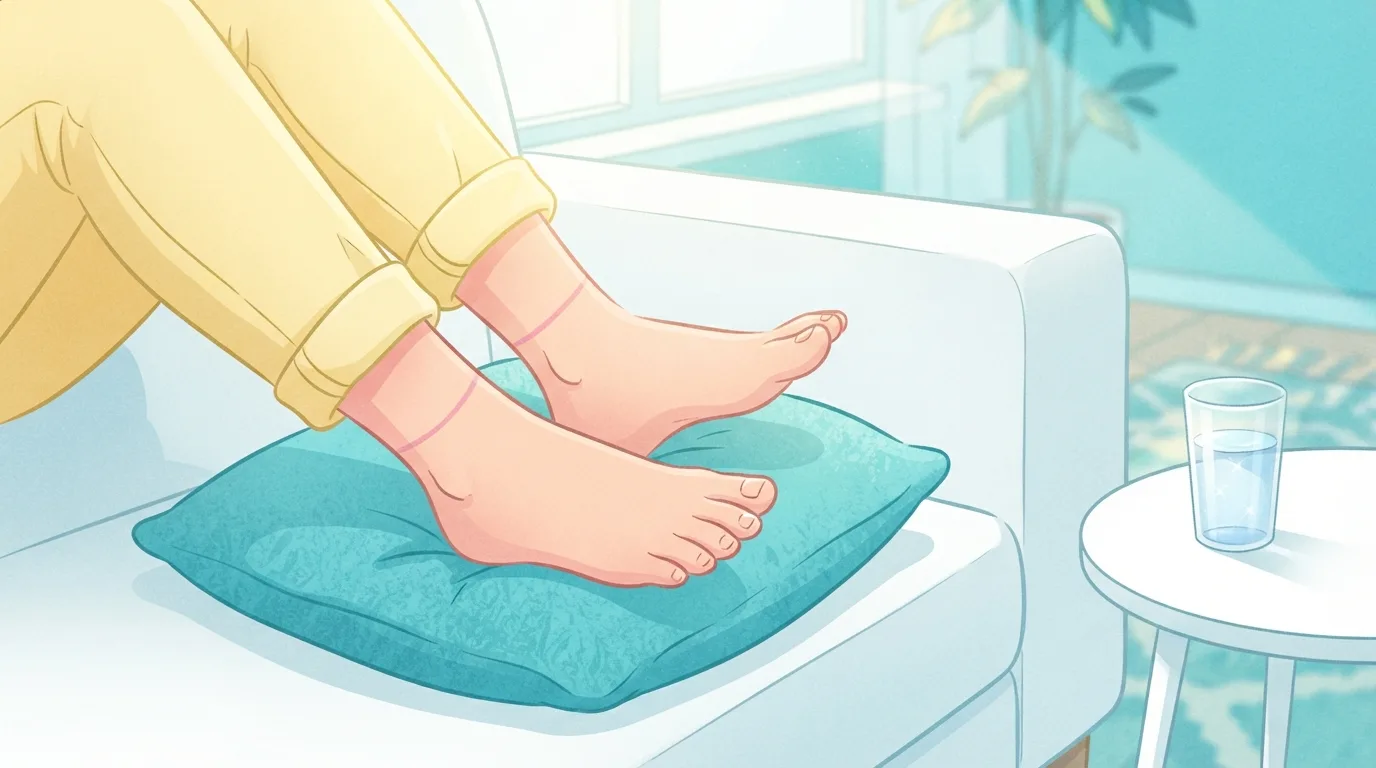
- Gravity and stillness. Fluid pools in the lower legs when the calf muscles stay quiet for hours.
- Drinking too little. A low intake raises the hormone that tells the kidneys to hold on to water.
Some medicines cause swelling too, and so do conditions of the heart, kidneys, liver and veins. Those get their own section near the end. For most people on most days, the scale swing comes from the first four causes, and those are the ones you can change this week.
How to Lose Water Weight: 7 Steps
If you want to get rid of water weight quickly, start at the top, because the steps are ordered by how much fluid each one usually moves. The first two do most of the work, and the rest make the change stick.
- Bring sodium back to normal, not to zero.
- Ease off refined carbs for two or three days.
- Drink enough water, not a gallon.
- Eat potassium-rich foods.
- Break up long sitting and move your legs.
- Read your cycle before you read the scale.
- Judge the weekly trend, not one morning.
1. Bring Sodium Back to Normal, Not to Zero
Sodium is the biggest lever you have. Visser and colleagues (2009), writing in Obesity, put 78 healthy men on a low-sodium diet of about 1.2 grams of sodium a day for one week and a high-sodium diet of about 4.6 grams for another. Moving from low to high raised extracellular fluid volume by an average of 1.2 liters, which weighs about 2.6 pounds. The rise was larger in men with a higher BMI, so heavier people tend to feel a salty week more.
The useful target is the US limit of 2,300 milligrams of sodium a day, not the lowest number you can manage. Most sodium arrives in packaged, restaurant and takeout food rather than from the salt shaker: bread, cured meats, cheese, canned soup, sauces, and anything from a fast-food fryer. Cook most of your meals from whole ingredients for three or four days and you'll usually land near the limit without measuring anything. The extra fluid leaves as your kidneys clear the extra sodium, which takes days rather than hours.
2. Ease Off Refined Carbs for Two or Three Days
Glycogen is how your body stores carbohydrate, and it isn't stored dry. Murray and Rosenbloom (2018), reviewing glycogen metabolism in Nutrition Reviews, put whole-body glycogen at roughly 600 grams in a typical adult, about 500 grams of it in muscle and 80 in the liver. Fernández-Elías and colleagues (2015) took muscle biopsies from nine trained cyclists as they refuelled after exercise and confirmed that each gram of glycogen was stored with at least 3 grams of water.
Do the multiplication and a full tank carries about 1.8 kilograms of water, close to 4 pounds, on top of the glycogen itself. Eating fewer refined carbs, such as white bread, pastries, sweets and sugary drinks, for a couple of days draws that tank down and releases part of the water. You won't empty it completely without hard training, and there's no reason to try.
One warning before you take this too far. That water comes straight back the first time you eat a normal amount of carbohydrate, and it's supposed to, because full glycogen stores are the fuel for your training. Use this step for a few days before an event, not as a permanent way of eating.
3. Drink Enough Water, Not a Gallon
It sounds backwards, but drinking too little makes your body hold more fluid. A low intake raises vasopressin, the hormone that tells the kidneys to conserve water. Enhörning and colleagues (2019) gave 31 healthy adults who habitually drank very little an extra 1.5 liters of water a day for six weeks. Their copeptin, a blood marker of vasopressin, fell from 12.9 to 7.8 pmol/L, and their daily urine output roughly doubled, from about 1.1 to 2.3 liters.
The practical version is simple. Drink enough that your urine is pale for most of the day, and spread it out. Forcing down a gallon in an afternoon doesn't flush retained water any faster than steady drinking does. Whether water helps with fat loss is a separate question, and our look at does drinking water help you lose weight covers the trials, which mostly found a small effect that comes from replacing sugary drinks.
4. Eat Potassium-Rich Foods
Potassium works on the other side of the sodium equation. Wu and colleagues (2023) ran a randomized crossover trial in 18 healthy adults kept on a high-sodium diet and found that five days of extra potassium dialled down a kidney transporter, the sodium chloride cotransporter, that holds on to sodium. Less sodium held means less water held with it.
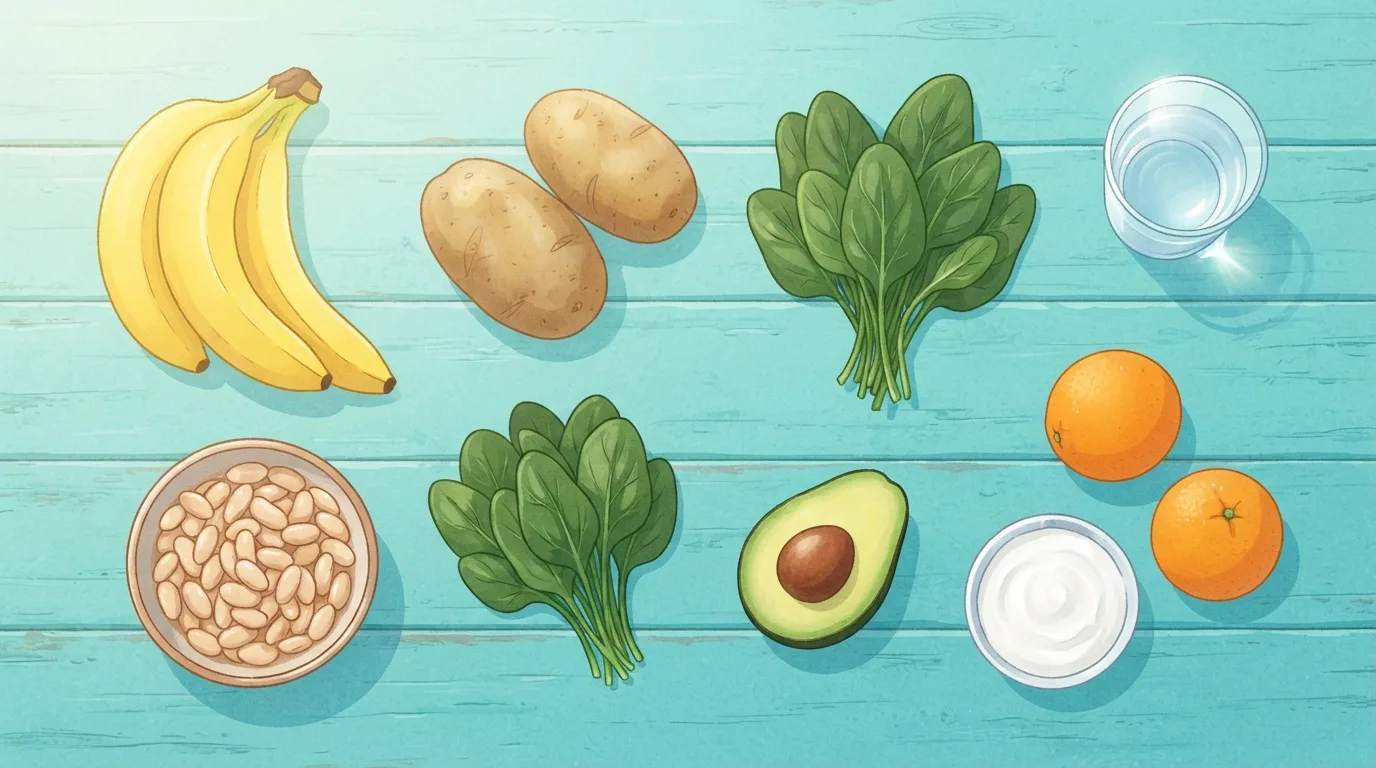
Be clear about what that trial showed: the mechanism, not the pounds. Nobody has weighed people to see how much water a plate of beans moves. It's still worth doing, because the foods involved are ones most people under-eat anyway: potatoes, beans and lentils, yogurt, bananas, oranges, spinach, avocados and tomatoes. Get your potassium from food rather than pills, since potassium supplements can be dangerous for people with kidney disease or on some blood pressure medicines.
5. Break Up Long Sitting and Move Your Legs
When you sit for hours, gravity pulls fluid toward your ankles while the calf muscles that normally pump it back up stay quiet. Dogra and colleagues (2019) had 10 active young adults sit for four hours on two occasions, once without a break and once with short exercise breaks every hour. Lower-leg swelling crept up during the unbroken session and dropped right after each exercise break.
You don't need a workout for this. Stand up once an hour, walk to refill your water, do 20 calf raises while the kettle boils, and put your feet up on the couch in the evening. On a long flight, walk the aisle and flex your ankles in the seat.
Proper training helps too, but be honest about what the scale says straight after it. A sweaty session drops your weight because you lost fluid, and the American College of Sports Medicine position stand on fluid replacement (Sawka and colleagues, 2007) uses exactly that before-and-after weigh-in to estimate sweat losses. You'll drink it back by dinner, and you should.
6. Read Your Cycle Before You Read the Scale
If you menstruate, some fluid arrives on a schedule. White and colleagues (2011) followed 62 healthy women through 765 menstrual cycles and found that self-reported fluid retention peaked on the first day of the period, was lowest in the middle of the follicular phase, and climbed gradually over the 11 days around ovulation.
Nothing in the steps above cancels that pattern, and you don't need to fight it. Note where you are in your cycle when you weigh in, and compare a given day with the same day of your last cycle rather than with yesterday.
7. Judge the Weekly Trend, Not One Morning
Body weight moves in a weekly rhythm even when nothing is wrong. Turicchi and colleagues (2020) analysed weigh-ins from 1,421 adults in a European weight-maintenance trial and found a within-week swing of about 0.35 percent: up after the weekend, back down by Friday. On a 200-pound person that's about 0.7 pounds of built-in noise before a single salty meal.
Weigh yourself at the same time each morning, after the bathroom and before eating, and compare seven-day averages. If the average is falling, the morning spikes don't matter.
Find out what's really holding you back
FitCraft, our mobile fitness app, pairs you with an AI coach who builds you a personalized plan around your goals, schedule, and fitness level. Every FitCraft program is designed by Domenic Angelino, MPH (Brown University) and NSCA-CSCS, with research published in the Journal of Strength and Conditioning Research and Medicine & Science in Sports & Exercise.
Take the Free Assessment Free • 2 minutes • No credit cardHow Fast Can You Lose Water Weight?
Faster than fat, and by less than most quick-fix articles promise. Here are straight answers to the four questions people ask most.
Can I lose water weight in 7 days?
Yes. A week is enough for most diet-related water weight to leave, because both the sodium shift and the glycogen swing play out over days. If visible swelling is still there after a few days of the steps above, the NHS guidance on oedema is to see a doctor rather than keep cutting.
How to lose 4 pounds of water weight in 3 days?
It's realistic if you're coming off a few salty, carb-heavy days. On the numbers above, bringing sodium back to normal can release around 2 to 3 pounds, and drawing down glycogen can release a few more. Run steps 1 to 5 together for three days. If you've been eating normally and drinking enough, there may not be 4 pounds of water to lose, and that's fine.
Can I lose 10 lbs of water weight in a week?
For most people, no. Ten pounds of fluid is more than salt and glycogen usually account for. The big first-week drops people post from aggressive diets mix water with real fat loss and with less food sitting in the gut, so they aren't ten pounds of water either. If you can see that much fluid as swelling in your legs or belly, that's edema, and it belongs with a doctor.
Can I lose 20 pounds of water weight?
No, not from ordinary diet-related water. Twenty pounds of retained fluid is a sign that the heart, kidneys, liver or veins aren't clearing it, and it needs medical care. If 20 pounds is your overall goal, that's a fat-loss goal, and our guide to how to lose 20 pounds lays out a realistic plan and timeline for it.
Water Weight or Fat: How to Tell What You're Losing
Both show up as the same number on the scale. They behave very differently over a week.
| Sign | Water weight | Fat loss |
|---|---|---|
| Speed | Pounds in one to three days | Around a pound or two a week |
| Reversal | Returns after one salty or carb-heavy meal | Doesn't come back overnight |
| Where you notice it | Ankles, fingers, face, a puffy belly | Gradually, waist first for most people |
| Physical clues | Sock lines, tight rings, puffy eyes in the morning | Looser clothes over several weeks |
| Timing | Follows salty days, travel, your cycle | Follows weeks of eating less than you burn |
The first week of almost any diet sits mostly in the water column, which is why the second week so often looks like a stall. One common exception is creatine, which pulls water into the muscle cells rather than under the skin, so it shows up on the scale more than in the mirror. Our breakdown of does creatine make you bloated separates that water from gut bloating and the loading-dose problem.
When Water Retention Needs a Doctor
Most water weight is harmless and leaves on its own. Some swelling is a symptom of something else. Contact a doctor promptly, or emergency services where noted, if any of these apply to you.
- Swelling in only one leg, especially if it's painful, warm or red. The NHS lists this as a reason to get urgent advice, because it can be a blood clot.
- Swelling with shortness of breath, chest pain or a tight chest. Call emergency services.
- Sudden weight gain. The American Heart Association tells people with heart failure that gaining more than 2 to 3 pounds in 24 hours or 5 pounds in a week can mean fluid is building up.
- Swelling that hasn't improved after a few days of home measures, or keeps coming back.
- Puffiness around the eyes or swelling in the belly without an obvious cause. Kidney and liver conditions can show up this way.
- Pregnancy with sudden swelling of the face or hands, a bad headache or changes in vision. That can be preeclampsia and needs same-day care.
- Swelling that started after a new medicine. Some blood pressure medicines, steroids and anti-inflammatory painkillers can cause it. Don't stop a prescription on your own; ask the person who prescribed it.
What Not to Do
Three shortcuts appear in nearly every search for this topic, and none of them made the list above. Water pills and laxatives move fluid you'll replace within a day, and they can upset your sodium and potassium balance. Sauna suits and long sweat sessions do the same job less dramatically and come with the same rebound. And cutting your water intake to "dry out" backfires for the reason in step 3: the kidneys respond by holding on harder.
What to Do After the Water Is Gone
Once the water is off, the scale tells the truth again, and the truth moves more slowly. Fat comes off at something like a pound or two a week for most people, which is why the big first-week drop of any diet is followed by a flat week that convinces people they've stalled. They haven't. The water finished leaving and the real trend took over.
If your bigger goal is fat loss, the plan that matters most is the one you'll still be following in week six. That's a consistency problem far more than a knowledge problem. Our roundup of the best workout apps for weight loss compares the options built to keep you training through the flat weeks. FitCraft is one of them: an AI coach demonstrates each exercise as a 3D character, says your name mid-workout, and keeps a streak going that makes skipping a session feel like it costs something.
The Bottom Line
Water weight is real, temporary and mostly about salt and stored carbohydrate. Bring your sodium back to normal, ease off refined carbs for a few days, drink enough, eat potassium-rich food, keep your legs moving, and judge the weekly trend instead of one morning. Expect a few pounds over a few days.
Anything bigger, faster or one-sided is a medical question, not a diet question. And once the water is gone, the number left on the scale is the honest one to build from.
Frequently Asked Questions
How to flush out water weight fast?
Bring sodium back to about 2,300 milligrams a day, eat fewer refined carbs for two or three days, drink enough water to keep your urine pale, and break up long stretches of sitting. Together those release most diet-related water weight within a few days to a week. There's no safe way to flush it out in a few hours, and water pills or laxatives only move fluid you'll replace within a day.
What causes water retention?
Most everyday water retention comes from a salty meal or day, the water stored with glycogen after carb-heavy eating, the menstrual cycle, and long hours of sitting or standing. Heat, some medicines and conditions of the heart, kidneys, liver and veins can cause it too. Swelling that's sudden, affects one leg only or comes with breathlessness needs a doctor.
Does drinking more water help with water retention?
It can, if you've been drinking too little. In Enhorning and colleagues (2019), habitually low drinkers who added 1.5 liters of water a day for six weeks saw copeptin, a blood marker of the water-conserving hormone vasopressin, fall from 12.9 to 7.8 pmol/L. Drinking far beyond thirst doesn't flush retained water any faster.
How do I know if I'm losing water weight or fat?
Water weight moves by pounds over one to three days and comes back after a salty or carb-heavy meal. Fat loss is slower, usually around a pound or two a week, and it doesn't reverse overnight. Compare seven-day averages rather than single mornings, because Turicchi and colleagues (2020) found body weight swings about 0.35 percent within an ordinary week.
Does creatine make you retain water?
Yes, a little, and mostly inside the muscle cells rather than under the skin. That's why creatine shows up on the scale in the first weeks without the puffy ankles and tight rings of salt-related water retention. It isn't fat, and it isn't the kind of water retention the steps on this page are meant to fix.
How long does water weight last?
Usually a few days. Salt-related water clears as the kidneys excrete the extra sodium, and glycogen water stays as long as your carbohydrate stores are full, which is normal and useful for training. Swelling that hasn't improved after a few days of home measures is worth a doctor's look.