The band pull apart is a low-load resistance band exercise that mainly works the rear deltoids, middle trapezius and rhomboids, with the lats assisting. Hold the band in front of you at shoulder height with an overhand grip and keep your elbows straight. Pull the band out until your arms make a T, squeezing the shoulder blades together instead of yanking with the hands. Start with a light band and a wider grip, then progress by narrowing the grip, adding a pause, or moving to overhead pull aparts. It fits well as a warmup before pressing, an accessory after rows, or a short posture break during the day.
Band pull aparts train the muscles that keep your shoulder blades moving well. They are simple, portable, and easy to recover from, which makes them useful for home workouts, warmups, and upper-body accessory work.
The key is restraint. A band that feels impressive for five reps usually ruins the exercise. Use enough tension to feel the rear shoulders and upper back, but light enough that your ribs, neck, and elbows stay quiet.
Quick Facts: Band Pull Aparts
- Equipment needed: Light to medium resistance band
- Difficulty: Beginner (harder with a narrower grip or a heavier band)
- Modality: Strength accessory and shoulder-prep work
- Body region: Upper back, shoulders, and shoulder girdle
Muscles Worked
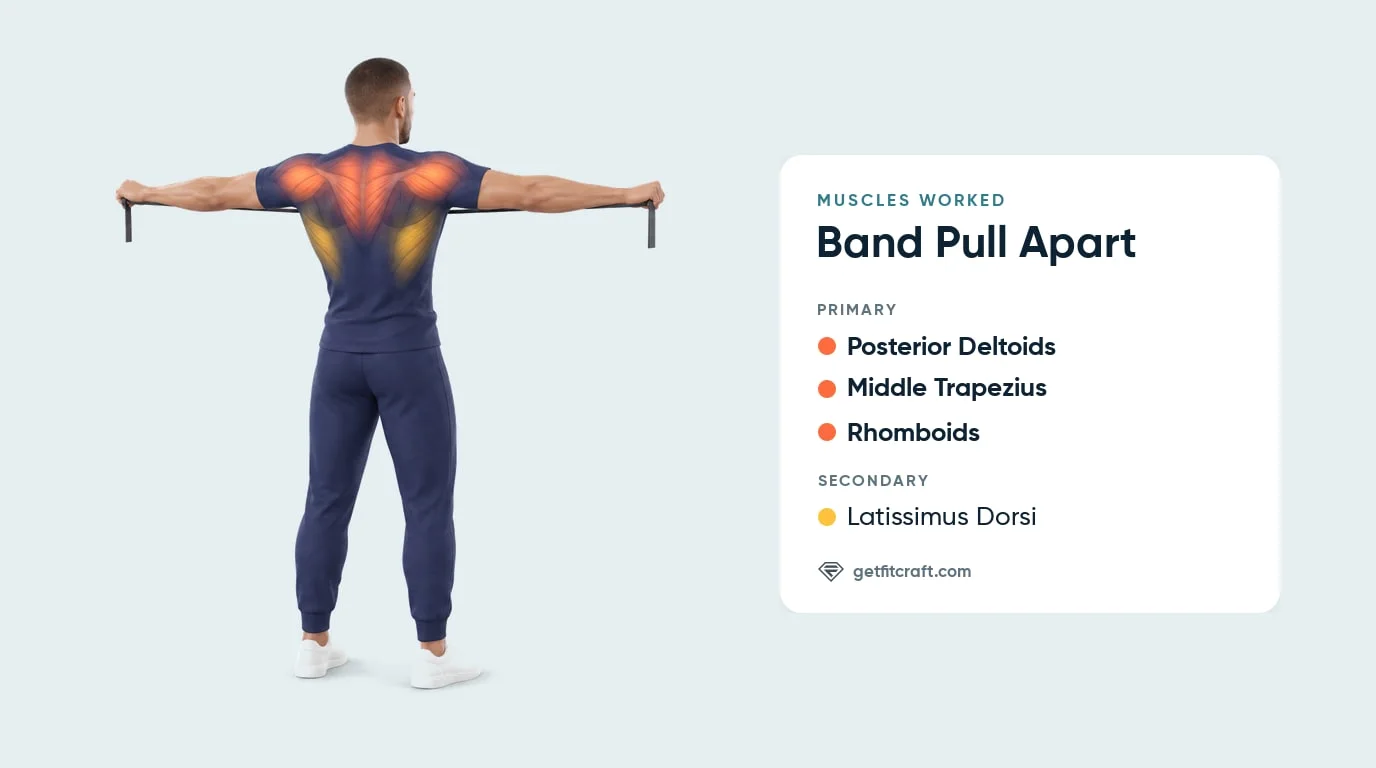
The main movers are the rear deltoids, the middle trapezius and the rhomboids. As your hands move apart, the rear delts horizontally abduct the shoulders, sweeping the arms out to the sides, while the middle traps and rhomboids pull the shoulder blades together toward the spine. The lats help draw the arms back and keep the shoulders pulled down, away from your ears. On the return, those same muscles control the band eccentrically.
Stand tall for the whole set. If you have to lean back or flare your ribs to finish a rep, the band is too heavy.
Fukunaga et al. (2022) measured shoulder muscle activity in 10 men doing band pull aparts at a moderate effort. In the palms-down pull straight out to the sides, the middle trapezius was the most active of the five muscles measured (61.5% of its maximum) and the rear deltoid reached 48.3%. The study did not measure the rhomboids or lats. The upper trapezius was nearly as active as the middle trapezius (59.6%), which is why the cues keep your shoulders down, away from your ears. Turning the palms up raised infraspinatus (rotator cuff) activity, and pulling on a diagonal upward raised the activity of most muscles.
Step-by-Step: How to Do a Band Pull Apart
- Choose a light band. Start with a band you can control for at least 12 clean reps. A wider grip makes the first set easier and lets you feel the movement before adding tension.
- Set your posture. Stand tall with feet about hip-width to shoulder-width apart, ribs down, and eyes forward. Hold the band with an overhand grip, palms down, and raise your arms straight out in front of you at shoulder height, hands about shoulder-width apart or a little wider, so the band is just taut.
- Pull from the shoulder blades. Keeping your elbows straight and your arms at shoulder height, move your hands out to the sides until your arms make a T, squeezing your shoulder blades together. Breathe out as you pull. Form tip: keep your shoulders down, away from your ears.
- Pause at the clean end range. Stop when the band reaches your chest or your farthest controlled position. Hold for a beat without shrugging, leaning back, or craning the neck.
- Return slowly. Let your arms come back to the front over 1 to 2 seconds, breathing in as they return. Move both arms at the same speed and height, reset your posture, and repeat.
Get this exercise in a personalized workout
FitCraft, our mobile fitness app, uses its AI coach Ty to program compound strength exercises like this into your plan at the right volume and intensity, based on your level, goals, and equipment. Ty was designed and trained by Domenic Angelino, MPH (Brown University) and NSCA-CSCS, with research published in the Journal of Strength and Conditioning Research and Medicine & Science in Sports & Exercise.
Take the Free Assessment Free • 2 minutes • No credit card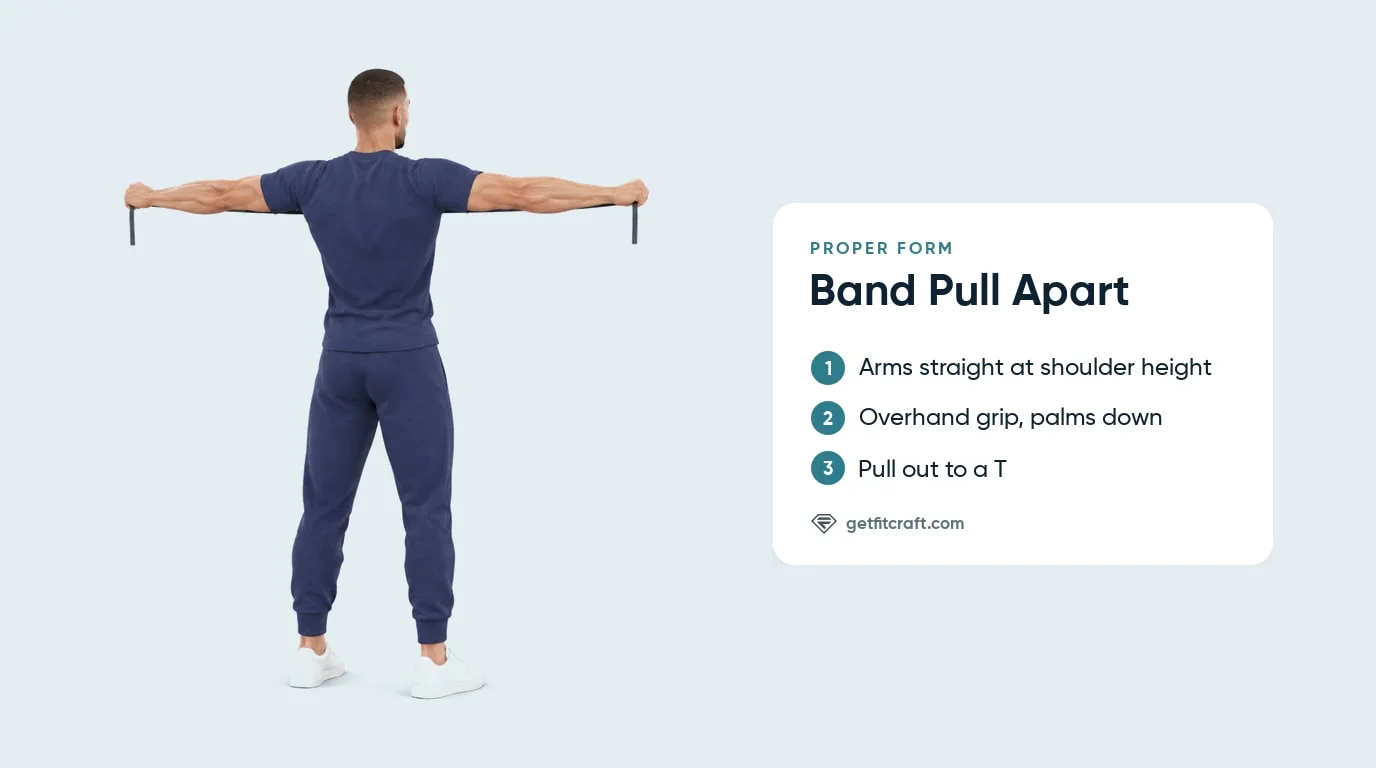
Common Mistakes
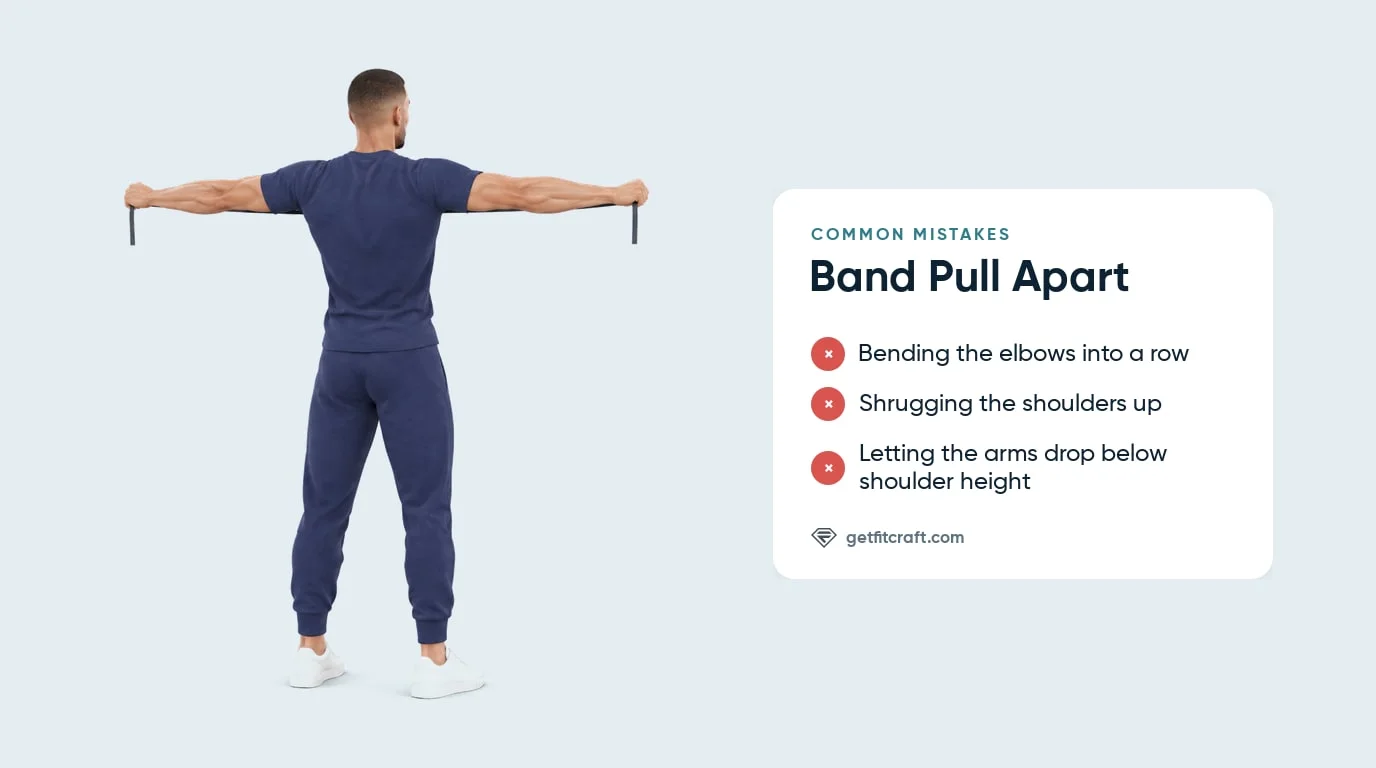
Bending the Elbows
What it looks like: The elbows fold as the band stretches, turning the exercise into a short row.
Why it's a problem: The pull apart is a straight-arm exercise. Bending the elbows shortens the lever and turns it into a different movement.
The fix: Keep your elbows straight for the whole rep. If you can't finish that way, use a lighter band or wider grip.
Shrugging the Shoulders
What it looks like: The shoulders climb toward the ears as the band gets harder.
Why it's a problem: Shrugging shifts the work toward the upper traps and neck instead of the middle traps, rear delts, and shoulder-blade muscles.
The fix: Pull the shoulders gently down before each rep. Think long neck, wide collarbones, then squeeze the shoulder blades back.
Dropping the Arms
What it looks like: The hands drift down toward the waist as the band stretches, so the arms finish below shoulder height.
Why it's a problem: The pull apart is done with the arms at shoulder height, and letting them drop changes the movement.
The fix: Keep your arms at shoulder height from start to finish, so the band reaches your chest at the end of the pull.
Using Too Much Band Tension
What it looks like: You lean back, flare the ribs, snap the band, or lose range after a few reps.
Why it's a problem: Heavy tension hides the target muscles behind compensation. The exercise should feel controlled and precise.
The fix: Move your hands farther apart on the band or choose a lighter band. Earn heavier tension after you can pause each rep cleanly.
Rushing the Return
What it looks like: The band pulls your hands together fast, and the shoulder blades lose position between reps.
Why it's a problem: The eccentric return is part of the training stimulus. Skipping it reduces control and makes the next rep sloppy.
The fix: Use a 1-second pull, a brief pause, and a 1 to 2 second return. End the set when that tempo breaks.
Band Pull Apart Variations: Regressions and Progressions
Wider Grip Pull Apart
Move your hands farther apart on the band. This lowers tension and is the best starting version if your elbows bend or your shoulders shrug.
Standard Overhand Pull Apart
Use a grip a little wider than your shoulders, with palms facing down. This is the version in the FitCraft app and the baseline for most warmups, accessory sets, and posture breaks.
Underhand Pull Apart
Turn the palms up while keeping the same shoulder-height path. Palms up shifts more of the work to the infraspinatus (a rotator cuff muscle), while palms down favors the rear deltoids (Fukunaga et al., 2022).
Overhead Pull Apart
Raise the band overhead and pull apart from that position. Use a much lighter band because working with your arms overhead makes the pull harder for your shoulders.
Narrow-Grip Pull Apart
Bring the hands closer together to increase tension. Add this only after you can keep the elbows long and pause at end range with the standard version.
When to Avoid or Modify Band Pull Aparts
Band pull aparts are safe for most healthy adults, but shoulder and neck symptoms deserve attention. Always consult your physician or physical therapist if you are returning from injury, managing chronic pain, or unsure whether band work fits your current plan.
- Shoulder pain or pinching. Stop the set. Next time, use a lighter band, wider grip, or shorter range, and if the pinching comes back, swap in W raises or a clinician-approved rehab drill.
- Recent shoulder, neck, or upper-back injury. Wait for clearance before adding loaded shoulder abduction. Start with very light tension and controlled range.
- Numbness, tingling, or radiating symptoms. Skip the exercise until a qualified provider checks the symptoms. Band tension should never create nerve-like sensations.
- Uncontrolled hypertension or known cardiovascular disease. Keep the band light, breathe normally, and avoid long breath holds during high-rep sets.
- Pregnancy, postpartum return, or active diastasis recti. Use gentle tension, stay upright, and avoid hard bracing. Pair with lower-intensity core basics like deadbugs or bird dogs when cleared.
- Poor scapular control under fatigue. If the shoulders shrug or the ribs flare late in a set, stop there. Use forearm planks to build trunk control that carries over to cleaner upper-body work.
Related Exercises
- Same upper-back target: Bent-over rows and inverted rows build bigger pulling strength around the same shoulder-blade pattern.
- Shoulder-girdle control: W raises, Y raises, and T raises train the rear shoulder and shoulder-blade positions that make pull aparts feel cleaner.
- Lat and pullover pattern: Overhead pullovers and stiff-arm pulldowns add shoulder-extension work that pull aparts don't cover well.
- Pressing balance: Chest press and shoulder press pair well with pull aparts when you want push-pull balance.
- Core foundation: Deadbugs, bird dogs, and forearm planks teach the rib and trunk position that keeps band work strict.
How to Program Band Pull Aparts
Ratamess et al., 2009 outlines progressive resistance training through load, volume, rest, and weekly frequency. For band pull aparts, keep the load modest and use clean reps, pauses, and frequency as the main progression tools.
| Level | Sets x Reps | Rest between sets | Frequency |
|---|---|---|---|
| Beginner | 2-3 x 12-20 | 45-60 seconds | 2-4 sessions/week |
| Intermediate | 3-4 x 15-25 | 45-75 seconds | 3-5 sessions/week |
| Advanced | 3-5 x 15-30 or paused reps | 60-90 seconds | 3-6 sessions/week |
Place band pull aparts early in an upper-body warmup before pressing, between pressing sets as low-fatigue balance work, or late in a workout as a rear-delt accessory. They also work well as a short desk-break drill when the band is light.
Use a form floor over rep targets. End the set when the elbows bend, the shoulders shrug, the neck tightens, or the band return gets fast and uneven.
FitCraft, our mobile fitness app, includes the pull apart as a beginner exercise with an interactive 3D demonstration. Keep pull aparts strict and repeatable so the work supports your bigger lifts instead of adding shoulder fatigue.
Frequently Asked Questions
What muscles do band pull aparts work?
Band pull aparts mainly work the rear deltoids, middle trapezius and rhomboids, with the lats assisting. In an EMG study of the palms-down pull apart, the middle trapezius was the most active of the five muscles measured.
Are band pull aparts good for posture?
They can help because they train scapular retraction and posterior-shoulder endurance. They work best as part of a balanced plan that also includes rows, pressing, mobility work, and enough breaks from long rounded sitting positions.
How many band pull aparts should I do?
Start with 2 to 3 sets of 12 to 20 clean reps. Use a light band and stop the set when your elbows bend, shoulders shrug, or the band snaps back instead of returning under control.
What resistance band should I use for pull aparts?
Use a light band first. You should be able to reach chest height, pause, and return slowly for at least 12 reps. If you need to bend your elbows or lean back, the band is too heavy.
Can I do band pull aparts with shoulder pain?
Stop if the movement causes shoulder pain, pinching, or numbness, and skip them if you have symptoms after a recent shoulder or neck injury. For strain that is not pain, try a lighter band, wider grip, shorter range, or a physical therapist-approved alternative.