The prone W raise is a low-load shoulder stability exercise done face down with elbows bent to 90 degrees. It targets the rear delts, rhomboids, middle trapezius, lower trapezius, and rotator cuff external rotators. The defining cue is simple: keep the W shape, pull the shoulder blades down and together, then lift the forearms without shrugging. Start with bodyweight and short pauses, then progress to longer holds, very light dumbbells, or a full YTW circuit.
The prone W raise is one of the cleanest ways to train scapular retraction and shoulder external rotation without heavy loading. It works well as a warmup before pressing, a shoulder-prep drill before overhead work, or an accessory exercise for anyone whose upper traps take over during rear delt work.
Quick Facts: Prone W Raises
- Equipment needed: None; exercise mat optional
- Difficulty: Beginner to intermediate
- Modality: Strength and shoulder stability
- Body region: Upper back and shoulders
- FitCraft quest category: Strength
Muscles Worked
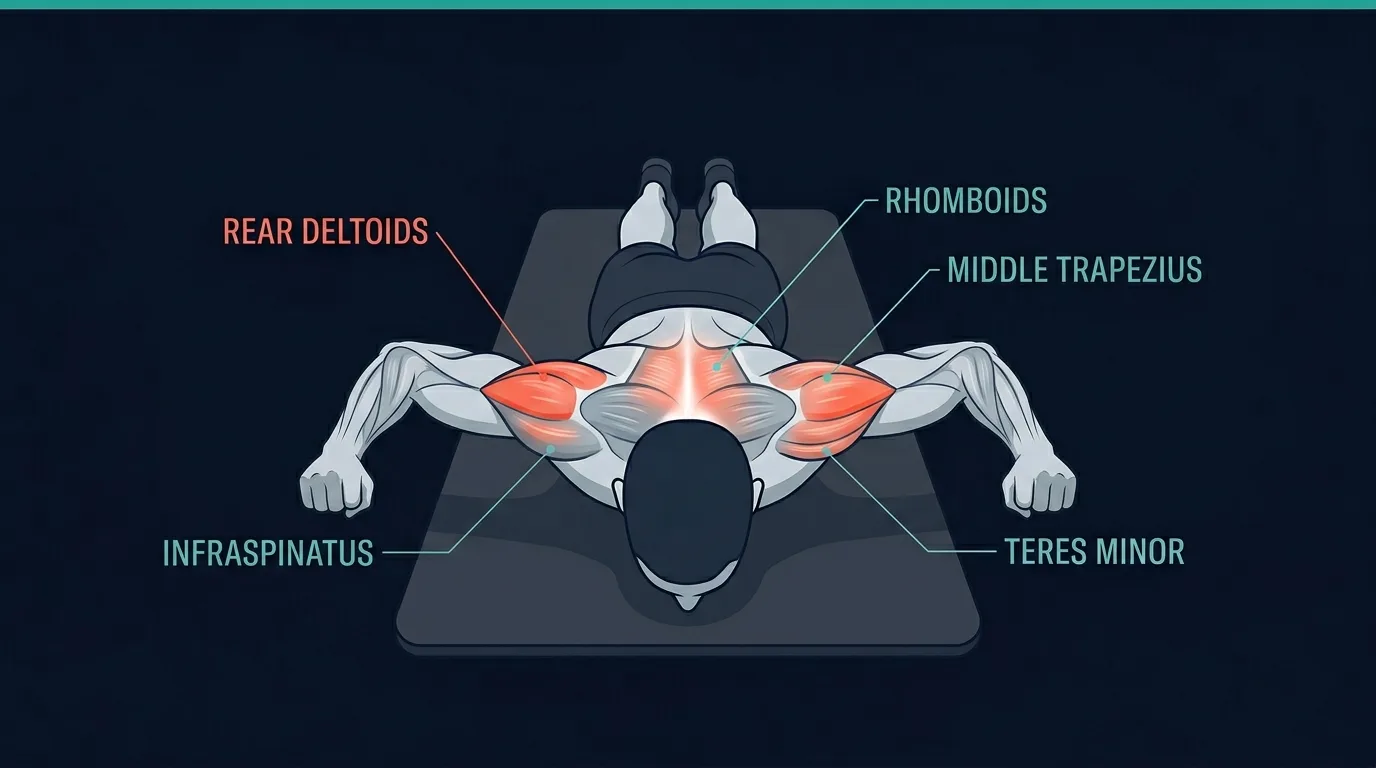
Primary movers: The rear deltoids, rhomboids, and middle trapezius drive the lift as you raise the forearms and pull the shoulder blades together. They shorten on the lift and lengthen under control as you lower back to the floor.
Secondary movers: The lower trapezius helps pull the shoulder blades down instead of letting them shrug. The infraspinatus and teres minor, two rotator cuff external rotators, help turn the upper arm outward while the elbows stay bent.
Stabilizers: The deep rotator cuff, serratus anterior, spinal extensors, glutes, and abdominal wall keep the shoulder centered and the torso quiet. The exercise is light, but it still needs a neutral neck, steady ribs, and a small amount of trunk tension.
Mechanism: The bent-elbow W shape shortens the lever compared with a straight-arm T raise, so you can focus on the shoulder blade and external rotation pattern instead of chasing height. If your hands rise while your neck stays relaxed, the right muscles are doing the job.
Step-by-Step: How to Do a Prone W Raise
- Lie face down and set your arms. Lie prone on a mat or firm floor. Bend both elbows to 90 degrees, place your upper arms out to the sides near shoulder height, and point your forearms toward your head so your arms make a W from above.
Coach Ty's cue: "Set the W before you lift. Elbows bent, shoulders away from your ears."
- Brace gently. Rest your forehead lightly on the floor or keep your gaze straight down. Brace your abs, lightly squeeze your glutes, and keep your ribs from flaring.
Coach Ty's cue: "Stay long through the neck. The floor is there to keep you honest."
- Lift your forearms off the floor. Squeeze your shoulder blades down and together, then lift your forearms. Keep the elbows bent and let the movement come from scapular retraction plus shoulder external rotation.
Coach Ty's cue: "Hands rise because the shoulder blades move, not because your neck helps."
- Pause at the top. Hold for 1 to 2 seconds. You should feel the rear shoulders and the middle of your upper back, with no pinching in the front of the shoulder.
Coach Ty's cue: "Squeeze the shoulder blades into your back pockets."
- Lower with control. Lower over 2 to 3 seconds until your forearms touch down lightly. Keep the W shape and start the next rep without fully relaxing your shoulders.
Coach Ty's cue: "Soft touch, then lift again. Keep the pattern clean."
Get this exercise in a personalized workout
FitCraft, our mobile fitness app, uses its AI coach Ty to program isolation exercises like this into your plan at the right volume and intensity, based on your level, goals, and equipment. Ty was designed and trained by Domenic Angelino, MPH (Brown University) and NSCA-CSCS, with research published in the Journal of Strength and Conditioning Research and Medicine & Science in Sports & Exercise.
Take the Free Assessment Free • 2 minutes • No credit card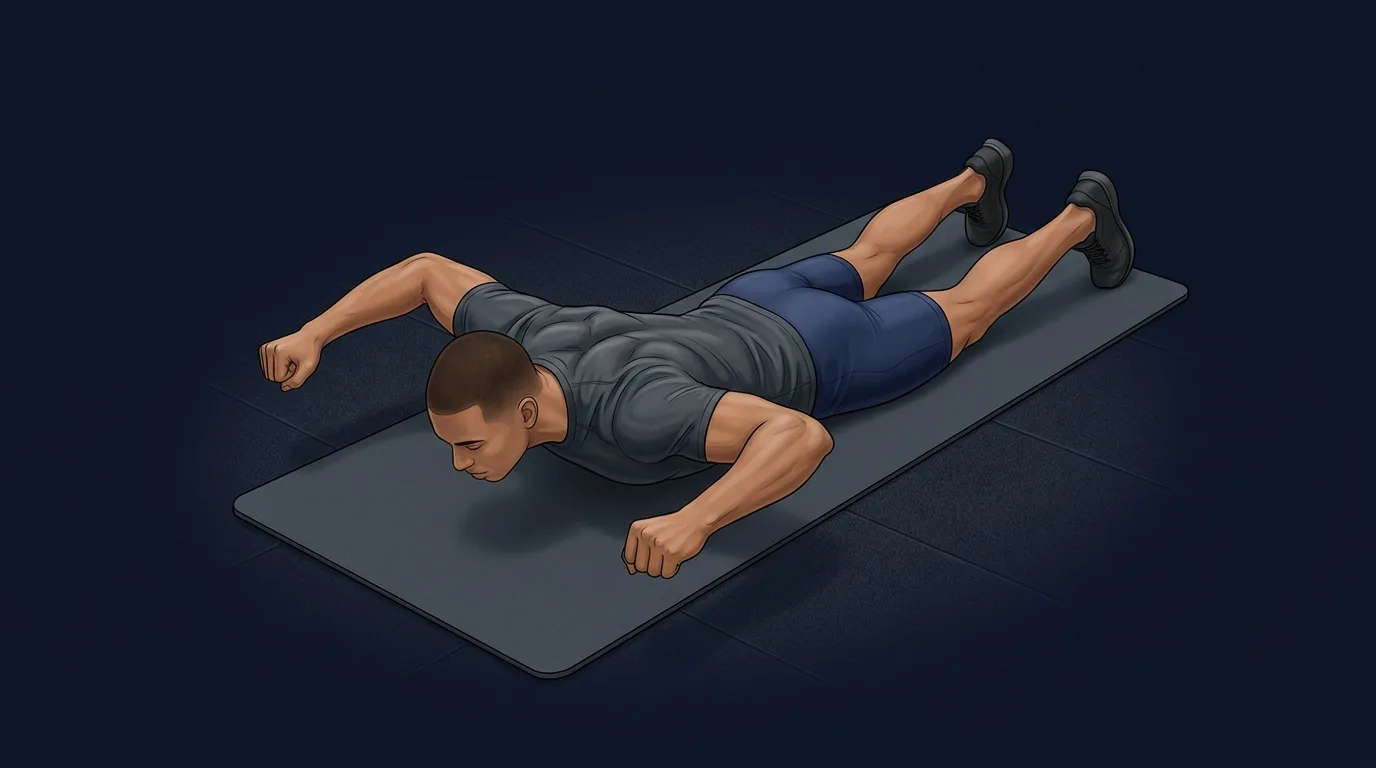
Common Mistakes and How to Fix Them
Shrugging the Shoulders Up
What it looks like: The upper traps hike toward the ears as the forearms leave the floor.
Why it's a problem: Shrugging shifts the work into the neck and upper traps. The rear delts, rhomboids, and middle traps miss the clean retraction pattern you are trying to train.
The fix: Pull your shoulders away from your ears before every rep. If the shrug returns, reduce the height of the lift and make the top pause smaller.
Losing the W Shape
What it looks like: The elbows drift behind the shoulders, the hands move too far forward, or the arms straighten into a T raise.
Why it's a problem: The W raise depends on a bent-elbow position. When that shape changes, the external rotation demand changes with it.
The fix: Set the elbow bend before each rep. Think elbows wide, forearms forward, thumbs rotating gently up as you lift.
Lifting the Chest Off the Floor
What it looks like: The rib cage peels away from the mat and the lower back arches to create extra height.
Why it's a problem: The low back starts helping, and the shoulder muscles no longer have to control the whole movement.
The fix: Keep the forehead down, squeeze the glutes lightly, and accept a smaller range. Height matters less than a clean shoulder-blade squeeze.
Skipping the External Rotation
What it looks like: The arms lift, but the forearms stay flat and the thumbs never rotate upward.
Why it's a problem: You lose the rotator cuff part of the exercise and turn the rep into a partial retraction drill.
The fix: Lift as if your thumbs are turning toward the ceiling. Keep the motion small and smooth.
Prone W Raise Variations: Regressions and Progressions
Isometric W Hold
Lift into the W position and hold for 10 to 20 seconds. This is the best regression if you lose position during reps because it teaches where the top position should feel.
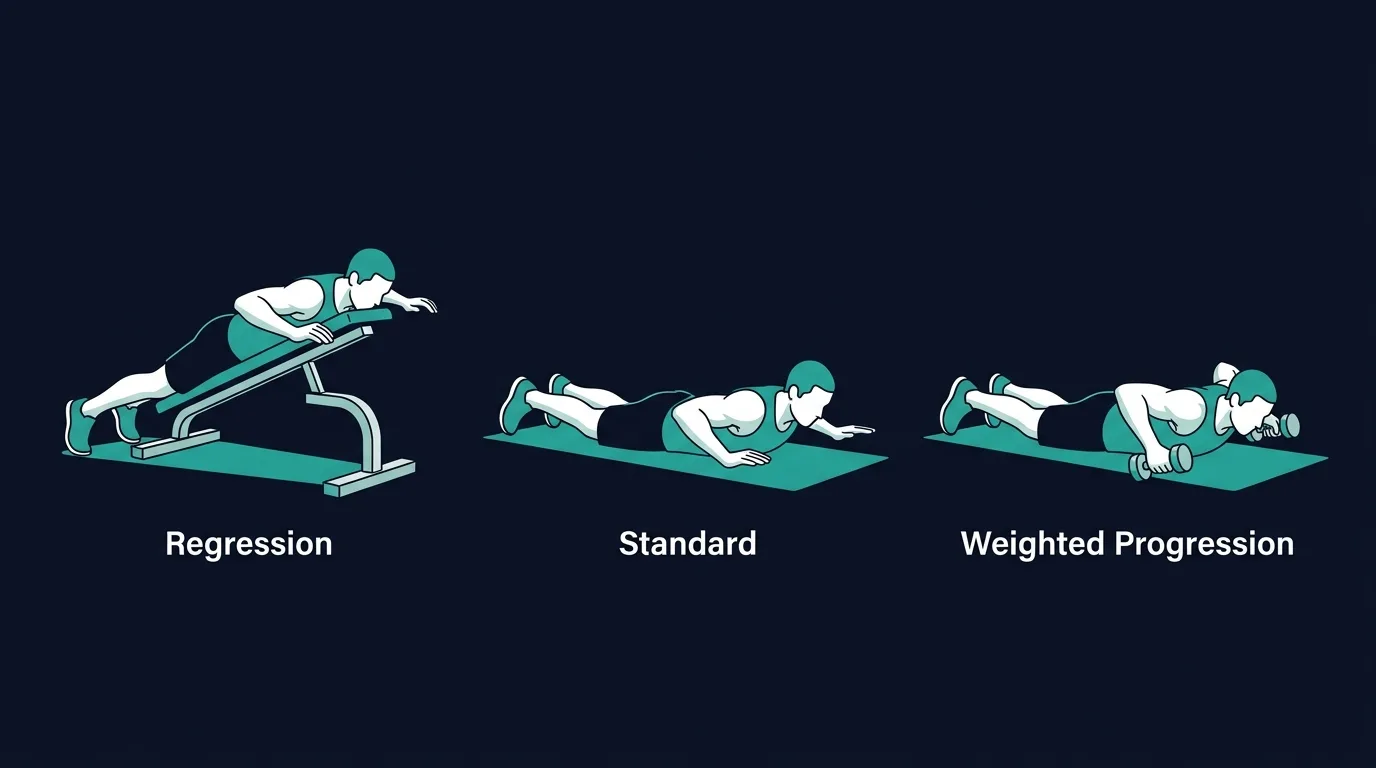
Incline Bench W Raise
Lie chest-down on a low incline bench with the arms hanging slightly off the sides. The bench gives you a little more room to move while keeping the same scapular pattern.
Weighted Prone W Raise
Hold 1 to 3 pound dumbbells and keep the same slow tempo. The load should feel almost too light at first because the target muscles are small and the shoulder position is precise.
YTW Circuit
Move from Y raises to T raises to prone W raises, then finish with I raises. Use this as a shoulder-prep circuit before rows, pressing, or overhead work.
When to Avoid or Modify Prone W Raises
Prone W raises are safe for most healthy adults, but a few shoulder and neck symptoms deserve a lighter variation or a clinician's input. Always consult your physician or physical therapist when pain changes your mechanics.
- Sharp shoulder pain or pinching. Stop if the front or top of the shoulder pinches during the lift. Use a smaller range, try isometric W holds, or swap in rotator cuff stretches until symptoms are evaluated.
- Recent shoulder surgery or acute rotator cuff injury. Get clearance before loaded external-rotation work. Rehab usually moves from isometrics to active range to light resistance.
- Neck tension that takes over the set. If the upper traps or neck dominate, reduce the lift height and practice shoulder rolls before the W raise.
- Low-back discomfort in the prone position. Keep the glutes lightly engaged and the ribs heavy. If that still bothers your back, use an incline bench or skip the prone version.
- Loss of arm position under fatigue. End the set when the W shape disappears. Quality matters more than extra reps for this drill.
Related Exercises
- Same scapular series: Y raises, T raises, and I raises train nearby shoulder-blade patterns.
- Shoulder and scapular health: Pull-aparts add band resistance for rear delts and mid-back control.
- Deltoid isolation: Lateral raises and front raises train other deltoid fibers with external load.
- Mobility pairing: Seated rear delt stretches help open the back of the shoulder after upper-body training.
- Shoulder extension pattern: Overhead pullovers train shoulder control through a larger range with external load.
How to Program Prone W Raises
Ratamess et al., 2009 outlines progression models for resistance training based on training status, volume, intensity, rest, and frequency. Prone W raises are low-load isolation work, so clean reps and positional control matter more than heavy resistance.
| Level | Sets x Reps | Rest between sets | Frequency |
|---|---|---|---|
| Beginner | 2-3 x 10-15 | 45-60 seconds | 2-3 sessions/week |
| Intermediate | 3-4 x 8-15 | 60-90 seconds | 2-4 sessions/week |
| Advanced | 3-4 x 6-15 with pauses or light load | 60-120 seconds | 2-4 sessions/week |
Place prone W raises early as shoulder prep before pressing, rows, pull-ups, or overhead work. If you are using them as accessory isolation work, place them late in the session after larger upper-body lifts.
Use a form floor over rep targets. Stop the set when your neck takes over, your chest lifts, your elbows straighten, or the W shape drifts.
Frequently Asked Questions
What muscles do prone W raises work?
Prone W raises work the rear deltoids, rhomboids, middle trapezius, lower trapezius, and the external rotators of the rotator cuff. The bent-elbow W position makes the movement more rotational than a prone T raise or Y raise.
Can I do prone W raises with shoulder pain?
Do not push through sharp shoulder pain, pinching, numbness, or symptoms that get worse with external rotation. Use a smaller range, switch to isometric W holds, or get guidance from a physical therapist if pain changes your form.
Why do prone W raises lying down instead of standing?
The prone position lets gravity load the rear shoulder and scapular muscles as you lift away from the floor. Standing W motions can still teach posture, but they do not challenge the same muscles in the same way unless you add a band or cable.
Do I need weights for prone W raises?
No. Bodyweight is enough for most beginners when the pause is strict. If you can keep the W shape without shrugging, progress with 1 to 3 pound dumbbells, longer holds, or a YTW circuit.
How do W raises compare with Y raises and T raises?
The Y raise uses straighter arms overhead and biases the lower trapezius. The T raise works with arms out to the sides and emphasizes rear delts and mid-back retraction. The W raise keeps the elbows bent, adding a clear external rotation demand.