Every wellness account on the internet has an opinion on breathing. Some say 4-7-8. Some say box. Some say cyclic sighing. Some say Wim Hof. The claims range from "it lowers cortisol" to "it changes your nervous system" to "it beats meditation." Most of that is downstream of one small research corner that has actually grown solid in the last five years.
The 2023 meta-analysis in Scientific Reports by Fincham and colleagues pooled 12 randomised trials with 785 adults and found breathwork significantly reduced self-reported stress. A Stanford trial the same year found a 5-minute daily practice beat mindfulness meditation on mood after 28 days. A 2017 trial in Frontiers in Psychology measured cortisol drops and attention gains after eight weeks. The signal is real. It is also modest, and understanding the size and shape of it matters more than the technique name on the top of the video.
This piece walks through the studies that actually earned their place in this literature. Which effects replicate. Which do not. What the mechanism is (spoiler: it is mostly about slowing the rate and lengthening the exhale, not the specific counting pattern). And a simple protocol the evidence supports.
What Diaphragmatic Breathing Does Physiologically
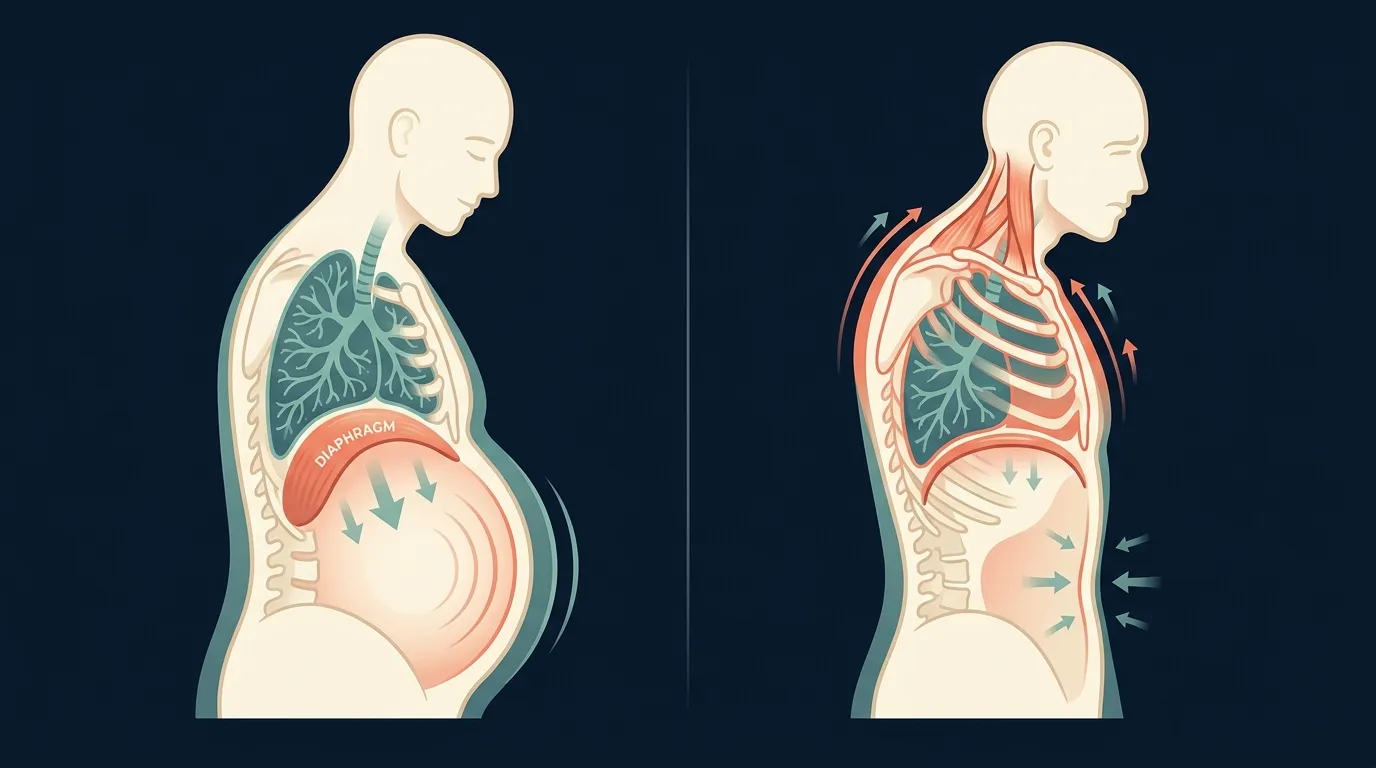
The diaphragm is the primary muscle of respiration. When it contracts on the inhale, it descends into the abdomen, pulling the lung bases open and creating negative pressure that draws air in. In relaxed diaphragmatic breathing, the belly rises before the chest. In stressed chest breathing, the accessory muscles of the neck and shoulders do more of the work, breaths get shorter and faster, and the mechanical rhythm shifts.
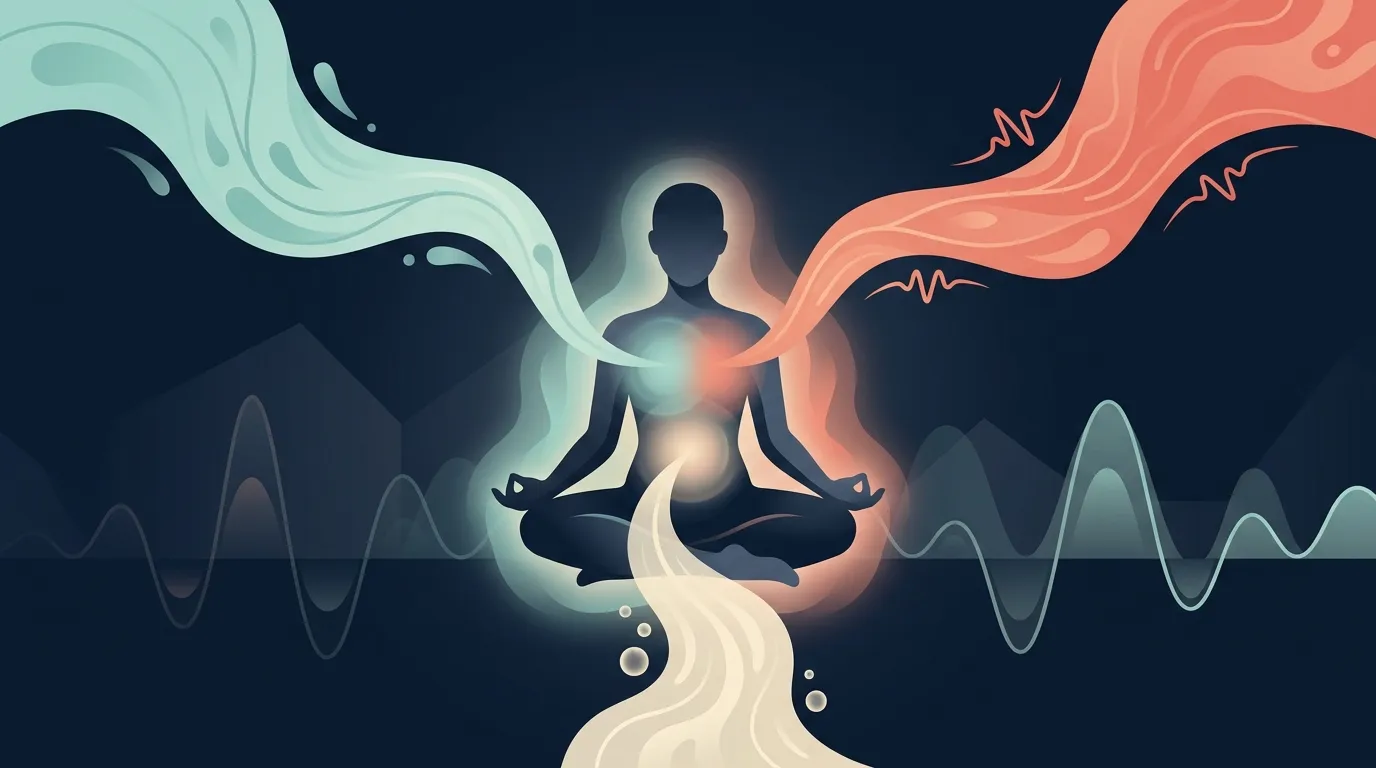
The physiological cascade downstream of slow, deep, exhale-extended breathing has three main threads. First, the extended exhale increases vagal tone through baroreceptor and pulmonary stretch-receptor signalling, which raises heart rate variability and shifts the autonomic balance toward the parasympathetic side. Second, slower respiratory rate (5 to 6 breaths per minute) sits near the resonance frequency of the cardiovascular system, where heart rate oscillations synchronise with breathing rhythm and produce large HRV peaks. Third, sustained practice appears to modulate hypothalamic-pituitary-adrenal (HPA) axis output, which shows up as lower salivary and blood cortisol.
The 2018 systematic review by Zaccaro and colleagues in Frontiers in Human Neuroscience pulled together electrophysiology, HRV, and psychological outcome data across dozens of slow-breathing studies. Their bottom line: slow breathing (which they defined as under 10 breaths per minute, with the well-documented resonance range around 5 to 6 breaths per minute) consistently increases heart rate variability and respiratory sinus arrhythmia and reduces symptoms of anxiety and stress. The mechanism is autonomic modulation via the extended exhale, not the specific counting pattern. That framing (rate and exhale length matter, brand name does not) simplifies the whole field.
The Research: What Trials Actually Found
Fincham et al. 2023: The Meta-Analysis
The single strongest piece of evidence in this literature is the 2023 Scientific Reports meta-analysis by Fincham and colleagues at Sussex and Oxford. They screened 12,606 records and included 12 randomised controlled trials (785 adult participants) comparing structured breathwork practices against non-breathwork active or passive controls.
Key findings:
- Self-reported stress dropped significantly with breathwork versus controls. The pooled effect was Hedges g of about 0.35, a small-to-medium effect size.
- Anxiety and depressive symptoms also improved, with smaller pooled effects (Hedges g around 0.32 and 0.40 respectively).
- Heterogeneity was moderate. Effects varied by breathwork type, dose, and control condition, but the direction was consistent.
- The evidence base is thin. Only 12 trials met inclusion criteria, most were small (median n around 40), and few had long follow-up. The authors called for larger, better-powered trials.
The honest read on this meta-analysis: breathwork works, the effect is real and statistically robust, and the size is modest. It is not a placebo. It is also not a psychiatric intervention. Think of it as one of the small, cheap, reliable levers that stacks with sleep, movement, and social connection to move your nervous-system baseline.
Balban et al. 2023: The Stanford Cyclic Sighing Trial
The most-cited recent trial in this space is Balban and colleagues (2023) in Cell Reports Medicine. The Stanford team randomised over 100 healthy volunteers across four groups: cyclic sighing (two nose inhales followed by a long mouth exhale), box breathing (4-second inhale, 4-second hold, 4-second exhale, 4-second hold), cyclic hyperventilation with retention (a Wim-Hof-style pattern), and mindfulness meditation. Everyone practiced 5 minutes daily for one month.
Results:
- All three breathwork arms outperformed mindfulness on positive affect improvement and respiratory rate reduction over the 28 days.
- Cyclic sighing was the strongest. It produced the largest gains in positive affect and the largest drop in resting respiratory rate. The extended exhale pattern seemed to matter most.
- Effects appeared after one session and grew across the 28 days, suggesting both an acute and cumulative benefit.
- Anxiety scores also dropped across the breathwork arms, with cyclic sighing again showing the biggest change.
The paper does not say cyclic sighing is uniquely magical. It says exhale-extended slow breathing beat mindfulness meditation at a matched 5-minute daily dose in this trial. Given the 12-RCT meta-analysis and the Zaccaro review both point to "slow rate, long exhale" as the mechanism, the Balban result is consistent with the rest of the field rather than an outlier.
Ma et al. 2017: Cortisol and Attention
Ma and colleagues (2017) in Frontiers in Psychology ran a controlled trial in 40 adults comparing an 8-week diaphragmatic breathing program (20 sessions total, real-time breathing-feedback device, target rate about 4 breaths per minute) with a matched control group. Outcomes were sustained attention (a computerised task), negative affect (mood questionnaire), and salivary cortisol before and after the intervention.
Findings:
- Salivary cortisol dropped significantly in the breathing group post-intervention. The control group did not change.
- Sustained attention improved on the computerised task. Reaction time variability was lower, hits were higher.
- Negative affect scores decreased in the breathing group across the 8 weeks.
The Ma trial is small (n=40) and uses a specialised feedback device most people will not have. But it is one of the few studies that measured cortisol directly rather than relying on self-report, and the cortisol drop is what makes it worth citing. It also shows that the attention benefit is not just subjective, it shows up on a controlled cognitive task.
Perciavalle et al. 2017: Cortisol and Mood in a Shorter Protocol
Perciavalle and colleagues (2017) in Neurological Sciences studied 38 adults (19 experimental, 19 control) doing a 10-week deep-breathing program (10 sessions, once per week, 90 minutes each). The breathing group showed reductions in salivary cortisol, improvements in self-reported mood on the Profile of Mood States questionnaire, and lower heart rate compared with the control group. It is a smaller trial than the Fincham-pooled data, but it replicates the cortisol-drop finding in a different population and dose.
Yau and Loke 2021: The Blood Pressure Review
Yau and Loke (2021) in Complementary Therapies in Clinical Practice reviewed 13 diaphragmatic breathing studies in prehypertensive and hypertensive adults. The synthesis found voluntary deep breathing produced small but consistent reductions in systolic blood pressure (roughly 3 to 8 mmHg depending on the protocol, with the higher end coming from device-guided sessions in the 15-to-30-minute-per-day range), along with lower heart rate and reduced anxiety.
Context for those numbers: a systolic drop of 5 mmHg is what a moderate aerobic exercise habit typically delivers. It is meaningful. It is not a substitute for prescribed antihypertensive medication, but it stacks additively with it. For blood pressure discussions in a related exercise context, see our isometric exercise and blood pressure research writeup.
Get an evidence-based plan built for you
FitCraft, our mobile fitness app, pairs you with an AI coach who builds you a personalized plan around your goals, schedule, and fitness level. Every FitCraft program is designed by Domenic Angelino, MPH (Brown University) and NSCA-CSCS, with research published in the Journal of Strength and Conditioning Research and Medicine & Science in Sports & Exercise.
Take the Free Assessment Free • 2 minutes • No credit cardWhy This Matters for Your Fitness
Two threads connect breathwork to the rest of what a training program does.
The first is recovery. Between hard sessions, your ability to shift the autonomic system out of sympathetic dominance is what lets you recover fully by the next workout. Sleep does most of that work. Slow diaphragmatic breathing does a smaller, complementary version of it during the day. A 5-minute practice before bed, before a stressful meeting, or as a between-set reset during a strength workout is a small nudge in the parasympathetic direction. It is not going to replace poor sleep, but it will not fight it either.
The second is heart rate variability. Resting HRV is a proxy for how well your autonomic system can flexibly respond to stressors. It responds to training load, to sleep, to stress, and (based on the Zaccaro 2018 review) to sustained slow-breathing practice. If you track HRV through a wearable or ring, adding 5 to 10 minutes of daily slow breathing is a lever that tends to move that number over weeks, not days.
None of this makes breathwork a substitute for training or sleep. It is a low-cost, no-equipment, easy-to-stack addition. The Fincham meta-analysis effect size of about 0.35 is roughly what you would see from adding a single new habit. Real, replicable, and worth doing.
How to Actually Do It (What the Data Supports)
Translating the research into a usable protocol:
1. Slow the rate to 5 to 6 breaths per minute. That is the resonance range the Zaccaro et al. (2018) review identified as the sweet spot for autonomic effects. Practically: about a 10-second breath cycle. Do not force it. If 10-second cycles feel strained, start at 8 seconds and lengthen over weeks.
2. Extend the exhale. The exhale is where vagal activation happens. Whether that is 4-in / 6-out, 4-7-8, or cyclic sighing (two inhales, long exhale) matters less than "exhale longer than inhale." The Balban 2023 trial's cyclic sighing pattern is the strongest single technique, but any exhale-extended pattern is inside the effective range.
3. Breathe through the nose, into the belly. Diaphragmatic means the belly rises before the chest. A hand on the abdomen and a hand on the chest is the classic cue. Nasal inhalation adds a small extra benefit through nasal nitric oxide autoinhalation and slower flow, though that effect is smaller than the rate and exhale-length effect.
4. Do 5 to 10 minutes a day, most days. The Balban Stanford dose is 5 minutes. The Ma et al. cortisol-drop dose is closer to 15 minutes per session across 20 sessions. Both worked. Consistency across weeks is more important than any single session length. Two 5-minute sessions on a busy day beats one skipped 15-minute session.
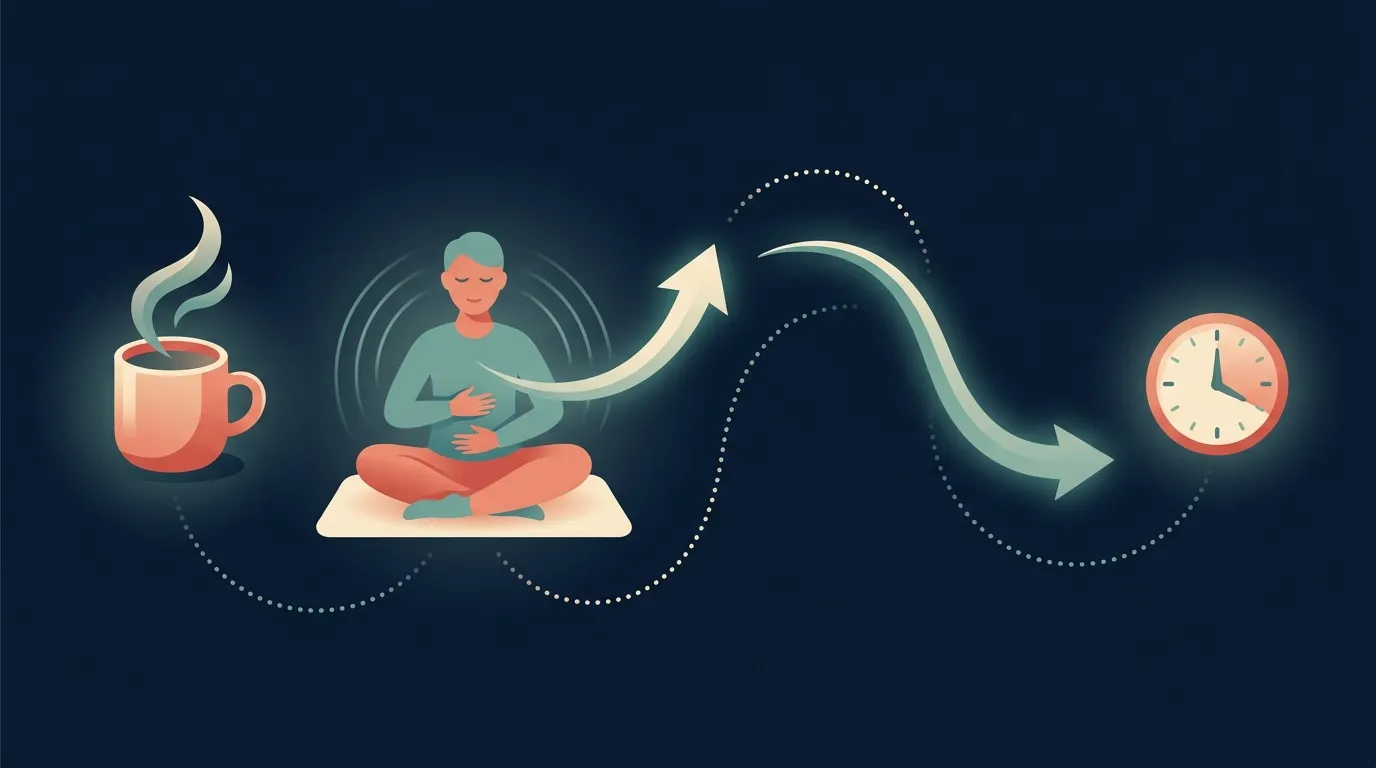
5. Anchor it to a trigger. The single biggest failure mode of breathwork is forgetting to do it. Attach the practice to something you already do daily: right after brushing teeth, in the car before you start driving, first 5 minutes of your commute, before your first coffee, or as your workout warm-up. The atomic habits framework for fitness covers the mechanic in more depth.
6. Do not chase the specific technique name. 4-7-8, box, cyclic sighing, coherent breathing, resonance breathing, all sit inside the same 5-to-6-breath-per-minute exhale-extended slow-breathing family. The differences between them are small compared with the difference between doing it and not doing it. Pick one you will actually do daily.
Common Breathwork Misconceptions
Misconception 1: "You have to do it for an hour to see benefits"
The Stanford Balban trial used a 5-minute daily dose and saw significant effects after one session, growing across 28 days. The Fincham meta-analysis pooled studies with doses ranging from 5 to 60 minutes and found the pooled effect held. Longer sessions do not appear to be required. Consistency across weeks is the load-bearing variable.
Misconception 2: "It is just placebo"
The Ma et al. 2017 trial measured salivary cortisol, an objective biomarker, and found it dropped in the breathing group but not the control group. The Yau and Loke 2021 review pooled trials that measured blood pressure with a cuff, another objective outcome, and found meaningful reductions. The Zaccaro 2018 review documented consistent HRV increases across studies. These are not self-report only. The physiological signal is real.
Misconception 3: "One breathing technique is scientifically proven best"
The Balban 2023 trial did find cyclic sighing outperformed box breathing and mindfulness on mood and respiratory rate, but the head-to-head data across all the popular patterns (4-7-8, box, resonance, coherent, cyclic sighing) is still sparse. What the aggregate evidence supports is the family of slow-paced exhale-extended breathing, not any single brand. The wellness industry sells specific techniques because they are marketable. The physiology does not care about the counting pattern nearly as much as the rate and the exhale length.
Misconception 4: "Deep breathing means big, fast, chest-heaving breaths"
Almost the opposite. Diaphragmatic breathing is slower, quieter, and belly-driven, not chest-lifting. Fast, forceful breathing is a different intervention (cyclic hyperventilation, tummo-style breathwork) with a different physiological profile, and while it has its own small research literature, it is not what the studies in this article describe. If your shoulders are rising and you feel lightheaded, that is not the pattern the research supports.
What the Research Suggests Going Forward
The synthesis across the strongest trials is consistent. Slow diaphragmatic breathing at 5 to 6 breaths per minute, with an exhale longer than the inhale, done for 5 to 15 minutes a day across several weeks, reliably produces small-to-medium reductions in self-reported stress, small drops in salivary cortisol, meaningful HRV gains, and clinically relevant blood pressure reductions in hypertensive adults. The 2019 JBI systematic review by Hopper and colleagues reached the same conclusion after synthesising the earlier literature.
Limitations worth flagging:
- Sample sizes are modest. The Fincham meta-analysis pooled 785 participants across 12 trials. Individual trials often have 20 to 60 subjects. Effect-size estimates are directional but not precise.
- Blinding is nearly impossible. Participants know whether they are being asked to breathe slowly. Placebo effects cannot be fully controlled. The objective cortisol and blood pressure results are the most defensible signal.
- Long-term follow-up is rare. Most trials run 4 to 12 weeks. What sustained years-long practice does to autonomic baseline is largely unstudied.
- Individual variability is high. Some people respond briskly, some do not. The average effect is real but the distribution around it is wide.
The honest bottom line: this is one of the highest-return, lowest-cost, most-portable habits in the entire wellness field. It stacks with sleep, movement, and social connection. It does not replace them. Five minutes a day, most days, exhale longer than inhale. That is the whole thing.
References
- Fincham GW, Strauss C, Montero-Marin J, Cavanagh K. "Effect of breathwork on stress and mental health: A meta-analysis of randomised-controlled trials." Scientific Reports. 2023;13(1):432. doi:10.1038/s41598-022-27247-y
- Balban MY, Neri E, Kogon MM, Weed L, Nouriani B, Jo B, Holl G, Zeitzer JM, Spiegel D, Huberman AD. "Brief structured respiration practices enhance mood and reduce physiological arousal." Cell Reports Medicine. 2023;4(1):100895. doi:10.1016/j.xcrm.2022.100895
- Ma X, Yue ZQ, Gong ZQ, Zhang H, Duan NY, Shi YT, Wei GX, Li YF. "The Effect of Diaphragmatic Breathing on Attention, Negative Affect and Stress in Healthy Adults." Frontiers in Psychology. 2017;8:874. doi:10.3389/fpsyg.2017.00874
- Zaccaro A, Piarulli A, Laurino M, Garbella E, Menicucci D, Neri B, Gemignani A. "How Breath-Control Can Change Your Life: A Systematic Review on Psycho-Physiological Correlates of Slow Breathing." Frontiers in Human Neuroscience. 2018;12:353. doi:10.3389/fnhum.2018.00353
- Hopper SI, Murray SL, Ferrara LR, Singleton JK. "Effectiveness of diaphragmatic breathing for reducing physiological and psychological stress in adults: a quantitative systematic review." JBI Evidence Synthesis. 2019;17(9):1855-1876. doi:10.11124/JBISRIR-2017-003848
- Perciavalle V, Blandini M, Fecarotta P, Buscemi A, Di Corrado D, Bertolo L, Fichera F, Coco M. "The role of deep breathing on stress." Neurological Sciences. 2017;38(3):451-458. doi:10.1007/s10072-016-2790-8
- Yau KKY, Loke AY. "Effects of diaphragmatic deep breathing exercises on prehypertensive or hypertensive adults: A literature review." Complementary Therapies in Clinical Practice. 2021;43:101315. doi:10.1016/j.ctcp.2021.101315
Frequently Asked Questions
Does diaphragmatic breathing actually reduce stress?
Yes, and the effect size is small-to-medium, not transformational. The largest analysis to date, a 2023 Nature Scientific Reports meta-analysis by Fincham and colleagues, pooled 12 randomised controlled trials with 785 adults and found breathwork significantly lowered self-reported stress compared with non-breathwork controls (Hedges g approximately 0.35). The 2019 JBI systematic review by Hopper and colleagues concluded diaphragmatic breathing decreased physiological stress markers such as blood pressure and salivary cortisol. The signal is real. It is a modest, reliable nudge, not a cure.
How long do I have to do it before it works?
Some effects appear after a single session; larger effects build over four to eight weeks. A 2023 Stanford trial by Balban and colleagues in Cell Reports Medicine found that a 5-minute daily breathwork practice produced measurable mood and respiratory-rate improvements after one session, with effects that grew across 28 days of daily practice. Cyclic sighing (two nose inhales, one long mouth exhale) beat mindfulness meditation on positive affect. The 2017 Ma et al. trial ran 20 sessions over 8 weeks and saw cortisol reductions and attention gains at that dose.
What is the actual breathing pattern that works?
Slow, nasal, belly-driven breathing with a longer exhale than inhale, at roughly 5 to 6 breaths per minute. The 2018 Zaccaro systematic review in Frontiers in Human Neuroscience identified this pattern as the one most consistently associated with parasympathetic activation, higher HRV, and lower cortisol. Practical templates that fit that spec include 4-in / 6-out breathing, 4-7-8 breathing, box breathing (4-4-4-4), and Balban's cyclic sighing. The mechanism is the extended exhale, which triggers baroreceptor and vagal signaling that shifts the autonomic system toward the parasympathetic side.
Can diaphragmatic breathing lower blood pressure?
In people with elevated blood pressure or mild hypertension, yes, by a small but clinically relevant amount. The 2021 literature review by Yau and Loke in Complementary Therapies in Clinical Practice synthesized 13 studies of diaphragmatic breathing in prehypertensive or hypertensive adults and found consistent reductions in systolic blood pressure (roughly 3 to 8 mmHg depending on protocol, with the higher end from device-guided 15-to-30-minute daily sessions), along with reduced heart rate and anxiety. That is in the same ballpark as adding an aerobic exercise habit or reducing sodium. It is not a substitute for prescribed antihypertensive therapy, but it stacks with it.
Is 4-7-8 breathing better than box breathing?
The direct head-to-head data is thin. The Balban 2023 Stanford trial did compare cyclic sighing (two inhales, long exhale) against box breathing (4-4-4-4) and cyclic hyperventilation, and cyclic sighing produced the largest positive affect gains and the largest reduction in respiratory rate. That does not make box breathing bad, it just makes exhale-extended patterns look slightly stronger in that one trial. The bigger predictor is whether you actually do it daily. Pick the pattern you will stick with. All three (4-7-8, box, cyclic sighing) sit inside the 5 to 6 breath-per-minute slow-breathing range the Zaccaro 2018 review identified.