
The honest answer to "how many days a week should I workout" is three to five, and the reason that range is so wide is that the research keeps pointing at weekly volume rather than weekly session count. How many hard sets and reps you do per muscle group across the whole week is what predicts your result. Frequency is just the shape you pour that volume into.
Which is good news, because it means the right number for you is mostly a scheduling decision. If four days is what your week can absorb without collapsing, four days is right. If three is the honest maximum, three works, as long as those three sessions are full-body and you actually finish them. The failure mode is not picking the wrong number. It is picking a number your life can't hold, missing sessions, and quitting by week five. Once you know your number, a workout plan maker can turn it into a full week of exercises, sets and reps.
This article gives you the number by goal, by experience level and by how much time you actually have. It covers what the frequency meta-analyses found, what the WHO minimum looks like in practice, how many rest days you need, and what to do when you can only train once or twice a week.
What Does the Research Say About Workout Frequency?
Twice a week per muscle beats once a week
The most cited finding on this question comes from Schoenfeld, Ogborn and Krieger (2016) in Sports Medicine. They pooled 10 studies that directly compared different weekly resistance training frequencies and measured muscle size by biopsy, imaging, circumference or densitometry. Higher frequency produced a larger hypertrophy effect size than lower frequency: 0.49 plus or minus 0.08 versus 0.30 plus or minus 0.07. Their conclusion, stated plainly, was that the major muscle groups should be trained at least twice a week to maximize muscle growth.
That single sentence is the most useful frequency rule on the internet, and it is the one most beginner programs get wrong. The classic bro split trains chest on Monday and does not touch it again until the following Monday. On a volume-matched basis, splitting that same work across two sessions produces more growth. Not double. But reliably more.
Once volume is equal, frequency stops mattering
Three years later the same lab tested the follow-up question with a much bigger dataset. Schoenfeld, Grgic and Krieger (2019) in the Journal of Sports Sciences pooled 25 studies and found no significant difference between higher and lower frequency on a volume-equated basis. That held for direct measures of muscle growth, for trained lifters specifically, and for upper body and lower body separately. Their conclusion: for a given training volume, you can pick your weekly frequency based on personal preference.
Ralston, Kilgore, Wyatt, Buchan and Baker (2018) in Sports Medicine - Open ran the strength version of the same analysis across 74 treatment groups from 12 studies. Volume-equated strength gain was essentially identical between low and high frequency (effect size 0.03, 95% CI -0.20 to 0.27). The one real exception was upper body strength, where training 3 or more days a week beat once a week by a clear margin (effect size 0.48, 95% CI 0.20 to 0.76). Lower body showed no significant frequency effect at all.
Put those three papers together and you get a rule you can actually use. Hit each muscle group at least twice a week. Past that, set weekly volume first and let frequency be whatever divides that volume into sessions you can finish. Our deeper training frequency research review works through the volume-versus-frequency mechanics in more detail if you want the full picture.
How much does health actually require?
Muscle is one goal. Not dying early is another, and the number there is lower than most people assume. The Bull et al. (2020) World Health Organization guidelines in the British Journal of Sports Medicine ask adults for 150 to 300 minutes of moderate-intensity aerobic activity per week, or 75 to 150 minutes of vigorous-intensity activity, plus muscle-strengthening activities involving all major muscle groups on 2 or more days a week.
For the strength half specifically, Momma, Kawakami, Honda and Sawada (2022) pooled 16 prospective cohort studies in the British Journal of Sports Medicine and found J-shaped associations: 10 to 17 percent lower risk of all-cause mortality, cardiovascular disease, total cancer and diabetes, with the maximum risk reduction landing at roughly 30 to 60 minutes per week of muscle-strengthening activity. Thirty to sixty minutes. Per week. Two short lifting sessions cover it.
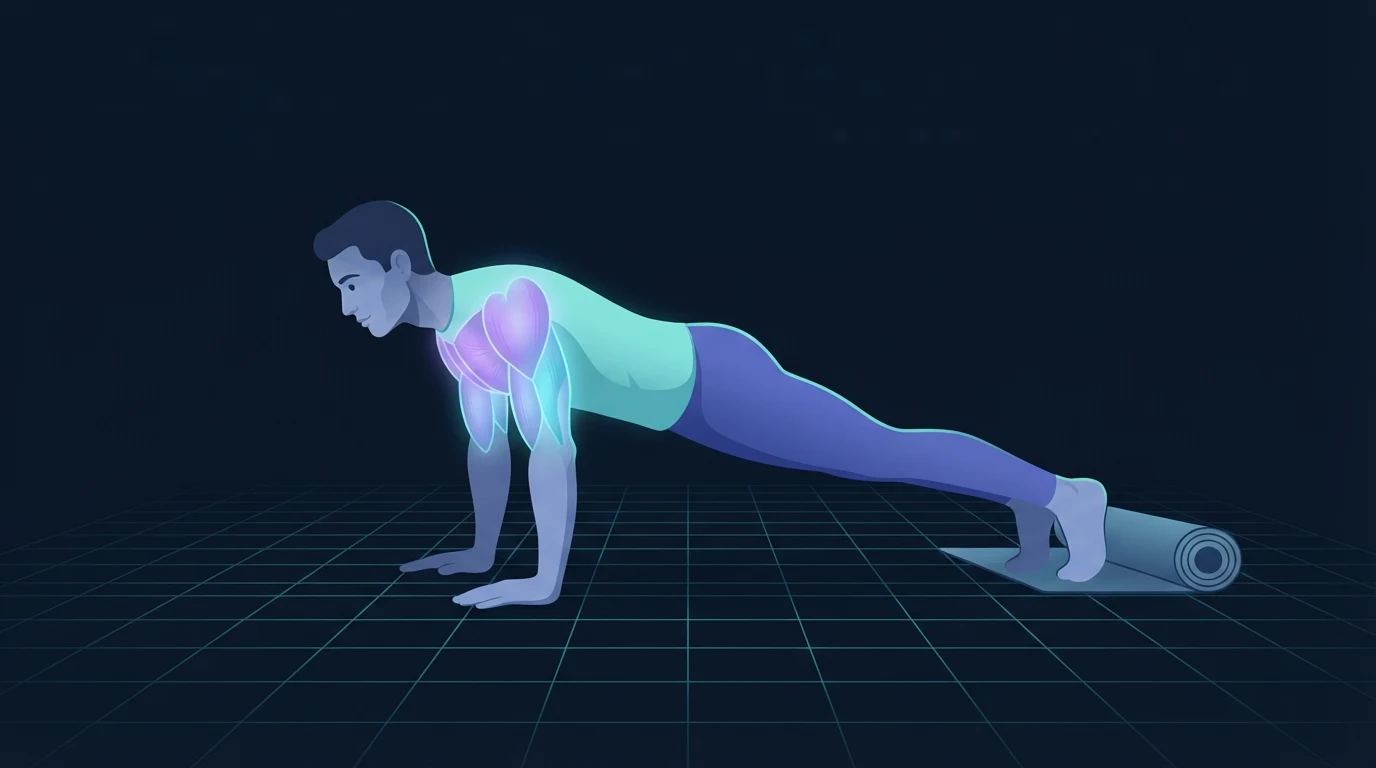
How Many Days a Week Should You Lift Weights?
Two to four lifting days covers nearly everyone. Here is what each option buys you, assuming the sessions are hard and the weekly volume is roughly matched. Once you have picked the number, the upper lower split is the cleanest way to fill three or four of those days without any session running past an hour.
| Lifting days per week | Structure that works | Each muscle trained | Best for |
|---|---|---|---|
| 2 days | Full body, 2 sessions | 2 times a week | Busy schedules, returning after a layoff, the evidence-backed minimum |
| 3 days | Full body, 3 sessions, a rest day between each | 3 times a week | Beginners and most intermediates. The best value on the list |
| 4 days | Upper and lower split, twice through | 2 times a week | Intermediates adding volume without longer sessions |
| 5 days | Push, pull, legs plus upper and lower | Roughly 1.7 times a week | Advanced lifters, or 4 lifting days plus a cardio day |
| 6 days | Push, pull, legs run twice | 2 times a week | Advanced lifters with short sessions and reliable recovery |
Notice what the third column does to the argument for more days. A 4-day upper and lower split and a 6-day push, pull, legs split both hit each muscle group twice a week. The 6-day version adds two more sessions and gets you more weekly sets, which is a real advantage, but it is a volume advantage, not a frequency advantage. If your total weekly sets are the same, the two schedules produce the same result. Our guide on choosing between full body and a split turns that volume-versus-frequency point into sample weeks for two through five training days.
Iversen, Norum, Schoenfeld and Fimland (2021) in Sports Medicine put a floor under this. Reviewing time-efficient program design, they concluded weekly training volume is more important than training frequency and recommended a minimum of about 4 weekly sets per muscle group in a 6 to 15 rep-max loading range. Four hard sets per muscle per week is not much. Two full-body sessions with compound lifts clears it.
Knowing what to do is the easy part.
FitCraft, our mobile fitness app, pairs you with an AI coach who builds you a personalized plan around your goals, schedule, and fitness level. Every FitCraft program is designed by Domenic Angelino, MPH (Brown University) and NSCA-CSCS, with research published in the Journal of Strength and Conditioning Research and Medicine & Science in Sports & Exercise.
Take the Free Assessment Free • 2 minutes • No credit cardHow Many Days a Week Should You Do Cardio?
The WHO target of 150 to 300 minutes of moderate aerobic activity per week divides cleanly a few ways. Three sessions of 50 minutes. Five sessions of 30 minutes. Or, at the vigorous end, two sessions of 40 minutes gets you to the 75-minute vigorous floor with room to spare. Brisk walking counts. So does cycling, swimming, rowing and anything else that raises your breathing and holds it there.
Cardio frequency is more flexible than lifting frequency because the recovery cost per session is lower at moderate intensity. Most people can do easy aerobic work daily without accumulating fatigue. Hard interval work is different and behaves more like lifting: two to three sessions a week is plenty, and stacking hard intervals on consecutive days is where people dig themselves into a hole.
If you are combining lifting and cardio in the same week, the order and separation matter more than the count. Hard cardio immediately before a lower body lifting session will cost you on the lifting. Our review on whether cardio kills gains covers the interference effect and how much separation actually removes it.
What Is the Right Number for Your Experience Level?
Experience changes the answer less than most programs imply, but it does change it. Beginners get a large response from a small dose, so extra days buy little. Advanced lifters need more total weekly volume to keep progressing, and past a certain point more volume needs more days to fit. Once you have picked the number, our three-day full body workout routine gives you the sessions to put in those slots, at bodyweight, dumbbell and band equipment tiers.
| Experience | Total training days | What the week looks like | Why |
|---|---|---|---|
| Complete beginner (0 to 3 months) | 3 | 3 full-body sessions, 30 to 45 minutes, one rest day between each | Every muscle gets 3 exposures a week. Rest days let you learn the movements without accumulating soreness |
| Early intermediate (3 to 12 months) | 3 to 4 | 3 full-body, or upper and lower twice, plus 1 to 2 walks or easy cardio days | Volume needs to climb. Splitting into upper and lower keeps sessions from running past an hour |
| Intermediate (1 to 3 years) | 4 to 5 | 4 lifting days on an upper and lower split, plus 1 cardio or mobility day | Enough room for 10 to 20 hard sets per muscle group per week without marathon sessions |
| Advanced (3 years plus) | 5 to 6 | Push, pull, legs run twice, or 5 lifting days plus conditioning | Weekly volume requirements are high enough that they need more sessions to fit |
| Over 50, or returning after a long break | 3 | 3 full-body sessions with a full rest day between each | Connective tissue adapts slower than muscle. The extra recovery day is the point, not a concession |
One caveat about the advanced row. More days is a symptom of needing more volume, not a cause of progress. If you are an intermediate adding a fifth and sixth day because you read that advanced lifters train six days, you are adding fatigue without adding the volume that justified it. Add sets first. Add days when sets stop fitting.

How Many Rest Days Do You Actually Need?
Two to three full rest days a week is the normal range for most people, and at least one is close to mandatory. But the more useful frame is rest per muscle group rather than rest per person. A muscle group generally needs about 48 hours before you train it hard again. That is why a 6-day training week works fine on a split that rotates body parts and falls apart on a program that hits the same lifts every day.
The practical test is not soreness. Soreness is a poor proxy for recovery. The tests that matter are whether your performance is holding (are the weights and reps going up over weeks, or drifting down), whether you are sleeping normally, and whether you feel like starting the session once you are actually in the room. Two of those three trending badly for a couple of weeks is your signal to cut a day or run a deload week.
Rest days do not have to be sedentary. Walking, easy cycling, mobility work and light activity all fit on a rest day and most people recover better with them than without. Our active recovery research review covers what the low-intensity work actually does and where the claims outrun the evidence.
What If You Can Only Train 1 or 2 Days a Week?
Then train 1 or 2 days a week, and stop treating it as a failed version of a better plan. O'Donovan, Lee, Hamer and Stamatakis (2017) in JAMA Internal Medicine followed 63,591 adults over 561,159 person-years and compared activity patterns. Adults who met the weekly activity target in only 1 to 2 sessions, the group the authors called weekend warriors, had a hazard ratio of 0.70 for all-cause mortality versus inactive adults, 0.60 for cardiovascular mortality and 0.82 for cancer mortality. Insufficiently active people who managed 1 to 2 sessions a week had a hazard ratio of 0.66 for all-cause mortality.
Read that second number again. People who did not even hit the weekly minimum, but who trained once or twice, got most of the mortality benefit. The steepest part of the whole dose-response curve is between zero sessions and one.
For muscle and strength on a 2-day week, the setup is straightforward. Two full-body sessions, compound lifts only, 3 to 4 hard sets per muscle group across the week, and progressive overload tracked session to session. That hits the twice-weekly threshold from Schoenfeld 2016 and clears the 4-sets-per-muscle floor from Iversen 2021. It will not build an advanced physique. It will build real strength and hold it indefinitely. If your constraint is session length rather than session count, our guide to how long a workout should be covers how short you can go before it stops working.
How Often Should I Lift Weights?
Two to four times a week, with every muscle group getting at least two exposures. That is the answer for building muscle and strength, and the table above shows the shapes that deliver it. What the table does not answer is the question most people actually have, which is what happens when the week goes wrong. Because the frequency research splits into two separate questions, and they have different answers: how often you need to lift to keep getting better, and how often you need to lift to keep what you have.
For getting better, the ceiling is volume, not sessions. Schoenfeld, Grgic and Krieger (2019) found no significant difference between higher and lower frequency once weekly volume was equated, and Ralston and colleagues (2018) reported the same for strength across 74 treatment groups, with upper body strength the one place where three or more days beat once a week outright. So the practical sequence is: set your weekly hard sets per muscle group first, then pick the number of days that divides those sets into sessions you can finish without dread. Adding a day without adding sets adds fatigue and nothing else.
For keeping what you have, the number is startlingly low. Spiering, Mujika, Sharp and Foulis (2021) reviewed the minimal maintenance dose in the Journal of Strength and Conditioning Research and found that in younger populations, strength and muscle size held for up to 32 weeks on as little as one session a week and one set per exercise, as long as the load stayed heavy. Older adults needed a bit more, roughly two sessions a week and two to three sets per exercise, again with intensity preserved. Their conclusion across both endurance and strength was that intensity is the variable you must not drop, even when frequency and volume fall a long way. Which is exactly the permission slip a busy month needs: when three days becomes one, keep the weight heavy, cut the sets, and you will arrive at the other side with your strength intact rather than starting over.
Put it together by what your calendar actually holds. Four days available: upper and lower twice through. Three days: full body three times, or upper and lower plus one full-body session. Two days: two full-body sessions built from compound lifts, which is the evidence-backed floor and clears both the twice-weekly threshold and the four-sets-per-muscle minimum. One day, for a stretch of weeks: treat it as maintenance, keep the loads heavy, and stop calling it a failed program. If you're new and want those days laid out for you, our workout schedule for beginners turns each option into a weekly calendar with the exercises, sets and rest for every day.
How to Tell Your Frequency Is Wrong
Three signals, in order of how often they show up.
You are missing sessions. The most common frequency mistake is picking a number that looks good on paper. If you planned 5 days and averaged 2.6 over the last month, your real frequency is 2.6 and your program is not the one you wrote down. Drop the plan to 3 days and hit 3. A completed 3-day program beats an aspirational 5-day one every time, and the honest way to find out which you are running is to count the last four weeks.
Your lifts are drifting down. If weights and reps have gone backwards for two to three consecutive weeks and nothing else in your life changed, you are accumulating more fatigue than you are clearing. Cut one day or take a deload week. This shows up most often in people who moved from 4 days to 6 without changing anything else about sleep or food.
You dread the sessions. Motivation is not the whole story, but a persistent, weeks-long aversion to training you used to enjoy is a real signal. Sometimes it means too many days. Sometimes it means the sessions got too long. Either way, the fix is usually less, not a bigger push.
The frequency question is really a consistency question wearing a lab coat, and consistency is the variable almost nobody solves by reading harder. If you have picked the right number three times and still not held it for a month, the missing piece is structure and accountability, not information. Our roundup of the best workout accountability apps compares the approaches that actually keep people showing up.
Bottom Line
Three to five days a week. Beginners take 3 full-body days, intermediates take 4 on an upper and lower split, and 5 makes sense when you want a dedicated cardio or mobility day. Hit each muscle group at least twice a week, because Schoenfeld 2016 found twice beat once, and past that let weekly volume decide, because Schoenfeld 2019 and Ralston 2018 both found frequency stops mattering once volume is equated. The health floor is lower than the muscle floor: the WHO asks for 150 to 300 minutes of aerobic work plus 2 strength days, and Momma 2022 put the peak mortality benefit of strength training at 30 to 60 minutes a week. If two days is all you have, take two, because O'Donovan 2017 shows the biggest jump on the entire curve is from zero sessions to one. Then keep it for a year. That part is worth more than any number in this article.
Frequently Asked Questions
How many days a week should I workout?
Three to five days a week fits almost everyone. Beginners do well on 3 full-body days with a rest day between each. Intermediate lifters usually move to 4 days on an upper and lower split. Five days suits people who want to add dedicated cardio or a mobility day. The WHO guidelines from Bull et al. (2020) set the floor at 150 to 300 minutes of moderate aerobic activity per week plus muscle-strengthening work on 2 or more days. The ceiling is set by recovery and by your calendar, not by a rule.
Is working out 3 days a week enough?
Yes, for strength, muscle and health outcomes, provided the sessions are full-body and hard enough. Three full-body days hit every major muscle group twice or three times per week, which clears the twice-weekly threshold Schoenfeld, Ogborn and Krieger (2016) identified as superior to once weekly. Momma et al. (2022) found the mortality benefit of muscle-strengthening activity peaks around 30 to 60 minutes per week in total, which three sessions cover easily. Three days is not a compromise. For most people with jobs it is the most repeatable option on the list.
Is it better to workout 4 or 5 days a week?
Neither is inherently better. Schoenfeld, Grgic and Krieger (2019) pooled 25 studies and found no significant difference between higher and lower training frequency once weekly volume was equated. Ralston et al. (2018) reported the same for strength. So the choice is a scheduling question: 4 days lets you run an upper and lower split with two rest days, and 5 days lets you shorten each session or add a cardio or mobility day. Pick the one you will still be doing in three months.
How many rest days a week do I need?
Two to three full rest days a week is the normal range, and at least one is close to mandatory. What matters more is rest per muscle group. A muscle group generally needs about 48 hours before it is trained hard again, which is why a 6-day training week works fine on a split that alternates body parts and fails on a program that hammers the same lifts daily. Rest days are also when the adaptation happens. Training is the stimulus, recovery is where the result gets built.
Can I get results working out only 1 or 2 days a week?
Yes, meaningfully. O'Donovan et al. (2017) followed 63,591 adults and found that people meeting the weekly activity target in only 1 to 2 sessions had a hazard ratio of 0.70 for all-cause mortality compared with inactive adults, which is close to what more frequent exercisers got. For muscle and strength, two full-body sessions a week already deliver most of the available progress. One day a week is enough to build strength and to hold what you have, but progress will be slower than on two days.
Should I work out every day?
You can move every day, but you should not train hard every day. Daily walking, mobility work and easy cardio are fine and useful. Daily hard resistance training on the same muscle groups is not, because the muscle needs roughly 48 hours to recover and rebuild between hard sessions. If you want 6 or 7 days of activity, structure it: 3 to 4 hard training days, and fill the rest with walking, mobility or easy aerobic work. That is how high-frequency schedules stay sustainable.
How often should I lift weights?
Two to four times a week, with every muscle group trained at least twice. Past that threshold, weekly volume decides the result rather than session count: Schoenfeld, Grgic and Krieger (2019) found no significant difference between higher and lower frequency once volume was equated, and Ralston and colleagues (2018) found the same for strength. Maintenance is a different question with a much lower answer. Spiering and colleagues (2021) reported that younger adults held strength and muscle size for up to 32 weeks on one session a week and one set per exercise, and older adults on about two sessions and two to three sets, provided the load stayed heavy in both cases. So lift three or four times a week when you are building, and do not panic in a bad month: one heavy session a week holds the ground you have already taken.
How many days a week should I lift weights specifically?
Two to four lifting days per week covers nearly everyone. Two full-body days is the evidence-backed minimum that hits each muscle group twice weekly. Three or four days lets you add volume per muscle group without making any single session excessively long. Iversen et al. (2021) concluded that weekly volume matters more than frequency and put a practical floor at about 4 hard sets per muscle group per week. Beyond four lifting days the returns get small and the recovery cost gets real.
References
- Schoenfeld BJ, Ogborn D, Krieger JW. "Effects of Resistance Training Frequency on Measures of Muscle Hypertrophy." Sports Medicine 46.11 (2016): 1689-1697. doi:10.1007/s40279-016-0543-8.
- Schoenfeld BJ, Grgic J, Krieger J. "How many times per week should a muscle be trained to maximize muscle hypertrophy?" Journal of Sports Sciences 37.11 (2019): 1286-1295. doi:10.1080/02640414.2018.1555906.
- Ralston GW, Kilgore L, Wyatt FB, Buchan D, Baker JS. "Weekly Training Frequency Effects on Strength Gain: A Meta-Analysis." Sports Medicine - Open 4.1 (2018): 36. doi:10.1186/s40798-018-0149-9.
- Bull FC, Al-Ansari SS, Biddle S, et al. "World Health Organization 2020 guidelines on physical activity and sedentary behaviour." British Journal of Sports Medicine 54.24 (2020): 1451-1462. doi:10.1136/bjsports-2020-102955.
- Momma H, Kawakami R, Honda T, Sawada SS. "Muscle-strengthening activities are associated with lower risk and mortality in major non-communicable diseases." British Journal of Sports Medicine 56.13 (2022): 755-763. doi:10.1136/bjsports-2021-105061.
- O'Donovan G, Lee IM, Hamer M, Stamatakis E. "Association of Weekend Warrior and Other Leisure Time Physical Activity Patterns With Risks for All-Cause, Cardiovascular Disease, and Cancer Mortality." JAMA Internal Medicine 177.3 (2017): 335-342. doi:10.1001/jamainternmed.2016.8014.
- Iversen VM, Norum M, Schoenfeld BJ, Fimland MS. "No Time to Lift? Designing Time-Efficient Training Programs for Strength and Hypertrophy: A Narrative Review." Sports Medicine 51.10 (2021): 2079-2095. doi:10.1007/s40279-021-01490-1.
- Spiering BA, Mujika I, Sharp MA, Foulis SA. "Maintaining Physical Performance: The Minimal Dose of Exercise Needed to Preserve Endurance and Strength Over Time." Journal of Strength and Conditioning Research 35.5 (2021): 1449-1458. doi:10.1519/JSC.0000000000003964.