The top chin hold is simple: get to the top of a chin-up and stay there with control. It teaches the position most people lose first, especially when the elbows start opening and the shoulders creep toward the ears.
Quick Facts: Top Chin Hold
- Equipment needed: Pull-up bar plus optional box, bench, resistance band, or partner assist
- Difficulty: Beginner with assistance to advanced with added load
- Modality: Bodyweight strength and isometric pulling
- Body region: Upper body, grip, and core
- FitCraft quest category: Strength
Muscles Worked
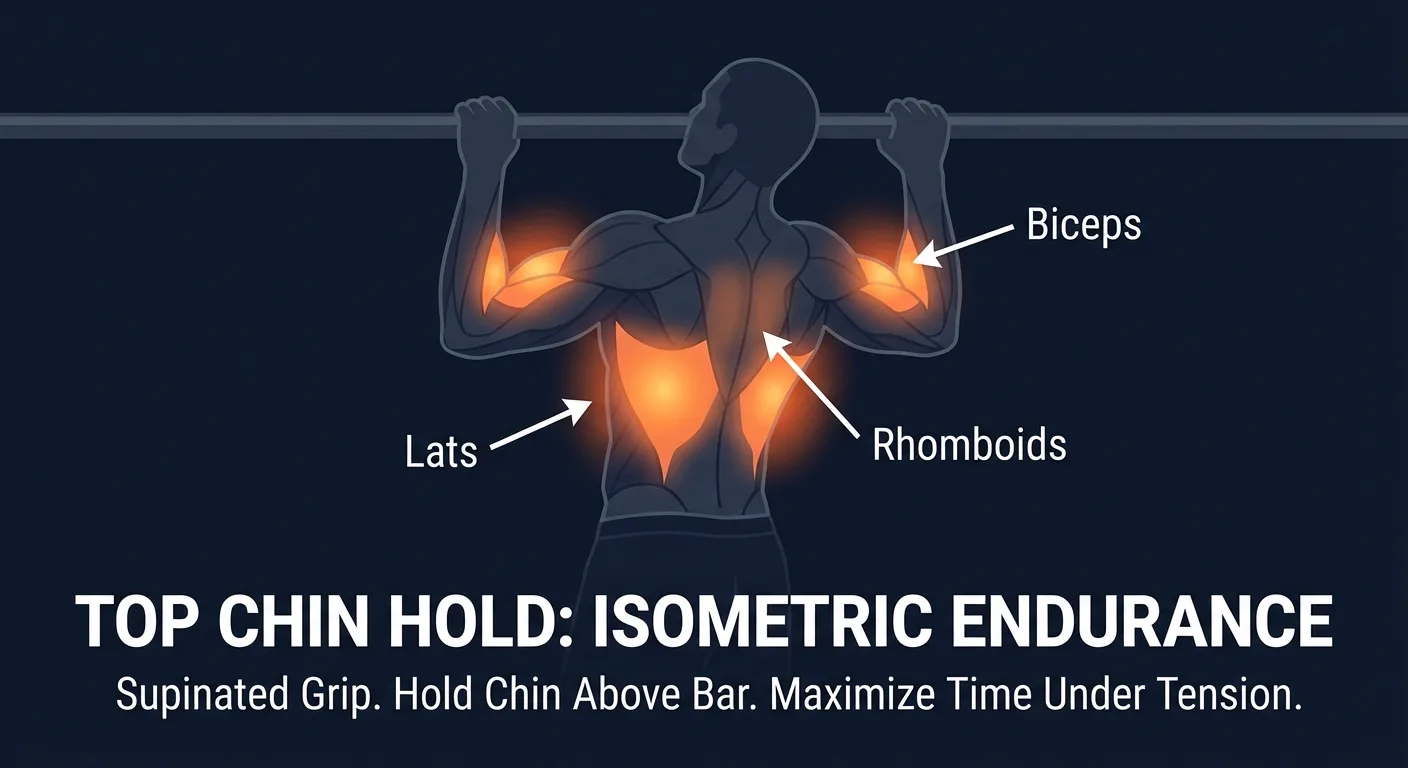
The biceps brachii and latissimus dorsi do most of the work. Because the exercise is a hold, they contract isometrically instead of moving through a full concentric and eccentric phase.
The brachialis, brachioradialis, rear deltoids, rhomboids, and middle and lower trapezius help keep the elbows bent and the shoulder blades pulled down and back. The underhand grip makes the elbow flexors especially important compared with a pronated pull-up grip.
The forearm flexors and extensors keep the grip closed. The rotator cuff controls the shoulder, and the core prevents swinging. The serratus anterior and lower trapezius help the shoulder blades stay controlled instead of riding up toward the ears.
No top-chin-hold-specific PubMed, PMC, or DOI citation is included in the verified FitCraft citation library. The muscle explanation here uses mechanism-based anatomy: a bent-arm hang keeps the elbow flexors and shoulder extensors under static tension while the scapular stabilizers hold the shoulder position.
Step-by-Step: How to Do a Top Chin Hold
- Get into position. Use a pull-up bar with an underhand grip, palms facing you, hands about shoulder-width apart. If you can chin up from a dead hang, do that. If not, step off a box, jump lightly, use a resistance band, or get a partner spot.
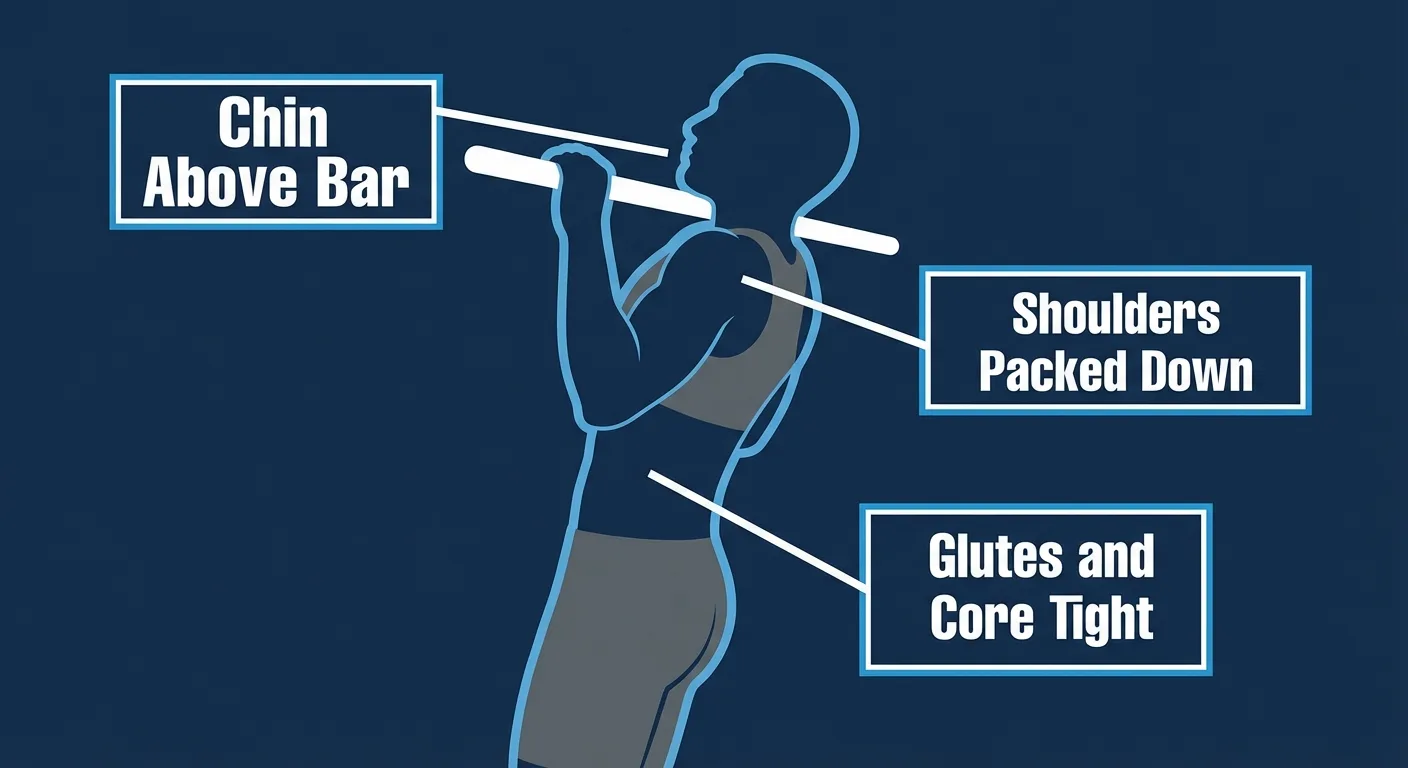
- Lock in the top. Keep your elbows bent and your chin clearly above the bar. Lift the chest toward the bar and pull your shoulders down away from your ears.
- Grip the bar hard. Squeeze the bar like you're trying to leave fingerprints in it. A loose grip usually turns into a short hold.
- Lock the body. Brace your abs, squeeze your glutes, and keep your legs still. Coach Ty's cue: "Ribs down, glutes tight, no swinging."
- Hold and breathe. Breathe slowly while you stay above the bar. End the set when your chin drops to bar level, the shoulders shrug, or your body starts swinging. Lower with control or step back to the box.
Common Mistakes and How to Fix Them
Chin Dropping Below the Bar
What it looks like: The chin slowly sinks to bar level or below, and the elbows start opening.
Why it's a problem: The drill works when you own the top position. Once you sink, the set has turned into an unplanned negative.
The fix: End the set the moment your chin reaches bar level. Drop under control, rest, and start the next hold from a cleaner top position.
Swinging or Kipping
What it looks like: The legs swing, the hips drift, or the body rocks forward and back.
Why it's a problem: Momentum takes tension away from the biceps and lats and teaches a sloppy pulling pattern.
The fix: Squeeze your glutes, brace your abs, and keep your legs quiet. If you can't stop swinging, use more assistance.
Shrugging the Shoulders
What it looks like: The shoulders ride up toward the ears and the neck disappears.
Why it's a problem: Shrugging shifts the hold toward the upper traps and makes the shoulder position less stable.
The fix: Pull your shoulder blades down and back before the clock starts. Think chest proud and neck long.
Holding the Breath
What it looks like: Red face, locked jaw, and a hard exhale as soon as the set ends.
Why it's a problem: Breath holding can spike pressure and shorten the hold.
The fix: Take small, steady breaths. If you can't breathe, the hold is too hard or too long.
Get this exercise in a personalized workout
FitCraft, our mobile fitness app, uses its AI coach Ty to program pulling exercises like this into your plan at the right volume and intensity, based on your level, goals, and equipment. Ty was designed and trained by Domenic Angelino, MPH (Brown University) and NSCA-CSCS, with research published in the Journal of Strength and Conditioning Research and Medicine & Science in Sports & Exercise.
Take the Free Assessment Free • 2 minutes • No credit cardTop Chin Hold Variations: Regressions and Progressions
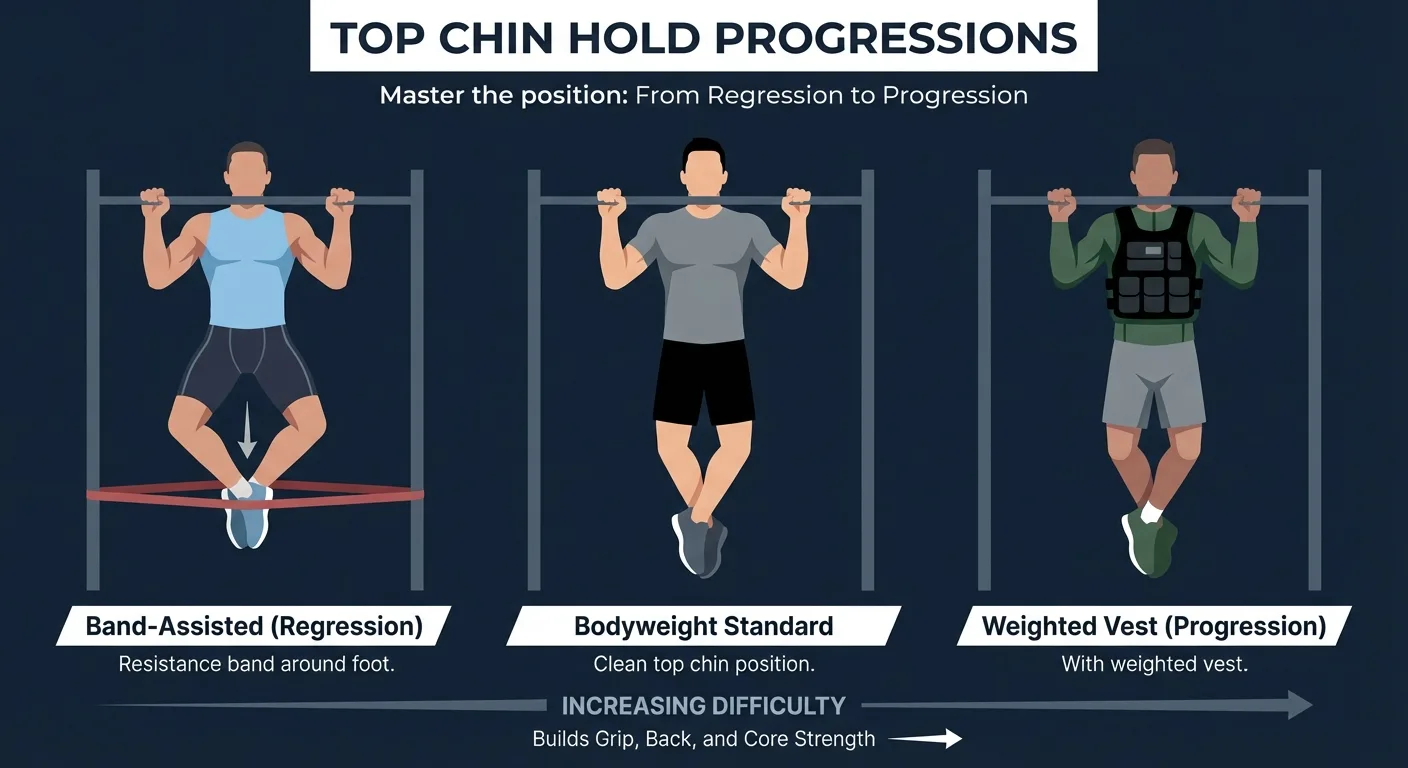
Easier: Band-Assisted Top Chin Hold
Loop a resistance band around the bar and place one knee or foot in it. The band reduces bodyweight so you can practice the top position without instantly dropping.
Easier: Box-Assisted Top Chin Hold
Place a box or bench under the bar. Use your legs just enough to reach the top, then take as much support away as your grip and elbows can control.
Standard: Bodyweight Top Chin Hold
Hold the top of the chin-up with no band or leg support. Start with shorter sets and keep every second honest.
Harder: Top Chin Hold to Chin Negative
Hold the top position for 5-10 seconds, then lower slowly to a dead hang. This links top-position strength to the full chin-up range.
Harder: Weighted Top Chin Hold
Once you can hold bodyweight for 25-30 clean seconds, add a light weight belt or vest. Small jumps in load are enough.
When to Avoid or Modify Top Chin Holds
Top chin holds are safe for many healthy adults, but bar-based pulling can be demanding on the shoulders, elbows, wrists, grip, and blood pressure response. Always consult your physician or physical therapist before training through pain or returning after an injury.
- Acute shoulder injury or rotator cuff irritation. Hanging from a bar loads the shoulder in elevation. Use supported rows or inverted rows at an easier angle until cleared.
- Recent shoulder or elbow surgery. Follow your surgeon's timeline. Start with scapular control drills such as engaged hangs only when your provider allows hanging.
- Tennis elbow or golfer's elbow. Underhand gripping and sustained elbow flexion can irritate tendons. Reduce volume, use more assistance, or use rows until symptoms calm.
- Lower-back pain that flares with swinging. Keep a hollow body position and use assistance. Add deadbugs or bird-dogs if you need better anti-swing control.
- Wrist pain or grip limitation. Try neutral-grip handles if available, use a thicker grip, or switch to supported rows.
- Blood pressure concerns. Avoid hard breath holding. Use short assisted holds and stop if you feel lightheaded.
Related Exercises
- Same muscle group: Chin-ups and bent-over rows train the same pulling pattern through a larger range of motion.
- Easier regression: Inverted rows, supported rows, corner rows, and reverse rows build pulling strength with less bodyweight.
- Strength-builder eccentric: Chin negatives teach control from the same top position into a slow descent.
- Grip and shoulder foundation: Dead hangs and engaged hangs build bar comfort before longer bent-arm holds.
- Core anti-swing foundation: Deadbugs, bird-dogs, and hollow holds help keep the body still under the bar.
How to Program Top Chin Holds
Ratamess et al., 2009, the ACSM resistance-training progression position stand, supports matching sets, rest, frequency, and progression to training level. For top chin holds, progress duration and assistance before adding load.
| Level | Sets x Hold Time | Rest between sets | Frequency |
|---|---|---|---|
| Beginner | 2-3 x 5-10 second assisted holds | 60-90 seconds | 2-3 sessions/week |
| Intermediate | 3-4 x 10-25 second bodyweight or lightly assisted holds | 90-120 seconds | 2-3 sessions/week |
| Advanced | 3-5 x 15-30 second holds, chin negatives, or light weighted holds | 90-180 seconds | 2-4 sessions/week |
Where in your workout: place top chin holds early in an upper-body or pull session while your grip is fresh. Pulling is grip-limited, so heavy carries or rows before holds can make the back under-worked.
Form floor over time targets: stop when the chin drops, the shoulders shrug, the breath locks, or the body swings. A clean 8-second hold beats a shaky 20-second hold.
How FitCraft Programs This Exercise
Knowing the drill is one piece. Knowing when to use it is the harder part. FitCraft uses your level, goals, and available equipment to place pulling exercises at the right point in the week, then Ty demonstrates the movement so you can see the shoulder and chin position before you train.
Frequently Asked Questions
Can I do top chin holds with elbow pain?
Be cautious. The top chin hold loads the elbow flexors and gripping tendons hard, especially with an underhand grip. If you have active tennis elbow, golfer's elbow, or sharp elbow pain, switch to supported rows or a very light band-assisted hold until a physical therapist clears heavier pulling.
What muscles does the top chin hold work?
Top chin holds primarily work the biceps brachii and latissimus dorsi. The brachialis, brachioradialis, rhomboids, middle and lower trapezius, rear deltoids, forearms, rotator cuff, and core help keep the top position stable.
How long should I hold the top chin position?
Start with honest 5-10 second assisted holds. Build toward 15-25 seconds at bodyweight before adding longer sets or load. Stop each set when the chin drops, the shoulders shrug, or breathing turns into a hard breath hold.
Will top chin holds help me get my first chin-up?
Yes. Top chin holds teach the bent-arm position many beginners lose at the top of a chin-up. Pair them with chin negatives, engaged hangs, and rows so you build strength through the full range, not only at the top.
Top chin hold vs dead hang: which is better?
They train different pieces of the same pulling pattern. A dead hang builds grip, shoulder comfort, and bottom-position control. A top chin hold builds bent-arm pulling strength. Use dead hangs as a foundation and top chin holds as a chin-up strength drill.