Quick Comparison
| Exercise | Main muscle | Difficulty | Setup needed | Best for |
|---|---|---|---|---|
| Diamond push-ups | Triceps | Hard | Floor only | Maximum triceps activation |
| Close-grip push-ups | Triceps + chest | Moderate | Floor only | Building toward diamonds |
| Bench dips | Triceps | Moderate | Chair or step | Loading triceps through a long range |
| Floor tricep dips | Triceps | Easy | Floor only | Absolute beginners |
| Decline push-ups | Triceps + shoulders | Hard | Chair or couch | Adding load past standard push-ups |
| Chin-ups | Biceps + back | Hard | Any bar | The only true biceps builder here |
| Towel rows | Biceps + back | Easy to moderate | Towel + table or door | Biceps work with no bar at all |
| Pike push-ups | Shoulders | Moderate to hard | Floor only | Deltoid size and pressing strength |
Do bodyweight arm exercises actually work?
For two of the three arm muscles, yes, and the evidence is better than you'd expect. Your triceps make up roughly two thirds of your upper arm's muscle mass, and they respond extremely well to push-up and dip variations. Your shoulders respond well to pike pressing. Muscle doesn't care whether resistance comes from iron or from gravity acting on your own body. It cares about tension, effort close to failure, and progressive overload. If the goal is the softness at the back of the arm rather than the strength, our guide to how to lose arm fat explains what training can change and what only whole-body fat loss can.
The biceps are the outlier, and we'll get to them honestly in a moment.
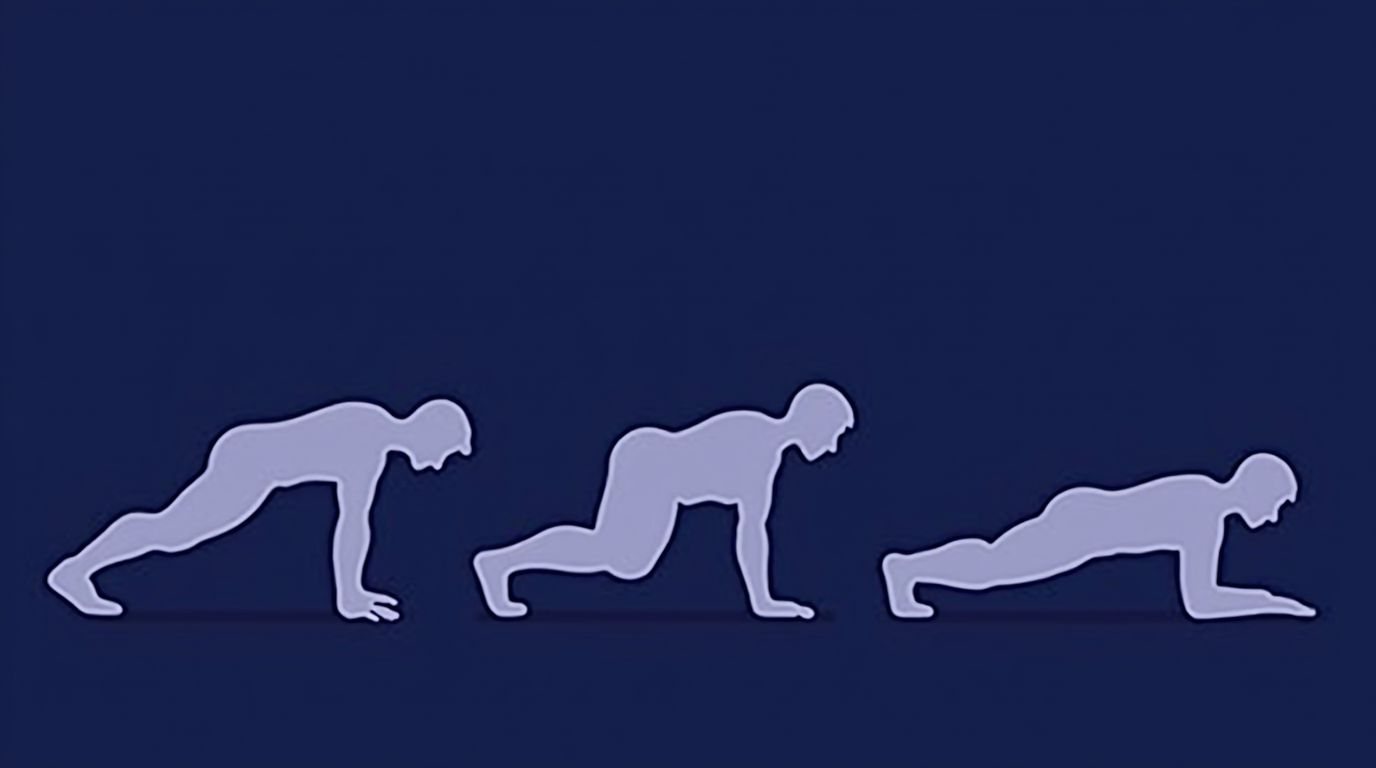
One more thing worth knowing before the list: difficulty is adjustable on every one of these. Research measuring ground reaction forces across push-up variations found that flexed-knee and hands-elevated versions carry the least load, while feet-elevated versions carry the most (Ebben et al., 2011). Same exercise family, very different demand. That's why each section below includes a ladder from easiest to hardest.
Triceps: The Push-Up and Dip Family
1. Diamond Push-Ups: Best Overall Arm Exercise Without Weights
An ACE-sponsored study at the University of Wisconsin-La Crosse wired subjects with EMG electrodes and compared eight common triceps exercises, including cable pushdowns, kickbacks, overhead extensions, and dips. Triangle push-ups, better known as diamond push-ups, produced the highest triceps activation of everything tested (Boehler et al., ACE, 2011). A free-floor exercise beat an entire rack of gym equipment.
Form the diamond with your thumbs and index fingers under your chest, keep your elbows tracking back rather than flaring, and lower under control.
The honest limitation: they're hard, and they're cranky on wrists and elbows if you jump in cold. Most beginners can't do five clean reps on day one. Start lower on the ladder below.
2. Close-Grip Push-Ups: Best Stepping Stone
Close-grip push-ups use a shoulder-width hand position instead of touching hands, which keeps most of the triceps emphasis while being far more manageable. This isn't just a vibe: EMG research comparing hand positions found narrow placement produced greater triceps and pectoralis activation than wide placement (Cogley et al., 2005).
The honest limitation: your chest shares the work, so the triceps get a slightly diluted stimulus compared to diamonds or dips.
3. Bench Dips: Best Long-Range Triceps Loading
Bench dips off a chair, step, or couch edge load the triceps through a longer range of motion than most push-up variations, and they scale beautifully: bend your knees to make them easier, straighten your legs or elevate your feet on a second chair to make them harder. In the same ACE study, dips ranked in the top tier alongside diamond push-ups and kickbacks.
The honest limitation: they put the shoulder in a lot of extension. If your shoulders roll forward or you drop too deep, the front of the shoulder complains before the triceps do. Keep the torso close to the bench and the depth modest.
4. Floor Tricep Dips: Best for Absolute Beginners
Floor tricep dips, done from a seated position with hands behind you and hips hovering, are the gentlest entry in the family. No furniture, no wrist extension under full bodyweight, no strength prerequisite.
The honest limitation: the range of motion is short and the load is light, so you'll outgrow them within a few weeks. That's fine. They're a starting rung, not a destination.
5. Decline Push-Ups: The Hard Tier
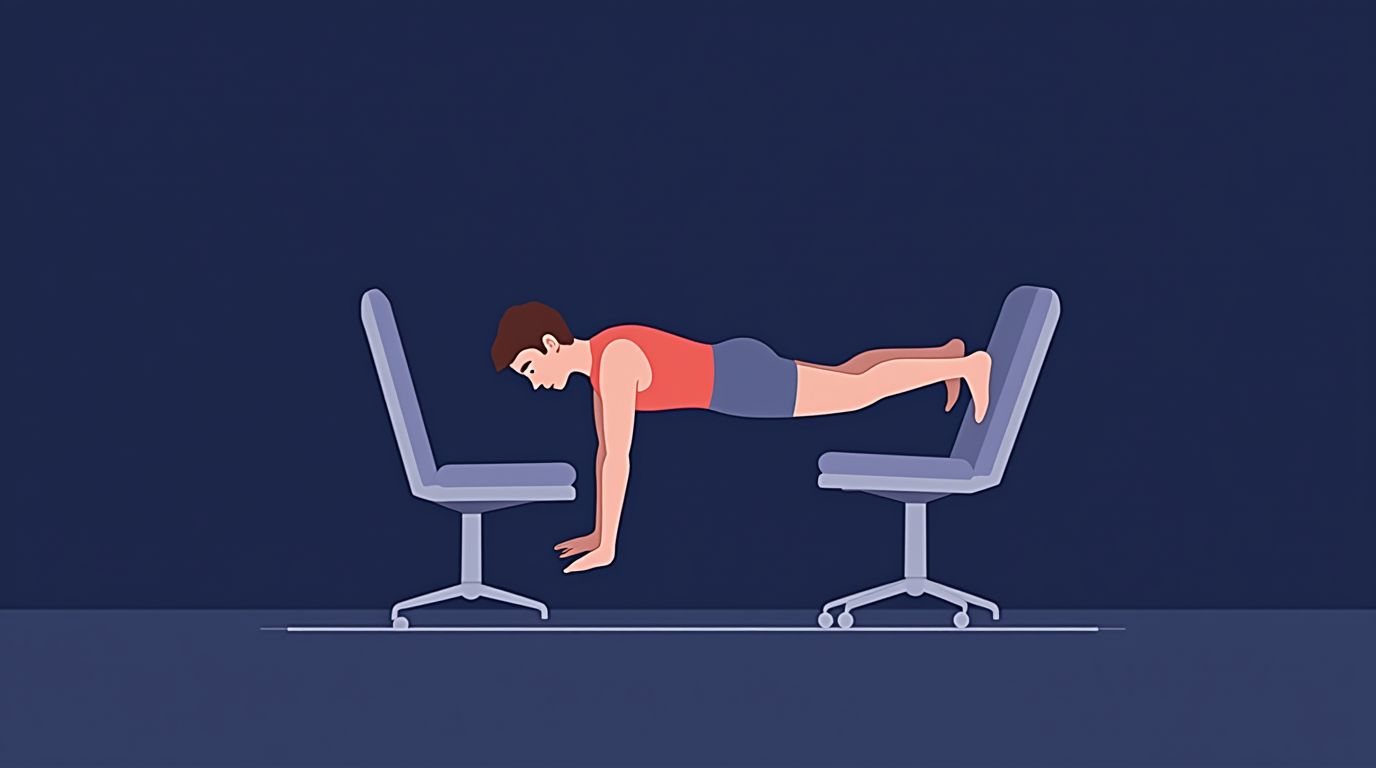
When standard and close-grip push-ups pass 15 to 20 clean reps, decline push-ups with feet on a chair are the natural next load. Feet-elevated push-ups produced higher ground reaction forces than every other variation in Ebben's kinetic analysis, which makes them the closest bodyweight equivalent to adding plates.
The honest limitation: elevation shifts emphasis toward the shoulders and upper chest, so it's a whole-pressing-system upgrade more than a pure triceps move.
The triceps ladder, easiest to hardest:
- Incline push-ups (hands on a raised surface), or push-ups from the knees
- Floor tricep dips
- Standard push-ups and bench dips
- Close-grip push-ups
- Diamond push-ups and decline push-ups
Knowing what to do is the easy part.
FitCraft, our mobile fitness app, pairs you with an AI coach who builds you a personalized plan around your goals, schedule, and fitness level. Every FitCraft program is designed by Domenic Angelino, MPH (Brown University) and NSCA-CSCS, with research published in the Journal of Strength and Conditioning Research and Medicine & Science in Sports & Exercise.
Take the Free Assessment Free • 2 minutes • No credit cardBiceps: The Part Nobody Wants to Say Out Loud
Here's the truth most no-equipment arm articles dance around: biceps are genuinely hard to train without equipment. Your biceps flex the elbow against resistance. Gravity gives you infinite ways to push your own bodyweight around, but pulling requires something to pull against. Air curls, squeezing your fist really hard, pressing one palm against the other: none of it creates enough tension to build muscle. If a listicle tells you otherwise, close the tab.
What you can do is get creative about finding something to pull.
6. Chin-Ups: The Only True Biceps Builder Here
If any bar exists in your life, a doorway bar, a playground, a sturdy tree branch, chin-ups are the best biceps exercise on this list by a wide margin. The underhand grip matters: a Journal of Strength and Conditioning Research study found the biceps brachii showed significantly higher EMG activation during chin-ups than during overhand pull-ups (Youdas et al., 2010).
Can't do one yet? Build up through a dead hang, then chin-up negatives, lowering slowly from the top. Our full guide to earning your first pull-up walks the whole progression.
The honest limitation: it needs a bar and a baseline of strength. Strictly speaking it stretches the "no equipment" premise, which is exactly why it's ranked here in its own honest section rather than pretending a substitute matches it.
7. Towel Rows: Best Biceps Option With No Bar At All
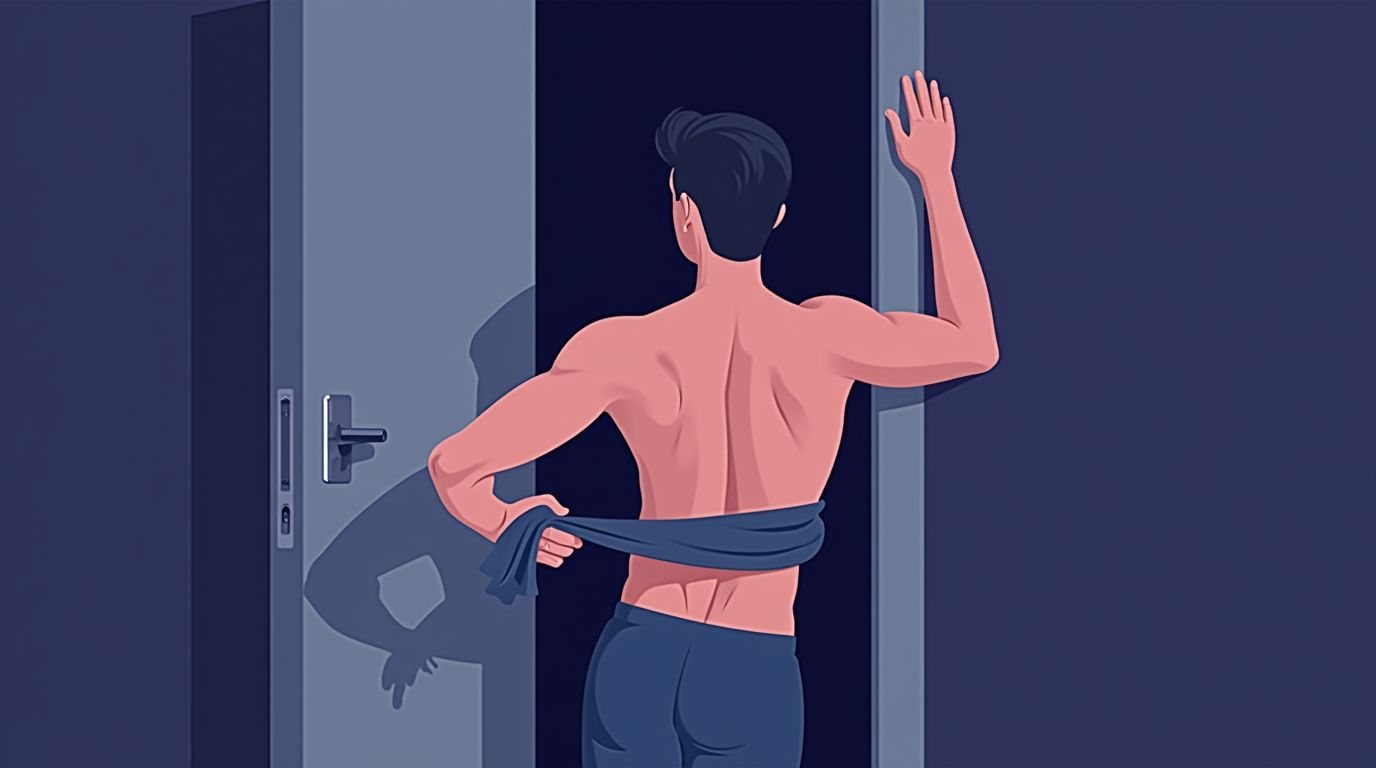
Loop a bath towel around a sturdy railing, or grip the edge of a solid table, palms facing you, and row your chest toward your hands. This is an underhand inverted row, and it's the closest thing to curls your living room offers. Walk your feet forward to make it harder, backward to make it easier. A doorframe variation works too: stand in the frame, grip both sides, lean back, and pull yourself upright.
The honest limitation: your grip and forearms often give out before your biceps get a full stimulus, and progression maxes out once your body is near horizontal. It works. It just has a lower ceiling than a bar.
The pulling ladder, easiest to hardest: doorframe rows, then towel rows at a steep angle, then towel rows near horizontal, then chin-up negatives, then full chin-ups.
Shoulders: The Pike Family
8. Pike Push-Ups: Best Shoulder Exercise Without Weights
Pike push-ups turn a horizontal push into a near-vertical one. Hips high, torso angled down, head traveling toward the floor between your hands. That angle change shifts the load off your chest and onto your deltoids and triceps, mimicking an overhead press with nothing but a floor.
The family has its own ladder. Start with the quarter pike push-up, a partial range version that grooves the pattern. Deepen the pike angle as you get stronger. Then elevate your feet on a chair to push more bodyweight over your shoulders. Wall-supported work comes after that: walk your feet up a wall behind you until your torso approaches vertical, and you're pressing most of your bodyweight overhead.
The honest limitation: pike positions demand wrist tolerance and enough hamstring flexibility to hold the hip hinge. Tight hamstrings turn a shoulder exercise into a hamstring stretch with bad form on top. Bend your knees slightly and shorten the range before you fight through it.
How We Picked These
Three filters, specific to training at home with nothing:
- Measured muscle activation, not vibes. Where EMG or kinetic data exists comparing variations, it drove the ranking. The ACE triceps study, Cogley's hand-position work, Youdas' grip comparison, and Ebben's force analysis are all linked above, and every one is a study you can read yourself.
- A real progression path. A bodyweight exercise you can't make harder stops working within weeks. Every family here has a documented ladder from beginner to advanced, because progression is the entire game when you can't add plates.
- Honesty about ceilings. We'd rather tell you biceps need something to pull on than pretend air curls count. One limitation is listed for every single entry above for the same reason.
What we didn't do: rank by social media popularity, or pad the list to 20 entries with redundant variations.
Which Should You Do?
- Total beginner: incline push-ups, floor tricep dips, and doorframe rows, three rounds, two or three days a week. Graduate each move when you pass 15 clean reps.
- Can do 10+ push-ups: close-grip push-ups, bench dips, towel rows, and quarter pike push-ups. This is the sweet spot where most of the list opens up.
- Chasing visible triceps: diamond push-ups and bench dips, pushed close to failure, twice a week.
- Chasing biceps specifically: get access to a bar. Seriously. A doorway pull-up bar changes what's possible more than any other single purchase, and chin-up progressions do the rest.
- Chasing shoulders: live in the pike family and climb the ladder toward feet-elevated reps.
And if your real problem isn't picking exercises but doing them consistently for more than two weeks, that's a program design problem. Our guide to home workouts that actually stick covers the structure side.
Frequently Asked Questions
Can you build bigger arms without weights?
Yes, with a caveat per muscle. Triceps and shoulders respond well to bodyweight training because push-up and dip variations load them hard and progress easily. Biceps are the exception: without a bar or something to pull against, you can't load them enough to grow them meaningfully. Muscle grows when sets get close to failure and get harder over time, whatever the resistance source.
What is the best tricep exercise without weights?
Diamond push-ups. An ACE-sponsored EMG study from the University of Wisconsin-La Crosse compared eight triceps exercises and found triangle (diamond) push-ups produced the highest triceps activation of all of them, edging out dips and kickbacks. If they're too hard at first, close-grip push-ups train the same pattern at a friendlier difficulty.
How do you work biceps without any equipment?
Honestly, you mostly cannot. Biceps flex the elbow against resistance, and with zero equipment there's nothing to pull against. The workarounds are towel rows under a sturdy table, doorframe rows, and chin-ups if any bar exists, since research shows the supinated chin-up grip produces higher biceps activation than a standard pull-up. Squeezing air through curl motions doesn't create enough tension to matter.
Are pike push-ups enough for shoulders?
For most beginners and intermediates, yes. Pike push-ups shift your bodyweight onto the deltoids and triceps in a vertical-press pattern similar to an overhead press. Progress them by starting with a quarter range of motion, deepening the pike angle, then elevating your feet. Very advanced trainees eventually outgrow them and need wall-supported handstand work or external load.
How many times a week should you train arms with bodyweight exercises?
Two to three sessions a week works well for most people. Bodyweight arm exercises recover faster than heavy barbell work, so hitting each movement family twice a week with 2 to 4 sets taken close to failure is a solid default. The limiting factor is usually progression, not frequency: keep making the exercises harder as reps climb past 15 to 20.