
Most calisthenics routines hand you a list of exercises and stop there. The hard part comes a few weeks in, when the list gets easy and you have to decide what to change. This plan answers that in advance. Each of the four movement patterns has a ladder of moves, from easy to hard, and one rule tells you when to climb: reach the top number on every set, then move up a rung. Press Start above and a guided session walks you through the warm-up, every set and rest, and the cool-down. Every move links to its own form guide.
How this calisthenics workout plan works
The plan uses the same structure as a workout in the FitCraft app, at the app's four levels. Here are the steps:
- Pick your level. Beginner, Intermediate, Advanced or Expert. Your level sets the rung you start on in each ladder, how many sets you do and how long you rest.
- Pick your days and equipment. Three days a week gives you three full-body sessions. Four days splits into upper-body days and legs-and-core days, and five days adds a full-body day. A pull-up bar, dip bars or rings add harder pulling and pushing moves to the ladders.
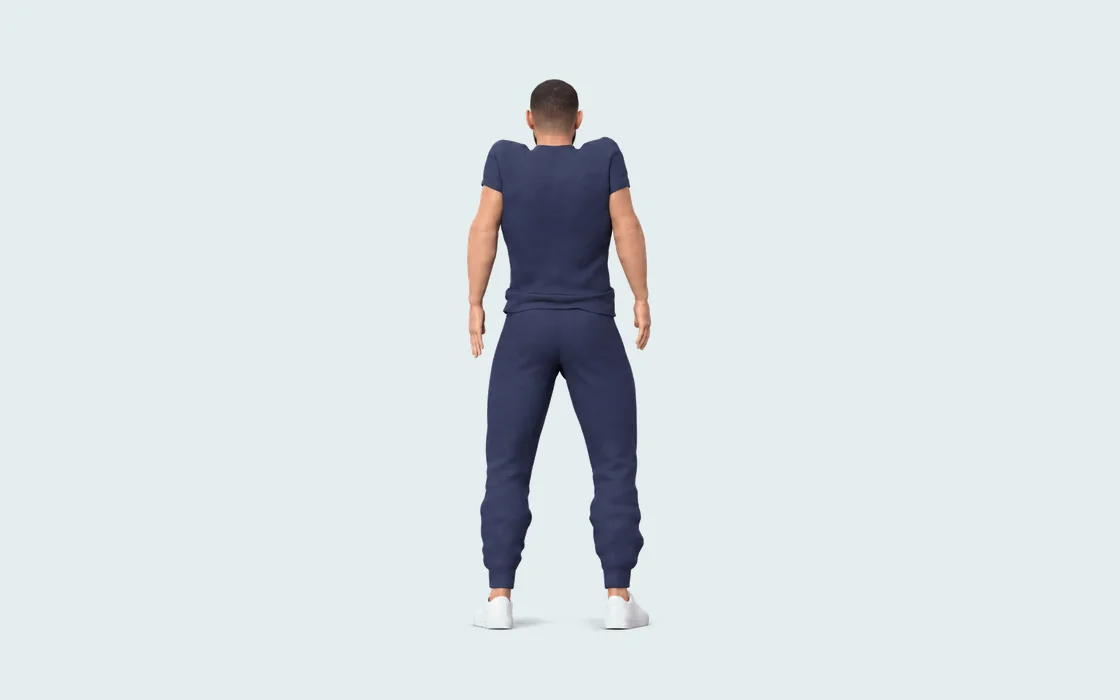
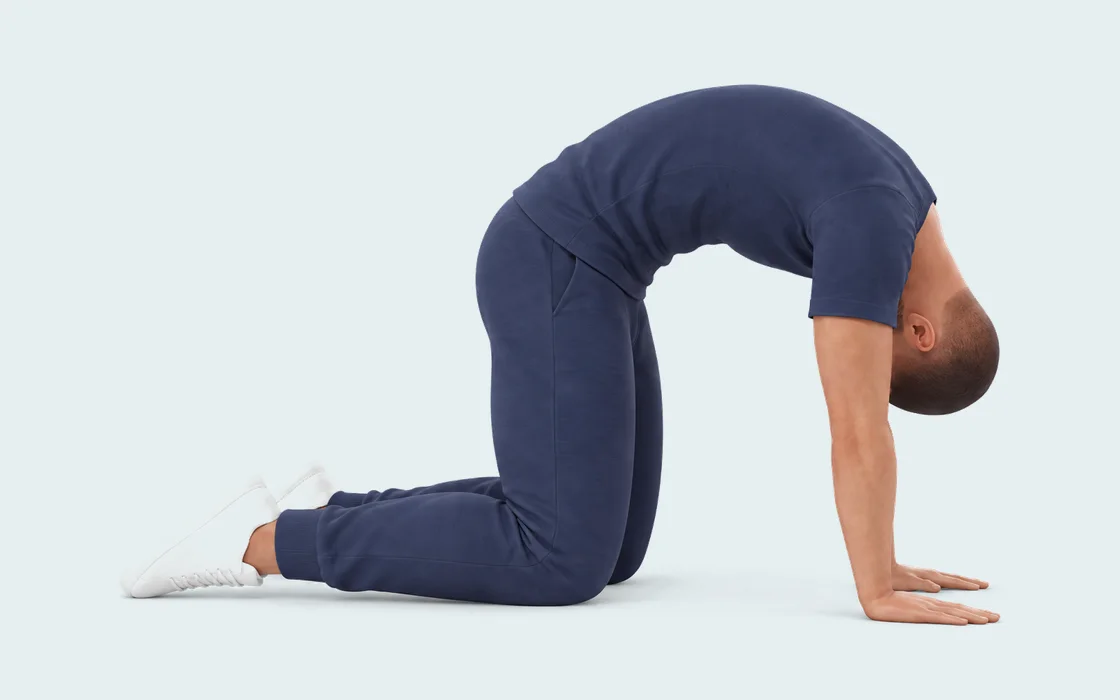
- Warm up. Shoulder rolls and cat cow, 45 seconds each.
- Do the main block. Every set of your moves, with a rest timer between sets. Tap Done when a set of reps is finished. Holds count down, and you tap Done when your form slips.
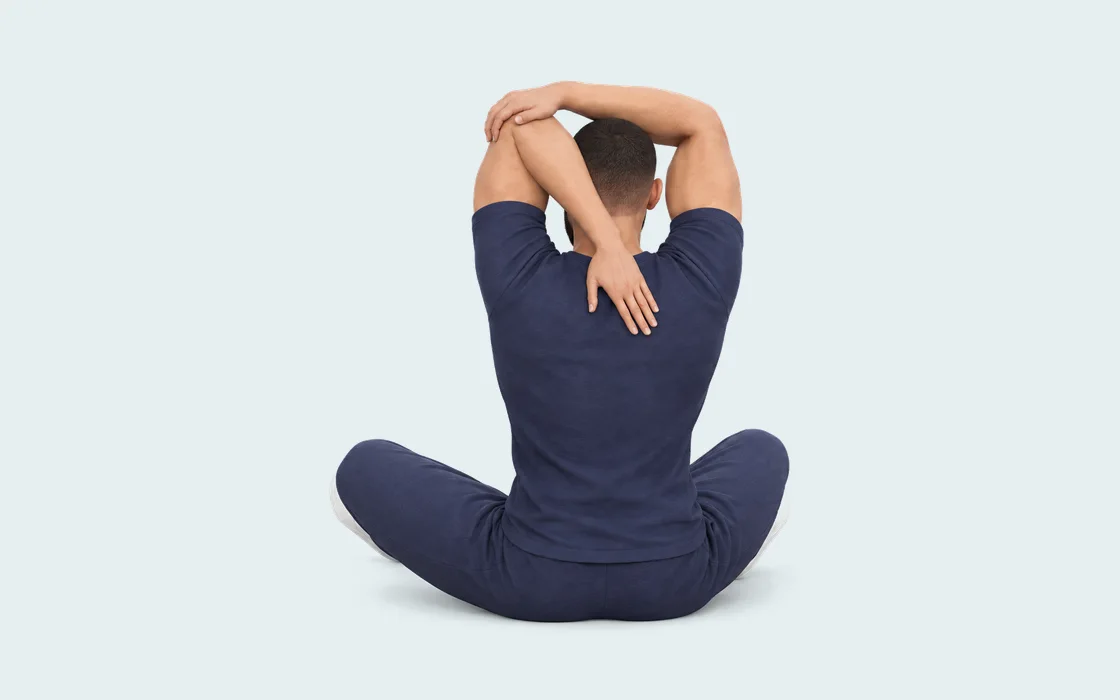
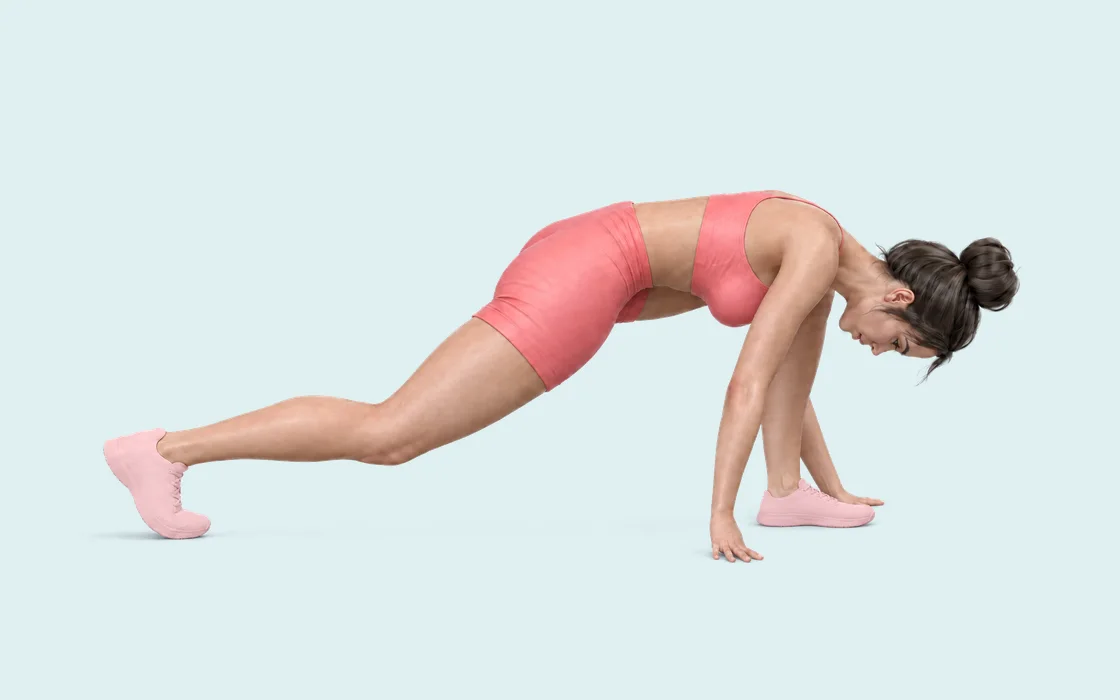
- Cool down. The tricep-n-lat stretch and the half kneeling stretch, 60 seconds each, switching sides halfway.
- Move up a rung. When you reach the top number on every set with clean form, move to the next move on that ladder next session and start again at the bottom number.
Rep sets have no clock, because a set of 8 hard push-ups takes as long as it takes. The session length in minutes counts 3.5 seconds per rep (8 seconds for a slow chin-up negative), the middle of each hold range, every rest and the warm-up and cool-down. Holds count down from the top of their range, so the timer never cuts a good hold short.
The four calisthenics progression ladders
This calisthenics exercise chart is the core of the plan. Read across a row to see moves of similar difficulty; read down a column to see where a ladder goes next. Every move links to its form guide, and the small print is the range you work in on that rung.
| Rung | Push | Pull, no equipment | Pull, with a bar | Legs | Core |
|---|---|---|---|---|---|
| 1 | Incline push-ups 6 to 12 reps |
Corner rows 8 to 15 reps |
Dead hang 15 to 40 s |
Squats 8 to 15 reps |
Forearm plank 20 to 45 s |
| 2 | Kneeling push-ups 6 to 12 reps |
Prone W raises 15 to 30 s |
Engaged hang 10 to 30 s |
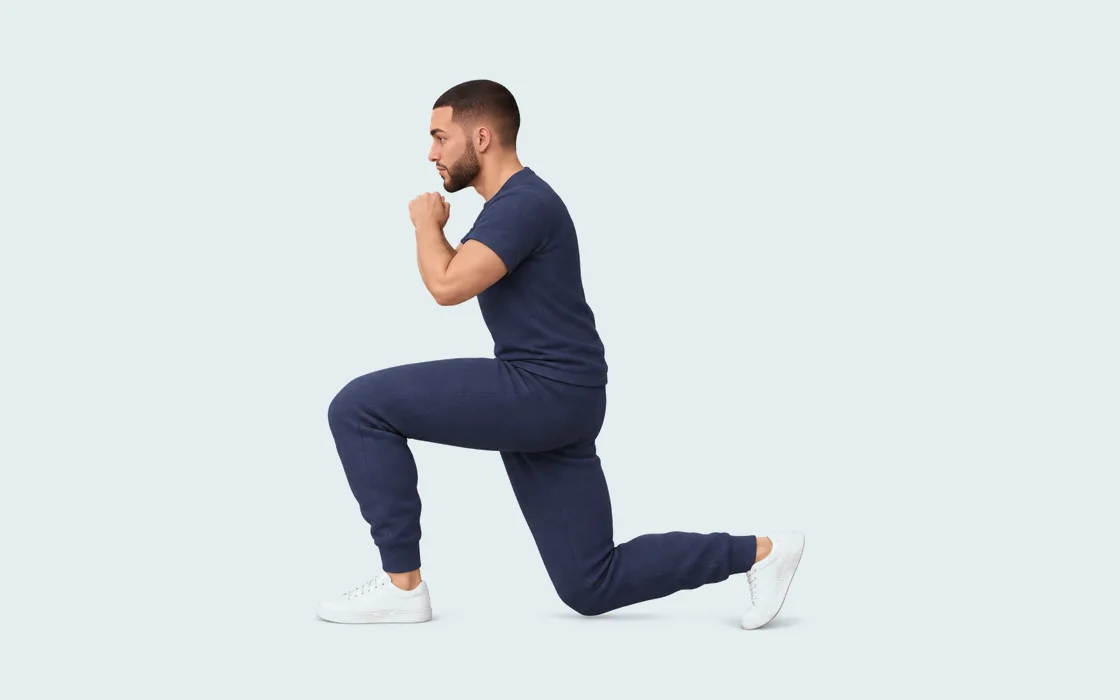
Split squats 6 to 12 reps each leg |
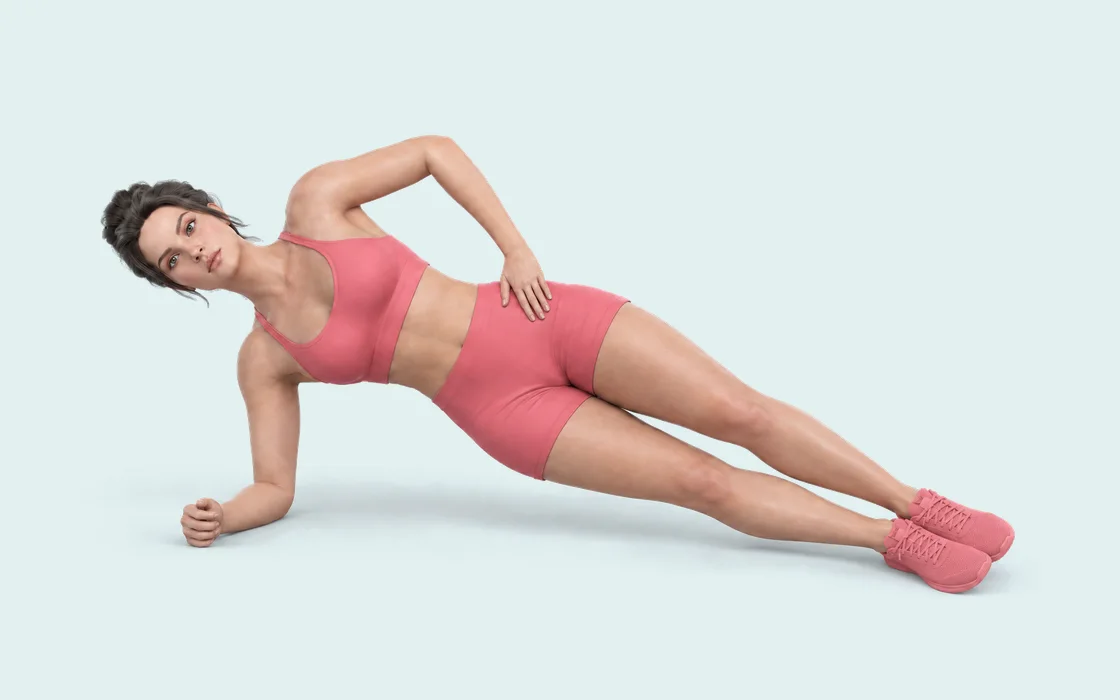
Side plank 15 to 40 s each side |
| 3 | Push-ups 6 to 12 reps |
Prone T raises 15 to 30 s |
Top chin hold 5 to 20 s |
Rear lunges 6 to 12 reps each leg |
Leg raises 6 to 12 reps |
| 4 | Decline push-ups 6 to 12 reps |
Prone Y raises 15 to 30 s |
Chin-up negatives 3 to 6 slow lowers |
Bulgarian split squats 6 to 12 reps each leg |
Hollow hold 15 to 30 s |
| 5 | Diamond push-ups 6 to 12 reps |
Superman holds 15 to 30 s |
Chin-ups 3 to 8 reps |
Jump lunges 6 to 12 reps each leg |
Teaser hold (no bar) or Hanging leg raises (bar) 10 to 30 s or 5 to 10 reps |
| 6 | Pike push-ups 6 to 12 reps |
||||
| 7 | Pseudo planche push-ups 5 to 10 reps |
With a pull-up bar plus dip bars or rings, two moves join the ladders: Parallel bar dips sit between diamond push-ups and pike push-ups on the push ladder, and Inverted rows on rings, straps or a waist-high bar sit between the engaged hang and the top chin hold on the pull ladder.
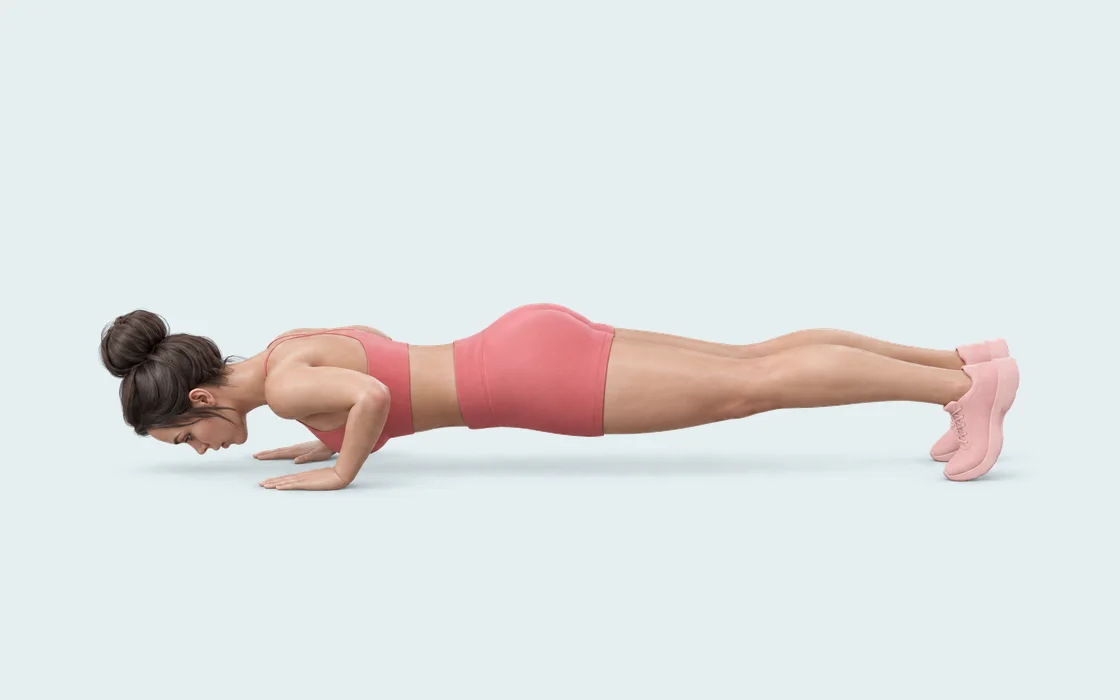
Push follows how much of your weight each push-up puts on your hands. On a force plate, push-ups with the hands raised or from the knees loaded people the least, and push-ups with the feet raised loaded them the most (Ebben et al. 2011). Past the floor push-up, the ladder follows our push-up progression guide: decline, then diamond, then the pike and pseudo planche push-ups that shift more weight onto the shoulders.
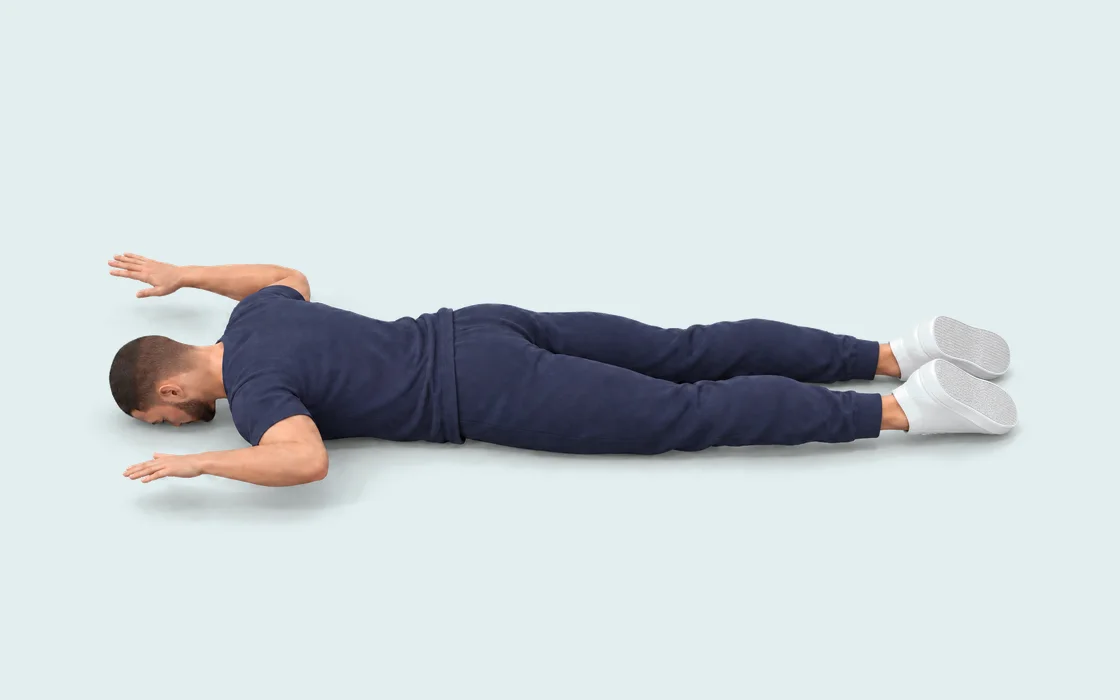
Pull is where equipment matters most. With no bar, the ladder runs from corner rows through face-down W, T and Y raises to the superman hold. Those train the upper back and the muscles that hold your shoulder blades in place, but none of them lets you pull your whole body. With a bar, the ladder climbs from a dead hang to the chin-up, in the same order the FitCraft app grades those moves.
Legs go from two legs to one. A bodyweight squat gets easy for most people within weeks, so the ladder moves the work onto one leg at a time with split squats, rear lunges and the Bulgarian split squat, then adds a jump. Core starts with a forearm plank and ends with a teaser hold, or hanging leg raises if you have a bar.
Calisthenics workout schedule: 3, 4 or 5 days a week
Three days a week means three full-body sessions on Monday, Wednesday and Friday. Four or five days add more weekly sets for each ladder: four days split into upper-body days (push and pull) and legs-and-core days, and five days add a full-body day on top. On upper and lower days, the extra sets are back-off sets one rung below yours, so you get more practice without grinding the same hard move.
| Days a week | Sessions | Weekly sets (Intermediate) | Session length |
|---|---|---|---|
| 3 days | Monday, Wednesday and Friday: full body | 9 per ladder | 27 min |
| 4 days | Monday and Thursday: upper body; Tuesday and Friday: legs and core | 10 per ladder | 21 min, 24 min |
| 5 days | Monday: full body; Tuesday and Friday: upper body; Wednesday and Saturday: legs and core | 13 per ladder | 27 min, 21 min, 24 min |
Weekly sets matter for muscle growth. A meta-analysis of 15 studies found that each extra weekly set was linked to a slightly larger gain in muscle size, about 0.37 percent per set (Schoenfeld, Ogborn and Krieger 2017). Another found that training a muscle at least twice a week grew more muscle than once a week (Schoenfeld et al. 2016). Every option here trains each ladder at least three times a week.
Sets, reps and rest at each level
Your level sets three things: the rung you start on, the number of sets and the rest between them. The table shows the starting moves with no equipment and how long a session takes for 3, 4 or 5 days a week.
| Level | Starting moves (no equipment) | Sets per move | Rest | Minutes (3 / 4 / 5 days) |
|---|---|---|---|---|
| Beginner | Incline push-ups, Corner rows, Squats, Forearm plank | 2 work sets, 1 back-off | 60 s | 16 / 13 / 13 to 16 min |
| Intermediate | Push-ups, Prone W raises, Split squats, Side plank | 3 work sets, 2 back-off | 75 s | 27 / 21 to 24 / 21 to 27 min |
| Advanced | Decline push-ups, Prone Y raises, Rear lunges, Leg raises | 3 work sets, 2 back-off | 90 s | 29 / 22 to 27 / 22 to 29 min |
| Expert | Diamond push-ups, Superman holds, Bulgarian split squats, Hollow hold | 4 work sets, 3 back-off | 90 s | 35 / 30 to 34 / 30 to 35 min |
With a pull-up bar, Beginners start the pull ladder at the dead hang and Experts at the chin-up. Expert sessions with a bar include diamond push-ups, chin-ups, bulgarian split squats and hollow hold, about 35 minutes. If your starting rung feels wrong, tap a different rung in the builder: you should be able to do the bottom number with clean form, but not the top.
Do this workout and more, customized to you in detailed 3D
The FitCraft app builds workouts around your goals, shows every move with a 3D AI coach and adjusts as you progress. Earn XP, keep your streak and level up. Free version available.
Take the Free Assessment Free • 2 minutes • No credit card
Can you build muscle by only doing calisthenics?
Yes, as long as the sets are hard. Several trials compared push-ups with the bench press directly:
- Muscle size. In Kikuchi and Nakazato 2017, 18 young men trained twice a week for 8 weeks with either a bench press at 40 percent of their one-rep max or push-ups adjusted to the same load, for example from the knees. In the push-up group, chest thickness rose from 17.0 to 20.8 mm and triceps thickness from 27.7 to 30.4 mm, and bench press strength rose from 61.1 to 64.2 kg. The authors judged the two groups comparable.
- Strength. Calatayud et al. 2015 matched push-ups (made harder with elastic bands) and the bench press for muscle activity in 30 trained students. After 5 weeks, both groups gained similar strength.
- Progressive push-ups. In Kotarsky et al. 2018, 23 moderately trained men did either push-up variations that got harder over time or the bench press, 3 days a week for 4 weeks. Both groups raised their one-rep bench press.
- A full calisthenics program. Thomas et al. 2017 gave 28 untrained men 8 weeks of calisthenics or no training. The calisthenics group improved its push-up test by 16.4 percent and its pull-up test by 39.2 percent, and lost fat mass.
The wider evidence explains why this works. A meta-analysis of 21 studies found that light loads taken close to failure built about as much muscle as heavy loads, while heavy loads still built more maximal strength (Schoenfeld et al. 2017). Bodyweight moves are light loads for most people, so they build muscle when each set ends close to failure, and they will not match a heavy barbell for a one-rep max. Our guide to calisthenics vs weights covers that trade-off, and our review of bodyweight workout results covers where the ceiling sits.
Progressive overload without weights
Progressive overload means asking your muscles for a little more over time. With weights you add plates. In calisthenics you change the move: raise your feet, narrow your hands, shift to one leg or slow the lowering. Each rung on a ladder is one of those changes, so climbing a ladder is the bodyweight version of adding weight.
The rep range is the signal. On most rungs you work between 6 and 12 reps. When the top number comes easily on every set, the move has become too light to keep building strength, so you move up a rung and drop back to the bottom number. If you reach the top of a ladder, add a set or slow each rep down, or move to a harder ladder with more equipment.
How should a beginner start calisthenics?
Start at the Beginner level, 3 days a week, with no equipment. Your first session is incline push-ups, corner rows, squats and forearm plank, 2 sets each, about 16 minutes. In the first week, stop each set with one or two good reps left so you learn the moves before you push them. Mild soreness a day or two later is normal in the first weeks.
Check your rungs in the first session. If you cannot do the bottom number with clean form, tap the rung below; if the top number feels easy, tap the rung above. Then let the move-up rule do the rest. Our guide to starting from zero fitness covers the first month in more detail.

What are the 5 basic calisthenics exercises?
Most calisthenics programs are built on five moves, and each one tops out a ladder in this plan or sits on it:
- Push-ups, the base of the push ladder.
- Chin-ups or pull-ups, the top of the pull ladder with a bar. Rows train the same muscles when you do not have one.
- Dips on parallel bars, the push rung that needs dip bars.
- Squats, the base of the legs ladder, leading to single-leg squats.
- A core hold, such as the forearm plank or the hollow hold.
Our roundup of the best bodyweight exercises goes through more of them, and our handstand guide covers the most common skill people add on top.
Does calisthenics burn belly fat?
Not on its own, and not from the belly first. In Vispute et al. 2011, 24 adults did ab exercises 5 days a week for 6 weeks without changing their diet, and their belly fat and waist size did not change. Training does help with fat across the body: a meta-analysis of 58 studies found that resistance training lowered body fat percentage by about 1.46 percentage points and fat mass by about 0.55 kg compared with no exercise, and reduced visceral fat (Wewege et al. 2022). For a visible change around the waist, pair this plan with a small calorie deficit; our TDEE calculator gives you a starting number.
The Physical Activity Guidelines for Americans ask adults for muscle-strengthening activity on 2 or more days a week, plus 150 to 300 minutes of moderate activity such as brisk walking. Every option in this plan covers the strength part; add walks or other cardio for the rest.
Who should check with a doctor first
The plan is built for healthy adults. Adjust it, or check with a professional first, in these situations.
- New to exercise or coming back after a long break. Start at Beginner and stop each set before your form slips.
- Wrist, elbow or shoulder pain. Push-ups load the wrists, and dips, pike push-ups and pseudo planche push-ups load the front of the shoulders. Stay on a lower rung that does not hurt, and see our guide to training with joint pain.
- High blood pressure or heart disease. Talk to your doctor first. Holds such as planks raise blood pressure while you hold them, as our article on isometric exercise and blood pressure explains. Breathe steadily through every hold.
- Hanging and jumping. Use a bar rated for your weight and step down from negatives onto a stable box. Jump lunges land with force, so skip them if your knees or ankles complain.
- Pregnancy and the months after birth. Follow your care team on which moves to use. Our postpartum fitness guide has more context.
Stop the session if you feel chest pain, dizziness or sharp joint pain.
Related reading
References
- Kikuchi N, Nakazato K. "Low-load bench press and push-up induce similar muscle hypertrophy and strength gain." Journal of Exercise Science and Fitness. 2017;15(1):37-42. doi:10.1016/j.jesf.2017.06.003
- Calatayud J, Borreani S, Colado JC, Martin F, Tella V, Andersen LL. "Bench press and push-up at comparable levels of muscle activity results in similar strength gains." Journal of Strength and Conditioning Research. 2015;29(1):246-253. doi:10.1519/JSC.0000000000000589
- Kotarsky CJ, Christensen BK, Miller JS, Hackney KJ. "Effect of Progressive Calisthenic Push-up Training on Muscle Strength and Thickness." Journal of Strength and Conditioning Research. 2018;32(3):651-659. doi:10.1519/JSC.0000000000002345
- Thomas E, Bianco A, Mancuso EP, et al. "The effects of a calisthenics training intervention on posture, strength and body composition." Isokinetics and Exercise Science. 2017;25(3):215-222. doi:10.3233/IES-170001
- Ebben WP, Wurm B, VanderZanden TL, et al. "Kinetic analysis of several variations of push-ups." Journal of Strength and Conditioning Research. 2011;25(10):2891-2894. doi:10.1519/JSC.0b013e31820c8587
- Schoenfeld BJ, Grgic J, Ogborn D, Krieger JW. "Strength and Hypertrophy Adaptations Between Low- vs. High-Load Resistance Training: A Systematic Review and Meta-analysis." Journal of Strength and Conditioning Research. 2017;31(12):3508-3523. PMID 28834797
- Schoenfeld BJ, Ogborn D, Krieger JW. "Dose-response relationship between weekly resistance training volume and increases in muscle mass: A systematic review and meta-analysis." Journal of Sports Sciences. 2017;35(11):1073-1082. doi:10.1080/02640414.2016.1210197
- Schoenfeld BJ, Ogborn D, Krieger JW. "Effects of Resistance Training Frequency on Measures of Muscle Hypertrophy: A Systematic Review and Meta-Analysis." Sports Medicine. 2016;46(11):1689-1697. doi:10.1007/s40279-016-0543-8
- Grgic J, Schoenfeld BJ, Davies TB, et al. "Effect of Resistance Training Frequency on Gains in Muscular Strength: A Systematic Review and Meta-Analysis." Sports Medicine. 2018;48(5):1207-1220. doi:10.1007/s40279-018-0872-x
- Wewege MA, Desai I, Honey C, et al. "The Effect of Resistance Training in Healthy Adults on Body Fat Percentage, Fat Mass and Visceral Fat: A Systematic Review and Meta-Analysis." Sports Medicine. 2022;52(2):287-300. doi:10.1007/s40279-021-01562-2
- Vispute SS, Smith JD, LeCheminant JD, Hurley KS. "The effect of abdominal exercise on abdominal fat." Journal of Strength and Conditioning Research. 2011;25(9):2559-2564. doi:10.1519/JSC.0b013e3181fb4a46
- Piercy KL, Troiano RP, Ballard RM, et al. "The Physical Activity Guidelines for Americans." JAMA. 2018;320(19):2020-2028. doi:10.1001/jama.2018.14854
How this plan differs from typical calisthenics workout plans
Most calisthenics workout plans are a fixed list of exercises, sets and reps, often for 30 days or 12 weeks. They tell you what to do on day one and leave you to guess what to change when it gets easy. This plan is built from four ladders instead, so the next step for every move is already written down, along with the plain rule for when to take it. Your level, days and equipment change the moves, the sets and the rest, and the builder shows how long each session takes in minutes.
It also runs the workout for you. The guided session counts down every rest and hold, waits for you to tap Done on rep sets, and turns the session into a small game with XP, combos, a level bar and a streak kept on your device. Every move comes with a picture and a form tip from its exercise guide. The studies above tested push-up training and calisthenics programs like this one; no trial has tested this exact plan.
Frequently Asked Questions
What does the 80/20 rule mean in calisthenics?
It is a rule of thumb from coaches, not a research finding, and people use it in more than one way. One common version says to spend about 80 percent of your training on the basic strength moves (push-ups, rows or pull-ups, dips, squats and core holds) and about 20 percent on skills such as the handstand. This plan keeps every session on the four basic ladders, so skill work fits on top of it.
What is the 3-3-3 rule for workouts?
It has no fixed definition either. One version is 3 exercises for 3 sets, 3 days a week. The Intermediate plan at 3 days a week is close to that: four moves, 3 sets each, on Monday, Wednesday and Friday.
How many days a week should I do calisthenics?
Three days a week is enough to start. A meta-analysis found that training a muscle twice a week grew more muscle than once a week (Schoenfeld et al. 2016), and another found that extra sessions helped strength mainly because they added more sets (Grgic et al. 2018). Pick 4 or 5 days when you want more weekly sets and can recover from them.
How long does it take to see results from calisthenics?
In the trials on this page, strength rose within 4 to 8 weeks, and chest and triceps thickness grew within 8 weeks of push-up training twice a week (Kikuchi and Nakazato 2017). Expect your reps on each rung to climb in the first few weeks, then your first rung change.
Do I need a pull-up bar for calisthenics?
Not to start. With no equipment, the pull ladder uses corner rows and face-down raises, which train the upper back but cannot load it heavily. A pull-up bar is the one piece of kit that changes the plan most, because it adds hangs, chin-up negatives and chin-ups.
Is this calisthenics workout plan good for women?
Yes. The plan is the same for everyone, and your level and rungs set the difficulty. In a force-plate study of six push-up versions, men and women showed no difference in how each version loaded them as a share of body mass (Ebben et al. 2011). Most of the training trials cited here studied young men.